
Balance Sheet: What Does It Include? How to Prepare It Under Circular 200 | Wotech Electronics
Vũ Khôi
Tác giả tại Wotech Electronics Blog
Balance Sheet: What Does It Include? How to Prepare It Under Circular 200
Vũ Khôi
Author at Wotech Electronics Blog
In the field of accounting and finance, the balance sheet is often mentioned as a tool for making quick assessments of a company's financial situation. So what does a balance sheet actually show? How many parts does a balance sheet have? When should a balance sheet be prepared? The share below explains the concept, meaning, and accounting principles of the balance sheet, and guides you through how to prepare a balance sheet under Circular 200 in the clearest, most complete way.

What is a balance sheet?
Concept
The balance sheet is a summary of the financial balances of an organization or business. Broadly speaking, the balance sheet is a consolidated financial statement that reflects all of a company's existing assets, liabilities, and owners' equity at a given point in time. Among the various types of financial statements, the balance sheet is the only one that applies to a single point in time (for example, the end of a month, quarter, or year). For that reason, the end-of-period balance sheet is regarded as a snapshot, providing a quick view of the company's financial situation.
What does a balance sheet include?
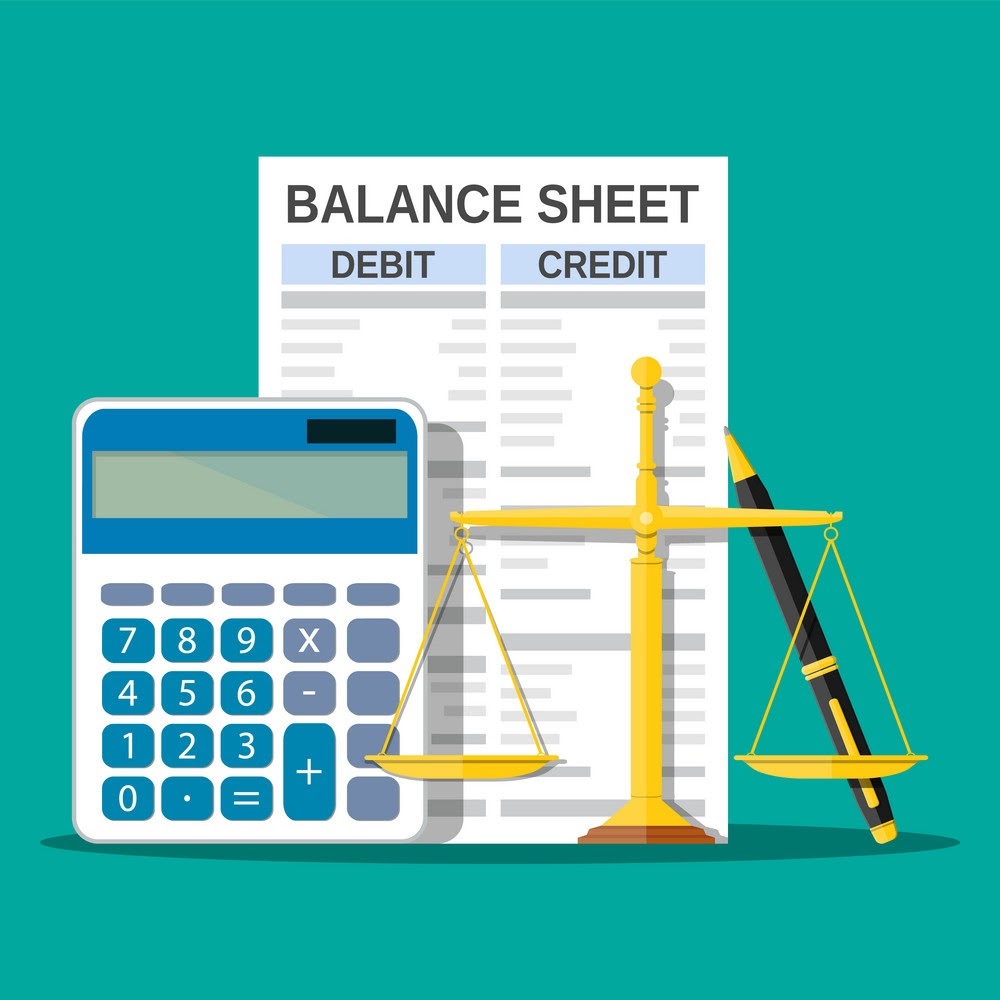
A company's balance sheet is divided into two parts: assets and capital sources (liabilities and owners' equity).
-
Assets: Assets are arranged in order of decreasing liquidity. Specifically, highly liquid assets are listed first. Conversely, less liquid assets are presented further down.
-
Capital sources: Arranged in order of urgency for repayment. Therefore, the capital sources section starts with liabilities (including borrowed and occupied capital), followed by owners' equity. Within liabilities, debts are ordered as short-term – medium-term – long-term.
The meaning of the balance sheet
The balance sheet plays a very important role in corporate financial management. It is the basis on which a company understands the current state, structure, and composition of its capital and assets. From there, it can make an overall, quick assessment of the financial situation, business results, capital efficiency, and financial potential of the company.
More specifically, each part — assets and capital sources — in a company's balance sheet has its own meaning, both economic and legal, as follows:
-
Assets
-
Economic meaning: Reflects the scale and the allocation and utilization of the company's existing assets at the time the balance sheet is prepared; including both tangible and intangible assets.
-
Legal meaning: Reflects the value of all existing assets under the company's management and use at the time the balance sheet is prepared.
2. Capital sources
-
Economic meaning: Reflects the scale and structure of the capital sources invested and raised for the company's operations. From there it helps assess the company's financial autonomy and risk reserves.
-
Legal meaning: Reflects the capital that formed the company's existing assets at the time the balance sheet is prepared. On that basis, the company is obliged to repay its debts; creditors understand clearly the limits of the owners' liability for the company's debt.
>>>> See more: Consolidated Financial Statements: Concept, Principles, and How to Prepare an Overview Report
Guide to preparing a balance sheet under Circular 200
Principles and preparation method
The basis for preparing the balance sheet
When preparing the balance sheet, accountants must base it on the data of the general ledger; detailed accounting books, cards, or Detailed Summary Tables; and the previous year's balance sheet.
The assets section
Short-term assets
Short-term assets (Code 100) = Code 110 + Code 120 + Code 130 + Code 140 + Code 150
Reflects the total value of cash, cash equivalents, and other short-term assets that can be converted into cash, sold, or used within one year or one normal operating cycle of the business up to the reporting date, including: inventories, short-term receivables, short-term financial investments, and other short-term assets.
- Cash (Code 110) = Code 111 + Code 112
Cash (Code 111)
Enter into the "Cash" line item the debit balances of account 111 "Cash on hand," account 112 "Cash in bank," and account 113 "Cash in transit" on the general ledger.
Cash equivalents (Code 112)
Enter into the "Cash equivalents" line item the detailed debit balances of account 121 "Short-term securities investments" on the Detail Ledger of account 121, consisting of securities with a recovery term or maturity of no more than 3 months from the purchase date.
- Short-term financial investments (Code 120) = Code 121 + Code 129
Short-term investments (Code 121)
Enter into the "Short-term investments" line item the debit balances of account 121 "Short-term securities investments" and account 128 "Other short-term investments" on the general ledger (excluding the portion entered under "Cash equivalents").
Provision for diminution in value of short-term investments (Code 129)
Enter into this line item the credit balance of account 129 on the general ledger as a negative number placed in parentheses: (***)
- Short-term receivables (Code 130) = Code 131 + Code 132 + Code 133 + Code 134 + Code 135 + Code 139
Receivables from customers (Code 131)
Based on the total detailed debit balances of account 131 opened per customer on the Detail Ledger of account 131, detailing short-term customer receivables.
Prepayments to suppliers (Code 132)
Based on the total detailed debit balances of account 331 "Payables to suppliers" opened per supplier on the Detail Ledger of account 331.
Short-term inter-company receivables (Code 133)
Enter into this line item the detailed debit balances of account 1368 "Other inter-company receivables" on the Detail Ledger of account 1368, detailing short-term inter-company receivables.
Receivables per construction contract progress plan (Code 134)
The figure to enter is the debit balance of account 337 "Payments per construction contract progress" on the general ledger.
Other receivables (Code 135)
Consists of the debit balances of accounts 1385, account 1388, account 334, and account 338 on the Detail Ledgers of accounts 1385, 334, and 338, detailing short-term receivables.
Provision for doubtful short-term receivables (Code 139)
Enter the detailed credit balance of account 139 on the Detail Ledger of account 139, detailing provisions for doubtful short-term receivables.
>>>> See more: Cash Flow Statement: Concept, Meaning, Principles, and How to Prepare It Under Circular 200
- Inventories (Code 140) = Code 141 + Code 149
Inventories (Code 141)
Enter into this line item the debit balances of account 151 "Goods in transit," 152 "Raw materials, supplies," 153 "Tools and instruments," 154 "Work in progress," 155 "Finished goods," 156 "Merchandise," 157 "Goods sent for sale," and 158 "Goods in bonded warehouse" on the general ledger.
Provision for devaluation of inventories (Code 149)
Enter into this line item the credit balance of account 159 "Provision for devaluation of inventories" on the general ledger as a negative number written in parentheses (***).
- Other short-term assets (Code 150) = Code 151 + Code 152 + Code 154 + Code 158
Short-term prepaid expenses (Code 151)
Enter the debit balance of account 142 "Short-term prepaid expenses" on the general ledger.
Deductible value-added tax (Code 152)
Enter the debit balance of account 133 "Deductible value-added tax" on the general ledger.
Taxes and other receivables from the State (Code 154)
Enter the detailed debit balance of account 333 "Taxes and other payables to the State" on the Detail Ledger of account 333.
Other short-term assets (Code 158)
Enter the debit balances of account 1381 "Assets awaiting resolution of shortage," 141 "Advances," and 144 "Short-term pledges, deposits, and collateral" on the general ledger.
Long-term assets
Long-term assets (Code 200) = Code 210 + Code 220 + Code 240 + Code 250 + Code 260
- Long-term receivables (Code 210) = Code 211 + Code 212 + Code 213 + Code 218 + Code 219
Long-term receivables from customers (Code 211)
Based on the total detailed debit balances of account 131 opened per customer for customer receivables classified as long-term assets.
Working capital at subsidiary units (Code 212)
Enter into this line item the debit balance of account 1361 "Working capital at subsidiary units" on the Detail Ledger of account 136.
Long-term inter-company receivables (Code 213)
Detail the debit balances of account 1368 "Other inter-company receivables" on the Detail Ledger of account 1368, detailing long-term inter-company receivables.
Other long-term receivables (Code 218)
Enter into this line item the detailed debit balances of accounts 138, 331, and 338, "Detail of other long-term receivables," on the Detail Ledgers of accounts 1388, 331, and 338.
Provision for doubtful long-term receivables (Code 219)
The figure to enter in this line item is the detailed credit balance of account 139 "Provision for doubtful receivables," detailing provisions for doubtful long-term receivables, on the Detail Ledger of account 139.
- Fixed assets (Code 220) = Code 221 + Code 224 + Code 227 + Code 230
Tangible fixed assets (Code 221) = Code 222 + Code 223
Historical cost (Code 222): The debit balance of account 211 "Tangible fixed assets" on the general ledger.
Accumulated depreciation (Code 223): The credit balance of account 2141 "Depreciation of tangible fixed assets" on the general ledger, entered as a negative number in the format placed in parentheses (***)
Fixed assets under finance leases (Code 224) = Code 225 + Code 226
Historical cost (Code 225): The debit balance of account 212 "Fixed assets under finance leases" on the general ledger.
Accumulated depreciation (Code 226): The credit balance of account 2142 "Depreciation of fixed assets under finance leases" on the general ledger, entered as a negative number in the format placed in parentheses (***)
Intangible fixed assets (Code 227) = Code 228 + Code 229
Historical cost (Code 228): The debit balance of account 213 "Intangible fixed assets" on the general ledger.
Accumulated depreciation (Code 229): The credit balance of account 2143 "Depreciation of intangible fixed assets" on the general ledger, entered as a negative number in the format placed in parentheses (***)
Construction in progress (Code 230)
Enter into this line item the debit balance of account 241 "Construction in progress" on the general ledger.
- Investment real estate (Code 240) = Code 241 – Code 242
Historical cost (Code 241): The debit balance of account 217 "Investment real estate" on the general ledger.
Accumulated depreciation (Code 242): The credit balance of account 2147 "Depreciation of investment real estate" on the Detail Ledger of account 2147, entered as a negative number in the format placed in parentheses: (***)
- Long-term financial investments (Code 250) = Code 251 + Code 252 + Code 258 + Code 259
Investments in subsidiaries (Code 251)
Enter into this line item the debit balance of account 221 "Investments in subsidiaries" on the general ledger.
Investments in joint-venture and associate companies (Code 252)
Enter into this line item the debit balances of account 222 "Joint-venture capital" and account 223 "Investments in associate companies" on the general ledger.
Other long-term investments (Code 258)
Enter into this line item the debit balance of account 228 "Other long-term investments" on the general ledger.
Provision for diminution in value of long-term investments (Code 259)
Enter into this line item the credit balance of account 229 "Provision for diminution in value of long-term investments" on the general ledger as a negative number in parentheses (***)
- Other long-term assets (Code 260) = Code 261 + Code 262 + Code 268
Long-term prepaid expenses (Code 261)
Enter into this line item the debit balance of account 242 "Long-term prepaid expenses" on the general ledger.
Deferred tax assets (Code 262)
Enter into this line item the debit balance of account 243 "Deferred tax assets" on the general ledger.
Other long-term assets (Code 268)
Based on the total debit balances of account 244 "Long-term deposits and collateral" and other related accounts on the general ledger.
→ Total assets (Code 270) = Code 100 + Code 200.
The capital sources section
Liabilities
Liabilities (Code 300) = Code 310 + Code 330
- Short-term liabilities (Code 310) = Code 311 + Code 312 + Code 313 + Code 314 + Code 315 + Code 316 + Code 317 + Code 318 + Code 319 + Code 320
Short-term loans and debts (Code 311)
Enter the credit balances of account 311 "Short-term loans" and 315 "Long-term debts due for repayment" on the general ledger.
Payables to suppliers (Code 312)
Enter the total detailed credit balances of account 331 "Payables to suppliers," classified as short-term, opened per supplier on the Detail Ledger of account 331.
Advances from customers (Code 313)
Based on the detailed credit balances of account 131 "Receivables from customers" opened per customer on the Detail Ledger of account 131, and the credit balance of account 3387 "Unearned revenue" on the Detail Ledger of account 3387.
Taxes and other payables to the State (Code 314)
Enter the detailed credit balances of account 333 "Taxes and other payables to the State" on the Detail Ledger of account 333.
Payables to employees (Code 315)
Enter the detailed credit balances of account 334 "Payables to employees" on the Detail Ledger of account 334, detailing amounts still payable to employees.
Accrued expenses (Code 316)
Enter the credit balance of account 335 "Accrued expenses" on the general ledger.
Inter-company payables (Code 317)
Enter the detailed credit balances of account 336 "Inter-company payables" on the Detail Ledger of account 336, detailing short-term inter-company payables.
Payables per construction contract progress plan (Code 318)
Enter the credit balance of account 337 "Payments per construction contract progress plan" on the general ledger.
Other short-term payables and obligations (Code 319)
Enter the total credit balances of account 338 "Other payables" and account 138 "Other receivables" on the Detail Ledgers of accounts 338 and 138 (excluding amounts payable or receivable classified as long-term liabilities).
Short-term provisions (Code 320)
Enter the total detailed credit balances of account 352 "Provisions" on the Detail Ledger of account 352, detailing provisions for short-term liabilities.
- Long-term liabilities (Code 330) = Code 331 + Code 332 + Code 333 + Code 334 + Code 335 + Code 336 + Code 337
Long-term payables to suppliers (Code 331)
Enter the total detailed credit balances of account 331 "Payables to suppliers," opened per supplier, for payables to suppliers classified as long-term debt.
Long-term inter-company payables (Code 332)
Enter the detailed credit balances of account 336 "Inter-company payables" on the Detail Ledger of account 336 (Detailing inter-company payables classified as long-term liabilities).
Other long-term payables (Code 333)
Enter the total detailed credit balances of account 338 and account 344 on the general ledger of account 344 and the Detail Ledger of account 338 (Detailing long-term payables).
Long-term loans and debts (Code 334)
Enter the credit balances of account 341 and account 342, and the result found from the credit balance of account 3431 – debit balance of account 3432 + credit balance of account 3433 on the Detail Ledger of account 343.
Deferred tax liabilities (Code 335)
Enter the total credit balance of account 347 on the general ledger of account 347.
Provision for severance allowance (Code 336)
Enter the total credit balance of account 351 on the general ledger of account 351.
Long-term provisions (Code 337)
Enter the detailed credit balance of account 352 on the Detail Ledger of account 352.
Owners' equity
Owners' equity (Code 400) = Code 410 + Code 430
- Owners' equity (Code 410)
Code 410 = Code 411 + Code 412 + Code 413 + Code 414 + Code 415 + Code 416 + Code 417 + Code 418 + Code 419 + Code 420 + Code 421
Owner's invested capital (Code 411)
Enter the credit balance of account 4111 "Owner's invested capital" on the Detail Ledger of account 4111.
Share premium (Code 412)
Enter the credit balance of account 4112 "Share premium" on the Detail Ledger of account 4112. If this account has a debit balance, it must be entered as a negative number in parentheses (***).
Other owners' capital (Code 413)
Enter the credit balance of account 4118 "Other capital" on the Detail Ledger of account 4118.
Treasury shares (Code 414)
Enter the debit balance of account 419 "Treasury shares" on the general ledger as a negative number in parentheses (***).
Asset revaluation differences (Code 415)
Enter the credit balance of account 412 "Asset revaluation differences" on the general ledger. If account 412 has a debit balance, the figure for this line item is entered as a negative number in parentheses (***).
Foreign exchange rate differences (Code 416)
Enter the credit balance of account 413 "Exchange rate differences" on the general ledger. If account 413 has a debit balance, the figure for this line item is entered as a negative number in parentheses (***).
Development investment fund (Code 417)
Enter the credit balance of account 414 "Business development fund" on the general ledger.
Financial reserve fund (Code 418)
Enter the credit balance of account 415 "Financial reserve fund" on the general ledger.
Other funds within owners' equity (Code 419)
Enter the credit balance of account 418 "Other funds within owners' equity" on the general ledger.
Undistributed after-tax profit (Code 420)
Enter the credit balance of account 421 "Undistributed profit" on the general ledger. If account 421 has a debit balance, the figure for this line item is entered as a negative number in parentheses (***).
Capital source for construction investment (Code 421)
Enter the credit balance of account 441 on the general ledger.
- Other capital sources and funds (Code 430) = Code 431 + Code 432 + Code 433
Reward and welfare fund (Code 431)
Enter the credit balance of account 431 "Reward and welfare fund" on the general ledger.
Capital sources (Code 432)
Enter the difference between the credit balance of account 461 and the debit balance of account 161 on the general ledger. If the debit balance of account 161 is greater than the credit balance of account 461, the figure for this line item is entered as a negative number in parentheses (***).
Capital source that has formed fixed assets (Code 433)
Enter the credit balance of account 466 "Capital source that has formed fixed assets" on the general ledger.
→ Total capital sources (Code 440) = Code 300 + Code 400.
Notes on preparing the balance sheet
-
The "Beginning-of-year figure" column: Take the data from the "End-of-period figure" column of the previous year's balance sheet.
-
The "End-of-period figure" column: Take the "End-of-period balances" of the relevant accounts presented on the balance sheet generated during the current year.
-
Be sure to observe the balancing principle: Total Assets = Total Capital Sources
Sample balance sheet
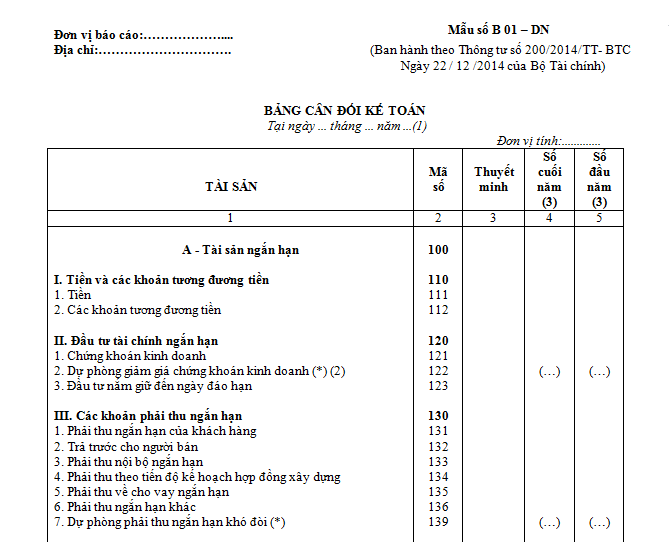
To understand how to prepare a balance sheet more easily and visually, download the Circular 200 balance sheet template here.
Conclusion
Through the balance sheet, managers can easily assess the company's financial situation. For that reason, the balance sheet plays a crucial role in proposing and adjusting the company's financial and business policies and objectives. Therefore, preparing the balance sheet requires not only completeness and accuracy but also strict compliance with the accounting standards of Circular 200.
To do that, businesses will need strong support from comprehensive accounting software to set up, store, and manage financial statements in a more scientific and effective way. If you need advice on how to deploy the SimERP corporate accounting software and its costs, leave a message in the comments section or contact SimERP right here!
Related articles
Bài viết liên quan

25 tháng 10, 2026 · 3 phut doc
2024年网页设计趋势预测如何? | Wotech Electronics
关于 2024 年网页设计趋势——步入 2024 年,年初正是我们为新事物预留时间的时刻。这也非常适合设计师群体唤醒我们内心的"艺术之魂"。闲话不多说,快来和 Markdao 一起浏览 2024 年的 UX/UI 设计趋势吧,说不定您就能为自己接下来的网页设计项目"迸发"出一个绝妙的点子呢!

25 tháng 10, 2026 · 1 phut doc
什么是网站(Website)?网站的详细定义及其带来的商业价值
什么是网站(https://www.markdao.com.vn/blog/website-la-gi)——这个问题或许已经无需定义,因为在如今这个信息时代,网站对每一家企业而言都是不可或缺的组成部分。正是网站帮助用户更近距离地接触企业所提供的产品和服务,从而提升经营效益。此外,要在当今竞争如此激烈的环境中求发展,网站是一个重要因素,它将带你走向品牌与销量上的双重成功。
25 tháng 10, 2026 · 1 phut doc
什么是SEO标准网站?一场"打赢"Google SEO标准的战役 | Wotech Electronics
99%的用户在购买前会先搜索信息,73%的用户只会访问排名前10的网站,并认定它们是值得信赖的品牌……在数字营销爆发的时代,这些数字有力地印证了SEO标准网站的重要性。然而,许多人对什么是SEO标准网站(https://www.markdao.com.vn/blog/huong-dan-toi-uu-seo-website-chuan-seo-on-page)仍然相当模糊,并未真正理解。达到SE…