
10 Tips for Identifying and Leveraging Potential Customers Effectively | Wotech Electronics
Vũ Khôi
Tác giả tại Wotech Electronics Blog
10 Tips for Identifying and Leveraging Potential Customers Effectively
Vũ Khôi
Author at Wotech Electronics Blog
Every business understands that commercial success depends on winning customers and getting them to use your products/services. Beyond simply compiling a list of potential customers, every business should carry out lead generation activities to understand their needs and wants, and in turn deliver a better customer experience. In this article, let's explore how to generate leads effectively.
What is lead generation?

Lead generation focuses on identifying and attracting customers who have a need for your products/services, and covers all activities aimed at reaching, communicating with, and understanding customers.
Lead generation can be carried out in many different ways. With the traditional approach (outbound lead generation), a brand tries to persuade customers to buy its products using generic online advertising aimed at everyone. With the modern approach (inbound generation), the brand delivers relevant content to the right target audience at the right time.
Both inbound and outbound marketing bring their own benefits when it comes to creating and generating leads. Our advice to businesses is to apply both in the lead generation process — and the best method is simply the one you feel fits your company's style!
The difference between B2C and B2B lead generation
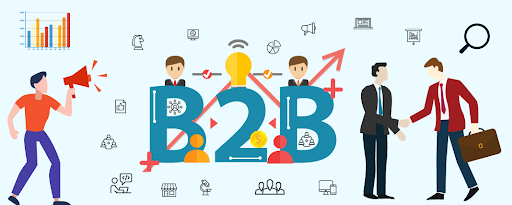
Typically, lead generation activities occur in B2C companies (businesses that sell directly to consumers). This can seem easier, because consumer buying behavior is more predictable and their needs are more varied and less demanding. However, this does not mean lead generation is unnecessary for B2B businesses. Customers of B2B companies are a little different: the buying process is more complex, and they need more time before actually placing an order for a product/service. In addition, there are several differences in potential customers between the two types of business, such as:
-
Sales cycle length: Most B2B businesses look for long-term suppliers, so they tend to sign longer contracts. This means the resources and effort devoted to lead generation for B2B purchases are greater and take more time. For B2C businesses, the opposite tends to be true: many sales processes are transactional and less costly, so lead generation is shorter and requires less effort.
-
Advertising content: With B2B, your target audience is business owners or key decision-makers. Your content needs to be informative, with precise, formal wording. In B2C, your content still needs to be engaging, but it can be less formal. Using videos, graphics, and "trendy" content is very appealing to readers and gets them to leave more information for you to work with.
-
Audience scope: Knowing who your audience is matters no matter what field you work in. If your customers are B2C, the audience scope is much broader. B2B, on the other hand, operates in a narrower market — usually business owners or company decision-makers.
-
Use of social media: Social media is one of the best channels when it comes to building a lead generation strategy. In B2B, the best social platform to use is LinkedIn, which lets you reach decision-makers and business owners directly. For B2C, the platforms that deliver results include Instagram, Facebook, Twitter, and so on. B2C businesses regularly use these platforms to promote content and engage with customers about products and services.
Although customer characteristics differ, B2C and B2B businesses can adopt similar lead generation strategies. Today, 73% of all purchases begin with a Google search. Online lead generation is a vital process that supports growth, a healthy customer portfolio, and revenue. Generating leads online through your website and email is a great way to attract prospects and introduce them to your products/services.
Content marketing: Content plays a major role in reaching and driving lead generation. To sell complex products and services, your brand needs to build relationships with prospects through content marketing. When you publish content that answers customers' questions about a topic or event, they may be drawn in and visit your website — and then you capture information about those visitors. In addition, with an existing customer base, you can guide prospects through the buying journey using marketing automation — delivering supporting information in a timely way. Lead generation software such as LeadInfo or the marketing automation tool HubSpot are widely used.
Follow the steps in the model below to start generating leads strategically, then scale up using marketing automation.
The online lead generation model
-
Identify potential customers: build customer personas and their buying personalities
-
Attract new visitors to your website through content marketing
-
Generate leads: convert website visitors into leads
-
Qualify leads using a Lead Scoring model
-
Help leads move forward in their buying journey through lead nurturing
Identify potential customers: build customer personas

As mentioned above, a business should define its potential customers, from identity traits and lifestyle to shopping behavior. Buyer personas not only help you build lead profiles but also let you put yourself in the prospect's shoes: their needs, pain points, ambitions, and their world! You can use this valuable information to improve prospects' experience at different stages of the buying process.
Attract new website visitors
Attract a new audience to your website by combining relevant content with the right use of the right channels.
Content strategy

Prospects will only visit your website if you serve them relevant content that is easy to find. A content marketing strategy starts with analyzing your prospects' needs — always ask yourself what problems they face and how those problems can be solved. Then create content that addresses those needs and questions. There are many content formats you can use to support prospects: blog posts, information presented as images, videos, website user guides, books, and slides.
Combine online sales channels
Once you have developed your content, you need to make sure your prospects actually see it. For inbound marketing, users prefer channels that do not intrude too much. For outbound marketing, your message needs to be spread across as many channels as possible to reach the widest audience.
-
SEO: Build an SEO strategy to optimize for search engines and maintain long-term discoverability among your target audience. If someone finds your content because they need the information, they will pay special attention to your product and feel they were not being pestered.
-
Search engine advertising (SEA): SEA also lets your target audience find relevant keywords, but on the other hand, you pay for every click.
-
Social media: Distribute your content through social networks. This form of communication is now considered one of the most effective by users — especially in Vietnam, where people use it daily to access information and shop. Build a following and share content based on customer needs, and let customers find you naturally.
-
Blogging: with blogging, you can significantly increase your reach within your target audience on the web.
>>>> See also: 13 Ways to Find New Potential Customers for Your Business
Generate leads

In step two, you made sure visitors come to your website. In this step, you start converting website visitors into leads through the conversion path. The conversion path takes visitors to a landing page containing a form. On that landing page, you present a content offer, providing value to the prospect in exchange for their contact details.
A conversion path consists of the following elements:
-
Call to action (CTA): in phase 1 of the lead generation process, you attract visitors and bring them to one of your pages — for example, a blog post. Place a compelling call to action on this page inviting visitors to download the content.
-
Landing page: by clicking the call to action, visitors continue on to the landing page. Here, you briefly describe what you are offering them.
-
Form: with the form, you collect prospects' information. Make sure it stands out on the landing page, and that the number of questions is proportional to the value of the content you are providing.
-
Thank-you page: after the download, redirect visitors to a thank-you page. This allows the business to drive "conversions" and lets Google Analytics measure the conversion rate. Besides the download button, attach another content offer to keep the visitor on the page.
-
Thank-you email: a thank-you email is useful because it gives people another chance to download the content. It is also an opportunity to build a relationship with your prospects.
Qualify your leads

In the previous step, you created actual leads and obtained their information. In the traditional lead generation process, you would follow up by phone and manage and advise that group of leads. However, having someone's contact details does not mean they are ready to use your product/service.
That is why you should consider:
(1) selecting, based on the audience, which leads are a good fit for your organization;
(2) and then continuously moving leads forward in their buying journey. When qualifying leads, you have roughly two options:
-
Qualify out: rule out leads that are not a sufficient fit for your organization.
-
Qualify: determine the right moment for follow-up and set sales priorities.
Nurture leads with nurturing activities

Beyond helping customers who have problems with your product/service, this is also an opportunity to learn more about your prospects' needs. You may already know your customers' problems through buyer behavior research and keyword research, but you can understand them far more deeply by asking questions after they use your product. As a prospect becomes more familiar with your business, they are willing to give you more information. Marketing automation also ensures you send your prospects relevant content that matches their interests and their behavior on your website.
10 tips for lead generation

-
Tip 1: Make sure your survey form is not too long. The longer your form, the higher the barrier to becoming a lead.
-
Tip 2: Supply and demand must be balanced. The more you give, the more you can ask for in return.
-
Tip 3: Manage your prospects' expectations. Always be honest and transparent about what you are offering them. It does your business no good when someone feels disappointed — or even misled — after reading your materials.
-
Tip 4: Place the form above the fold. This means your visitors do not have to scroll down your landing page to see or fill in the form.
-
Tip 5: Improve your conversion path. There are two main places where you can improve it: the call to action (CTA) and the landing pages. With CTAs, aim for the highest possible click-through rate; with landing pages, for the highest possible conversion rate.
-
Tip 6: Add images to the content you provide. A picture is worth more than 1,000 words. Adding images effectively makes your lead capture far more effective!
-
Tip 7: Use reviews or customer quotes on your landing pages. This builds trust with your website visitors.
-
Tip 8: Use marketing automation. It lets you intelligently deliver the right content to your prospects at the right time. Marketing automation also helps you validate leads.
-
Tip 9: Don't forget to chat and interact with customers. Nowadays it's not just live chat — automated chat programs are becoming increasingly useful and intelligent. Chatbots can boost your lead generation process!
-
Tip 10: Bring all information about your leads together in a customer information management system — a CRM.
Conclusion
To help your business reach more audiences, you should study and analyze their buying psychology and behavior. The methods and tips above are ones you can absolutely try out. Below, this article introduces a customer management application for generating and nurturing leads — SimCRM. The application was refined into its most complete version in 2021, with plenty of features that make management more convenient for businesses.
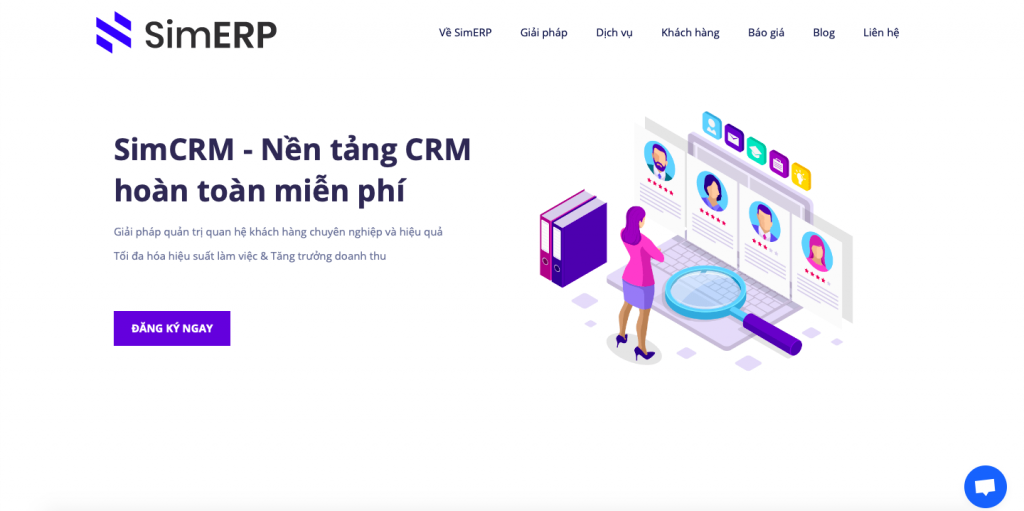
SimCRM delivers outstanding results in:
-
Storing customer information
-
Creating activity reminders for each order, with the ability to create email templates for specific products to provide relevant information to buyers — helping the business stay in regular contact with customers
-
Supporting visual reports on follow-up activities, order analysis, and invoicing
-
Tracking KPIs such as total invoiced amount and sales per country/salesperson/sales team
Enjoy a free trial for the first month and experience the full capabilities of the SimCRM customer management tool — the global solution for businesses in the Industry 4.0 era!
Related Articles
Bài viết liên quan

25 tháng 10, 2026 · 3 phut doc
2024年网页设计趋势预测如何? | Wotech Electronics
关于 2024 年网页设计趋势——步入 2024 年,年初正是我们为新事物预留时间的时刻。这也非常适合设计师群体唤醒我们内心的"艺术之魂"。闲话不多说,快来和 Markdao 一起浏览 2024 年的 UX/UI 设计趋势吧,说不定您就能为自己接下来的网页设计项目"迸发"出一个绝妙的点子呢!

25 tháng 10, 2026 · 1 phut doc
什么是网站(Website)?网站的详细定义及其带来的商业价值
什么是网站(https://www.markdao.com.vn/blog/website-la-gi)——这个问题或许已经无需定义,因为在如今这个信息时代,网站对每一家企业而言都是不可或缺的组成部分。正是网站帮助用户更近距离地接触企业所提供的产品和服务,从而提升经营效益。此外,要在当今竞争如此激烈的环境中求发展,网站是一个重要因素,它将带你走向品牌与销量上的双重成功。

25 tháng 10, 2026 · 1 phut doc
什么是SEO标准网站?一场"打赢"Google SEO标准的战役 | Wotech Electronics
99%的用户在购买前会先搜索信息,73%的用户只会访问排名前10的网站,并认定它们是值得信赖的品牌……在数字营销爆发的时代,这些数字有力地印证了SEO标准网站的重要性。然而,许多人对什么是SEO标准网站(https://www.markdao.com.vn/blog/huong-dan-toi-uu-seo-website-chuan-seo-on-page)仍然相当模糊,并未真正理解。达到SE…