
6 Steps of the Production Management Process in Enterprises 2022 | Wotech Electronics
Vũ Khôi
Tác giả tại Wotech Electronics Blog
6 Steps of the Production Management Process in Enterprises 2022
Vũ Khôi
Author at Wotech Electronics Blog
Nowadays, production management plays an extremely important role for manufacturing enterprises. A good production process helps boost productivity, improve revenue and profit, and build the company's reputation. With such a large volume of work to handle, it would be very difficult to control the entire production process without a well-defined production management process in place. Read on to learn how to build one.
What is production management?
Production management is a phase of production and business operations tied to a company's factories and workshops; it is directly involved in planning and monitoring the progress of the production process to ensure goods are delivered on time, in the required quantities, and to the quality standards set out in the plan. Specific tasks can include assessing production capacity, managing production stages, and managing product quality.
Objectives of the production management process
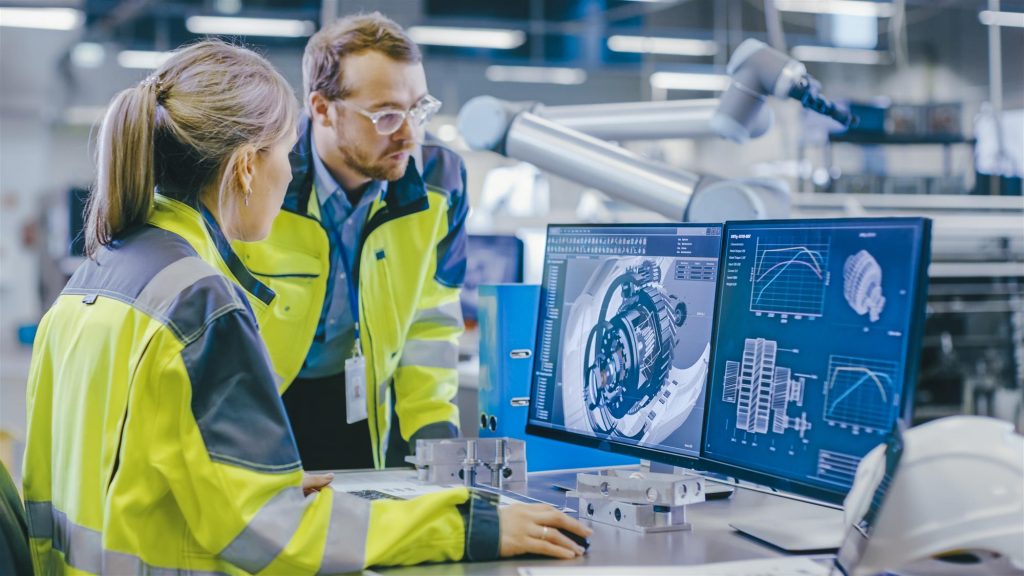
As we know, production is the foundation of the goods economy. Managing the production process is work that always goes hand in hand with production itself, helping to set the direction for the company's development. In production management, setting directional objectives is extremely important because they are what the entire system is aiming toward. While each production sector may have different development approaches, all production management processes must follow the same regulations and objectives:
-
Manage the production line across all stages
-
Inspect product quality at each different stage
-
Maintain inventory thresholds and manage imports and exports
-
Monitor progress in a timely manner and meet demand for goods and products
-
Leverage resources to drive and increase business productivity; generate profit for the company
-
Build brand value and increase competitiveness for the product line and the company as a whole.
The production management process in enterprises
When it comes to production management processes, the Japanese management model (JPM) is always mentioned for its popularity and effectiveness. Developed in the 1980s, its standout characteristics — speed, high efficiency, and the ability to integrate technologies, pivot terminology, expand from manufacturing into services, drive creative improvement, and analyze data both broadly and deeply — allowed it to quickly establish a global position. Let's look at the Toyota Group's production management model and its standout features:
-
Minimize waste, especially in employee working time, materials, and other resources.
-
Reduce the chance of overproduction by keeping inventory levels low.
-
Reduce labor costs by applying technology and engineering.
-
Elevate product demand, reflected in its direct influence on processes and production decisions.
-
Significantly shorten production cycles thanks to the SMED system, which reduces downtime and supports small-batch production.
Having reviewed the Japanese production management process, we now have an overview of what a manager needs to do to coordinate a company's entire production process. So next, let's start setting up a complete production management process for a business!
Typically, a manager will carry out the work in the following steps:
Research, define the market, and assess the company's potential
This is certainly an essential step for any business before entering any market. As a good manager and leader, you must be able to research, forecast, and analyze to determine whether the company has enough resources to compete in the market. From there, you can build development strategies and long-term direction for production work.
Define the plan for material imports and exports
Controlling and allocating materials promptly and quickly is also one of the factors that make a production chain successful. That is why this is another aspect managers should pay attention to.
Manage each stage carefully and meticulously
A good manager is someone who can oversee the company's entire production system. Understanding each specific production stage improves coordination, direction, and work allocation. At the same time, it maximizes rigor and precision to optimize production time.
Manage product quality
Product quality is what reflects the company's brand and provides the most objective assessment of how effective the production process is. Conducting quality inventories and timely evaluations ensures product quality is always maintained, helping to avoid unnecessary risks when products reach customers.
Product pricing
Before entering any market, a business will already have gained some basic knowledge of that market, from which it can set the most appropriate pricing strategy. In addition, there will always be costs incurred during production, such as depreciation and losses. To manage the production process as well as possible, managers must always keep all of these factors under control to ensure production and wholesale operations run as smoothly as possible.
Monitor product quality
After the production process is complete, managers must continue monitoring the sales process so they can respond promptly to feedback and bug reports from customers. Errors during production are entirely possible, so it is inevitable that some customers may unfortunately receive defective products. That is why production management must always go hand in hand with quality monitoring, so that appropriate recovery, replacement, or compensation measures can be taken for products that do not meet the desired quality.
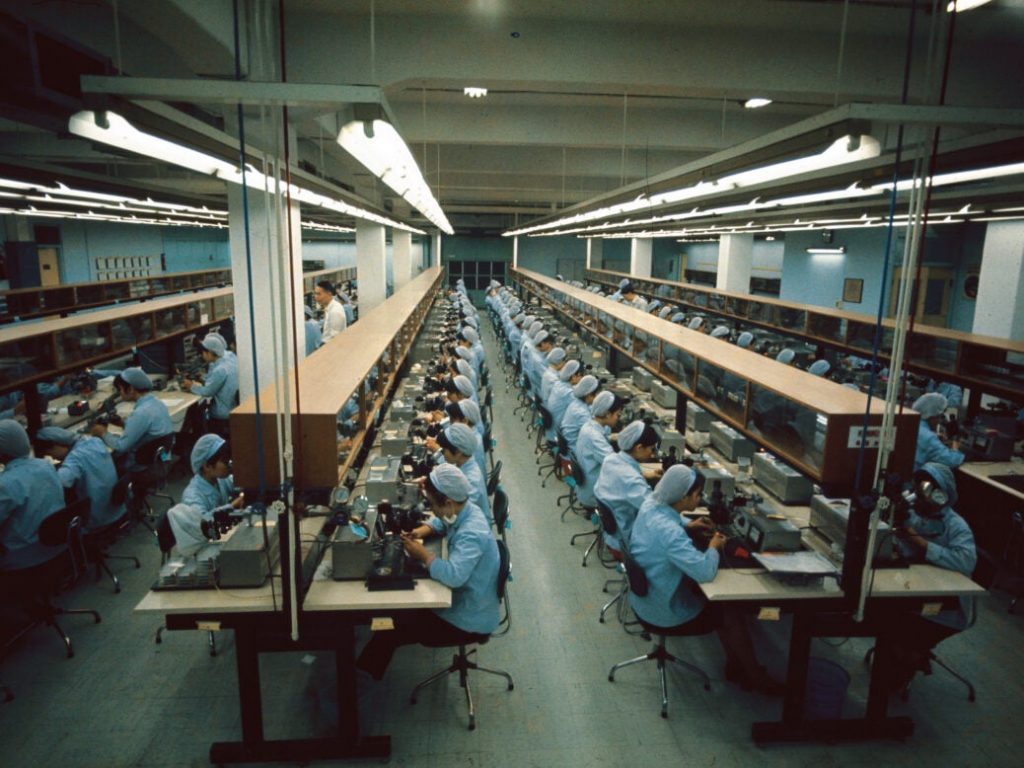
For inexperienced managers, it is truly difficult to create and monitor an entire complete production management process. Steering the production apparatus of an entire system requires not only professional expertise but also soft skills such as observation, teamwork, and forecasting. So, to get a broader view of a production management process, let's take a look at the Japanese production management process below:
The Japanese management model (JPM) has become popular worldwide in the field of management, especially in the 1980s, and later expanded beyond Japan's borders. Characteristics such as quick setup, small batches, and kanban boards are what made it famous. Compared with other models today, JPM's strength lies in its ability to pivot terminology, consolidate and absorb practices, expand from manufacturing into services, and drive creative improvement. However, after some time, the failures of Japanese companies as well as Western companies have raised questions about JPM's sustainability. Although at its core the model seems to have become a firmly dominant trend, its present and future state deserve careful consideration.
Effective production management organization methods
The guide above has somewhat helped businesses shape the fundamental steps for building a complete production process. However, businesses also need to equip themselves with the most suitable organizational method to maximize the productivity of the production process and manage it more effectively. Here are a few examples of the most common organizational methods:
The line organization method
The characteristic of this method is organizing production stages and operations along an entire line to carry out the business cycle from "input" to "output." Each production site and each stage has a specific task, which makes distributing labor and machinery easier. However, line-based organization must meet the following requirements:
-
Effectiveness of the work
-
Suitability to the product design
-
Suitability to product volume
-
Suitability to the production environment
Organizing production along lines brings benefits such as high productivity and quality, fast production speed, and efficient use of resources, thereby saving costs and improving work efficiency.
The group-based production organization method
This is typically used for mass-producing small and medium-sized products, with many product types manufactured on the same system. This method is not designed around the technological process, and machinery is not arranged by individual product type; instead, it is arranged for the whole group based on the selected product component. A few characteristics of group-based production organization:
-
Standardizing products into specialized groups
-
Having a specific process for each group
-
Making it easy to set thresholds, design tools, and arrange machinery
-
Reducing the volume and time of technical preparation work, facilitating specialization and raising workers' skill levels
The job-shop (one-off) production organization method
One-off production is a type of intermittent production. In one-off production, workstations process many different component types and carry out many different steps in the product's production process. Each component type is produced in very small quantities — sometimes just a single unit. Workstations are not specialized and are arranged according to technological principles. General-purpose machinery and equipment are commonly used at workstations. This type of production is highly flexible.
Notes on the production management process
-
Plan and allocate the workload sensibly in terms of both time and quantity.
-
Try to oversee the entire process. Regularly inspect and assess quality, and provide feedback on production methods. Minimize risks and unnecessary problems in the production process.
-
Regularly report statistics on quantity and quality to promptly assess the effectiveness of the company's production process. From there, set directional strategies in time, aiming for long-term, sustainable development.
-
Use optimal, modern management tools to save cost and effort in production management. Especially in the 4.0 era, the explosion of technology will bring many opportunities, but alongside them countless challenges, as science and technology become ever more modern and advanced.
Production management software
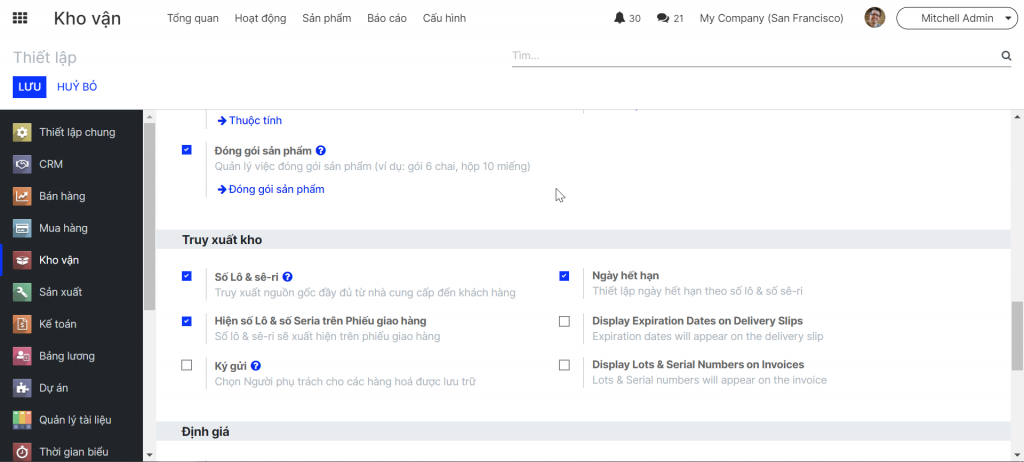
Nowadays, many production management software solutions have been developed, offering various superior features that greatly assist production process management. This software integrates many versatile functions such as materials management, sales, human resources, warehouse, costing, expenses, and more. It uses cloud computing technology to update and store data quickly and securely, providing powerful support for businesses. Some useful solutions include IOT, VNSolution, ERP Bravo, Kiu Global, SimERP, and more.
Currently, SimERP is offering a completely free 30-day trial. Sign up for a trial here!
Conclusion
In short, to establish and implement a production management process that is effective, meets standards, and delivers high productivity, a manager must understand the methods and fundamental principles in order to develop them into strategies for sustainable development. In addition, they must ensure the scientific rigor, feasibility, and effectiveness of the production process, and continuously change and apply advances in science and technology to keep improving the production process.
Related articles
Bài viết liên quan

25 tháng 10, 2026 · 3 phut doc
2024年网页设计趋势预测如何? | Wotech Electronics
关于 2024 年网页设计趋势——步入 2024 年,年初正是我们为新事物预留时间的时刻。这也非常适合设计师群体唤醒我们内心的"艺术之魂"。闲话不多说,快来和 Markdao 一起浏览 2024 年的 UX/UI 设计趋势吧,说不定您就能为自己接下来的网页设计项目"迸发"出一个绝妙的点子呢!

25 tháng 10, 2026 · 1 phut doc
什么是网站(Website)?网站的详细定义及其带来的商业价值
什么是网站(https://www.markdao.com.vn/blog/website-la-gi)——这个问题或许已经无需定义,因为在如今这个信息时代,网站对每一家企业而言都是不可或缺的组成部分。正是网站帮助用户更近距离地接触企业所提供的产品和服务,从而提升经营效益。此外,要在当今竞争如此激烈的环境中求发展,网站是一个重要因素,它将带你走向品牌与销量上的双重成功。

25 tháng 10, 2026 · 1 phut doc
什么是SEO标准网站?一场"打赢"Google SEO标准的战役 | Wotech Electronics
99%的用户在购买前会先搜索信息,73%的用户只会访问排名前10的网站,并认定它们是值得信赖的品牌……在数字营销爆发的时代,这些数字有力地印证了SEO标准网站的重要性。然而,许多人对什么是SEO标准网站(https://www.markdao.com.vn/blog/huong-dan-toi-uu-seo-website-chuan-seo-on-page)仍然相当模糊,并未真正理解。达到SE…