9 Ways to Build an Email List of Potential Customers for Your Business
Vũ Khôi
Tác giả tại Wotech Electronics Blog
9 Ways to Build an Email List of Potential Customers for Your Business
Vũ Khôi
Author at Wotech Electronics Blog
Marketing through social media has become so familiar and widespread today that people can easily reach and interact with it every day. However, social media marketing seems to be showing signs of saturation, as users are overwhelmed by far too much information. That is why many businesses are asking whether it is still a wise, high-yield move. With the development of technology and the market, a wave of marketing forms has emerged — or is regaining its footing — to meet businesses' needs for promoting their brands, and Email Marketing is one of them. Email Marketing is rated as one of the marketing strategies that delivers high results across many survey metrics.
According to Marketing Charts, as many as 82% of marketers agree that it is a promising strategy for driving effective business growth in the future. Gmail from Google is one of the most widely used email services today, so a customer Gmail list is one of the crucial factors determining the outcome of your Email Marketing campaign. Many businesses today view collecting customer emails as a make-or-break goal for growing their business. In practice, however, the email marketing methods available on the market are not yet widely applied. So what benefits does owning a company email list bring, and what resources do you need to obtain one? Let's find the answers with SimERP in the article below!
What benefits does a customer email list bring to a business?
Stable growth
When your business owns a list of potential customers' Gmail addresses, nurturing these customers well will help the business grow in a stable and sustainable way. This not only boosts the company's business activity but also quickly raises the quality and effectiveness of its marketing campaigns.
Higher revenue
In this era of technological explosion, each person spends at least a few hours a day browsing the web, checking email, and using the Internet. Collecting and compiling a free email list, then sending them sales information, offers, advice, and care, makes it easy for a business to lift its revenue.

Cost savings
Many businesses choose to buy lists of potential customers' Gmail addresses rather than own a free but messy, time-wasting list. Choose truly accurate data sources to save your business both time and investment costs.
Better customer management and care
With a customer email list in hand, a business gains enormous advantages in managing and coordinating all departments smoothly to accelerate the services customers need, support customers in the best way possible, and formulate the most accurate business strategies. At the same time, thanks to the email list, you can care for customers better, satisfying their ever-rising demands for product and service quality, delivery quality, and returns when requested.
9 ways to build a business email list
For a business's Email Marketing campaign to work effectively, a list of potential customers' emails is indispensable. So how do you collect customer emails, and how do you compile and filter them to obtain the highest-quality customer data? This is a concern for many businesses. SimERP will show you how to collect and compile a reputable, high-quality list of potential customer emails right below.
Collect customer emails via your website
A blog can be a "gold mine" for collecting customer email addresses for free. Simply create content that delivers value, design an eye-catching logo and visuals, and add a strong call to action — customers will leave you their emails.
For example, suppose you have a marketing article that attracts thousands of visitors every day. You create a popup window with the message: "Leave your email to receive the most effective marketing materials." This is one of the ways you can apply to collect and compile customer email data.
In addition, Google offers a simple, free, and highly professional form-building tool: Google Forms. Once you finish designing the form, Google gives you a snippet of code. You just copy that code and paste it directly into your website for customers to complete the survey. In the survey, you can ask questions and gather users' personal information; once they finish, offer a few perks or gifts so customers feel their effort is well rewarded.
Use WordPress plugins
Some website-building platforms (mainly WordPress) provide popups that ask customers to leave their email addresses.
Popup Maker, Popup Builder, OptinMonster, Popup by Supsystic, and ARI Fancy Lightbox are plugins that can perform this task. Installing and using these plugins is very simple, and they feature email verification. To receive something of value (an offer, a gift, etc.), users must enter a verified email. The offer or gift is then automatically sent to the customer by email.
With this approach, you collect a list of emails from the potential customers you are targeting, matching the content you are building. From there, you can easily classify each customer group to serve future email marketing campaigns.
However, to obtain plentiful data, you need to pick red-hot topics for each target customer group you are aiming at. Then write marketing-style content to attract them, along with a call to action (CTA) to make them willing to leave you their email. At the same time, you must share this content across many channels, especially social networks (Facebook, LinkedIn, Twitter, Instagram, etc.) or large websites in the same field.
Use Facebook advertising
There is no arguing it: the most sensible and economical way to grow a list of potential customers for an Email Marketing campaign is through Facebook advertising. Black Card Books Publishing — a US publishing company — reports that it easily generated revenue in the millions of dollars within 12 months by using directly targeted Facebook ads to attract potential customers.
Facebook's user count is at an all-time high, and its users' ages are ideal for most businesses today. The number of users aged 30–55 and above has grown strongly, while the 13–25 age group has declined significantly.
Whether you are an independent entrepreneur, a mid-sized business, or a large corporation, Facebook remains a channel that delivers astonishing results for attracting potential customers. Even on a modest budget, you can harvest dozens of valuable emails every day — corresponding to dozens of potential customers. You can target them very specifically based on age, geographic location, behavior, and even online purchase history.
Black Card Books Publishing says that on average it acquires 50–150 potential customers per day using targeted Facebook ads. Seize the opportunity to run your Facebook advertising strategies right now, before users start migrating to another platform.
From customer phone calls
When customers call you, it means they are interested in your products or services. After consulting and resolving their issues, you can tactfully ask for some personal information — full name, phone number, email — to bring customers closer to you.
This is also a way to collect high-quality customer email data. Customers may still be hesitating about whether to use your service when they give you their information. But thanks to an email marketing campaign, they may well become your loyal customers.
Collect customer emails from promotional programs
In marketing, promotions, special offers, and discounts are the most effective source for mining potential customer emails.
Leveraging promotional programs in your business strategies is a clever and effective way to collect potential customer emails. You will harvest a massive amount of customer data after each promotional program. Moreover, providing a gift or discount code when using a product or service not only collects email addresses but also boosts sales effectively. Blippar's research shows that users of discount codes spend 37% more on average than ordinary shoppers.
To run this campaign, you can use a popup window to announce the offer and then send the discount code to your customers by email. You can provide a discount code for a certain range of products, a discount within a specific time frame, or simply free shipping on any order placed.
Collect email addresses by hosting seminars
Hosting seminars lets you deliver valuable information to customers, gather personal information, and promote products and services all at once. You can host free webinars to increase attendance while sharing the join link in exchange for email addresses.

Pick a red-hot topic, prepare the content perfectly, then invite customers and people interested in your brand to join. To attract attendees, you can invite well-known experts in the field to share their knowledge.
Harvest email addresses from social media
If you know how to make the most of social media, you can easily direct traffic to a landing page where you collect customer email addresses.
Let's look at a few standout social networks:
-
Facebook: When you create a Facebook page, you can add a Sign Up button at the top of your page. This can link to a landing page where you collect visitors' emails.
-
Twitter: You can run an advertising campaign aimed at your target audience, thereby driving traffic to your landing page and building a pool of potential customers.
-
Instagram: In your Instagram bio, you can add your website or landing page URL. You can also add a call to action (CTA) in your bio to encourage people to visit the link and join your newsletter list.
You can also link directly to your email signup form without sending all your traffic to your website. There are a few smart apps that can help you do this. For example, the Getform app lets you create popup pages to collect emails from followers of your business's social media.
After creating the popup page, you can link it directly to your fanpage on social media so followers can easily join your email list.
Social media campaigns are hard to track and evaluate, so whether you are using professional software or working manually, don't forget to set KPIs and goals before you start. A Steelhouse study shows that by tracking and testing landing pages, conversion rates can increase by up to 300%.
Use popup windows
Collecting customer emails through signup popups is also an effective method. However, using popups can be a double-edged sword: while it gets you customer email data quickly, it can also easily annoy customers when the popup appears.
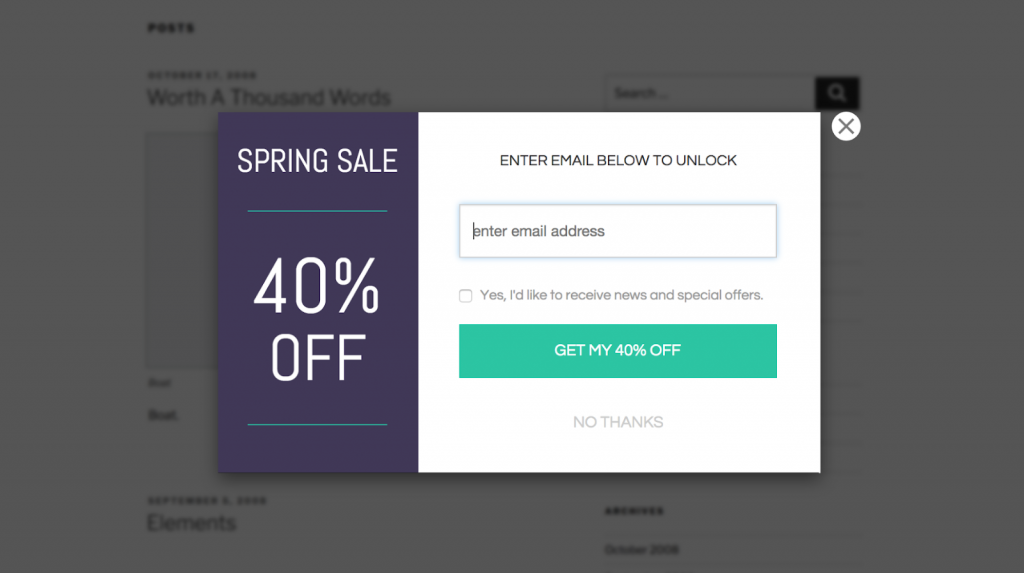
When used correctly, popups can convert visitors into potential customers and customers of the business. Some marketers believe popups can be disruptive if they appear immediately upon visiting the website or midway while the visitor is reading a blog post. Exit popups are different, however. They are shown to a visitor who is about to leave your website — a last attempt to connect with them. These popups usually present an offer or deal the visitor can't resist, even as they are about to leave the site.
If you are looking to add an exit popup to your website, consider Getsitecontrol. It tracks users' mouse movements and then displays an exit popup just before they leave the page. Once users have signed up — and if your email content is compelling enough — you can encourage them to return to your website.
Run contests to collect entrants' emails
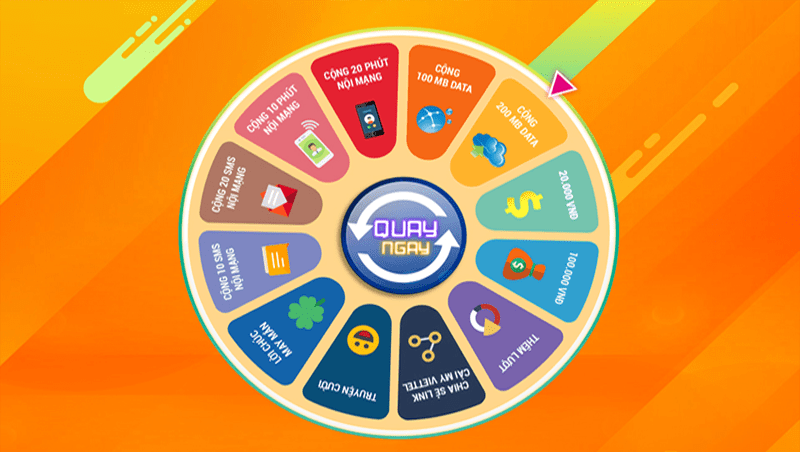
Running a contest is another effective way to collect potential customers' emails and build a community around your website. Some game-show formats to choose from include: lucky draws, photo and video contests, sharing thoughts and impressions, and more. All you need is a topic that resonates with your audience. And once you have an idea, consider using suitable software to collect entrants' data. Here, we have a suggestion for you: Gleam is excellent software when you run lucky-draw activities. It lets you add a form to collect participants' email addresses and then — randomly select the winners.
Conclusion
There are many ways for your business to obtain a quality list of potential customer emails. Alongside that, be careful with approaches that deliver quick results but carry legal risks, such as exchanging or buying and selling customer email data. What's more, choose and weigh reliable data sources, because low-quality data will quickly send your emails to the spam folder. We hope that through this SimERP article, you will gain safe, quality methods for collecting customer emails.
Related articles
Bài viết liên quan

25 tháng 10, 2026 · 3 phut doc
2024年网页设计趋势预测如何? | Wotech Electronics
关于 2024 年网页设计趋势——步入 2024 年,年初正是我们为新事物预留时间的时刻。这也非常适合设计师群体唤醒我们内心的"艺术之魂"。闲话不多说,快来和 Markdao 一起浏览 2024 年的 UX/UI 设计趋势吧,说不定您就能为自己接下来的网页设计项目"迸发"出一个绝妙的点子呢!

25 tháng 10, 2026 · 1 phut doc
什么是网站(Website)?网站的详细定义及其带来的商业价值
什么是网站(https://www.markdao.com.vn/blog/website-la-gi)——这个问题或许已经无需定义,因为在如今这个信息时代,网站对每一家企业而言都是不可或缺的组成部分。正是网站帮助用户更近距离地接触企业所提供的产品和服务,从而提升经营效益。此外,要在当今竞争如此激烈的环境中求发展,网站是一个重要因素,它将带你走向品牌与销量上的双重成功。

25 tháng 10, 2026 · 1 phut doc
什么是SEO标准网站?一场"打赢"Google SEO标准的战役 | Wotech Electronics
99%的用户在购买前会先搜索信息,73%的用户只会访问排名前10的网站,并认定它们是值得信赖的品牌……在数字营销爆发的时代,这些数字有力地印证了SEO标准网站的重要性。然而,许多人对什么是SEO标准网站(https://www.markdao.com.vn/blog/huong-dan-toi-uu-seo-website-chuan-seo-on-page)仍然相当模糊,并未真正理解。达到SE…