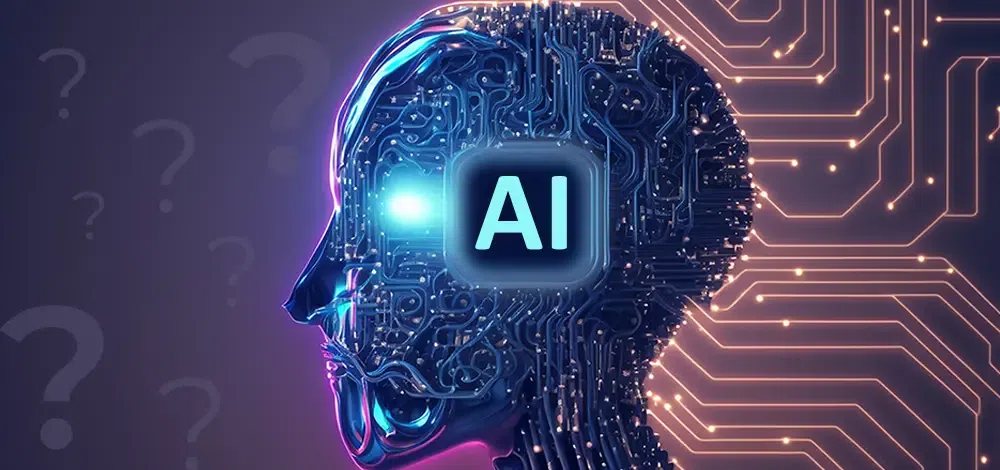
What Is AI? How Does AI Impact Different Areas of Life?
Vũ Khôi
Tác giả tại Wotech Electronics Blog
What Is AI? How Does AI Impact Different Areas of Life?
Vũ Khôi
Author at Wotech Electronics Blog
What Is AI?
What is Artificial Intelligence (AI)? AI stands for Artificial Intelligence — technology that enables machines to simulate human thinking, learning skills, and behavior. The article below from Logico will help you better understand AI and its applications.
AI's Impact Across Industries
In recent years, artificial intelligence (AI) has had — and continues to have — a powerful impact on every sector of the economy and society. From healthcare, finance, and education to manufacturing, AI is no longer just a promising technology; it has become an indispensable tool for optimizing processes, boosting productivity, and reducing risk. With its ability to process massive amounts of data, learn from data patterns, and perform complex tasks that once only humans could do, AI is creating sweeping and highly promising changes.
1. AI in Healthcare
AI in healthcare has opened a new era in disease detection and treatment. AI technologies — especially machine learning and deep learning — help detect medical conditions with higher accuracy while saving time and cost. For example, AI can analyze medical images such as X-rays, MRIs, or CT scans to detect health problems early, including cancer, stroke, and cardiovascular diseases.
AI also plays an important role in creating personalized treatment methods — using patient data and AI analysis to develop therapies and medications that are more effective. For instance, AI systems can analyze genetic information, lifestyle habits, and medical histories to produce the most suitable treatment plans.
Beyond that, AI helps improve doctors' efficiency, lightens their workload, and strengthens decision-making. Some AI tools can assist doctors in making more accurate diagnostic decisions while helping predict patients' future health conditions.
2. AI in Finance
In the finance industry, AI has been revolutionizing how banks and financial companies operate. One of AI's most important applications is in data analysis and market prediction. Machine learning algorithms can analyze millions of transactions and financial data points in a short time, helping detect trends and forecast market movements.
AI also plays a key role in fraud detection. AI systems can monitor and analyze financial transactions to identify abnormal behavior and flag fraud risks. This not only protects financial institutions but also reduces losses for customers.
In addition, AI improves the customer experience in finance. Intelligent chatbots are used to deliver customer service faster and more effectively. AI systems can help customers carry out transactions, answer questions, and even offer personalized financial advice.
3. AI in Manufacturing
AI has become an integral part of modern manufacturing. AI technologies help optimize production processes, cut costs, and raise product quality. One of the most common applications of AI in manufacturing is automation. Robots and intelligent machines can perform repetitive tasks accurately and efficiently, while also reducing errors and the risk of workplace accidents.
AI systems can also monitor equipment conditions and predict when maintenance is needed, minimizing machine downtime and increasing production efficiency. Using AI in manufacturing also improves inventory management processes, optimizes the supply chain, and strengthens the ability to forecast product demand.
Manufacturing companies can use AI to analyze production data and adjust processes for greater efficiency, reducing waste of materials and energy.
4. AI in Education
In education, AI brings major improvements to teaching and learning. Machine learning systems can personalize learning paths for students, giving them access to materials and lessons suited to each person's abilities and needs. Using AI in the classroom increases learning effectiveness, as students can learn at their own pace and in their own style.
AI also saves teachers time on grading and assessment, allowing them to focus on teaching and supporting students. AI tools can evaluate the quality of written work, analyze student data, and offer recommendations for improving learning.
Another application of AI in education is intelligent online learning platforms that can generate customized exercises and tests based on the learner's progress, further improving learning outcomes.
5. AI in Transportation and Logistics
The transportation industry is undergoing a powerful transformation thanks to AI applications. Intelligent traffic control systems use AI to analyze and coordinate traffic flows, reducing congestion and improving mobility in large cities. AI also supports the development of self-driving vehicles, capable of recognizing their surroundings and making accurate decisions in real time.
In logistics, AI is used to optimize delivery schedules and routes, reducing costs and shipping times. AI algorithms can analyze data from previous trips and predict traffic conditions, then map out optimal routes for drivers.
6. AI in Marketing and Advertising
Marketing is a field that is being continuously improved by AI. Companies use AI to analyze customer behavior and build effective advertising strategies. AI can analyze customer data from various sources — social media, purchase history, and interactions across online platforms — to create more precise ad campaigns.
AI systems can help businesses predict customer demand and, from there, design suitable promotions and product strategies. AI also assists in generating advertising content automatically, saving time and production costs.
7. AI in Agriculture
AI is creating profound changes in agriculture, helping farmers optimize cultivation processes and raise yields. AI tools analyze data on climate, soil, and crops to recommend ways to care for plants and manage land. AI also helps detect pests and other crop problems, which reduces the use of pesticides and fertilizers and contributes to environmental protection.
In addition, AI optimizes the use of resources such as water and energy in agricultural production, making farms more sustainable.
Conclusion
Artificial intelligence is having — and will continue to have — profound, wide-ranging impacts across many sectors. AI applications not only increase efficiency and reduce risk, but also deliver significant improvements in quality and service. However, deploying and using AI also raises considerable challenges around ethics, security, and impact on employment. Thorough strategic preparation and sound policies are therefore needed to maximize AI's benefits while minimizing its negative effects.
WOTECH supports the development of AI technology and consulting on its application in businesses.
Related Articles
Bài viết liên quan

25 tháng 10, 2026 · 3 phut doc
2024年网页设计趋势预测如何? | Wotech Electronics
关于 2024 年网页设计趋势——步入 2024 年,年初正是我们为新事物预留时间的时刻。这也非常适合设计师群体唤醒我们内心的"艺术之魂"。闲话不多说,快来和 Markdao 一起浏览 2024 年的 UX/UI 设计趋势吧,说不定您就能为自己接下来的网页设计项目"迸发"出一个绝妙的点子呢!

25 tháng 10, 2026 · 1 phut doc
什么是网站(Website)?网站的详细定义及其带来的商业价值
什么是网站(https://www.markdao.com.vn/blog/website-la-gi)——这个问题或许已经无需定义,因为在如今这个信息时代,网站对每一家企业而言都是不可或缺的组成部分。正是网站帮助用户更近距离地接触企业所提供的产品和服务,从而提升经营效益。此外,要在当今竞争如此激烈的环境中求发展,网站是一个重要因素,它将带你走向品牌与销量上的双重成功。

25 tháng 10, 2026 · 1 phut doc
什么是SEO标准网站?一场"打赢"Google SEO标准的战役 | Wotech Electronics
99%的用户在购买前会先搜索信息,73%的用户只会访问排名前10的网站,并认定它们是值得信赖的品牌……在数字营销爆发的时代,这些数字有力地印证了SEO标准网站的重要性。然而,许多人对什么是SEO标准网站(https://www.markdao.com.vn/blog/huong-dan-toi-uu-seo-website-chuan-seo-on-page)仍然相当模糊,并未真正理解。达到SE…