
What Is Multichannel Selling? How to Build a Multichannel Sales Strategy | Wotech Electronics
Vũ Khôi
Tác giả tại Wotech Electronics Blog
What Is Multichannel Selling? How to Build a Multichannel Sales Strategy
Vũ Khôi
Author at Wotech Electronics Blog
Multichannel selling is becoming a mainstream trend for every kind of business. This model helps expand product reach and connect with more customers, which in turn drives sales. However, finding a multichannel selling approach that suits your business is no easy task. Beyond operating on multiple platforms, a company also needs to deploy effective management software to optimize its multi-platform sales operations.
In the article below, SimERP will suggest how to sell across multiple channels, along with the best software available today.
What Is Multichannel Selling?
Multichannel selling means a business markets and sells its products across many different platforms — from online channels such as websites, Facebook, e-commerce marketplaces (Shopee, Lazada), and Zalo to offline channels like brick-and-mortar stores. This makes it easier for the company to reach customers, expand its business, and grow sales.
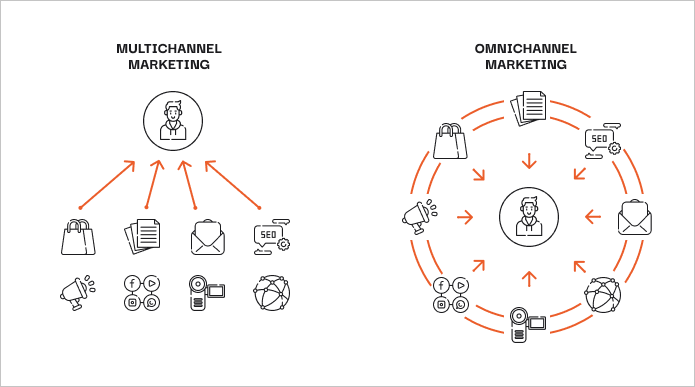
Today, multichannel selling comes in two main models: Multi-channel and Omni-channel.
The Multi-channel Selling Model
Multichannel is a model that uses multiple sales channels, either online or offline. The five main sales channels are:
-
Retail stores.
-
Social platforms: Facebook, Instagram, Zalo, etc.
-
The company's website.
-
E-commerce marketplaces: Shopee, Lazada, etc.
-
Sales teams and sales collaborators.
Multichannel uses several sales channels to reach customers rather than trying to create a seamless experience for the buyer. As a result, the channels lose their cohesion. The company needs a management approach that keeps its sales channels effectively unified, smooth, and consistent.
The Omni-channel Selling Model
Omni-channel is a model for businesses that sell across multiple different platforms — from websites, social media, and e-commerce marketplaces to retail points of sale.
What sets Omni-channel apart is its customer-centric approach, which creates a seamless shopping experience. As a result, activities across channels are more tightly connected. All product and promotion information is synchronized and applied across every platform. This helps the company manage its stores better, enhances the customer's omnichannel experience, and links the channels into a closed loop.
Benefits of Multichannel Selling
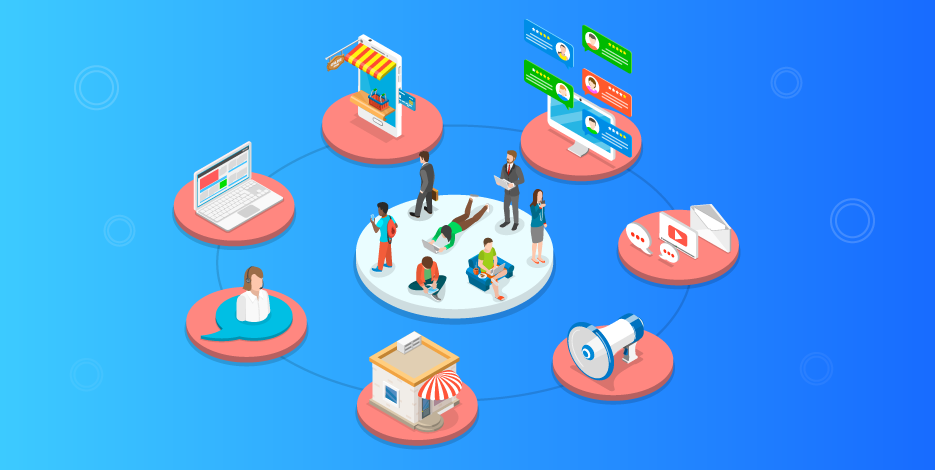
Building, maintaining, and running a multichannel sales operation is quite costly. That is why many businesses wonder whether multichannel selling is worth it. To help you answer that question, here are the main benefits this model delivers.
Increased Sales
Customers today tend not only to buy in offline channels but also to use online channels as a primary tool. The more sales channels you have, the easier it is to reach more buyers.
This is especially true now, when more and more customers are in the habit of shopping online on Facebook, websites, e-commerce marketplaces, and so on. As a result, sales will grow far more than if you sold through a single channel only.
Better Customer Experience
What customers want most is a great shopping experience across all of a business's sales channels. They hope to find products on every platform and receive equally good service regardless of the channel.
Instead of having to visit retail locations, buyers can now easily access services and products on online channels — convenient and fast, while still enjoying benefits comparable to buying in person.
Collecting and Analyzing Customer Data
Thanks to the customer information gathered across channels, you can collect and analyze buyer behavior, then develop sales and marketing strategies that fit accordingly.
The Most Effective Multichannel Selling Trends Today
Enhancing the Shopping Experience on Websites with AR
One of the biggest obstacles when customers choose and buy products online is that they cannot see and try the product in person. That is why many businesses have adopted augmented reality technology to improve the customer experience. Buyers can try out an item to see whether it suits them before purchasing.
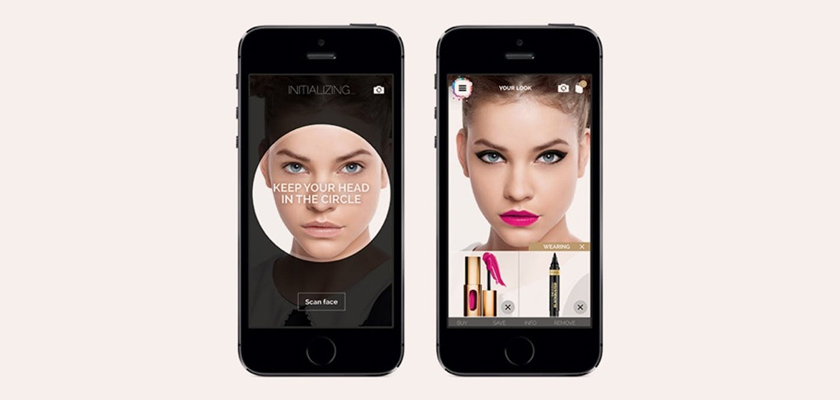
Take L'Oreal — a company that manufactures and distributes cosmetics for women — which has successfully applied AR. It lets customers upload a photo and try makeup products such as lipstick and foundation on their own face. Customers get to see which product suits them best.
Online Checkout Across Channels
In today's era, contactless shopping and payment are becoming an ever-growing trend. For online shopping, paying with e-wallets such as Momo, ZaloPay, and ShopeePay, or via online banking apps, is increasingly common. Even at offline stores, more and more people are choosing online payment: customers simply scan a QR code with their phone, enter the amount on the bill, and complete the transaction in seconds.
Livestream Selling
Livestreaming is a standout trend in multichannel selling. Sellers broadcast live and review their products. Buyers interact with the seller by commenting under the live video. This way, customers get a clearer view of the products and learn about their uses through the seller's promotion and introduction.
Selling Through Social Media
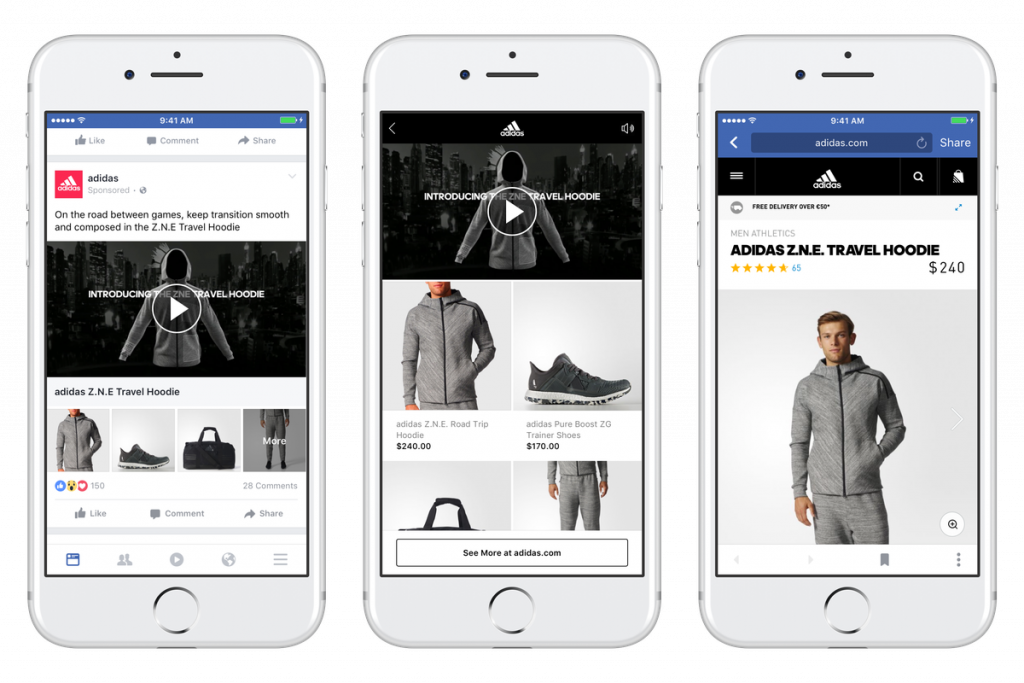
Social media pages like Facebook, Instagram, and Zalo are no longer just places for exchange, socializing, and entertainment — they have become optimization tools for businesses and stores.
Beyond posting engagement content and promoting products, sellers can use Facebook Shop or Instagram Shopping as effective sales channels. Customers can scroll through social media and buy directly on the spot, while sellers reach more customers with ease.
Video as an Optimization Tool
With the rise of TikTok, short videos have become an entertainment trend that reaches a huge audience. Sellers can use video as a tool to promote and sell their products.
Videos should be short — under one minute — with engaging, concise content. You can use TikTok or video shooting and editing software to introduce and advertise products, then post them on social platforms.
How to Sell Across Multiple Channels Effectively in Vietnam
Selecting and Building Your Sales Channels
The first thing a business owner should do before multichannel selling is to select, build, and optimize the sales channels — especially online ones. These can include Facebook, Zalo, e-commerce marketplaces, a multichannel e-commerce website, and more. Depending on the target customers, the product, and the available budget, the business chooses suitable channels. That said, to reach more customers, the company should use as many of the most popular online sales channels as possible. Adding retail locations is even better.
Creating Consistency Across Channels
Each sales channel may require its own tailored optimization approach. However, all channels must share one consistent theme that clearly expresses the company's character, features, and vision. Store owners should pay attention to elements such as sharp images, lively videos, and SEO-standard content. To ensure the best possible customer experience, the company also needs to synchronize promotions and customer care policies across all platforms.
Designing a Multichannel Strategy
In addition, business owners should apply a few effective selling strategies across every platform — for example, free samples, cross-selling, and up-selling. Using these smart, skillful multichannel selling techniques helps a business reach more customers and increase revenue for its own store.
A Multichannel Selling Process for Every Business
Analyzing and Understanding Customers
Customers are at the center of all business activity. To use a multichannel selling platform effectively, you must truly understand buyers' psychology and consumption behavior. Using the internal data your company collects, along with market reports and figures, the business can sketch a clear customer profile. From there, the company knows which approach works best and can formulate a fitting strategy.
Segmenting Customers
Every customer has different characteristics. The seller's job is to classify each customer segment, identify the most important one, and focus effort there. Beyond that, the business needs to study each segment's buying journey to analyze purchasing behavior and pinpoint where customers run into problems. The company can apply the AIDA marketing funnel model to study the buying journey more effectively. Under this model, the buying process consists of four stages:
-
Attention: The business aims to capture customers' attention. This is the stage where buyers first see the company's information and become curious about you.
-
Interest: The business piques customers' interest. If successful, buyers will begin researching the company and its products.
-
Desire: The company's task is to influence customers' psychology to persuade them to use your products and services. Buyers will develop a desire to purchase the items you sell.
-
Action: This is the final, decisive stage. The business must make strong calls to action to stimulate purchases. If successful, the buyer checks out and completes the purchase.
Selecting and Building Your Sales Channels
Once you know who your potential customer base is and understand their shopping behavior, the business must research and select suitable sales channels. For example, when choosing an online selling platform suited to customers under 25, Instagram can be an effective channel. Conversely, Instagram does not suit customers over 30 — in that case, the business should go with Facebook instead.
After choosing the right multichannel selling platform, the company needs to plan content for each channel and start selling on them. Remember: you must use one consistent theme across all channels, and apply a single shared promotion program and customer care policy.
Personalization
Customers always want to buy products with features and characteristics relevant to them. Many are even willing to spend more to own personalized items. Therefore, the business needs to study each customer group and build a plan to personalize its products. You don't necessarily have to create a new product.
Simply applying a few techniques — such as suggesting related products or "customers may also like" items — can encourage customers to buy more. Another approach many store owners use is creating combos tailored to each person's needs. Instead of researching and buying items separately, customers can purchase a package that meets their wants right away.
Multichannel Sales Management
Because it sells across multiple platforms, a business needs to manage multichannel sales effectively. You need to find the optimal way to keep products, order information, and data unified and synchronized, so as to avoid mix-ups or lost orders. Typically, businesses build an e-commerce website and integrate it with other management software, such as SimERP.
Tracking and Checking Metrics
The business needs to identify which metrics matter most to its operations, then monitor and analyze them to quickly spot emerging problems. These metrics also serve as a compass that helps the business set goals and chart its future.
The Best Multichannel Selling Software Today
To boost business efficiency, companies should use a multichannel selling system that suits them. The market currently offers several quality products at reasonable prices.
XSale
XSale is one of the most popular online multichannel selling software today. It is trusted by many businesses thanks to a friendly interface and powerful features that support managing sales operations.
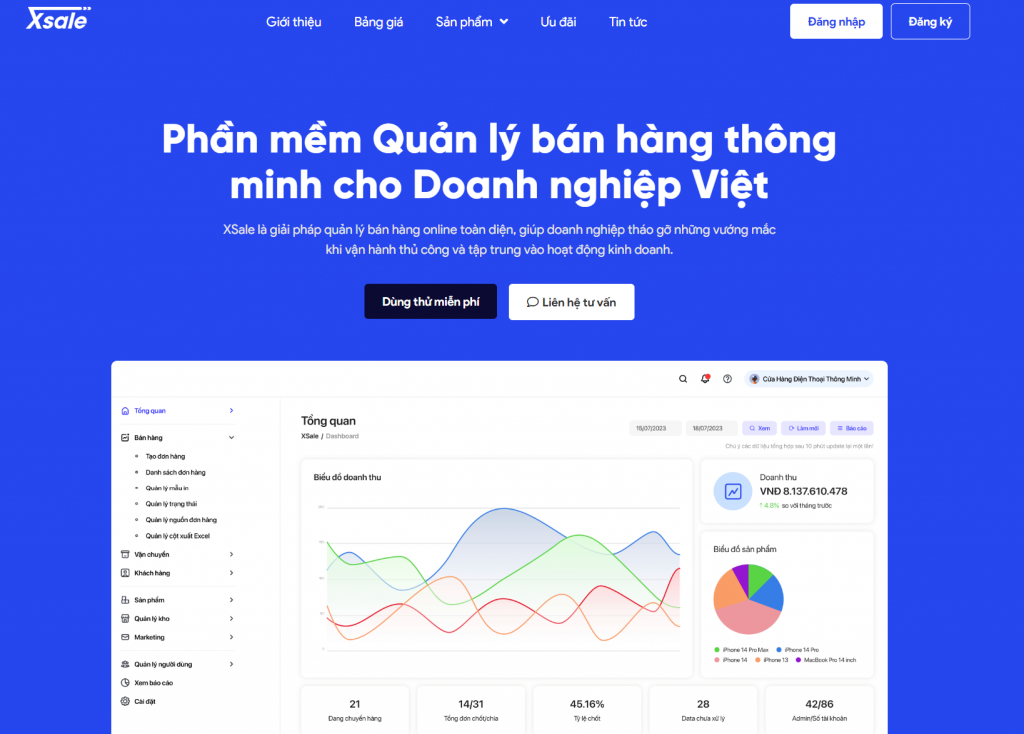
Its standout features include:
-
Synchronizing product, order, and inventory data with third parties, making it easier to manage message and order data.
-
Integration with many reputable shipping providers.
-
Detailed sales report templates that let businesses track their operations conveniently and easily.
-
Absolute security, preventing leaks of the company's transactions and important data.
-
Low cost — just 99,000 VND/month — accessible to nearly every business.
SimERP
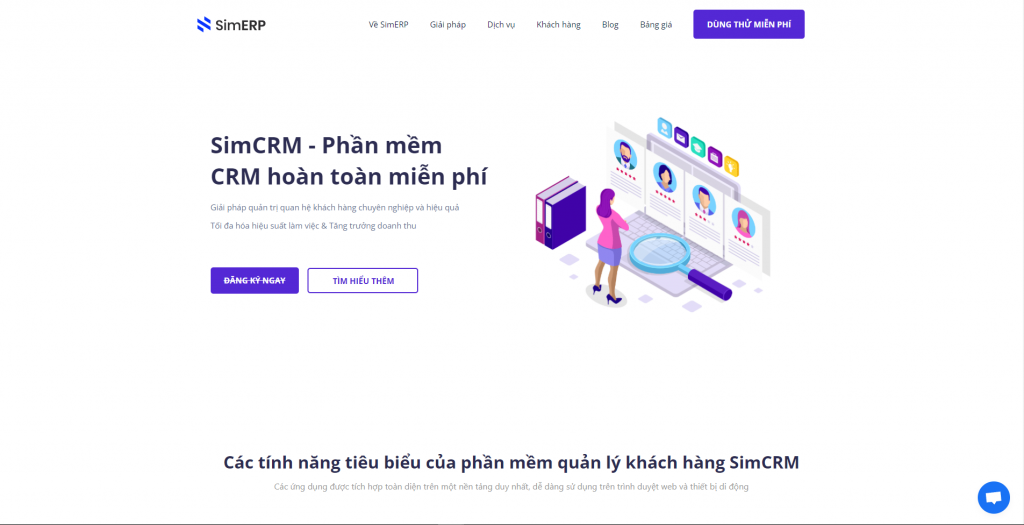
SimERP is a multi-platform business management solution that helps companies control both online and offline sales activities. Its main functions include:
-
Product management: Check detailed information on items by group.
-
Order control: Automatically update order status.
-
Customer information management: Store customer information and customer status by product.
-
Automated reporting: Updates on revenue, work productivity, customer volume, and more.
-
Integration with other systems and platforms: Users can add features and platforms to optimize sales management.
SimERP is currently offering a free trial of its SimCRM customer management feature. With just a few simple registration steps, you can experience one of the most optimal multichannel sales management solutions available today.
Haravan
Renowned as one of the effective multichannel selling solutions, Haravan is trusted by many merchants. Its standout features:
-
Customer management: customer information across online and offline platforms is synchronized, so businesses understand customers' characteristics, shopping behavior, and needs.
-
Order processing: with Haravan, businesses can receive and fulfill online orders quickly.
-
Shipping management: Haravan's software integrates with shipping providers' services, letting businesses track deliveries.
-
Inventory management: information on remaining stock is updated regularly.
-
Report generation: collects and reports revenue-related data accurately and in detail.
KiotViet
KiotViet software is quite familiar to small and medium-sized businesses. With a clean interface and easy-to-use features, KiotViet is a sensible choice for many companies. Its standout features include:
-
Setting up and building promotion programs
-
Goods management: businesses can check and monitor product information in unlimited quantities.
-
Cloud-based data storage.
-
A user-friendly mobile version.
-
Integration with various devices: computers, receipt printers, barcode scanners, and more.
Sapo

This is one of the most popular multichannel sales management platforms today, especially among retail store operators. Its standout features include:
-
Shipping management: integrates with shipping providers so you can check delivery status.
-
Facebook integration: users can manage business activities and interact with customers on Facebook.
-
Fast payment and order creation.
-
Integration with various devices: receipt printers, barcode scanners, and more.
-
Inventory management: stock information is fully updated every day. In addition, the software checks the quantities of goods leaving and entering the warehouse in detail.
Multichannel selling is a popular model that will only keep growing in the future. It will be the most effective approach for every business. In the article above, SimERP has provided multichannel selling guidance, along with strategies and processes for multi-platform business. We hope that with this content, your business has found the approach that works best for you.
Related Articles
Bài viết liên quan

25 tháng 10, 2026 · 3 phut doc
2024年网页设计趋势预测如何? | Wotech Electronics
关于 2024 年网页设计趋势——步入 2024 年,年初正是我们为新事物预留时间的时刻。这也非常适合设计师群体唤醒我们内心的"艺术之魂"。闲话不多说,快来和 Markdao 一起浏览 2024 年的 UX/UI 设计趋势吧,说不定您就能为自己接下来的网页设计项目"迸发"出一个绝妙的点子呢!

25 tháng 10, 2026 · 1 phut doc
什么是网站(Website)?网站的详细定义及其带来的商业价值
什么是网站(https://www.markdao.com.vn/blog/website-la-gi)——这个问题或许已经无需定义,因为在如今这个信息时代,网站对每一家企业而言都是不可或缺的组成部分。正是网站帮助用户更近距离地接触企业所提供的产品和服务,从而提升经营效益。此外,要在当今竞争如此激烈的环境中求发展,网站是一个重要因素,它将带你走向品牌与销量上的双重成功。

25 tháng 10, 2026 · 1 phut doc
什么是SEO标准网站?一场"打赢"Google SEO标准的战役 | Wotech Electronics
99%的用户在购买前会先搜索信息,73%的用户只会访问排名前10的网站,并认定它们是值得信赖的品牌……在数字营销爆发的时代,这些数字有力地印证了SEO标准网站的重要性。然而,许多人对什么是SEO标准网站(https://www.markdao.com.vn/blog/huong-dan-toi-uu-seo-website-chuan-seo-on-page)仍然相当模糊,并未真正理解。达到SE…