Common Customer Types in Marketing and Commerce | Wotech Electronics
Vũ Khôi
Tác giả tại Wotech Electronics Blog
Common Customer Types in Marketing and Commerce
Vu Khoi
Author at Wotech Electronics Blog
In reality, not all customers share the same personality or the same shopping and consumption habits. Depending on their tastes and personalities, they will have different expectations and needs regarding a product/service. At this point, the most important task for a business owner is to recognize customer personalities and buying behaviors in order to divide them into different customer types, so they can be reached and attracted effectively.
Let's explore the most common customer types with SimERP in the article below!

Why Segment Customers into Different Types?
Did you know that 50% of customers would have chosen you over your competitor — but they went with your competitor because it seemed like a better fit and met their needs better?
So why do your customers feel dissatisfied with your service?
The most prominent answer is that you are approaching different customer types in the same way.
If you don't segment your customers strategically and approach them appropriately, things will go wrong. You will certainly lose many loyal customers and a large share of sales.
Moreover, once you can divide customers into different types, it also becomes easier to manage and take good care of them. For each customer group, the business can have its own suitable care policy to build trust and loyalty, making an impression so that they choose you when the need arises.
Segmenting customers also lets the business craft sales and marketing strategies tailored to each audience, stimulating purchases and increasing profits.
Customer Types in Business
In today's digital business environment, reaching the right customer at the right time is far more effective than taking a mass-market approach. Research shows there are 5 types of customers in business, and each requires slightly different approaches to attraction and retention.
Customer Types by Personality

The main reason businesses fail is failing to grasp customer personalities. Each customer has a different personality and therefore a different customer journey. However, research identifies the following three groups.
"Director" Customers
This group refers to people with serious, decisive personalities who like to compete. They usually think things over before buying and are always aware of what they're doing. They are also competitive by nature and always want influence. So in their shopping habits, this group is demanding, exacting, perfectionist, and thorough when choosing a product/service to use. Of all the customer types, salespeople are usually reluctant to deal with this group.
With this group, the best approach is to clarify the most useful, optimal features and functions of your product/service, and show them your brand's competitive advantages over the market. Because they are very demanding and perfectionist, you need to present solid evidence to earn their trust. You should also express appreciation and align yourself with the points you make.
"Amiable" Customers
"Amiable" customers are among the most common customer types. What businesses should care about most when approaching this audience is building solid trust with them. These are highly emotional customers who live by their feelings. Unlike the "director" group above, this group usually makes buying decisions based on feelings, intuition, and the service attitude of staff.
So make an effort to care for and attend to them thoughtfully when they show interest in your products and services. During the conversation, listen attentively to their wishes, needs, and the problems they're facing. With this customer group, sincerity and enthusiasm are what it takes to win them over.
Indifferent, Undecided Customers
These customers are very hard to persuade by urging or pressuring on price. They don't have any specific item on their shopping list but want to buy whatever looks good and effective at that moment. Handling these customers is a challenge, because they aren't specifically looking for one product and want the business to display all its useful products laid out in front of them so they can buy what they like. If these customers are approached and cared for appropriately, there is a high chance they will become loyal, regular customers of the business.
Segmenting Customers by Buying Psychology
Appearance-Driven Customers
For the group of customers who care mainly about a product's looks — it's beautiful, it's premium, it's exquisitely designed — the business needs to analyze and filter out the group with these shared tastes, then focus on developing products that meet their needs.
Deal Hunters
This is the most easily recognizable group among all the customer types in business. This group tends to care mainly about prices and promotional offers. While they don't bring the business much profit, they are a source of consumption for inventory/hard-to-sell items.
Focused on Service Attitude
This group of customers is difficult to please, but if you know how to please them, they will become loyal customers devoted to your brand. With this group, the business needs a professional, tactful team of consultants and customer care staff.
Wanting the Latest Products
This group likes chasing the newest trends and always wants to be the first to experience the latest products/services. This group is fairly easy to reach — the business simply needs to invest in product innovation and new product experience services.
Customer Types by Value Delivered
Loyal Customers
This group contributes up to 70% of a business's revenue compared with the other customer types in commerce. They already trust and are loyal to your brand. That is why the business needs special policies to retain them.
Potential Customers
These are people who have been and are using the business's products/services, or people who currently have a need to use them. This group will deliver benefits in the future if the business has the right strategy and policies.
Low-Value Customers
This group of customers brings in only low revenue. They usually focus only on small-value products/services.
Negative Customers
This group is demanding and may only buy once. But the business's job at this point is to listen and resolve their unpleasant issues quickly and tactfully. This action demonstrates the professionalism of the business — who knows, from that experience the customer may see things differently and come to trust the brand.
Customer Types in Marketing
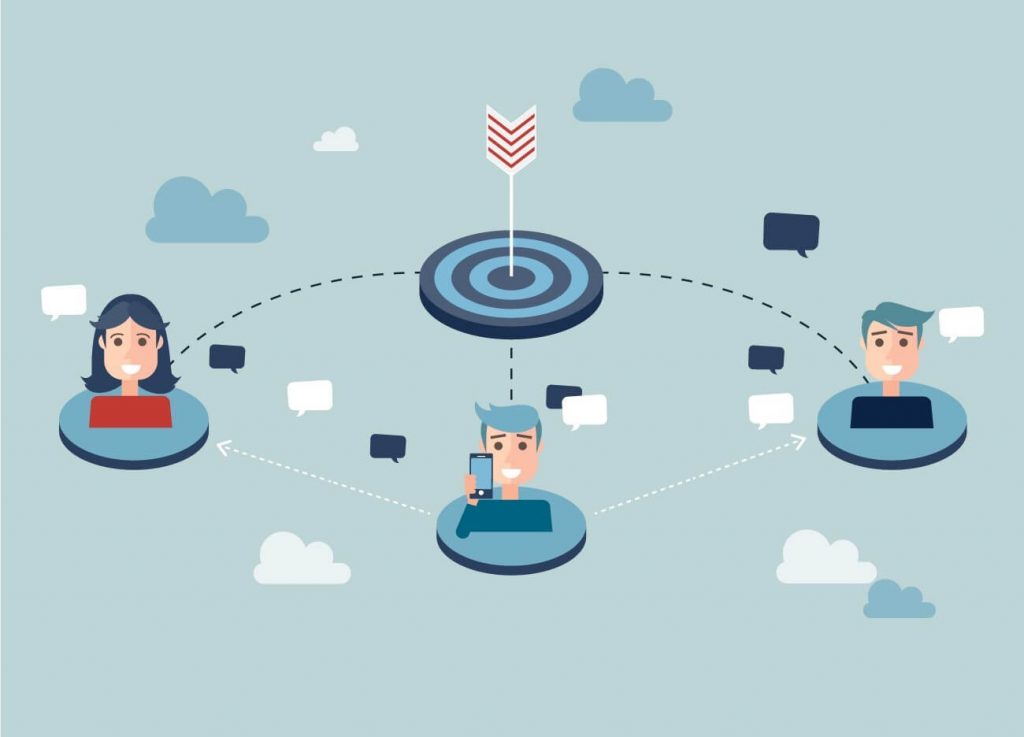
Marketing strategies in the past relied mainly on a single approach for all customers, where the most important thing was broadcasting the message to as many people as possible. But today's market requires businesses to communicate in a more targeted way. Therefore, in marketing, customers are divided into two types: target customers and non-target customers.
Target Customers
Target customers are among the most important customer types that marketers must identify before building marketing strategies. This group consists of the people the business aims at: they must have a need for the product/service and, most importantly, must be able to pay for those products/services.
To reach this type of customer, marketers usually have to search for them based on specific factors such as location, age, income, and more.
For example: if your business sells home appliances and kitchenware, you will certainly want to attract homemakers and women with enough income to pay for the products, located in an area you can deliver to.
Once you've identified your target customer group, it becomes easy to reach and attract them through media channels with quality, engaging content and products.
Non-Target Customers
Meanwhile, non-target customers are people who are not among the business's targets: they have no need for your product/service or cannot afford it.
Use a Strategy for Each Different Customer Type!
Segmenting and approaching different customer types is an art. To succeed, it demands patience from you and your sales team, along with an understanding of customers' personalities and buying behavior. We hope this article gives you a clearer picture of your customer profile. Apply that knowledge to change behavior, stimulate their shopping demand, and increase revenue for the business.
Related Articles
Bài viết liên quan

25 tháng 10, 2026 · 3 phut doc
2024年网页设计趋势预测如何? | Wotech Electronics
关于 2024 年网页设计趋势——步入 2024 年,年初正是我们为新事物预留时间的时刻。这也非常适合设计师群体唤醒我们内心的"艺术之魂"。闲话不多说,快来和 Markdao 一起浏览 2024 年的 UX/UI 设计趋势吧,说不定您就能为自己接下来的网页设计项目"迸发"出一个绝妙的点子呢!

25 tháng 10, 2026 · 1 phut doc
什么是网站(Website)?网站的详细定义及其带来的商业价值
什么是网站(https://www.markdao.com.vn/blog/website-la-gi)——这个问题或许已经无需定义,因为在如今这个信息时代,网站对每一家企业而言都是不可或缺的组成部分。正是网站帮助用户更近距离地接触企业所提供的产品和服务,从而提升经营效益。此外,要在当今竞争如此激烈的环境中求发展,网站是一个重要因素,它将带你走向品牌与销量上的双重成功。

25 tháng 10, 2026 · 1 phut doc
什么是SEO标准网站?一场"打赢"Google SEO标准的战役 | Wotech Electronics
99%的用户在购买前会先搜索信息,73%的用户只会访问排名前10的网站,并认定它们是值得信赖的品牌……在数字营销爆发的时代,这些数字有力地印证了SEO标准网站的重要性。然而,许多人对什么是SEO标准网站(https://www.markdao.com.vn/blog/huong-dan-toi-uu-seo-website-chuan-seo-on-page)仍然相当模糊,并未真正理解。达到SE…