How to Account for Imported Goods Under Circular 200 – Updated 2022 | Wotech Electronics
Vũ Khôi
Tác giả tại Wotech Electronics Blog
How to Account for Imported Goods Under Circular 200 – Updated 2022
Vũ Khôi
Author at Wotech Electronics Blog
Imported goods are goods produced abroad and brought in through Vietnamese border gates. During a business period, if costs arise for imported goods, how should they be accounted for, and how does this differ from ordinary goods? Let's find out with SimERP!
How to account for imported goods under Circular 200
When purchasing imported goods: the accountant must file a Customs declaration and pay import duty and special consumption tax (if any).
Import duty: a tax levied on goods imported into Vietnam. When the goods arrive at the border gate, customs officers inspect the goods, cross-check them against the customs declaration, and calculate the import duty payable under the regulations.
For the goods to be cleared and circulated domestically, the importing company must pay import duty (account: 3333).
Special consumption tax: an indirect tax levied only on certain products and services toward which the State has consumption-guidance policies. Special consumption tax usually applies high tax rates with the aim of regulating the income of individuals who consume these special goods and services. Goods and services subject to special consumption tax include: cigarettes, wine, beer, cigars, nightclub operations, massage, karaoke, golf, lottery operations, etc. (account: 3332).
If these two taxes apply, they are added to the original cost of the goods or services.
Which exchange rate is used to account for imported goods?

When a transaction arises in foreign currency, the accountant must convert it into Vietnamese dong at the actual transaction exchange rate of the commercial bank where the company holds its account, following these principles:
-
The actual transaction rate for calculating revenue is the buying rate of the commercial bank where the taxpayer holds an account.
-
The actual transaction rate for calculating expenses is the selling rate of the commercial bank where the taxpayer holds an account, at the time of the foreign-currency payment transactions.
When payables to account 331 arise:
For payables denominated in foreign currency:
When a payable to a supplier arises (credit side of account 331) in foreign currency, the accountant must convert it into Vietnamese dong at the transaction rate at the time it arises (the selling rate of the commercial bank with regular transactions).
In the case of an advance payment to a supplier, once the conditions for recognizing the expense are met, the credit side of account 331 applies the actual specific book rate for the amount already advanced.
When paying payables to a supplier (debit side of account 331) in foreign currency, the accountant must convert into Vietnamese dong using the exact actual book rate for each specific creditor. (If the creditor has multiple transactions, the specific actual rate is determined based on the moving weighted average of that creditor's transactions.)
In the case of a transaction advancing money to a supplier, the debit side of account 331 applies the actual transaction rate (the selling rate of the commercial bank with regular transactions) at the time of the advance.

When making payment, if:
– Paying liabilities denominated in foreign currency, and the book rate on the ledgers of the payable accounts is lower than the rate recorded on the ledgers of accounts 111 and 112, record:
-
Debit account 331... (book rate).
-
Debit account 635 – Financial expenses.
-
Credit account 112 (at the book rate or the bank's foreign currency buying rate).
– Paying liabilities denominated in foreign currency, and the book rate on the ledgers of accounts 111 and 112 is lower than the book rate of the payable accounts, record:
-
Debit account 331... (book rate).
-
Credit account 515 – Revenue from financial activities.
-
Credit account 112 (at the book rate or the bank's foreign currency buying rate).
How to account for imported goods
When importing goods, materials, or fixed assets
Accounting reflects the value of imported goods, materials, and fixed assets, including the total amount paid to the supplier (at the actual transaction rate), special consumption tax, import duty, and environmental protection tax payable. Record:
-
Debit accounts 152, 153, 156, 211
-
Credit account 331 – Payables to suppliers
-
Credit account 3332 – Special consumption tax
-
Credit account 3333 – Import duty (import duty detail)
-
Credit account 33381 – Environmental protection tax
-
Credit accounts 111, 112, 331...
Deductible input VAT on imported goods, record:
-
Debit account 1331 – Deductible value-added tax
-
Credit account 33312 – VAT on imported goods
When paying taxes to the State Budget – Based on the State Budget payment receipt, record:
-
Debit account 33312 – VAT on imported goods
-
Debit account 3332 – Special consumption tax.
-
Debit account 3333 – Import duty (import duty detail)
-
Debit account 33381 – Environmental protection tax
-
Credit account 1111 / account 1121
When the imported goods arrive at the company, account for:
-
Debit accounts 156/152/153/211
-
Debit account 1331 (if any)
-
Credit accounts 1111 / 1121 / 331
How to calculate import duty, VAT on imported goods, and special consumption tax
Taxable value
The taxable value is the CIF price: the purchase price including transport and insurance fees (the buyer does not need to pay any additional costs).
Taxable value = CIF price
The taxable value is the FOB price: the purchase price excluding transport and insurance fees (the buyer must pay additional transport and insurance fees).
Taxable value = FOB price + Transport fee + Insurance fee (if any)
Import duty
Formula for calculating import duty:
Import duty = Quantity x Taxable value x Import duty rate
The import duty rate: the tax rate for the dutiable goods specified in the tariff schedule under Circular No. 164/2013/TT-BTC, as amended by Circulars 173/2014/TT-BTC and 213/2014/TT-BTC.
Special consumption tax on imported goods
Special consumption tax on imported goods = Special consumption tax taxable value x Special consumption tax rate
Where:
-
Special consumption tax taxable value = Import duty taxable value + Import duty
-
Special consumption tax rate: the tax rate for the dutiable goods specified in the tariff schedule
VAT on imported goods
Formula for calculating VAT on imported goods:
VAT on imported goods = Taxable value + Import duty + Special consumption tax (if any) x VAT rate %
Example 1: Company A imports a lot of 500 air conditioners at a unit price of 200 USD per unit, with the lot worth 100,000 USD in total. There are 3 possible scenarios as follows:
Scenario 1: Paying the supplier in full in advance
– On January 1, 2021, payment in full: 10,000 USD (the selling rate of Vietcombank, where the company holds its transaction account, that day was 21,000).
-
Debit account 331: 100,000 x 21,000
-
Credit account 112: 100,000 x 21,000
– On January 2, 2021, the lot arrives at Hai Phong port (the rate on the declaration is 21,500; this rate must NOT be used to account for the value of the lot — it is only for the Customs authority to calculate import duty, special consumption tax, and VAT).
-
Debit account 156: 100,000 x 21,000 (at the advance payment date rate of 21,000)
-
Credit account 331: 100,000 x 21,000
Scenario 2: Paying the supplier in multiple installments
– On January 1, 2021, partial prepayment: 40,000 USD (the selling rate of Vietcombank, where the company holds its transaction account, that day was 21,000).
-
Debit account 331: 40,000 x 21,000
-
Credit account 112: 40,000 x 21,000
– On January 2, 2021, the lot arrives at Hai Phong port (the selling rate of Vietcombank, where the company holds its transaction account, that day was 21,500).
-
Debit account 156: (40,000 x 21,000) + (60,000 x 21,500)
-
Credit account 331: (40,000 x 21,000) + (60,000 x 21,500)
– On January 10, 202, paying the remaining amount to the supplier: 60,000 USD (the selling rate of Vietcombank, where the company holds its transaction account, that day was 21,200).
-
Debit account 331: 60,000 x 21,500 = 1,290,000,000 (Only the difference from January 2 is taken)
-
Credit account 112: 60,000 x 21,200 = 1,270,200,000
-
Credit account 515: 60,000 x (21,500 – 21,200) = 10,800,000
Scenario 3: Paying the supplier in full afterward
– On January 1, 2021, the lot arrives at Hai Phong port (the selling rate of Vietcombank, where the company holds its transaction account, that day was 21,500).
-
Debit account 156: 100,000 x 21,500
-
Credit account 331: 100,000 x 21,500
– On January 8, 2021, paying the supplier in full (the selling rate of Vietcombank, where the company holds its transaction account, that day was 21,800).
-
Debit account 331: 100,000 x 21,500 = 2,150,000,000
-
Debit account 635: 100,000 x (21,800 – 21,500) = 30,000,000
-
Credit account 112: 100,000 x 21,800 = 2,180,000,000
Accounting for non-commercial imports
What are non-commercial imports?
Non-commercial imports are imported goods that carry no commercial purpose, are not on the list of goods banned from import, and are imported under a License from the specialized management authority. Non-commercial imported goods must pay tax before customs clearance and include the following types of goods:
-
Gifts from individuals or organizations abroad sent to individuals or organizations in Vietnam, and vice versa.
-
Goods of international organizations, diplomatic missions in Vietnam, and people working at those agencies and organizations.
-
Humanitarian aid goods.
-
Temporary imports by individuals granted tax exemption by the State.
-
Unpaid sample goods.
-
Working equipment and professional tools of people entering and exiting the country.
-
Other non-commercial goods.
Input tax deduction on non-commercial imported goods
If goods are imported using a non-commercial export/import customs declaration and there is no payment voucher, input VAT cannot be deducted. The reason is that goods imported under a non-commercial export/import customs declaration are not goods purchased for commercial purposes, so no payment obligation arises and there is no contract or invoice evidencing a sale.
How to account for non-commercial imports
Tax payment:
-
Debit account 333312
-
Credit account 1111 (or account 1121)
Expense accounting:
-
Debit account 642
-
Credit account 3333
-
Credit account 33312
-
Credit account 1111 (or account 1121)
Income accounting:
-
Debit account 211 (accounts 152, 156, etc.)
-
Credit account 711
Accounting for entrusted imports
The concept of entrusted import
Entrusted import is a form of activity for import companies that do not yet qualify for direct import licensing — for example, companies that do not yet have deep knowledge of the market or partners, or lack the ability to negotiate and sign foreign contracts.
In that case, these companies must entrust their import operations to direct import companies (the entrusted import company). Once the entrusted work is completed, the entrusted import company receives an entrustment commission at a regulated percentage, calculated on the value of the lot and the degree of entrustment. In this relationship, the entrusting company is the service user, and the entrusted company is the service provider.
How to account for entrusted imports
When receiving money from the entrusting company to open a letter of credit (L/C)
If receiving Vietnamese dong:
-
Debit accounts 111, 112
-
Credit account 338 – Other payables (3388)
If receiving foreign currency:
-
Debit accounts 111, 112 (at the actual rate at the commercial bank at the time of the transaction)
-
Credit account 338 – Other payables (3388) (at the actual rate at the commercial bank at the time of the transaction)
When transferring a deposit to open the L/C
-
Debit account 244 – Pledges, deposits (at the actual rate at the commercial bank at the time of the transaction)
-
Debit account 1386 – Pledges, collateral, deposits (at the actual rate at the commercial bank at the time of the transaction)
-
Debit account 635 – Financial expenses (if there is an exchange rate loss)
-
Credit accounts 1112, 1122 (book rate)
-
Credit account 515 – Revenue from financial activities (if there is an exchange rate gain)
When receiving goods and delivering them to the entrusting company
When importing goods, equipment, and materials, the accountant does not record the value of the lot on the balance sheet, but instead tracks the entrusted import lot in the management system and discloses the lot's value in the notes to the financial statements.
Similarly to receiving goods, when returning goods, the entrusted lot is not recorded on the balance sheet but only reflected in the management system and disclosed in the financial statements.

Accounting for entrusted import payment transactions
Case of transferring the L/C deposit to pay the supplier part of the payment for the imported goods:
-
Debit account 138 – Other receivables (1388) (at the actual rate, if the entrusting company has not yet advanced money for the purchase)
-
Debit account 338 – Other payables and obligations (3388) (offset against the amount received from the entrusting company – at the rate when the money was received)
-
Debit account 635 – Financial expenses (if there is an exchange rate loss)
-
Credit account 244 – Pledges, deposits (book rate at the time of the deposit)
-
Credit account 1386 – Pledges, deposits, collateral (book rate at the time of the deposit)
-
Credit account 515 – Revenue from financial activities (if there is an exchange rate gain)
Case of paying the supplier the amount payable for the entrusted imported goods after deducting the deposited amount. Record:
-
Debit account 138 – Other receivables (1388) (at the actual rate, if the entrusting company has not yet advanced money for the purchase)
-
Debit account 338 – Other payables and obligations (3388) (offset against the amount received from the entrusting company – at the book rate when the money was received)
-
Debit account 635 – Financial expenses (if there is an exchange rate loss)
-
Credit account 112 (1122), etc. (at the book rate)
-
Credit account 515 – Revenue from financial activities (if there is an exchange rate gain)
Reflecting the import duty, VAT on imported goods, and special consumption tax payable to the entrusting company:
-
Debit account 1388 – Other receivables
-
Debit account 3388 – Other payables
-
Credit accounts 111, 112
Other amounts related to the entrusted import activity
-
Debit account 1388 – Other receivables
-
Credit accounts 111, 112...
When the transaction ends, offset the receivables and payables
-
Debit account 338 – Other payables (3388)
-
Credit account 138 – Other receivables (1388)
Applying technology to accounting for imported goods
In the Industry 4.0 era, human work is becoming easier, faster, and more automated. Accounting work is no exception: many tools and software have been developed to support accounting for imported goods, delivering high efficiency and ensuring accuracy, timeliness, and security.
Today's accounting software is fairly easy to use and not very different from one another; once you have mastered one, you only need a little time to pick up how to use the others.
Introducing SimERP software

SimERP is an Enterprise Resource Planning software built and developed on the Odoo platform — the world's most popular ERP software, with more than 16,000 powerful applications serving over 2,500 partners and 5 million customers worldwide.
SimERP's solutions
SimERP's applications are integrated on a single platform, easy to use on both mobile and web. Those applications include:
-
Project management: Managing multiple company projects at once.
-
Accounting management: Internal accounting management in accordance with Vietnamese accounting standards.
-
HR management: Managing recruitment and personnel information, attendance, and company facilities.
-
Retail management (POS): Supporting the management of retail store chains across multiple industries.
-
Customer relationship management (CRM): Professional, effective customer outreach and communication.
-
Sales management: Making the company's sales operations more professional and systematic.
-
Inventory management: Helping businesses control the quantity of goods in the warehouse for easier, more effective management.
-
Purchasing management: Managing the company's suppliers and purchase orders.
-
Manufacturing management: Production, maintenance, and product lifecycle management integrated on a single system.
SimERP's outstanding advantages
– Vietnam-standard accounting module: compliant with Circular 200 of the Ministry of Finance, suitable for every type of business in Vietnam.
– Powerful permission management: SimERP assigns user permissions according to different positions, roles, and job titles. As a result, users can access the system but will not see other people's data without the administrator's permission.
– Flexible adjustment of user numbers: SimERP was developed to provide a comprehensive management solution suite suitable for every type of business across all fields. Therefore, it can be used by startups as well as large enterprises.
– Diverse deployment models: Businesses can choose and deploy the following models:
-
On-premise: deployed on the company's own server with its own IT operations team.
-
On-cloud: deployed on the cloud platform without customization.
-
Hybrid: a combination of on-premise and on-cloud for application development.
SimERP's notable customers
SimERP has been and is delivering complete, effective solutions at highly competitive deployment costs, bringing success to many Vietnamese and foreign companies, including: Trung Nguyen Group, 24h VISA, Flexfit Furniture, Bibomart, Drinkies by Heineken...
Getting to know SimERP's Accounting module

SimERP's Accounting module is regarded as the optimal solution for measuring, tracking, and managing a company's accounting–financial and business situation.
Outstanding advantages
-
Compliance with Vietnamese accounting standards (VAS).
-
Invoice tracing and future cost forecasting.
-
Managing expenses, revenue, and contracts with corresponding payments.
-
Automatic configuration setup, suited to each company's accounting–financial system.
-
Internal accounting and tax accounting managed on a single system.
Key features
-
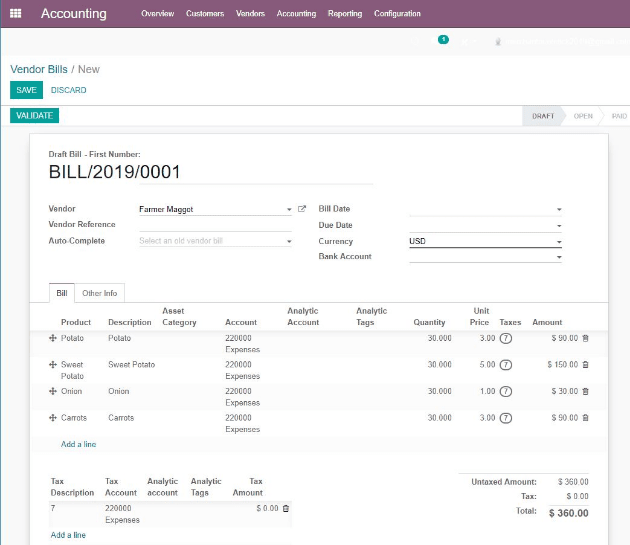
Sales accounting management: Automatically records the journal entries corresponding to purchase-sale and inventory transactions:
-
Invoices managed per order.
-
Tracking and managing refund invoices at different stages.
-
Managing supplier payments.
-
Managing payments and customer information.
-
Effective management of management accounting operations
-
Tight budget and revenue management.
-
General ledger entry management.
-
Effective management of asset entries.
-
Entering deferred revenue.
-
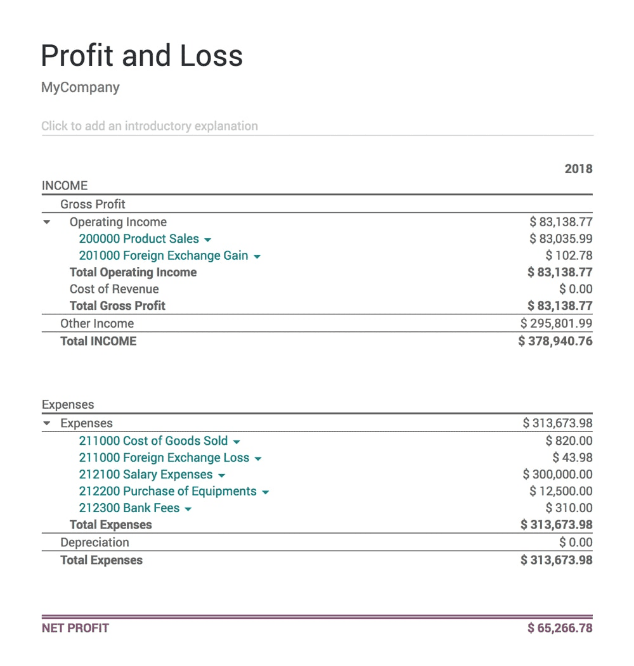
Fast, accurate report building:
-
VAT declaration reports and profit-and-loss reports.
-
Trial balance, cash flow statement, and general journal.
-
Budget reports and product profit-margin reports.
-
Asset reports and deferred revenue reports.
-
Flexible customization capabilities.
-
Powerful application integration: applications such as HR Management, POS Management, Purchasing Management, CRM Management, and Accounting are integrated on a single platform.
Conclusion
With the information in this article, we hope you have gained many useful insights into accounting for imported goods. If you have any further questions, leave a comment below this article so SimERP can give you a quick answer!
Related articles
Bài viết liên quan

25 tháng 10, 2026 · 3 phut doc
2024年网页设计趋势预测如何? | Wotech Electronics
关于 2024 年网页设计趋势——步入 2024 年,年初正是我们为新事物预留时间的时刻。这也非常适合设计师群体唤醒我们内心的"艺术之魂"。闲话不多说,快来和 Markdao 一起浏览 2024 年的 UX/UI 设计趋势吧,说不定您就能为自己接下来的网页设计项目"迸发"出一个绝妙的点子呢!

25 tháng 10, 2026 · 1 phut doc
什么是网站(Website)?网站的详细定义及其带来的商业价值
什么是网站(https://www.markdao.com.vn/blog/website-la-gi)——这个问题或许已经无需定义,因为在如今这个信息时代,网站对每一家企业而言都是不可或缺的组成部分。正是网站帮助用户更近距离地接触企业所提供的产品和服务,从而提升经营效益。此外,要在当今竞争如此激烈的环境中求发展,网站是一个重要因素,它将带你走向品牌与销量上的双重成功。

25 tháng 10, 2026 · 1 phut doc
什么是SEO标准网站?一场"打赢"Google SEO标准的战役 | Wotech Electronics
99%的用户在购买前会先搜索信息,73%的用户只会访问排名前10的网站,并认定它们是值得信赖的品牌……在数字营销爆发的时代,这些数字有力地印证了SEO标准网站的重要性。然而,许多人对什么是SEO标准网站(https://www.markdao.com.vn/blog/huong-dan-toi-uu-seo-website-chuan-seo-on-page)仍然相当模糊,并未真正理解。达到SE…