
What Is a CRM Strategy? The Factors That Influence a CRM Strategy | Wotech Electronics
Vũ Khôi
Tác giả tại Wotech Electronics Blog
What Is a CRM Strategy? The Factors That Influence a CRM Strategy
Vũ Khôi
Author at Wotech Electronics Blog
Choosing the right CRM strategy is one of the key goals for improving and maintaining long-lasting, sustainable relationships with customers. Building a CRM system requires a business to focus and continuously deepen its customer knowledge. So what steps does a business need to take to build a suitable and effective CRM strategy? Join SimERP as we find out in the article below!
What Is a CRM Strategy?
A CRM strategy is a customer relationship management framework that any business needs to understand in order to grow its operations. Building and developing a CRM strategy is the method that helps a business approach and communicate with customers more effectively and systematically.

A CRM database includes various types of information — accounts, needs, communications, and so on — to serve and care for customers better.
Why Building a CRM Strategy Matters
Although CRM is considered a foundation for delivering excellent customer experiences, implementing it is no simple matter. CIO Magazine (2017) once reported that roughly one-third of CRM projects fail. That figure ranges from 18% to 69%, and the reasons for failure include: insufficient budget, data synchronization problems, technology limitations, and — above all — the lack of a CRM implementation strategy.
What's more, for a business to interact with customers effectively, CRM must process a large volume of customer data and run many features, such as storing communications history; integrating with third-party platforms (email marketing, social media, etc.); creating reminders for each order; supporting reporting; tracking KPIs; and more.
That's why building an effective CRM strategy acts as a "guiding compass" for the business to achieve its long-term goals. It also enables management to make faster financial decisions, thereby optimizing revenue and boosting the productivity of the entire workforce.
Building a CRM Strategy

The Factors That Influence a CRM Strategy
A CRM strategy consists of 4 fundamental elements:
-
Business strategy
-
Customer strategy
-
Customer levels
-
The business's human factors
Business Strategy
Business strategy is the way of creating value — like a model that helps a business identify opportunities to deliver value to customers and turn that value into profit.

Building a business strategy is one of the first important steps in constructing the CRM strategy matrix, linking internal resources — people, knowledge, relationships, and competitive advantages — between the business and its customers.
To build an effective business strategy, the business needs to identify the internal factors, including the following sub-factors:
– Industry analysis: This analysis is based on criteria such as potential opportunities, customer power, company power, the threat of substitutes, the possibility of cooperation, competitor analysis, and the influence of technology, together with a macro-environment analysis. Each of these criteria affects the later customer strategy and CRM strategy.
-
Competitor analysis: Once you have defined the objective of your analysis, it's time to collect data. Although you can gather a great deal of valuable information from various sources, don't overlook reference sources from competitors — such as their advertising and product introduction materials. This data can provide detailed, useful insights into pricing, advertising budgets, and most of the sellable product features of competitors on the market.
-
Company power analysis: Assessing competitors' strengths and weaknesses through SWOT analysis also allows you to determine your position in the market. Combined with accurately identifying the advantages your company holds over competitors, you can anticipate future problems and adjust your strategy before they turn into a crisis. For example, you may need to revise prices, add features, or explore different markets to keep your goods ahead of the pack.
-
Customer power analysis: Get a precise understanding of whether your company is in a market with a shortage of customers, where buyers hold more power and can negotiate.
-
Substitute analysis: Every industry can fall victim to substitute goods or products over time. Examine the availability of substitute products and goods on the market and determine whether this poses an immediate threat to your business. Find out whether any competitor could easily copy your product or make it cheaper. This helps you come up with a new product that isn't easy to replace.
– Overview strategy model: The business must pay attention to several strategies concerning price and product, among others, because these strategies all affect the company's position in the market.
-
Product strategy is an extremely important component because it is the foundation of the business strategy. Any company entering a market will sell some type of product or service. That's why product strategy helps a business define its direction of development, then design products that fit customer needs and tastes while limiting potential risks.
-
Pricing strategy is one of the advanced strategies in marketing. Its goal is to set an attractive, competitive price for the company's products and services on the market. Pricing strategy is one of the 4 most important elements of the marketing mix, which includes product, price, place, and promotion.
Customer Strategy

After establishing its CRM strategies for business, the company relies on them to decide its customer strategy. You need to decide which industry to enter, which customer segments to serve, what the company's market position is, which strategic goals it will pursue to capture market share in the current market, and so on.
More specifically, within the customer strategy, the business needs to pay particular attention to the following factors when developing its CRM strategy:
-
Customer characteristics and segmentation: Based on defined criteria, the business will need to segment customers in order to deliver different values to them as thoroughly as possible. For each customer segment, the business will apply different approaches and CRM strategies. For B2B companies, customers are segmented by criteria such as industry, service, the added value the company provides to customers, and so on. For B2C companies, customers are segmented by age, gender, geographic location, and so on.
-
Product-market strategy: The business needs to define its product and target market strategy according to these criteria: serving an old or new market, serving old or new customers, or a new market with old customers. Each type of strategy involves different decisions and communication approaches.
-
Marketing strategy: The business needs to practice marketing according to either a Mass Marketing or a One-to-One Marketing strategy. In fact, if customer segmentation is done well, choosing a Mass Customization Marketing strategy will bring enormous advantages to the business.
By Customer Level
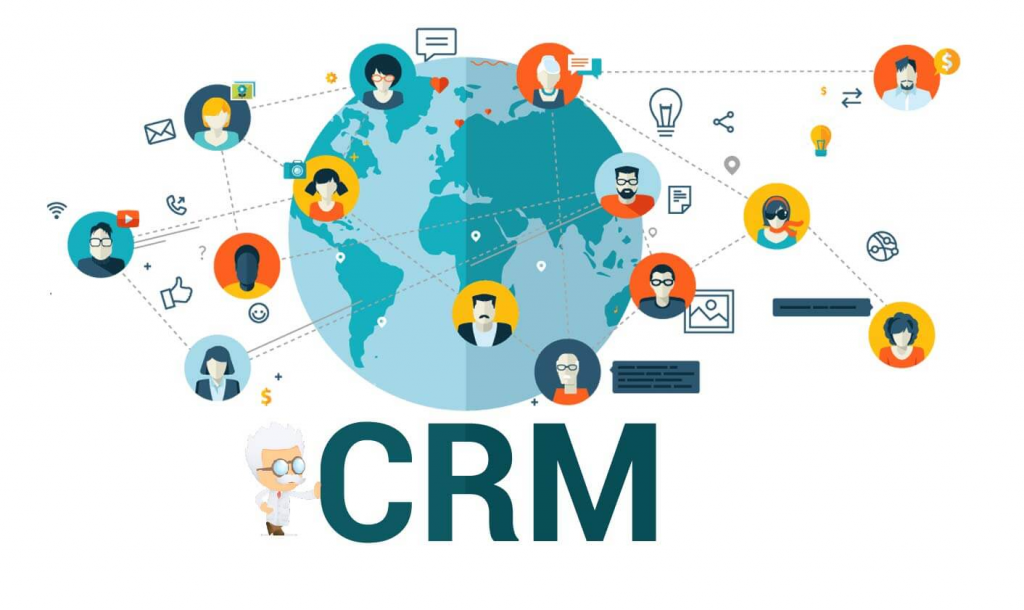
Alongside business strategy and customer strategy, the business also needs to consider customer levels to build an effective CRM strategy. Below are the 4 levels for developing a company's customers:
Level 1: Product-based selling
With this approach, the business focuses entirely on the product and distribution channels, with no attention to customers at all.
Level 2: Adding complementary services and customer support
At this point, the business begins to put more emphasis on customer support and care. This is also where differentiation between customers starts. The company can choose to build a customer service center system, manage simple customers, and implement automated sales and marketing.
Level 3: Collecting more detailed, higher-quality customer information
The business can begin implementing customer-based marketing strategies and focusing on customers' real needs in order to build loyalty to the product.
The business needs to build systems that manage customer information and behavior in detail to ensure a deeper understanding of them.
At this level, the business can carry out the following activities:
-
Assess customer potential
-
Closely monitor competitors' reactions
-
Effectively manage customer loyalty
-
Manage and tightly track potential risks
To accomplish the above, the business needs to analyze its customers in detail and thoroughly within each segment, while offering them different benefits.
Level 4: Personalized CRM strategy
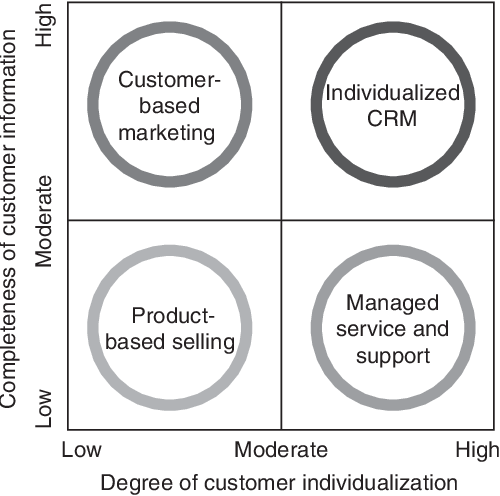
This can be seen as the ultimate goal when implementing a CRM strategy. Each customer receives a different kind of care and different value. At this stage, some activities a business can implement include:
-
One-to-One Marketing
-
Integrating a call center system
-
Developing automated sales processes
-
Managing all customer-related activities
Depending on the specifics of the industry, the business will choose the most suitable CRM strategy. Some companies take a shortcut from step 1 straight to step 4, while others move sequentially from step 2 or 3 to 4.
The Business's Human Factors
In any system, people remain the foremost and most important factor. That's why, to deploy a CRM platform effectively, both leadership and staff need to keep the following in mind:
-
Leadership: Clearly define the business's needs to choose a suitable CRM platform. In addition, management needs to agree on the scale and features of the system before and during the CRM rollout, and prepare thoroughly in terms of budget, technology, and personnel. Managers should also regularly encourage and push staff to adopt the new technology so that departments work more seamlessly and consistently.
-
Staff: Every employee needs to clearly understand their role and responsibilities. They must be trained, learn, and update the necessary skills to use the system optimally, thereby achieving high business performance and delivering excellent customer experiences. Beyond that, management should also give employees a voice in the decision to deploy the system. This helps the business build a platform that fits and truly meets the needs of its users.
Conclusion
Each business, based on its industry and its own characteristics, will choose the CRM strategies that suit it best. Choosing your own path and implementation steps is itself the CRM strategy.
In addition, businesses can look into the customer management and care software available on the market, which contributes to building a professional and positive image in customers' minds. If you are interested in or have any questions about SimCRM customer relationship management software, visit the homepage and sign up for a trial to experience SimCRM free for 1 month!
Related Articles
Bài viết liên quan

25 tháng 10, 2026 · 3 phut doc
2024年网页设计趋势预测如何? | Wotech Electronics
关于 2024 年网页设计趋势——步入 2024 年,年初正是我们为新事物预留时间的时刻。这也非常适合设计师群体唤醒我们内心的"艺术之魂"。闲话不多说,快来和 Markdao 一起浏览 2024 年的 UX/UI 设计趋势吧,说不定您就能为自己接下来的网页设计项目"迸发"出一个绝妙的点子呢!

25 tháng 10, 2026 · 1 phut doc
什么是网站(Website)?网站的详细定义及其带来的商业价值
什么是网站(https://www.markdao.com.vn/blog/website-la-gi)——这个问题或许已经无需定义,因为在如今这个信息时代,网站对每一家企业而言都是不可或缺的组成部分。正是网站帮助用户更近距离地接触企业所提供的产品和服务,从而提升经营效益。此外,要在当今竞争如此激烈的环境中求发展,网站是一个重要因素,它将带你走向品牌与销量上的双重成功。

25 tháng 10, 2026 · 1 phut doc
什么是SEO标准网站?一场"打赢"Google SEO标准的战役 | Wotech Electronics
99%的用户在购买前会先搜索信息,73%的用户只会访问排名前10的网站,并认定它们是值得信赖的品牌……在数字营销爆发的时代,这些数字有力地印证了SEO标准网站的重要性。然而,许多人对什么是SEO标准网站(https://www.markdao.com.vn/blog/huong-dan-toi-uu-seo-website-chuan-seo-on-page)仍然相当模糊,并未真正理解。达到SE…