
Digital Transformation in Retail: Benefits, Trends, and Solutions for Businesses in 2022
Vũ Khôi
Tác giả tại Wotech Electronics Blog
Digital Transformation in Retail: Benefits, Trends, and Solutions for Businesses in 2022
Vũ Khôi
Author at Wotech Electronics Blog
In the ever-advancing era of Industry 4.0, digital transformation is an inevitable trend for any retailer that wants to succeed. That trend became most evident when the Covid-19 pandemic broke out: customers shifted from traditional in-store shopping to online shopping. So what is digital transformation in retail, and what impact does it have? What is an effective digital transformation solution for businesses? Join SimERP as we explore this in the article below.
What you need to know about digital transformation in retail

Retail is the practice of buying products from manufacturers/wholesalers/retail companies and reselling them to end consumers. The retail market changes constantly because consumer habits and purchasing power shift unpredictably. Especially since the Covid-19 pandemic broke out, consumers have shown the following trends:
-
Moving from in-person shopping at physical points of sale to shopping online via the Internet.
-
Spending less cash and instead increasing electronic payments in many different forms, such as bank card payments, bank transfers, e-wallets, and more.
-
Using social media more heavily, visiting websites and e-commerce platforms to shop online, joining numerous promotional programs, hunting for discounted sales, and more.
These notable shifts are the clearest proof of how important digital technology is to retail businesses. So what exactly is digital transformation in retail?
What is digital transformation in retail?
Digital transformation in retail is the shift from a supply-chain-driven, product-centric business model to a data-driven, customer-centric model built on a digital chain. In other words, it is essentially about changing how a retail business operates, sells, and is managed — moving from traditional selling to a modern environment built on digital technology and focused on the customer experience.
How is digital transformation in retail carried out?
According to The Straits Times, Inditex — the company that owns the fashion brand Zara — announced it would close 1,200 stores worldwide to focus on online sales and larger shops. Also hit hard by Covid-19, more than 8,700 commercial enterprises in Vietnam had to leave the market in March 2021, an increase of nearly 25% over the same period last year (according to the Ministry of Planning and Investment). In addition, a series of major supermarkets in Vietnam have developed online shopping apps, such as BigC, VinID, and others.
These telling figures show that going digital is a necessary step for businesses to survive in the digital age, and it involves the following activities:
-
Transforming traditional sales channels into modern ones: moving from stores/sales counters/other direct points of sale to building online sales channels on social networks, websites, and e-commerce platforms.
-
Operating processes that collaborate with digitalized services: electronic payments, home delivery services, digital loyalty points, promo codes, and more.
-
Automated management and customer care: using cloud data and customer management software to collect, nurture, and manage automatically.
-
Applying technology solutions to manage and run the business: using software that provides goods management, automated sales, HR management, finance, marketing operations, and more.
The benefits digital transformation brings to retail businesses

Applying digital transformation in retail delivers these standout benefits to businesses:
Improved customer experience
In the Industry 4.0 era, consumer behavior and demands change constantly; they expect more from providers and have more choices. Therefore, improving the customer experience and keeping customers satisfied is always a top priority for businesses competing in a fiercely competitive retail market.
By offering new technology solutions that optimize the shopping experience, businesses deliver the following benefits to customers:
-
Fast payment: achieved by combining artificial intelligence (AI) and sensor technology for faster checkout. Today, popular payment methods include bank cards, promo codes, and e-wallets such as AirPay, Momo, ViettelPay, and ZaloPay, in partnership with e-commerce platforms.
-
Virtual reality (VR)/augmented reality (AR) experiences: widely used in retail sectors such as furniture and automobiles, giving customers a clearer view of products through AR apps on their smart devices.
-
Quick product lookup with QR codes: a QR code is a form of encoded information widely used in retail for shopping and fast payment. With just a phone carrying a QR-scanning app, all information about a product/service/payment gateway appears instantly on the customer's device.
Automating workflows and operating systems

Applying technological achievements to production and business processes is essential for improving productivity and for streamlining and standardizing operations. This is especially true for large retailers with complex workflows such as sales management, HR management, distribution and shipping processes, inventory, accounting, and more.
Technology software supports retailers with the following solutions:
-
Retail management: efficient payment management (order creation, multiple payment methods, e-invoicing, etc.), strong management of sales sessions, products, and the ways of connecting with customers.
-
Accounting management: supports invoice reconciliation, accurate forecasting of future costs, tracking of revenue/expenses/contracts, and detailed financial reporting.
-
CRM management (customer relationship management): easy customer information management, assigning care staff to individual customer segments, opportunity management, and automatic detailed reporting on customer care activities.
-
ERP solutions: build, customize, and manage e-commerce websites easily and quickly.
-
HR management: manages each employee's and department's information well, supporting planning, tracking training processes, and effective staffing and payroll.
Increased revenue
During the Covid-19 pandemic, alongside the collapse of many retailers, Nike was a bright spot, with sales up 36% thanks to the number of customers shopping online to limit contact.
In addition, The Home Depot — the US retail giant in home improvement supplies — planned its digital transformation early, back in late 2017. When the Covid-19 pandemic broke out, while other competitors were struggling to adapt to the new environment, The Home Depot's revenue grew by more than $17 billion thanks to online sales backed by a strong IT department.
Beyond optimizing sales/payment/delivery processes and retail management, digital transformation in retail also saves businesses the cost of hiring staff, the cost of ineffective advertising, and the cost of running complex production and business processes. Digital transformation is precisely the key to meeting trends and needs and improving the customer experience effectively — and as a result, sales and revenue will grow as expected.
Greater competitiveness for retail businesses
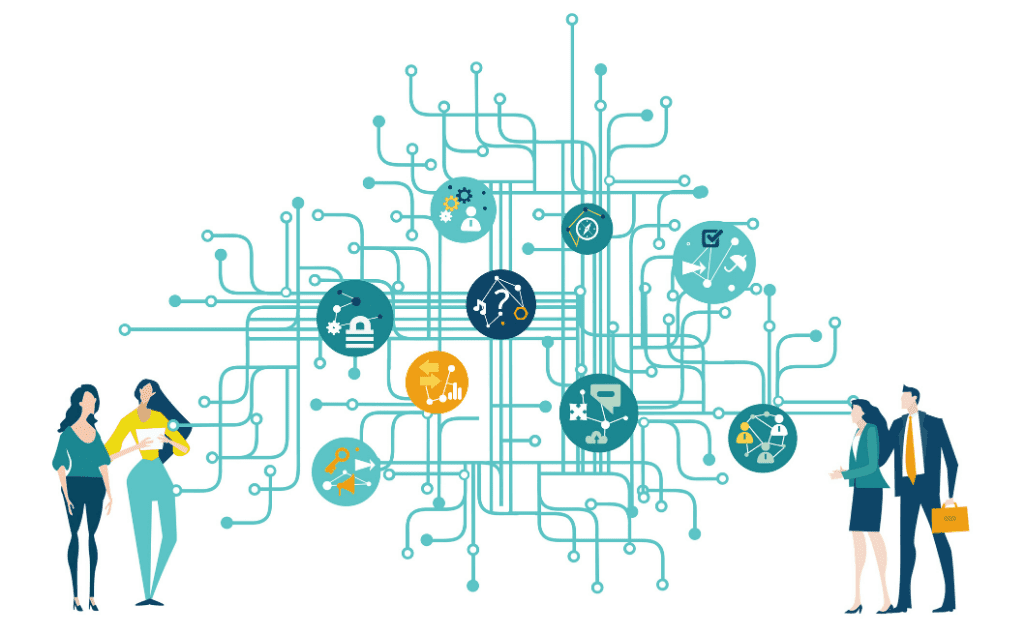
It cannot be denied that the retail market is extremely competitive. According to a Vietnam Report survey of Vietnamese retailers: 41.7% of businesses were severely affected by the COVID-19 pandemic, 50% rated the impact as moderately severe, and only 8.3% were insignificantly affected.
In other words, without anticipating and grasping consumer trends and needs and adopting a suitable digital transformation strategy, a business will fail to adapt to a changing market and will easily be left behind. Applying technological achievements is the appropriate solution that helps businesses boost their competitiveness and impress consumers with the image of a company that embraces modern technology.
5 standout technology trends in retail digital transformation
Personalization
Personalization is when a business uses the data it has collected about customers — including information, trends, shopping behavior, preferences, and more — to create promotional activities aimed at target customers.
To personalize effectively, retailers can apply these prominent approaches:
-
Ad personalization: works by using online user data to display relevant ads targeted at the intended customers.
-
Email personalization: marketers use the data of subscribers on their list to deliver email content tailored to each customer segment.
Personalization not only helps retailers attract more potential customers, but also raises satisfaction and retains them effectively — and as a result, sales revenue will grow as expected.
Voice technology

The trend of searching for products by voice has been on the rise in recent years as the number of voice searches grows rapidly. The reason consumers give is that they no longer need to type search keywords manually: through voice, search keywords are generated and the web is browsed automatically, saving consumers time and effort. Popular virtual assistants include Google Home, Apple, HomePod, Amazon Alexa, and more.
Using artificial intelligence (AI)
Applying AI to business operations is no longer unfamiliar to retailers, as it provides effective solutions that optimize business processes simply and easily:
-
Automating business processes: applying this technology helps businesses track and compile accurate figures for supply and demand in a specific area, and manage retail and inventory easily and flexibly.
-
Analyzing surface-level data: enables rapid data analysis and identifies potential sales opportunities.
-
Prediction and forecasting: AI analyzes sales data from transaction history to find correlations between customer personalities and your interactions with potential customers, from which it predicts transaction outcomes, cross-selling opportunities, upselling opportunities for premium products beyond what customers currently own, appropriate price increases, and more.
A common example of AI is the chatbots of Facebook, websites, and e-commerce platforms, which support customer questions and resolve certain issues quickly and accurately without a human agent present.
Not just in retail, artificial intelligence has been and is being applied broadly to mine and analyze consumer data effectively, helping businesses build strategies that enhance the customer experience.
Mobile shopping
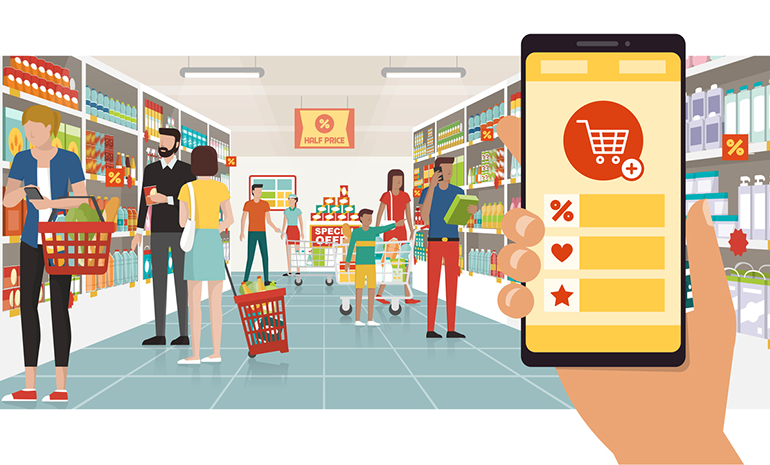
According to We Are Social's Digital 2020 report, Vietnam had about 68.17 million Internet users (about 70% of the population), 65 million social media users (67% of the population), and 145.8 million mobile subscriptions (150% of the total population). In addition, as of June 2020, 76% of surveyed Vietnamese said they wanted to shop online more than usual. This makes it easy to see that Vietnam is a country with huge potential for mobile commerce development.
Many retailers use smartphone apps to improve the consumer experience, such as Shopee, Tiki, Lazada, Watsons, Hasaki, and others. Through them, product updates and promotional information are automatically pushed to the customer's device as an effective shopping reminder.
Moreover, the mobile phone is also a preferred means of online payment, with apps like Momo, Zalo Pay, Viettel Pay, Alipay, and more. From here on, customers no longer need to carry cash and can pay easily and quickly at any time.
This trend is growing strongly as the Covid-19 pandemic grows more complex, and it is predicted to keep rising in the future.
Internet of Things (IoT)
The Internet of Things (IoT) is a system of interrelated computing devices, mechanical machines, digital systems, and people that can transfer data over a network without requiring human-to-computer interaction. The connections can be made via Wi-Fi, broadband telecom networks (3G, 4G), Bluetooth, ZigBee, infrared, and more.
In retail digital transformation, the benefits IoT brings include:
-
Facial recognition: with IoT, retailers can recognize customers' faces the moment they walk into the store. Online customer profiles are then collected and uploaded to the system, helping the business personalize the customer experience even better.
-
Smart shopping carts: allow customers to upload the store's product list, then guide them in finding and choosing suitable products.
-
Electronic price/information tags: help businesses update all product-related information (status, prices, etc.) via the Internet and monitor goods movement with precision, enabling more effective inventory management.
Software solutions that help retail businesses transform digitally successfully
The market today has many providers specializing in optimized solutions that help retailers transform digitally quickly and effectively, including:
-
ERP solutions: SimERP, FPT IS, Diginet, BRAVO, CITEK, etc. Among them, SimERP is trusted by many famous brands by providing efficient management of revenue, inventory, promotional programs, and automatic loyalty points, while raising the competitive standing of retail businesses.
-
Chatbots: platforms such as BizFly, FPT.AI Conversation, Hana Chatbot, etc.
-
Personalization support platforms: Adobe Target, RichRelevance, Salesforce, Adobe Experience Cloud, etc.
-
CRM software: SimERP, Salesforce, Zoho CRM, SugarCRM, HubSpot CRM, etc.
Conclusion: Real-world figures show that digital transformation in retail is an inevitable trend that retailers must undertake. Through this sharing of the benefits and standout trends in digital transformation, SimERP hopes you will build the right processes and strategies to boost your competitiveness and keep pace with the trends of the era.
Related articles
Bài viết liên quan

25 tháng 10, 2026 · 3 phut doc
2024年网页设计趋势预测如何? | Wotech Electronics
关于 2024 年网页设计趋势——步入 2024 年,年初正是我们为新事物预留时间的时刻。这也非常适合设计师群体唤醒我们内心的"艺术之魂"。闲话不多说,快来和 Markdao 一起浏览 2024 年的 UX/UI 设计趋势吧,说不定您就能为自己接下来的网页设计项目"迸发"出一个绝妙的点子呢!

25 tháng 10, 2026 · 1 phut doc
什么是网站(Website)?网站的详细定义及其带来的商业价值
什么是网站(https://www.markdao.com.vn/blog/website-la-gi)——这个问题或许已经无需定义,因为在如今这个信息时代,网站对每一家企业而言都是不可或缺的组成部分。正是网站帮助用户更近距离地接触企业所提供的产品和服务,从而提升经营效益。此外,要在当今竞争如此激烈的环境中求发展,网站是一个重要因素,它将带你走向品牌与销量上的双重成功。

25 tháng 10, 2026 · 1 phut doc
什么是SEO标准网站?一场"打赢"Google SEO标准的战役 | Wotech Electronics
99%的用户在购买前会先搜索信息,73%的用户只会访问排名前10的网站,并认定它们是值得信赖的品牌……在数字营销爆发的时代,这些数字有力地印证了SEO标准网站的重要性。然而,许多人对什么是SEO标准网站(https://www.markdao.com.vn/blog/huong-dan-toi-uu-seo-website-chuan-seo-on-page)仍然相当模糊,并未真正理解。达到SE…