What Is Customer Service? Customer Service Standards? | Wotech Electronics
Vũ Khôi
Tác giả tại Wotech Electronics Blog
What Is Customer Service? Customer Service Standards?
Vũ Khôi
Author at Wotech Electronics Blog
For any business to succeed, customer service is absolutely indispensable. So what is customer service? Why is it needed? These are questions that many readers care about and wonder about. To find detailed answers, let's walk through some related information in the article below with SimERP.
The concept of customer service

Customer service refers to the activities of interaction and support that a business provides to customers throughout their experience of using its products and services, in order to meet their needs and expectations. In other words, these are the accompanying services that complete the transaction process, ensuring that customers' needs and desires are always met and satisfied.
The role of customer service
A measure of service-level performance
Customer care helps measure performance results. It helps measure on-time delivery rates and order-processing efficiency within an allowable unit of time. At the same time, it serves as a yardstick for work results, ensuring that the company's service-improvement efforts will satisfy customers.
An expression of the business's care for its customers
Customer care plays an important role in building a base of regular customers and maintaining customer loyalty. In customer-facing activities, customer care is the factor that influences customers' psychology through the attitude of service staff and the ability to meet and satisfy their needs.
The benefits of customer service for a business
Retain current customers, create loyal ones
Many reports show that retaining existing customers can save your business up to 60% in costs compared with winning over a new customer. When you take good care of existing customers and earn their satisfaction and trust, that is precisely how you create loyal customers for your business.
Demonstrating professional customer care after a purchase is also a way of showing respect to customers.

Attract potential customers
Good customer care creates satisfaction among customers while drawing more people to your products and services. Many shoppers have the habit of reading reviews and comments from previous buyers as the basis for their choices. A satisfied customer who expresses this publicly is far more effective than you saying your own product is good.
Another study also found: "A satisfied customer will tell 4 other people. A dissatisfied customer will tell 10 other people or more."
That means when you take good care of a customer and make them feel satisfied with both product quality and the accompanying service, you are also enhancing the company's reputation and multiplying its pool of potential customers exponentially.
Reduce business costs

When a business delivers good customer care, it will obviously reduce its operating costs significantly — namely the cost of finding new customers through marketing programs, advertising, and sales outreach.
At the same time, meaningful customer service that satisfies customers from the start helps limit the time and effort spent handling customer complaints and inquiries.
A satisfied customer tends to share that experience with people around them. This is a zero-cost marketing strategy.
A competitive weapon among businesses
If customers are hesitating between two companies offering identical products, price will not be the deciding factor in their choice. Customers also care about many other factors, such as pre-sale service, service during the sale, and after-sales care.
Standards of professional customer service
Setting accurate, consistent customer service standards for evaluating good customer service is very difficult. In each field and each different line of business, we see certain distinct particularities...
Based on their nature, the following 5 factors can be used for evaluation:
The speed standard

"Fast service means comfort for the customer." This means speed is a decisive factor in customer satisfaction. Speed standards include:
First response time: You should respond immediately to inquiries coming in via live chat and hotline. For email, businesses often promise a reply within 24–48 hours, but it should be at most 24 hours. For social media channels, this should be kept under 60 minutes.
Response time: This is the average total time between replies. For social media channels it should be 1 to 3 minutes; for email, 24 hours.
First-contact resolution rate: This factor strongly determines customer satisfaction, and it is also a metric for evaluating staff performance. The typical benchmark for this metric is 75%, per the global standard of the International Finance Corporation.
Waiting-service rate: This metric carries a lot of meaning for conversations, messages, and direct phone calls. The recommended standard is a maximum of 2 customers waiting per channel, or 15 customers waiting in total.
Issue resolution time: When setting up your standards, start by ranking issues by importance.
Accuracy

Fast service is great, but it must also assure quality, accuracy, and results. Accuracy standards may include:
Customer success rate: The number of customers who have been advised and had their issues fully resolved. The higher this rate, the more customers are being successfully helped.
Errors: A metric that applies the quality-productivity improvement model approach, focused on finding and detecting errors across the entire workflow.
Transparency
This standard is difficult to measure and is mostly assessed qualitatively based on scale. Accuracy standards may include:
Customer perception rate: Uncertain, unexplained waiting makes customers weary. A customer asks about an issue and is asked to wait for a fixed period — typically 3 minutes for messages and 1 minute for calls.
Accessibility

Customer care needs to proactively reach customers' issues. Accessibility standards include:
Customer Effort Score (CES): A metric from the customer's point of view that asks just a single question on a 5-point scale.
Transfers per issue: Measures how many staff members must be involved in resolving one issue.
Queue abandonment: The lower the rate of customers abandoning the queue, the higher the service satisfaction.
First-contact clicks: This metric can be tracked across phone, live chat, email, and other channels. The fewer clicks a customer makes, the better the accessibility.
Efficiency

Efficiency metrics include:
Replies per issue: This metric tells the business about staff communication skills and the effort customers have to put in.
Backlog inflow/outflow: Growth in this metric indicates the size of your service team; set standards to keep this ratio around 0.5.
Minutes spent per issue: Helps you compare the work efficiency of individual staff members.
So now you know the required standards of a customer care service. To grow, a business must offer consumers products and services that deliver differentiated value compared with competitors in order to maintain a solid position in the market. Next, assess where your business stands within the 6 levels of customer service.
The 6 Levels of Customer Service
Level 1: Disappointing customer service

This is the worst of the 6 customer care levels, one every business must absolutely avoid. Service that makes customers angry typically fails to fulfill any of their expectations, not even the smallest ones. Consumers will never want to experience this kind of service again or buy products at this level, and they will certainly complain sharply, causing unpredictable damage to the business.
Level 2: Basic service

This is another disappointing level for a business. Specifically, this service stays at a basic level and usually meets very few customer needs. Sometimes, at the most frustrating moment, customers may get angry; however, as time passes, they grow used to it and end up not even bothering to complain. The problem, though, is that customers often share this terrible experience with people close to them, and they may never want to use your products or services again.
Level 3: Average service

This level means the service a business provides is usually nothing special. At this level, the service is rated as average, with no differentiation whatsoever. In a few cases, customers may return to use the products or services, but mostly because they have no better alternative.
Level 4: Service that meets expectations

This is exactly the level of service you need to achieve when serving customers. If your service is rated at this level, it means you have delivered exactly what customers like and expect. As a result, there is a high chance they will come back to use your products or services in the future.
Level 5: Service that exceeds customer expectations

At this level, the service you provide is fresh and different — or simply put, for the customer it feels like a wonderful gift beyond their expectations. Reaching this level makes you a loved and sought-after name, and obviously customers will keep using your service. In particular, they will tend to share this wonderful experience with people close to them, giving the business a new customer base in the future without spending a single dollar on marketing.
Level 6: Amazingly perfect service

This is precisely customer care that is so professional and so good that it is astonishing. When using services at this level, customers certainly won't be able to forget the wonderful experience they rarely ever get, and of course they will share it with their friends and family.
Once you have analyzed where your business stands within these 6 levels of customer care, it is time to start learning about and grasping the customer service trends that will rise in the future.
4 Customer Service Trends Today
As the use of mobile devices keeps growing, businesses have more and more ways to interact with customers and thereby increase their value.
Omnichannel: Multi-channel approach
With the amazing development of technology and the rising smartphone adoption rate (crossing the 2 billion mobile device milestone in 2015), businesses will have many ways to make it easier for customers to interact with them, such as leveraging social media channels, designing websites, creating their own apps, and sharing information on forums...

Cloud computing technology will be the perfect way to help businesses track customers' "journeys" as they move across interaction channels.
Recently, a Gartner survey of 7,000 consumers was conducted, and the results showed that over the past 6 months, 67% of them had shopped or used services across many different channels. In addition, 87% of respondents said "they want brands to always create a seamless connection with customers."
However, a recent study also found that "more than 50% of customers prefer interacting directly with a company's customer care agents rather than through other communication methods."
These are extremely useful studies for building and developing businesses' customer care strategies and trends. Because customers are diverse, leveraging online communication channels is not always the right move. Businesses can adapt with different methods that help them connect, depending on different needs.
Let customers self-serve

Support from the business is always essential. However, for many consumers, the best and most effective way to be served is to serve themselves.
Self-service websites are the most widely adopted communication channel among the various types of customer service — even surpassing mobile communication channels as in the past.
So not every customer wants to connect or interact with your business; all they need is simply to self-serve.
This also means you should optimize your customer interaction channels, emphasizing convenience and simplicity when users need help, and combine the remaining interaction channels with other customer service strategies and trends.
Make the most of support tools
Customer support tools are growing rapidly and gradually becoming a must-have for every business.
Customer care providers are developing these tools to make them increasingly attractive and convenient. These customizations allow your business to interact with customers in many ways, across many different channels, without revealing any personal information.
Advisory content gets priority
Advances in sensing technology make it easy for businesses to know when customers are having trouble with a product. When they run into a problem, most customers will first turn to a Google search. At that point, the company's advisory content on products and services becomes critically important.

Moreover, customers don't just want to easily find advisory information — they also want to maximize the value of the products or services they are using.
Businesses should have one or several dedicated YouTube channels to share about their products and services through how-to videos or other forms of content. Remember, every brand needs to communicate and promote its products and services.
Finally, this advisory content needs to be designed to display easily on mobile devices.
In today's extremely dynamic and diverse market, with benefits going hand in hand with competition, businesses need to know how to combine sales management approaches to improve their business performance. One of the most powerful tools is effective customer service management.
Enterprise customer service management
What is customer service management?
This can be understood as a method that helps business owners manage and track their customer service effectively, monitor staff performance, order information, and buyer data, and from there adjust or build appropriate care and support plans to improve both service quality and business results.

The tasks of customer service management
Once you know what customer service work involves, for these tasks to run smoothly and effectively, the business owner needs to organize their execution and monitor them closely. This not only ensures adherence to the customer service process but also improves the productivity and quality of the service.
Identify the customer services that need managing
–Determine the number of services the business needs to provide to customers: Depending on the products and services your business offers and the characteristics of your target customers, you can determine the number of services needed. For instance, if customers need consultation, you provide consulting services; if buyers need warranty support, you can provide after-sales services... Identifying the number of services in detail is the foundation for your later tracking and management work.

–Determine the importance of each service: For each different service, the business needs to determine how important it is. This is how a business can deliver the most necessary services to customers. The main reason is that businesses, especially small and medium-sized ones, often lack the resources to provide every service. Therefore, focusing on core services will deliver higher effectiveness.
Organize execution
Before starting customer care activities, the business needs to set detailed KPIs for each department and employee. The business owner will establish sets of rules and requirements so that staff deliver good service to customers. These standards will not only guide employees in their work but also serve as a tool to help the owner evaluate and measure work performance.
Inspection and evaluation
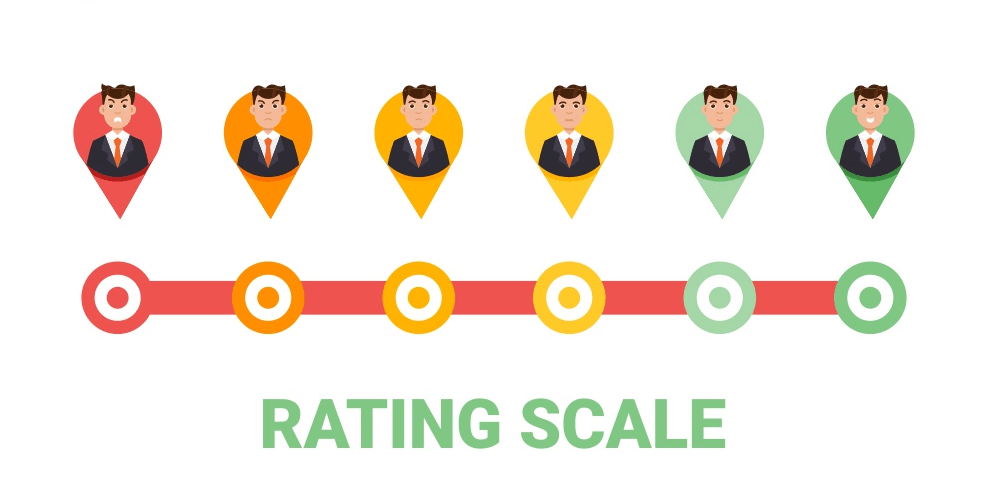
Based on employees' performance and productivity, the results they deliver, and the results of the customer service survey, you will carry out inspection and evaluation. Each standard is assigned a specific score corresponding to the level of task completion:
-
1 – Poor: Fails to meet the minimum requirement
-
2 – Average: Meets the minimum requirement
-
3 – Good: Meets the job requirement
-
4 – Very good: Meets the requirement and exceeds it
-
5 – Excellent: Far exceeds it
After multiplying these scores by their weights and arriving at the final evaluation, the manager will have the clearest possible picture of how effective the company's customer service management is.
Conclusion
The customer service mindset needs to be correctly and sufficiently understood by business owners and managers in order to operate and implement the company's growth strategies. The nature and elements of customer service, if carried out properly, will create a truly large and sustainable competitive advantage for businesses in the current period.
We hope that through this article, readers have understood what customer service means as well as grasped today's customer service elements. If you have any further questions, leave a question below this article and SimERP will help you get a quick answer!
Related articles
Bài viết liên quan

25 tháng 10, 2026 · 3 phut doc
2024年网页设计趋势预测如何? | Wotech Electronics
关于 2024 年网页设计趋势——步入 2024 年,年初正是我们为新事物预留时间的时刻。这也非常适合设计师群体唤醒我们内心的"艺术之魂"。闲话不多说,快来和 Markdao 一起浏览 2024 年的 UX/UI 设计趋势吧,说不定您就能为自己接下来的网页设计项目"迸发"出一个绝妙的点子呢!

25 tháng 10, 2026 · 1 phut doc
什么是网站(Website)?网站的详细定义及其带来的商业价值
什么是网站(https://www.markdao.com.vn/blog/website-la-gi)——这个问题或许已经无需定义,因为在如今这个信息时代,网站对每一家企业而言都是不可或缺的组成部分。正是网站帮助用户更近距离地接触企业所提供的产品和服务,从而提升经营效益。此外,要在当今竞争如此激烈的环境中求发展,网站是一个重要因素,它将带你走向品牌与销量上的双重成功。

25 tháng 10, 2026 · 1 phut doc
什么是SEO标准网站?一场"打赢"Google SEO标准的战役 | Wotech Electronics
99%的用户在购买前会先搜索信息,73%的用户只会访问排名前10的网站,并认定它们是值得信赖的品牌……在数字营销爆发的时代,这些数字有力地印证了SEO标准网站的重要性。然而,许多人对什么是SEO标准网站(https://www.markdao.com.vn/blog/huong-dan-toi-uu-seo-website-chuan-seo-on-page)仍然相当模糊,并未真正理解。达到SE…