Vũ Khôi
Tác giả tại Wotech Electronics Blog
What Is Digital Marketing?
Vũ Khôi
Author at Wotech Electronics Blog
What is Digital Marketing? In today's world, Digital Marketing is one of those types of marketing that no company or business can afford to ignore in the course of doing business. Shopping for goods, products, and services today all happens on the Internet, and that makes this form of advertising one of the advantages and tools that help companies and businesses get closer to potential markets and potential customers. So, what is Digital Marketing?
What Is the Definition of Digital Marketing?
To help you easily picture this type of service, here is a concise definition:
Digital Marketing is the set of activities that promote a product/brand in order to influence customer perception and stimulate buying behavior. Put simply, Digital Marketing is marketing conducted using one or more digital media on the Internet.
What Is the History of Digital Marketing?
Since the Internet developed, customer trends and buying behavior have changed along with it: buyers now favor the virtual online marketplace over the physical one, because they find it convenient, useful, and fast. Moreover, searching for information has become quite easy — information can be obtained through search engines or social media — which has inadvertently created a new customer segment: customers on the Internet.
What Are the Advantages of Digital Marketing?
The development of information technology today has brought new services to life, giving businesses a fresh experience of quality, reputable service — and Digital Marketing is the service we want to talk about. So, what are the advantages of Digital Marketing?
Maximizing Cost Savings in the Most Effective Way
Digital Marketing services cost far less than traditional methods used from the past until now. Businesses carrying out Digital Marketing do not have to bear the substantial costs of renting premises or maintenance. With the traditional approaches of famous brands in major cities, the most common methods are advertising products and services via TV, billboards, newspapers and radio, magazines, flyers, direct mail, phone calls, or even in-person sales pitches and product introductions — and service costs can easily run into tens of billions of dong.
Digital Marketing is, however, a form of brand promotion that does not require high costs, and it is also an open arena of competition for small, medium, and large businesses alike. With this approach, consumers can quickly and easily discover your business, unlike in the past when you might PR "until your tongue wore out" with no one showing up.
Reaching the Potential Customer Market
Easy access to the potential customer market for products and services is the greatest advantage of Digital Marketing: not only information about the business, but customers can even explore the imagery, prices, materials, and services. Digital Marketing is a form of marketing that can reach customers anywhere, at any time.
It helps businesses easily shape demand by gender, age, occupation, region, and address — and beyond that, by the shopping habits, preferences, and specific behaviors of the many customers in today's market. With Digital Marketing, geographic distance is no longer a barrier, because no matter where they are, your products or services can reach them.
Measuring Effectiveness
With Digital Marketing tools, you can easily and precisely evaluate metrics on how interested customers are when they visit your ads. Measurement tools can even track the user's path — which source they came to your website from: a Facebook page or a Google search, where they were directed within your site, how long they stayed on your website, and what content they read there.
Increasing Flexibility
The Internet develops at a rapid transmission speed — that is precisely its strength. Therefore, from the start of a Digital Marketing campaign until its completion, you can monitor its effectiveness through statistics.
What Are the Steps for Implementing Digital Marketing?
A Digital Marketing effort cannot do without implementation steps — they give companies and businesses assurance and certainty during execution. So, what are the steps for implementing Digital Marketing? Here is your answer.
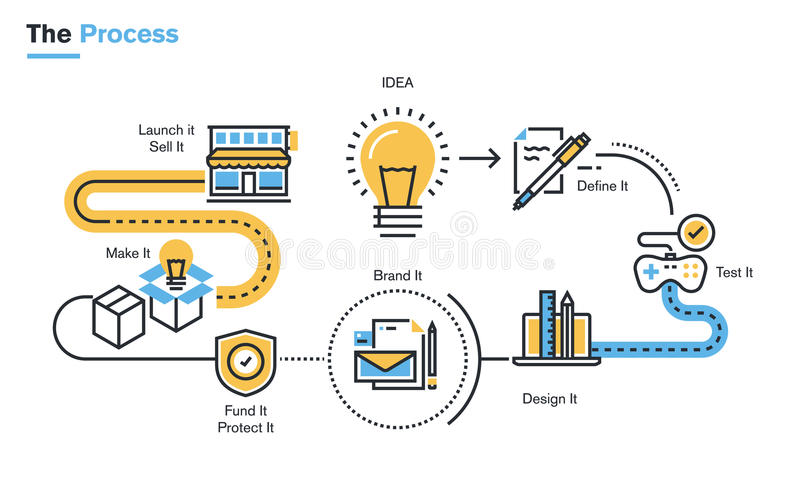
Step 1: Build Your Customer Base
For any type of Digital Marketing, online or offline, you first need to know one thing: who are you? Only then should you begin your Digital Marketing process. For each Digital Marketing strategy to achieve the best results, you need to base it on the characteristics, needs, and preferences of consumers — this is the first and most important step in implementing Digital Marketing.
To correctly identify the potential customer group for each of your company's product or service lines, you need to research, survey, and interview your target audience — and do it thoroughly. If you rely on assumptions, your Digital Marketing will surely head in the wrong direction. Collect both quantitative and qualitative data on consumers to be certain of what customers actually need.
Step 2: Define Goals
Goals are the final results you want your company or business to achieve during the Digital Marketing process; only then can the business chart the right course for itself. Whatever the overall goal may be, you must know how to measure it. If you can measure effectiveness, your Digital Marketing process will certainly succeed — and this will help enormously.
Step 3: Evaluate Your Digital Marketing Channels
At this step, you should review the channels or assets already available to include in your company's Digital Marketing strategy. Examine which channels are effective and focus on those, including Owned Media, Earned Media, and finally the paid media you are using for your Digital Marketing strategy.
Step 4: Audit and Plan Your Media
Media can be called one of the decisive factors in the success or failure of a Digital Marketing effort. Your brand messages will be organized as content, whether that is an introduction page, product descriptions, or posts on blogs and social networks. Whether customers show a lot or a little interest, and whether it is effective, is determined through user traffic. So draw up a truly detailed content plan — it will surely bring you 50% of the success in your Digital Marketing process.
Step 5: Audit and Plan for Earned Media
Evaluate and review Earned Media as rated highly by customers, based on their visits to your pages, then rank each earned media source and arrange and plan them sensibly.
What Is the Difference Between Online Marketing and Digital Marketing?
From Markdao's previous article "Online Marketing Overview" and today's article, let's put it all together and see what the difference is between Online Marketing and Digital Marketing!
In terms of measurement:
Online Marketing can be measured very effectively and easily with the help of today's measurement tools, so businesses know exactly how many clicks their website received, from which channels, how long customers stayed on the site, and whether customers completed a purchase right on the company's website. However, Online Marketing can only perform measurement that is not entirely precise.
Digital Marketing can be measured, but since this form does not depend on a website or the Internet, it is harder to measure. With this form of marketing, you cannot know how many people read the message you sent via SMS, nor whether that buyer went on to make a purchase afterward.
Mode of operation:
When it comes to how they operate, Digital Marketing and Online Marketing are completely different: Online Marketing channels generally depend on the Internet. Where there is no Internet, there is no Online Marketing.
Conversely, Digital Marketing channels do not depend entirely on the Internet — they also rely on telecommunications infrastructure (TV signals, radio waves, phone signals, etc.) and work perfectly normally with or without Internet.
Purpose of use:
There are two main purposes when advertising:
-
To boost conversions (sales, sign-ups, etc.) — and Online Marketing's strength is helping increase conversions, with sales and payment processes that are fast, streamlined, and suited to the needs of the business.
-
To increase brand awareness. Digital Marketing is the form of advertising whose strength is boosting brand awareness for a business most effectively.
In summary, through this article, Markdao hopes you now understand more about what Digital Marketing is, its implementation steps, and the difference between Online Marketing and Digital Marketing, so you can build a correct and effective advertising campaign for your business's overall marketing purposes.
Related Articles
Bài viết liên quan

25 tháng 10, 2026 · 3 phut doc
2024年网页设计趋势预测如何? | Wotech Electronics
关于 2024 年网页设计趋势——步入 2024 年,年初正是我们为新事物预留时间的时刻。这也非常适合设计师群体唤醒我们内心的"艺术之魂"。闲话不多说,快来和 Markdao 一起浏览 2024 年的 UX/UI 设计趋势吧,说不定您就能为自己接下来的网页设计项目"迸发"出一个绝妙的点子呢!

25 tháng 10, 2026 · 1 phut doc
什么是网站(Website)?网站的详细定义及其带来的商业价值
什么是网站(https://www.markdao.com.vn/blog/website-la-gi)——这个问题或许已经无需定义,因为在如今这个信息时代,网站对每一家企业而言都是不可或缺的组成部分。正是网站帮助用户更近距离地接触企业所提供的产品和服务,从而提升经营效益。此外,要在当今竞争如此激烈的环境中求发展,网站是一个重要因素,它将带你走向品牌与销量上的双重成功。

25 tháng 10, 2026 · 1 phut doc
什么是SEO标准网站?一场"打赢"Google SEO标准的战役 | Wotech Electronics
99%的用户在购买前会先搜索信息,73%的用户只会访问排名前10的网站,并认定它们是值得信赖的品牌……在数字营销爆发的时代,这些数字有力地印证了SEO标准网站的重要性。然而,许多人对什么是SEO标准网站(https://www.markdao.com.vn/blog/huong-dan-toi-uu-seo-website-chuan-seo-on-page)仍然相当模糊,并未真正理解。达到SE…