
What Is Production Cost? What Does It Include? How Is It Calculated?
Vũ Khôi
Tác giả tại Wotech Electronics Blog
What Is Production Cost? What Does It Include? How Is It Calculated?
Vũ Khôi
Author at Wotech Electronics Blog

In any field of operation, the top goal of a business or organization is profit. To achieve high profits, a business must find ways to boost revenue as well as manage production costs. This means the business must clearly understand where its costs come from and identify the costs that arise. In a manufacturing enterprise, production cost is regarded as the expense that accounts for the largest share of total costs; to reduce costs, a business must calculate product costs accurately and promptly. Beyond that, production cost is one of the critically important factors for accounting for the costs and revenue of every business.
What is production cost?
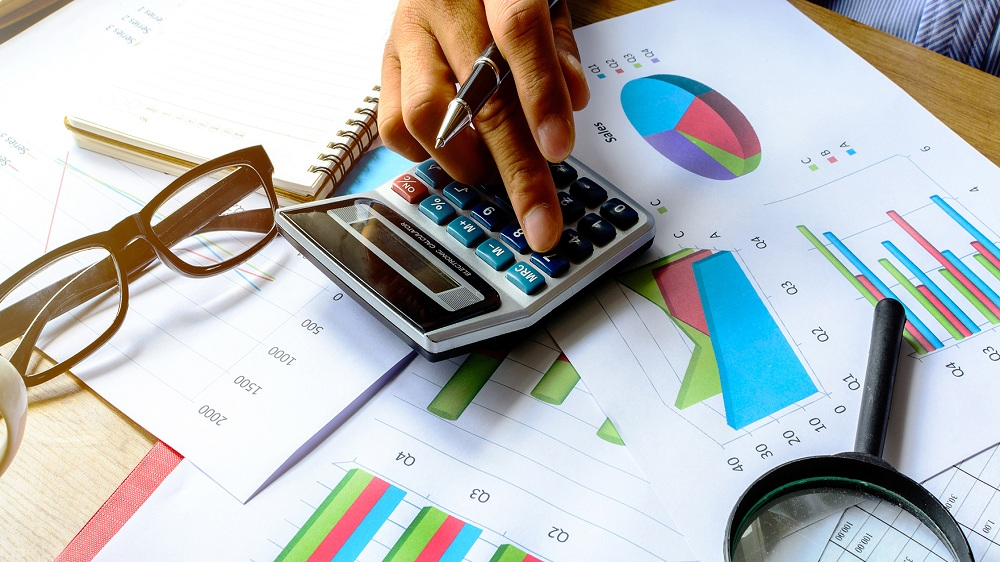
The production cost of a product or service is simply understood as the manufacturing cost calculated for a volume or a single unit of product that the business produces and completes under normal production conditions.
Production cost consists of the following 3 cost items:
-
Direct material costs: the cost of materials that make up the product or service;
-
Direct labor costs: turning materials into products requires labor. The business must pay wages to the workers who directly make the products and services;
-
Manufacturing overhead: expenses related to creating the product (including department and workshop management costs, fixed asset depreciation, electricity, water, etc.).
Production cost is an extremely important quality indicator for manufacturing enterprises as well as for the entire national economy. Moreover, it is an aggregate economic indicator reflecting the quality of production and production management activities, and fully reflecting the results of using assets, capital, materials, and labor in the production process. It is also an important basis for production accountants to determine selling prices and the economic efficiency of production activities.
What does production cost include?
Production cost covers several different types, divided into corresponding categories depending on management requirements and classification criteria.
Classification by time and by the data basis used for costing
Based on the point in time at which costs are calculated and the data basis used, production cost is divided into the following 3 types:
Planned cost
This is the cost calculated on the basis of planned production costs and planned output. Determining the planned cost takes place before the production and manufacturing process and is handled by the planning department. Planned cost is one of the targets a business strives toward, and serves as the basis for comparing, analyzing, and evaluating the company's plan performance.
Norm cost
This is the production cost calculated on the basis of current production cost norms and computed only for a single unit of product. Determining the norm cost is also done before production begins. Norm cost is one of the business's norm-based management tools, regarded as an accurate yardstick for evaluating the use of assets, capital, materials, and labor in production. Norm cost helps the business properly assess the economic and technical solutions it has applied to improve production and business efficiency.

Actual cost
This is the production cost calculated on the basis of the actual production costs incurred and accumulated during the period and the actual output produced during the period. Actual cost can only be calculated once the production process is complete. Actual cost is considered an aggregate economic indicator for determining the results of the business's production and commercial operations.
Of the three types of production cost above, norm cost is more widely used in the field of management accounting, with the purpose of comparing it against actual cost to identify variances and their nature (in price, in productivity, etc.). In addition, norm cost is used to find the causes of those variances. In other words, norm cost is the cost used for management control purposes.
Classification by scope of calculation
Under this classification, product cost is divided into 2 main types: production cost and full cost.
Full cost of products sold
This includes production cost, selling expenses, and corporate administration costs calculated for the products and services sold. The full cost of a product is one of the bases for calculating and determining a business's pre-tax profit.
Based on full cost, a business can easily determine whether its operations have produced a profit or a loss. By nature, full cost usually plays the leading role in long-term strategic decisions, such as deciding whether to stop or continue producing a certain product. The full cost indicator therefore has extremely important significance in business management.
However, for businesses producing many different products, determining the full cost of each product on a regular basis (for example, monthly) is quite complex and offers very little benefit if the business does not face any decisive choices.
In full production cost, all fixed costs are charged entirely to production cost, which is why the full-cost calculation method is also known as the full (absorption) costing method.

Production cost at variable cost
The production cost of a product includes 3 types of costs: direct materials, direct labor, and manufacturing overhead charged to the product. Production cost is applied to record finished goods entering the warehouse or delivered to customers. It is the basis for determining cost of goods sold and calculating gross profit from business operations and services at manufacturing enterprises. Production cost at variable cost includes only direct and indirect variable costs. Therefore, under the variable costing method, fixed manufacturing costs are charged immediately to the income statement as period expenses in the fiscal year, rather than included in production cost.
Because it includes only variable production costs, it is called partial production cost. On the basis of partial production cost, the business can quickly determine gross margin on variable costs (the contribution margin) and can model the cost–volume–profit relationship simply.
Advantages and disadvantages of the production cost indicator at variable cost
Advantages:
-
Simple and quick to determine and calculate.
-
Serves as the basis for determining the break-even point (break-even output and revenue).
-
Provides data for business managers to make short-term decisions.
Thus, production cost at variable cost is mainly used in control activities, where managers must make purely immediate and secondary decisions.
Disadvantages:
Because it is so simple and is a partial cost, production cost at variable cost has the following fundamental drawbacks:
-
Variable costs are not the only information relevant to short-term decisions. Routine decisions can have long-term effects on fixed costs; for example, forcing functional departments to take on additional administrative tasks increases the operating costs of those departments, thereby raising the company's fixed costs.
-
The distinction between variable and fixed costs is only relative. A cost may be variable for one department but fixed for the whole enterprise (for example, a cost allocated to a workshop based on scale of activity).
-
This indicator often leads business managers toward short-term goals and ignores fixed costs — the type of cost they cannot control.
This indicates that fixed costs can be normalized rather than ignored. Therefore, in addition to the two indicators above, the production cost indicator with a reasonable allocation of fixed costs is also widely used in management accounting.

Production cost with a reasonable allocation of fixed costs
Production cost with a reasonable allocation of fixed costs includes the following two components:
-
All variable production costs (direct and indirect).
-
The portion of fixed costs allocated on the basis of actual activity level compared with the standard activity level (by design capacity and norms).
The production cost indicator with a reasonable allocation of fixed costs overcomes the drawbacks of the variable-cost indicator and is widely used in management control activities in businesses.
>> See also: Cost management accounting: Concepts, objectives, methods
How to calculate production cost
The production costing process
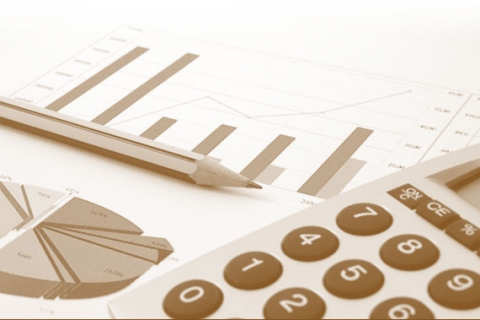
For costing to be carried out accurately, managers must clearly understand the cost-accumulation objects to supply data for costing by each object within the enterprise. Conversely, correctly identifying the costing objects is the basis for the company's accounting department to determine the appropriate cost-accumulation objects in order to fully meet the requirements of the costing task.
Here, the costing objects include the types of products the business produces and the services the business has provided to customers. For both of these objects, total cost and unit cost must be calculated. In addition, production costs incurred must be tied to the place where production takes place and to the products being made. Accountants need to accurately identify the cost-accumulation objects, then organize the collection of production costs and provide data for calculating production cost.
Formulas for calculating production cost

To obtain accurate data for calculating the production cost of products and services, accountants need to regularly organize cost collection. Direct costs are aggregated by cost-accumulation object or costing object. Manufacturing overhead is selected using appropriate criteria (wages, direct costs, etc.) and allocated reasonably to each object.
Formula for the production cost of a product
Unit production cost of a product = Total cost of products completed / Total number of products completed
Where:
Total cost of products completed = (value of work in progress at the beginning of the period) + (production costs incurred during the period) − (value of work in progress at the end of the period)
Work in progress refers to unfinished products still being produced on the line or in the production workshops. Valuing work in progress is performed using methods such as the equivalent units estimation method or the direct cost method.
Some popular production costing methods today

1. The simple costing method (the direct method)
This method suits products with a simple, self-contained production process, produced at large scale, with short, staggered, and continuous production cycles (such as electricity, water, coal, confectionery, etc.).
2. The coefficient costing method
This method is widely applied in enterprises whose production process uses the same type of materials but yields several different main products.
3. The ratio costing method
This method is quite suitable for businesses that, within the same production process, obtain a group of similar products with many different varieties, qualities, and specifications.
4. The cost elimination method
Businesses that choose this method are those whose production process yields by-products in addition to main products — typically crude oil refiners or wood processing and manufacturing companies.
5. The cost accumulation method
This method is commonly applied in enterprises with relatively complex production processes, where manufacturing and processing must pass through multiple production departments and different technological stages.
6. The combined method
This method is often applied to businesses with complex production processes, such as continuous processing with many linked stages. Each stage of the process has its own distinct output, and the output of the preceding stage is the input material for the next. Typical business types that apply this method are canned food processors, household goods manufacturers, and fashion apparel makers.
7. The norm-based costing method
This method suits businesses that have established complete and stable economic-technical norms.
Building on the product costing methods above, when applying them to a specific business, accountants need to base their choice on actual conditions across aspects such as: the characteristics of production organization, the characteristics of the technological process, and the cost-accumulation objects. From that determination, managers can select and apply the appropriate costing method.
Conclusion
Clearly understanding the concept of production cost and correctly identifying the costing objects is one of the top priorities in manufacturing enterprises. Once the appropriate production costing method is determined, a business can quickly increase revenue while cutting costs, thereby generating the highest profit.
We hope this article has answered your questions about production cost in enterprises. If you have any further questions, leave a comment below this article and SimERP will answer you promptly!
Related articles
Bài viết liên quan

25 tháng 10, 2026 · 3 phut doc
2024年网页设计趋势预测如何? | Wotech Electronics
关于 2024 年网页设计趋势——步入 2024 年,年初正是我们为新事物预留时间的时刻。这也非常适合设计师群体唤醒我们内心的"艺术之魂"。闲话不多说,快来和 Markdao 一起浏览 2024 年的 UX/UI 设计趋势吧,说不定您就能为自己接下来的网页设计项目"迸发"出一个绝妙的点子呢!

25 tháng 10, 2026 · 1 phut doc
什么是网站(Website)?网站的详细定义及其带来的商业价值
什么是网站(https://www.markdao.com.vn/blog/website-la-gi)——这个问题或许已经无需定义,因为在如今这个信息时代,网站对每一家企业而言都是不可或缺的组成部分。正是网站帮助用户更近距离地接触企业所提供的产品和服务,从而提升经营效益。此外,要在当今竞争如此激烈的环境中求发展,网站是一个重要因素,它将带你走向品牌与销量上的双重成功。

25 tháng 10, 2026 · 1 phut doc
什么是SEO标准网站?一场"打赢"Google SEO标准的战役 | Wotech Electronics
99%的用户在购买前会先搜索信息,73%的用户只会访问排名前10的网站,并认定它们是值得信赖的品牌……在数字营销爆发的时代,这些数字有力地印证了SEO标准网站的重要性。然而,许多人对什么是SEO标准网站(https://www.markdao.com.vn/blog/huong-dan-toi-uu-seo-website-chuan-seo-on-page)仍然相当模糊,并未真正理解。达到SE…