Vũ Khôi
Tác giả tại Wotech Electronics Blog
Sales Accounting and What You Need to Know
Vũ Khôi
Author at Wotech Electronics Blog
Sales accounting is a job that doesn't demand extensive experience. To conduct business and deliver services, a company will incur related transactions. To help students and accountants get a firm grasp of accounting entries, this article from SimERP compiles the knowledge and regulations related to this topic.
What Is Sales Accounting?

Before exploring what sales accounting is, you need to clearly understand the concept of sales. Sales is the final stage of a company's production and business activities. It is the process of transferring ownership of goods and services to the buyer, and the company collects money or gains the right to collect payment. From an economic perspective, sales is the process by which a company's goods and services are converted from physical form into monetary form.
Sales accounting is the work tasked with managing and recording all activities related to the company's sales transactions — from consolidating sales invoices, recording sales revenue in detail, calculating VAT payable, keeping detailed goods ledgers, to processing invoices and documents, and consolidating and preparing sales reports as required.
Sales Accounting Duties
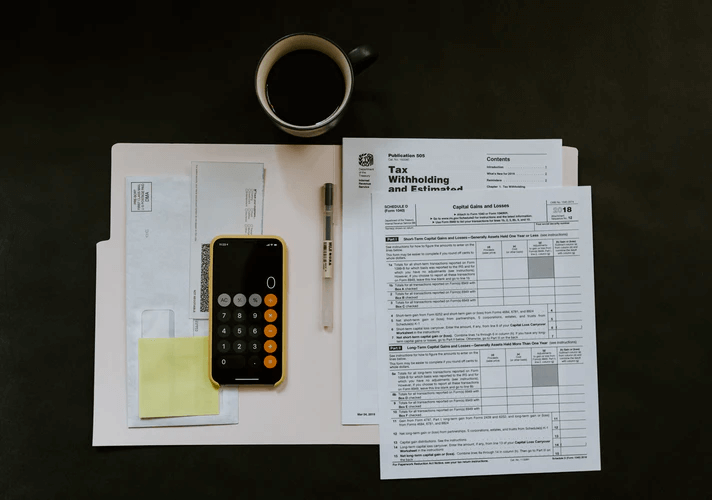
Depending on each company's specific situation, sales accounting work will include different tasks, such as:
-
Preparing contracts and quotes; knowing the selling prices and characteristics of the products and services the company sells.
-
Accurately calculating the cost of goods sold and services delivered, business administration costs, selling expenses, and other costs, in order to determine sales results.
-
Providing honest, timely information and preparing complete financial statements to correctly assess business performance and tax compliance.
-
Recording and managing all transactions related to sales invoices.
-
Closely tracking goods received into the warehouse and issued for sale.
-
Posting and classifying documents in detail for each economic transaction.
-
Updating unit prices for goods entering and leaving the warehouse to notify sales staff promptly.
-
Sending quotes when customers request them.
-
Tracking and recording revenue in detail.
-
Preparing declarations for purchased goods and materials on the VAT declaration form.
-
Consolidating all purchase and sales figures for the day, then handing them over to the store management department or the company's accounting department.
-
Periodically reconciling quantities issued and in stock with the storekeeper, reconciling customer receivables with the payables accountant, and reconciling payments with the cashier.
-
Preparing monthly business performance reports for the company on a regular basis or on request.
-
Managing supplier and customer information in support of sales work.
-
Supporting other accounting departments when requested.
-
Issuing financial invoices when customers request them.
-
Advising leadership on solutions to boost sales.
In addition, if the company uses accounting and finance management software, the staff member in charge of bookkeeping must regularly update selling prices and new products in the management software and notify the relevant departments of any changes.
Installment Sales Accounting
What Is Installment Sales Accounting?
Nowadays, to boost sales, businesses must adopt various sales methods such as agency sales, deferred-payment sales, and installment sales.
Installment sales is a form of selling with multiple payments: the buyer pays part of the item's value at the time of purchase, with the remainder paid in multiple installments in subsequent periods, plus interest on the deferred amount. The payments in subsequent periods are equal, comprising both principal and deferred-payment interest.
Revenue is recognized as cash-sales revenue, while the interest earned is recorded as financial activity revenue.
How to Account for Installment Sales
– Recognize cash-sales revenue and the difference between the installment price and the cash price:
When selling products or services by installment, sales revenue for the accounting period is recognized at the cash price (excluding tax); the difference between the installment price and the cash price is recorded in account 3387 "Unearned Revenue," as follows:
-
Debit accounts 111, 112: the amount the customer pays at the time of purchase.
-
Debit account 131: the amount the customer still owes.
-
Credit account 511: the one-time cash selling price, excluding VAT.
-
Credit account 333: taxes and other payables (calculated on the cash selling price).
-
Credit account 3387: Unearned Revenue (the difference between the installment price and the cash price, excluding VAT).
– Recognize the cost of goods sold:
-
Debit account 632: cost of goods sold.
-
Credit accounts 154, 155, 156…
– Determine and close out installment sales interest revenue for the period:
-
Debit account 3387: Unearned Revenue.
-
Credit account 515: revenue from financial activities (including deferred and installment interest).
– When collecting installment payments, including the difference between the installment price and the cash price:
-
Debit accounts 111, 112, etc.
-
Credit account 131: receivables from customers.
Example: Company X specializes in selling cars. Company X sells a Toyota Camry to Company Y on installment over 3 years (36 months) at a price of 1.015 billion VND (excluding 10% VAT). If Company Y had paid cash at the same time, it would have paid Company X a pre-VAT price of 700 million VND. Company Y pays the principal and interest monthly by bank transfer. The cost of the Toyota Camry is 600 million VND.
Company X issues a VAT invoice to Company Y as follows:
The accountant at Company X records the entries as follows:
– Recognize car sales revenue at the cash price and the difference between the installment price and the cash price:
-
Debit account 131 (Company B): 1.085 billion VND.
-
Credit account 5111 – Car sales revenue: 700 million VND.
-
Credit account 33311 – Output VAT: 70 million VND.
-
Credit account 3387 – Unearned Revenue: 315 million VND.
– Recognize the cost of the car: Debit account 632.
– Cost of goods sold: 700 million VND.
- Credit account 156 (Toyota Camry): 700 million VND.
– Periodically, determine and close out installment sales interest:
-
Debit account 3387 – Unearned Revenue: 315 million VND / 36 months = 8.75 million VND.
-
Credit account 515 – Revenue from financial activities (installment interest): 8.75 million VND.
– Periodically, upon receiving the principal and interest Company Y pays Company X:
-
Debit account 112: Bank deposits: 1.085 billion VND / 36 months = 30.138889 million VND.
-
Credit account 131: Receivables from customers (Company Y): 30.138889 million VND.
Export Sales Accounting
Export sales accounting is an issue of great interest to many import-export businesses. Below are some basic guidelines to help accountants at exporting companies perform this work more simply and quickly.

When to Recognize Export Revenue
Point 7, Article 3 of Circular 119/2014/TT-BTC stipulates:
"Commercial invoice. The date for determining export revenue for tax purposes is the date customs procedures are confirmed complete on the customs declaration."
Thus:
-
Revenue is recognized on the date customs procedures are confirmed complete on the customs declaration.
-
The basis for determining export sales revenue is the commercial invoice and the customs declaration.
Guide to Export Sales Accounting
– Recognize export sales revenue:
-
If, at the time of the transaction, the export tax payable can be separated out, record revenue excluding export tax:
-
Debit accounts 111, 112, 131 (total amount payable).
-
Credit account 511: revenue from goods and services sold.
-
Credit account 3333: import-export tax.
-
If, at the time of the transaction, the export tax payable cannot be separated out, record revenue including export tax:
-
Debit accounts 111, 112, 131 (total amount payable).
-
Credit account 511: revenue from goods and services sold.
– Periodically determine the export tax payable:
-
Debit account 511: revenue from goods and services sold.
-
Credit account 3333: import-export tax.
– Recognize cost of goods sold:
-
Debit account 632 – cost of goods sold.
-
Credit accounts 155, 156…
– When paying export tax to the State budget:
-
Debit account 3333: export and import tax.
-
Credit accounts 111, 112, etc.
– Export tax refunded or reduced (if any):
-
Debit accounts 111, 112, 3333.
-
Credit account 711: other income.
Agency Sales Accounting
Forms of Agency Sales

Commission-based agency: A form in which agents buy and sell products at the purchase and selling prices set by the supplier, in exchange for a commission. The commission is calculated as an agreed percentage of the purchase and selling prices, as agreed between the parties.
Guaranteed-output agency (for products and services): a common form of agency today, in which the agent buys and sells a fixed quantity of goods at the price set by the supplier and receives remuneration as prescribed by the granting company. The remuneration is the margin between the actual purchase and selling prices and the price the supplier has fixed for the agent, as agreed by the two parties.
Exclusive agency: a form of agency in which, in a given territory — or possibly nationwide or regionwide — the supplier grants only one exclusive agent the right to buy, sell, and trade one or more product lines.
General merchandise agency: a form in which the agent organizes a system of subordinate agencies to buy and sell goods on behalf of the granting party.
Guide to Agency Sales Accounting

Accounting at the consigning party
– When goods or products are issued from the warehouse and delivered to agents, the consigning party prepares a Goods Issued for Agency Sale note, accompanied by an Internal Transfer Order. Based on the documents prepared, the accountant records:
-
Debit account 157: Goods in transit.
-
Credit account 155: Finished products.
-
Credit account 156: Goods.
– Upon receiving the Sales Invoice List for products sold, submitted by the agents, the accounting department recognizes sales revenue:
-
Debit accounts 111, 112, 131 (amounts receivable or collected from customers).
-
Credit account 511: sales revenue.
-
Credit account 3331: VAT payable.
– At the same time, record the cost of the goods sold:
-
Debit account 632: cost of goods sold.
-
Credit account 157: Goods sent for sale.
– Commission payable to the agent:
-
Debit account 641: selling expenses.
-
Debit account 133: deductible VAT.
-
Credit accounts 131, 111, 112: deducted from receivables or paid directly.
Agency-Side Sales Accounting

– Upon receiving the goods, the accounting department records:
- Debit account 003: goods received for sale on consignment.
– When goods are issued for sale or returned to the consigning party, the accountant records:
- Credit account 003: goods received for sale on consignment.
– When the goods are sold, the agent must issue an Invoice as required. Based on this invoice, the accounting department records the total payment value of the goods the agent has sold:
-
Debit accounts 111, 112, 131: total payment value.
-
Credit account 331: payable to the consignor (total payment value).
– Periodically, when determining the commission the agent earns, the accounting department records:
-
Debit account 331: payable to the seller.
-
Credit account 511: sales revenue (commission earned).
-
Credit account 3331: VAT payable.
– When paying for the goods to the supplier:
-
Debit account 331: amount payable to the seller.
-
Credit accounts 111, 112: the remaining amount.
Accounting for Sales Below Cost
Selling below cost typically occurs in the following situations:
-
The business manufactures or sells quickly obsolete products. At the end of the cycle, to avoid inventory build-up and losses, the company must sell below cost.
-
Easily perishable goods, for example: products with a shelf life, foods with short expiry dates.
-
Too much inventory on hand, forcing promotional sales at low prices to clear stock and avoid capital losses.
-
The business is bidding on multiple items at once, and some items must be sold below cost to win the bid.
For the most part, selling below cost will attract the tax authority's attention.
Many accountants today are still struggling to handle situations where the selling price is below cost. Typically, companies first sell at a very high price, then gradually reduce to half the cost price, at cost, or even below cost, because inventory deteriorates over time and no longer matches consumer tastes and market supply-and-demand shifts.
Below are some solutions to help businesses untangle the knot of selling below cost.
First, the company needs to prepare documentation to explain why the selling price is below cost:
-
Documentation proving why the selling price is lower than the listed price or market price.
-
Documentation of inventory damage, poor quality, and other reasons…
The key here is that the company must be able to prove that the selling price matches the market price at the time, or that the product has become obsolete or damaged… For example, a technology company with many easily obsolete products will see resale prices fall faster. For damaged goods, an inventory count report and records are required.
Accounting for Sales Not Yet Collected
Point 2, Article 5 of Circular 78/2014/TT-BTC stipulates:
"Article 5. Revenue
2. The time of determining revenue for taxable income purposes is determined as follows:
a) For goods sales, it is the time of transferring ownership and the right to use the goods to the buyer.
b) For service provision, it is the time of completing the service delivery or completing each part of the service delivery to the buyer, except for the cases specified in Point 3, Article 5 of Circular 78/2014/TT-BTC and Point 1, Article 6 of Circular 119/2014/TT-BTC.
c) For air transportation, it is the time of completing the transport service for the buyer.
d) Other cases as prescribed by law."
Thus: Under these regulations, the time of determining revenue for corporate income tax purposes in goods sales is the time the company transfers ownership and the right to use the goods to the buyer.
In summary: If a company engages in the sale of goods or services and has transferred ownership and usage rights to the buyer, it must declare and record revenue as required by law — even in cases where payment has not yet been collected.
The Difficulties When a Business Doesn't Use Accounting and Finance Software
In the 4.0 era, most businesses have taken shortcuts by embracing new technologies that greatly serve their production and business activities — improving productivity, cutting costs, and maximizing revenue. If you haven't yet applied technology to accounting and finance management, your business will quickly be left behind and face countless difficulties, including:
-
The volume of figures, information, and daily reports from the accounting department is enormous. All reports related to costs, revenue, profit, budget income and expenses, or even tax reports, receivables reports, and so on would take tremendous time and effort if done manually.
-
Manual financial data entry carries many risks of error.
-
Reconciliation between the storekeeper, the cashier, and accounting cannot be carried out frequently and in detail.
-
Accountants must pay attention and constantly track every change in regulations or standards set by regulatory bodies…
Using accounting software is considered the optimal and most effective solution today. Professional accounting software can automate many previously manual tasks such as consolidating information, data entry, and report preparation.
In addition, all accounting and finance information and data — goods, assets, and more — are updated specifically, continuously, and accurately on a single system, and can be monitored anytime, anywhere, on any device. Notably, managers can also easily check and monitor goods, products, and employee productivity across the business, giving them a concrete view for oversight and random inspections to minimize possible fraud.
Conclusion
We hope that with the information above, readers have grasped the fundamentals of the various forms of sales accounting and the corresponding accounting entries. If you have any further questions, leave a comment below this article so SimERP can answer you promptly!
Related Articles
Bài viết liên quan

25 tháng 10, 2026 · 3 phut doc
2024年网页设计趋势预测如何? | Wotech Electronics
关于 2024 年网页设计趋势——步入 2024 年,年初正是我们为新事物预留时间的时刻。这也非常适合设计师群体唤醒我们内心的"艺术之魂"。闲话不多说,快来和 Markdao 一起浏览 2024 年的 UX/UI 设计趋势吧,说不定您就能为自己接下来的网页设计项目"迸发"出一个绝妙的点子呢!

25 tháng 10, 2026 · 1 phut doc
什么是网站(Website)?网站的详细定义及其带来的商业价值
什么是网站(https://www.markdao.com.vn/blog/website-la-gi)——这个问题或许已经无需定义,因为在如今这个信息时代,网站对每一家企业而言都是不可或缺的组成部分。正是网站帮助用户更近距离地接触企业所提供的产品和服务,从而提升经营效益。此外,要在当今竞争如此激烈的环境中求发展,网站是一个重要因素,它将带你走向品牌与销量上的双重成功。
25 tháng 10, 2026 · 1 phut doc
什么是SEO标准网站?一场"打赢"Google SEO标准的战役 | Wotech Electronics
99%的用户在购买前会先搜索信息,73%的用户只会访问排名前10的网站,并认定它们是值得信赖的品牌……在数字营销爆发的时代,这些数字有力地印证了SEO标准网站的重要性。然而,许多人对什么是SEO标准网站(https://www.markdao.com.vn/blog/huong-dan-toi-uu-seo-website-chuan-seo-on-page)仍然相当模糊,并未真正理解。达到SE…