
What Is the Customer Journey? Steps to Build a Customer Journey Map | Wotech Electronics
Vũ Khôi
Tác giả tại Wotech Electronics Blog
What Is the Customer Journey? Steps to Build a Customer Journey Map
Vũ Khôi
Author at Wotech Electronics Blog
The goal of businesses is to understand customer behavior, needs, and desires so they can craft suitable sales strategies, thereby driving customers to use their products and services and maximizing profits. That is why the term Customer Journey is of particular interest to all marketers, and it is regarded as a useful tool in the business strategies that many brands in today's market cannot afford to skip.
What Is the Customer Journey?
The Customer Journey simulates the process a customer goes through in experiencing a brand over time — the journey connecting the customer with the brand. Describing the customer journey helps a business pinpoint the touch-points and what customers think and how they interact with the brand, while ensuring consistency across all touch-points and all channels. In the connected era, the customer journey has become more complex thanks to the combination of online and offline purchasing.
Customers interact with brands across multiple platforms, in many different ways, from many different starting points — such as marketing campaigns, referrals, search engines, social networks, or other marketing channels that build the brand's image, personality, and themes.
Here are examples of some basic customer journeys:
-
A customer interacts on social media and learns the business exists — social media.
-
A user is searching for product information on Google and finds your website in the top position on the first page of results — SEO.
-
The user explores the information on the website and fills in a form to receive documents and product information — on-site content.
-
The user contacts customer service or sales to sign up for a trial — can both teams persuade the customer to decide at this point?
-
The user becomes a paying customer — email marketing is an excellent option for connecting and building a long-term relationship.
-
The customer stops using the service — you need to find out why.
-
You try to persuade the customer to stay with a more attractive offer — email or social media marketing.
The Customer Journey Map
What is a customer journey map?
A customer journey map (customer journey diagram) is a visual representation of the experience customers have with a business. It can be understood as the story of the customer experience with the brand, from the very first interaction and throughout the long-term relationship.

Benefits of a customer journey map
Breaking the engagement process into stages helps a business clearly grasp the problem, diagnose "the right illness," and optimize each activity. Ultimately, your job is not only to meet the goals set beforehand (selling products and services, raising brand awareness) but also to thoroughly solve the problems customers encounter and build a lasting relationship between customers and the business.
The benefits of a customer journey map include:
-
Choosing the right marketing approach.
-
Focusing on the target customer group.
-
Being able to apply the principle of 'Customers First' — everything for the customer.
Steps to build a customer journey
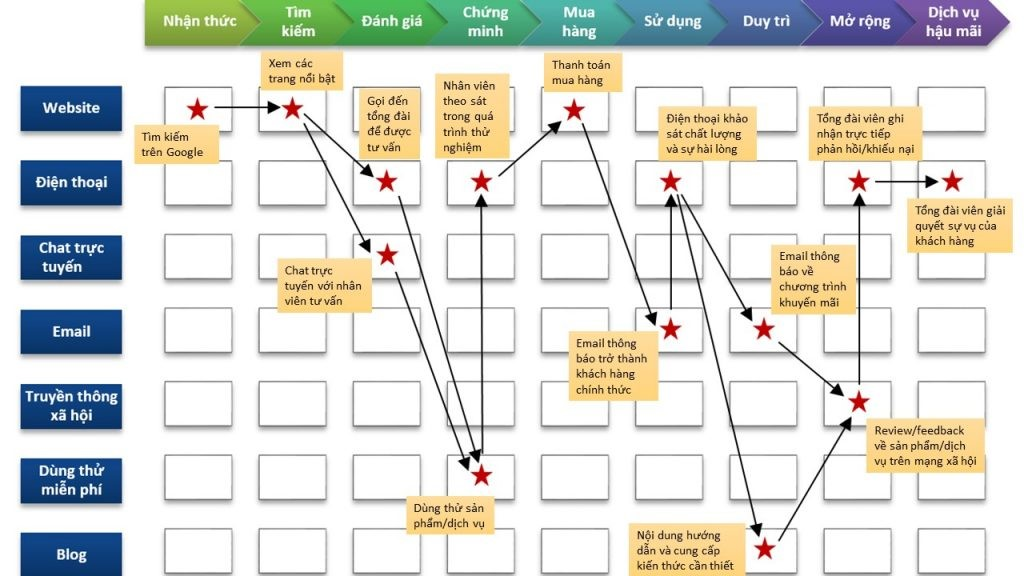
Drawing a customer journey map helps a business understand customer behavior. It gives the business deep insights into customers' pain points and how to improve the customer experience, and helps identify both potential customers and those with a purchase need so they make the buying decision.
Below is the 8-step process for drawing a customer journey map suggested by HubSpot:
Step 1. Set your objectives
You need to understand why you are doing this and what goal you are aiming for. Who exactly is your target audience? What experience is it based on?
Step 2. Create customer profiles and identify their goals
At this step, you need to conduct surveys to gather feedback and comments (feedback, reviews) from customers (actual or potential) through questionnaires. Some of the questions might be:
-
Which channel or medium did you first hear about our brand through?
-
What first caught your attention when you visited the website?
-
What problems are you facing, or what do you need help with from us?
-
How much time do you usually spend on the website?
-
Have you ever purchased a product or service from us? What was the deciding factor?
-
Have you ever interacted with the website intending to buy but then decided not to? What influenced your purchase decision?
-
On a scale of 10, how would you rate the navigation on the website?
-
Have you ever contacted our customer service department? How helpful were the answers, on a scale of 10?
-
What do you suggest to make your interaction process more convenient?
Step 3. Choose your target customer persona
Once you understand the characteristics of each different type of customer interacting with the business, narrow down and focus on one or two of those customer segments.
Step 4. List all the touch-points
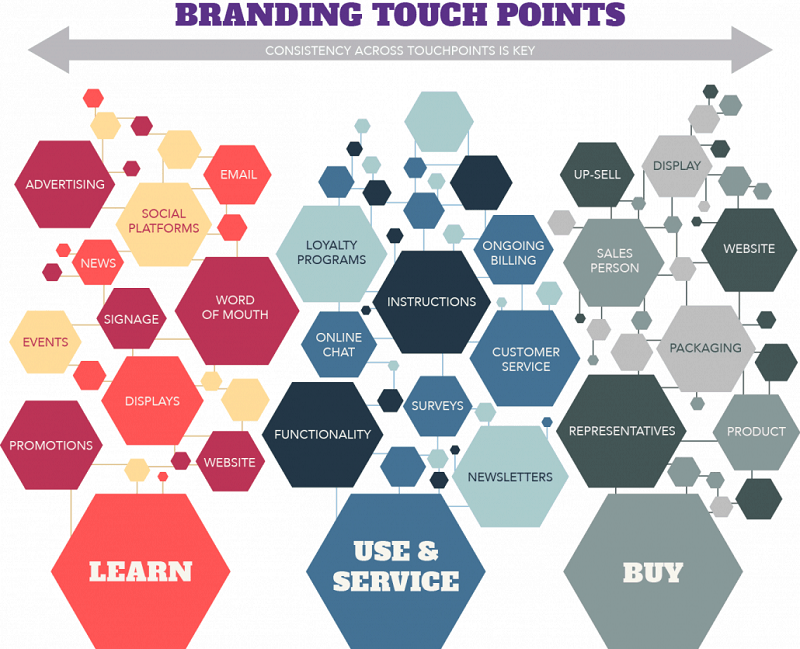
Touch-points are all the places on the website where customers interact with the business. This is a key element in drawing the customer journey map because it gives us a deeper view of customer behavior.
Don't stop your customer behavior research at the website — you can broaden the view to other channels such as social networks, paid advertising, email marketing, and the channels dedicated to reviewing and rating products and services.
- Actions
List all the actions customers take throughout their interaction with the brand — for example, searching Google for related keywords, clicking the email you sent, and so on. This is the opportunity for the business to streamline information later.
- Emotions and motivations
Every customer behavior is driven by emotion. And that emotion changes depending on the stage of the customer journey.
What influences the emotion behind each customer behavior is the pain point, or the problem they are facing. Understanding this helps you build a coherent, well-timed customer journey.
- Obstacles and pain points
One visible obstacle is cost — for example, a customer likes your product but discovers at checkout that shipping fees are quite high.
Understanding these obstacles and problems — and dealing with them — makes the customer's experience on the journey smoother.
Step 5. Identify the elements you want to show on the map
There are 4 types of customer journey maps; depending on the business's purpose, you can choose the suitable type:
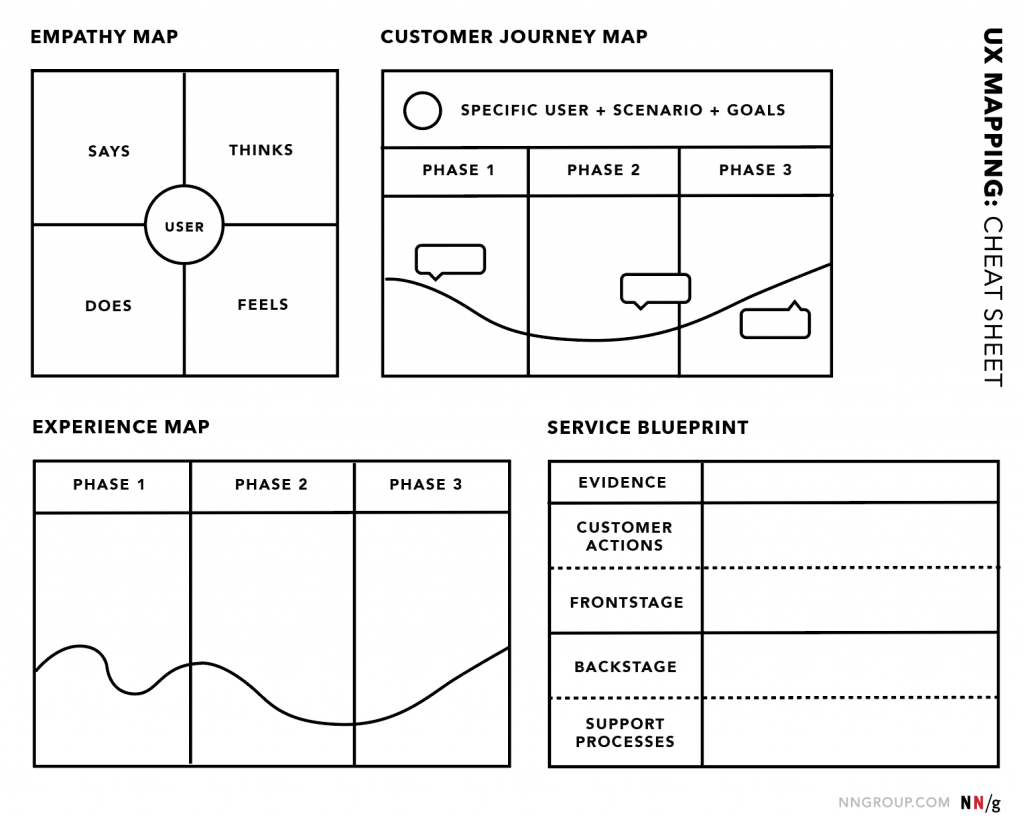
- Current State (Empathy Map)
This is the most common type, used to simulate the actions, thoughts, and emotions customers experience when interacting with the company. This map is very useful and can help continuously improve the customer journey.
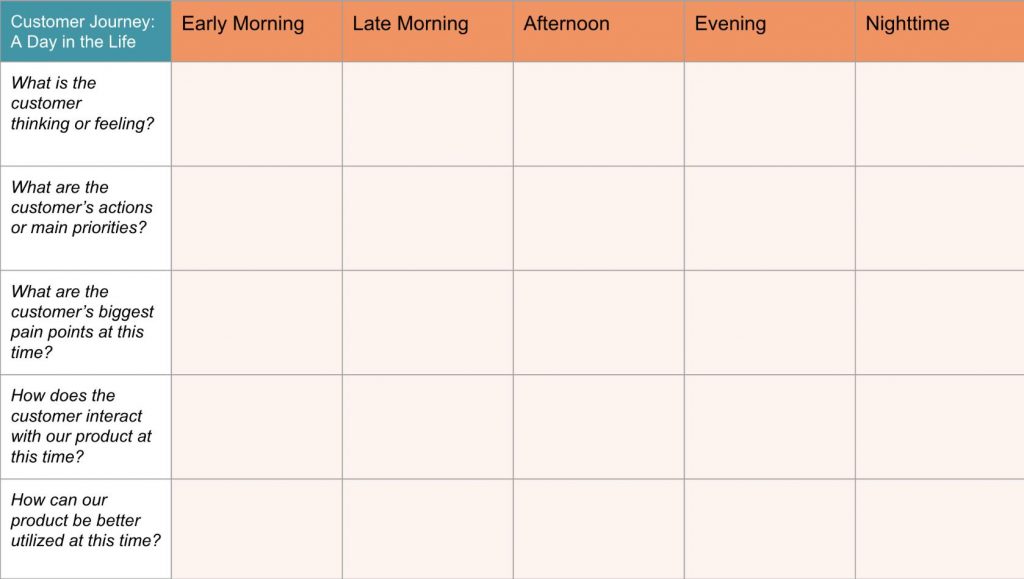
- Day in the Life (Experience Map)
This map depicts the actions, thoughts, and emotions customers go through across all the activities in their daily lives.
This type offers a broader, deeper perspective on customers' lives and their pain points. It is often used to address unmet needs even before customers become aware of them.
- Future State
This type describes the actions, thoughts, and emotions you believe customers will experience when interacting with the business in the future.
It is often used to illustrate a vision and set clear goals for the near future.
- Service blueprint
This map starts with a simplified version of the types above, but clarifies the elements responsible for delivering the experience: people, technology, policies, and processes.
This type is usually used to identify the root causes in the current customer journey, or to identify the steps needed for the customer journey of the future.
Step 6. Determine your resources
This section clarifies the resources you will need to create the customer experience journey as envisioned. So you need to list and leverage every resource you currently have, along with the ones you will need to improve the journey.
For example, your map reveals some errors in customer service, and the care team has no useful tools to follow up with customers after they purchase and start using the service.
This also lets you more accurately gauge how additional resources would affect revenue and business performance, so you can convince the management team.
Step 7. Take action
Finishing the customer journey map doesn't necessarily mean the job is done — you still have to analyze the results.
-
How many people clicked on the website but took no steps toward a purchase?
-
How can the business support customers better?
Analyzing the results will show where customer needs are not being met — only then can the business deliver a genuine customer experience. Each different customer group has its own journey, which customers go through by reading emails, searching online, and so on.
Step 8. Make changes and adjust in the real world
The analyzed data will tell the business what to do next — for example, adjusting the website, creating a more prominent Call to Action button, or adding a longer description to clarify features or benefits. Beyond that, your map should also be re-evaluated regularly every month or every quarter to find gaps or opportunities to improve the customer experience.

Customer Journey Map Template
Optimize your customer touch-points with 7 free templates!
Your information is invalid. Please try again!
Customer Journey Map Examples
HubSpot
HubSpot is an American software company in the sales and marketing fields. Its customer journey map provides a detailed outline to help businesses become well-versed in the customer journey.
Dapper Apps
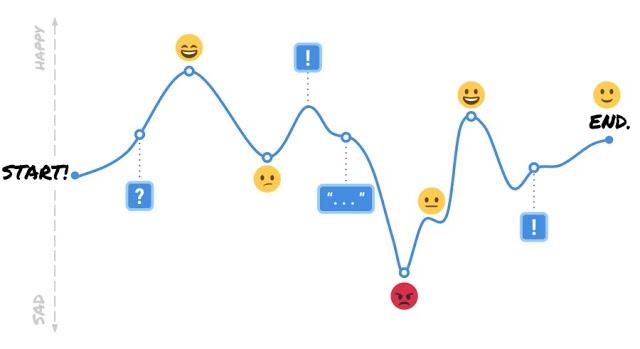
This customer journey map clearly shows the 5 steps customers go through when approaching a product. As you can see, the actual purchase stage is shaped by a combination of the initial customer behavior research conducted by Dapper Apps and customer needs.
Retail Customer Journey Map Template
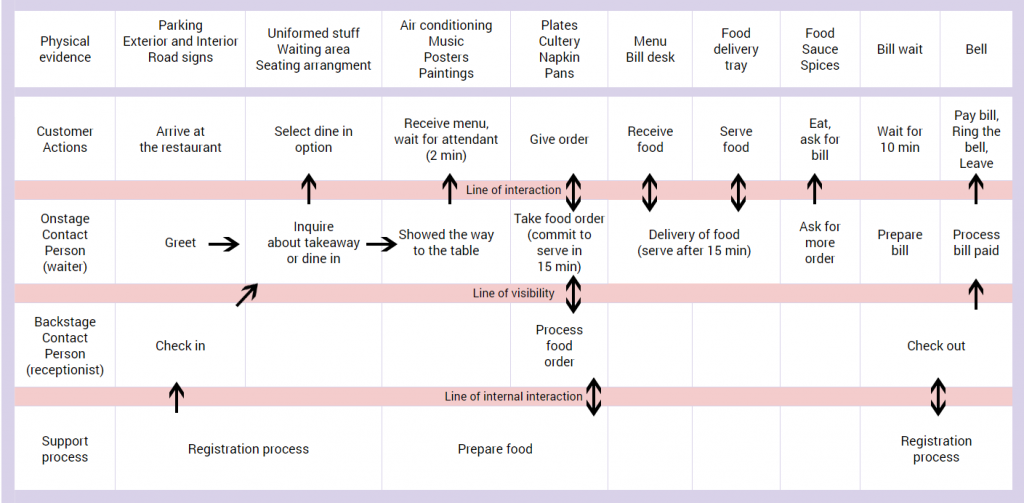
This mock-up map depicts the customer journey interacting with a virtual restaurant. This kind of map is certainly more detailed than the others because it specifies customers' direct/indirect interactions with the business, as well as the customer care process.
This map is somewhat more complex, but it captures every action related to the customer experience, including the behavior of customers, front-line staff, and backstage employees. By analyzing how each element affects the customer's journey, a company can find the root causes of risks and solve these problems for the future.
The 5A Customer Journey
Overview of the 5A customer journey
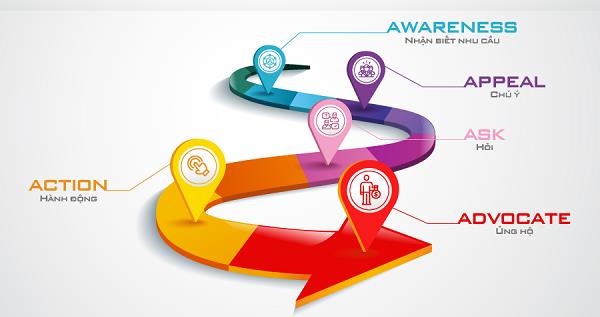
Building on the foundation of AIDA*, some marketers have developed the 5A model (previously the 4A model) — which is widely used in strategy building and in teaching about the customer journey.
*First introduced in 1898, AIDA is the pioneering model simulating the customer journey with 4 stages: "Attention," "Interest," "Desire," and "Action."
The customer's purchase journey under the 5A model:
Aware
At this stage, when a need arises, customers will recall the names of a number of brands, depending on the strength of each factor — such as past experiences, personal tastes, or the company's external marketing communications — and how much brand awareness there is.
Appeal
At this stage, the brands that deliver the strongest emotional responses to customers find it easier to move on to the next steps.
Brands with faint influence fall behind. So in highly competitive product categories, such as FMCG, the appeal must be even stronger (Omo, Sunsilk, Neptune...). You can clearly see this in the way brands run reminder advertising campaigns continuously over long periods to increase customer engagement, or ads that touch customers' hearts and minds.
For the young customer group, they are usually the earliest responders compared with other groups. For that reason, this young customer group is often regarded as the pioneer customer group in the digital era.
Ask
At this step, customers actively seek out information about the brand. They will research through friends, forums, community groups, Google, Cốc Cốc, Bing, and so on, or through magazines, books, and newspapers.
This "Ask" step in the 5A model differs from the 4A model in that there is interplay between online and offline.

Act
When customers are satisfied with the information they have gathered, they move on to the Act stage. At this step, marketers need to understand that it doesn't only mean making a purchase — it also encompasses the customer's experience.
Advocate
After a period of interacting with and staying loyal to the brand, customers develop a sense of loyalty and advocacy for the brand, reflected in their returning to buy products and services again and recommending them to others.
Through this article, we have explored the consumer's purchase journey and how businesses use the customer journey effectively in their business strategies. We hope SimERP's insights will help your business build a suitable customer journey!
Related Articles
Bài viết liên quan

25 tháng 10, 2026 · 3 phut doc
2024年网页设计趋势预测如何? | Wotech Electronics
关于 2024 年网页设计趋势——步入 2024 年,年初正是我们为新事物预留时间的时刻。这也非常适合设计师群体唤醒我们内心的"艺术之魂"。闲话不多说,快来和 Markdao 一起浏览 2024 年的 UX/UI 设计趋势吧,说不定您就能为自己接下来的网页设计项目"迸发"出一个绝妙的点子呢!

25 tháng 10, 2026 · 1 phut doc
什么是网站(Website)?网站的详细定义及其带来的商业价值
什么是网站(https://www.markdao.com.vn/blog/website-la-gi)——这个问题或许已经无需定义,因为在如今这个信息时代,网站对每一家企业而言都是不可或缺的组成部分。正是网站帮助用户更近距离地接触企业所提供的产品和服务,从而提升经营效益。此外,要在当今竞争如此激烈的环境中求发展,网站是一个重要因素,它将带你走向品牌与销量上的双重成功。

25 tháng 10, 2026 · 1 phut doc
什么是SEO标准网站?一场"打赢"Google SEO标准的战役 | Wotech Electronics
99%的用户在购买前会先搜索信息,73%的用户只会访问排名前10的网站,并认定它们是值得信赖的品牌……在数字营销爆发的时代,这些数字有力地印证了SEO标准网站的重要性。然而,许多人对什么是SEO标准网站(https://www.markdao.com.vn/blog/huong-dan-toi-uu-seo-website-chuan-seo-on-page)仍然相当模糊,并未真正理解。达到SE…