
What Is Consumer Behavior? Models and Influencing Factors | Wotech Electronics
Vũ Khôi
Tác giả tại Wotech Electronics Blog
What Is Consumer Behavior? Models and Influencing Factors
Vu Khoi
Author at Wotech Electronics Blog
For most businesses, the main source of revenue comes from the number of products they sell to customers. Therefore, to achieve good business results, companies need to understand their customers through various methods such as surveys and interviews. In particular, through the process of studying consumer behavior, a business can significantly improve its operating results. So let's explore consumer behavior together in the article below.
The concept of consumer behavior

First, let's answer the question together: "What is consumer behavior?" Consumer behavior is the purchasing responses people exhibit under the influence of external factors as well as internal psychological ones during the process of deciding to purchase a particular product or service.
Business organizations need to study consumer behavior in order to identify the characteristics, personalities, needs, preferences, and shopping habits of their customers — specifically, they need to find answers to questions about who their customers are, what they want to buy, why they buy, how they buy, where and when they buy, and how much they buy, in order to build perfect marketing strategies aimed at driving consumers to purchase their products or services. Studying consumer purchasing behavior is extremely important for business organizations — understanding customers' buying behavior is essential to helping a business grow faster.
To achieve this, businesses have made great efforts to organize research into consumer buying behavior in the market. So what have businesses done in that research process to learn about customer buying behavior? That is why in this article, SimERP will introduce what you need to know when researching consumer behavior in the global market in general, and in Vietnam in particular.
Some consumer behavior models in marketing
Marketing offers many consumer behavior models that businesses can apply. The most notable are the following three: the black box model, the Maslow hierarchy of needs model, and the Phillip Kotler model.
The consumer black box model
Studying consumer behavior in marketing is very important for businesses, because understanding consumers allows organizations to strengthen their competitiveness in the market. What all businesspeople care about is predicting how consumers will respond to the marketing strategies they have worked hard to create. To accomplish this, market researchers have tried to thoroughly study consumer behavior in the market and discovered the consumer black box model.
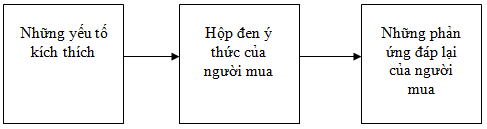
Stimuli enter the consumer's "black box" and generate responses. The stimuli here are marketing stimuli, including strategic activities related to products or services, pricing, the marketing mix strategy, distribution, promotion, and other factors such as the economy, science and technology, politics, and culture and society. The black box of consciousness reflects the thoughts, perceptions, and judgments of consumers as influenced by the stimuli described above.
These stimuli enter the consumer's black box of consciousness and then turn into a series of observable responses, including choices of products, brands, and suppliers, decisions about where to buy, when to buy, and how much to buy. The responsibility of market researchers is to study and observe how the stimuli are transformed once they are received into the consumer's "black box" — and why consumers undergo those transformations.
The Maslow hierarchy of needs model
According to Abraham Maslow, human needs are divided into five tiers, represented by a pyramid in which the lower tiers represent lower-order needs and the apex represents higher-order needs.
Tier 1: Basic / Physiological needs:
Physical needs such as breathing, eating and drinking, shelter, and other physiological needs. These are the most fundamental and strongest human needs. In the pyramid, these needs are placed on the lowest tier — the most basic one. Maslow believed that higher-level needs will not appear unless these basic needs are satisfied, and that these basic needs will dominate and drive people to act as long as they remain unmet.
Tier 2: Safety needs such as
A sense of reassurance about one's body and health, and about one's property and loved ones being protected. Once a person's basic needs have been met, safety and security needs begin to be activated. These safety and security needs manifest both physically and psychologically. They are often expressed through desires for stability in life, access to social insurance, retirement benefits, savings plans, living in a society governed by law, having a home to live in, and so on.
Tier 3: Belonging and love needs
This need is also known as the need to belong to a group or organization, or the need for affection and love. It manifests through social interaction, such as seeking out and making friends and joining communities.
Tier 4: Esteem needs
This is also called the self-esteem need, because it has two levels: the need to be liked and respected by others through one's own achievements, and the need to feel and value oneself and one's reputation, with self-respect and confidence in one's own abilities.
Tier 5: Self-actualization needs
This is the need to be creative and live life to the fullest — to express oneself completely and to be recognized as successful. Maslow described this need as follows: "A person's need to be themselves and to do what they were born to do." Put more simply, this is the need to use one's full abilities and potential to assert oneself, to work, and to achieve accomplishments in society.
The Phillip Kotler model
According to Phillip Kotler, consumer behavior is described through the following stages:
– Need recognition: This is the first stage of the buying process, when the consumer becomes aware of a problem or a need for a product or service.
– Information search: the consumer may learn about the product through various sources of information (personal sources, public sources, commercial sources, or personal experience).
– Evaluation of alternatives: the consumer uses the information gathered to evaluate the options before making a final choice.
–Purchase decision: after evaluating the options, the consumer chooses the products they consider the best. Where will they buy? How much? Which type?
–Post-purchase behavior: the consumer's behavior regarding whether or not they will use the product again in the future.
Thus, the essence of the Phillip Kotler model is precisely the consumer's decision-making process. SimERP will analyze this process in more detail below.
>> See more: The 3 Most Common Consumer or Customer Buying Behavior Models
Factors influencing consumer behavior
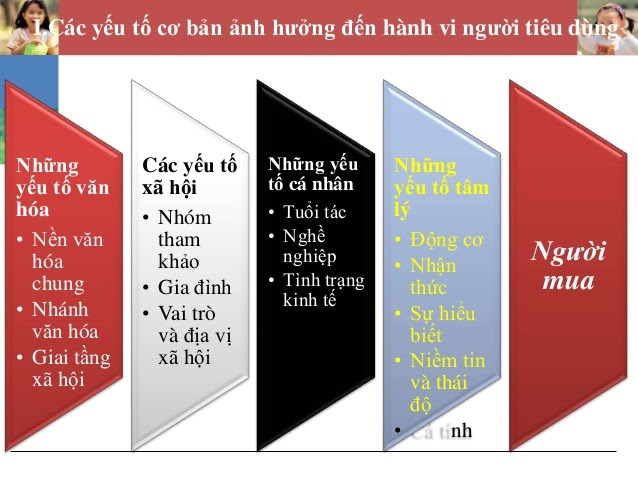
The factors that directly influence consumers' buying behavior are divided into four groups: cultural factors, social factors, personal factors, and psychological factors. Consumer behavior researchers always pay attention to, study, and explore how these factors affect customers' consumption of their products or services. Based on this, they can develop strategies and approaches that better fit their business.
Cultural factors
Culture
Culture is understood as a system of beliefs, norms, customs, and values that humans create on top of the natural world, reflecting the distinctive character of a community. Moreover, culture is formed and evolves over many generations, is passed down, and is absorbed from the very beginning of a person's life — from family, school, religion, and other members of the community. Culture is a fundamental factor that strongly influences human needs and consumption behavior.
Example: Vietnamese people view motorbikes as a means of transportation, so they prefer compact, small-sized bikes, whereas in Western countries motorbikes are used for recreation, and people there favor larger models.
Subcultures – secondary cultures
Notably, the culture of a community contains many smaller groups called subcultures. Ethnic origin, race, beliefs, religion, living environment, and daily habits create different beliefs, values, styles, and behaviors even among people living in the same society. We can understand a subculture as a distinct cultural group that exists as an identifiable segment within a larger, more complex society.
Subcultures are divided into many smaller groups based on fundamental factors such as ethnicity, geographic region, age, gender, and religion. If culture influences customers' consumption behavior, then these smaller cultural groups clearly shape preferences, personality, judgments, and shopping and product consumption behavior. To better understand the needs of buyers, marketers need to identify where their customers sit among the various subcultures along with those distinct consumption characteristics.
Example: In Vietnam, people in different geographic regions have different views and shopping habits.
Social classes
The division of social ranks is inevitable in every society. A social class can therefore be defined as a group of people of roughly equivalent rank in society, and a society typically splits into many different classes.
The formation of these ranks depends on many factors — not only income, but also education level, ability, occupation, status, where one lives and works, and one's relationships with other members of society. Differences between classes create differences in outlook, beliefs and values, and even consumption behavior. People from different classes have different needs and tastes in products, brands, and shopping locations…
Consumer behavior researchers must study social classes in order to clearly identify the beliefs, values, attitudes, and consumption characteristics of each class, and to select one or several classes as their target market.
Example: In the Vietnamese market, famous foreign fashion brands such as Chanel, LV, Gucci, and Dior sell at high prices aimed at the premium consumer segment; buyers of these products usually want to assert their status.
Social factors
Reference groups
Reference groups often influence a person's views, behavior, lifestyle, and consumption habits, and sometimes a group can create pressure that forces members to conform.
Example: Family members teach us how to choose what to buy — which company's brand is good, which product to buy, and where. Specifically, when we buy a motorbike, the family will offer opinions for us to consider, such as which model uses less fuel and is more durable than other brands.
Your company's products and brands may be affected to a greater or lesser degree by the influence of reference groups. If a product is a luxury, an expensive item few people can afford, it easily attracts attention, so the decision to buy it is usually more strongly influenced by other people's opinions than essential products — products many people own because of their necessity. In addition, luxury or essential products that are used in public are influenced by reference groups more than products of a private nature.
Family
The family is the social group that most strongly influences individual consumption behavior, because:
-
Changes in the demand for goods are always tied to the formation and evolution of the family.
-
An individual's purchasing decisions can be influenced by the habits, thinking, and consumption behavior of other family members.
Families are divided into two types: the family of orientation and the family of procreation.
-
The family of orientation spans multiple generations, such as grandparents, parents, and children. The influence of the family of orientation comes from one's grandparents and parents — a person's orientations regarding religion, political thought, economics, emotions, and hobbies. This influences consumer behavior either subconsciously or decisively.
-
The family of procreation consists of only two generations: parents and children. The family of procreation is a critical consumption unit, and the influence of the wife, husband, and children on everyday consumption decisions is very strong. The consumption behavior of parents or children changes depending on the type of product, their level of understanding and experience with the product, and their role and position in the family.
Thus, businesses need to determine how family members influence the purchase of a specific product in order to direct activities that stimulate that person's buying action.
Roles and status
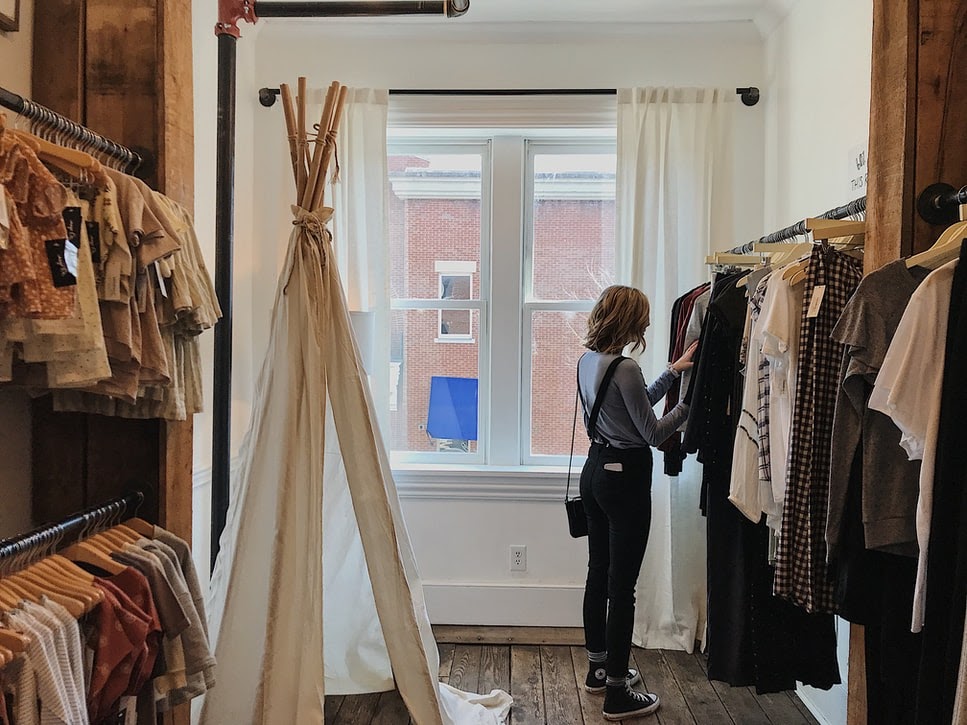
In society, each person holds a different role and status, and it is precisely that role and status that influences their purchasing decisions — people usually choose products and services that reflect their status.
Personal factors
Beyond the factors described above, a consumer's purchasing decisions are also influenced by their personal characteristics, such as age and stage in the life cycle, occupation, economic circumstances, lifestyle and personality, and self-concept.
Age and stage in the life cycle
Customers' needs, preferences, and consumption behavior also change with each stage of their lives. Needs for food, clothing, and entertainment when young differ from those in adulthood and again in old age.
For instance: Young people like to dress fashionably and stylishly. Middle-aged people prefer to dress modestly and maturely. And the elderly again prefer simpler clothing.
Occupation
In addition, consumers' shopping behavior is also influenced by occupation. A factory worker shops and consumes differently from the engineers or executives where they work. The differences in how these people consume are driven by income. Marketers can therefore segment the market by occupation in order to offer products and services suited to people's income levels or occupational requirements.

Economic circumstances
Economic circumstances are expressed through personal income, accumulated assets, borrowing capacity, and attitudes toward spending. Consumption behavior is also strongly governed by this factor. It is one of the factors that premium brands care about most.
Lifestyle
Lifestyle influences consumption behavior — the goods a person uses usually express their way of living. Marketers often explore the links between lifestyle groups and products, or position products according to different lifestyles.
Personality
Every person has their own personality, expressed through traits and qualities such as confidence, independence, liveliness, politeness, boldness, dynamism, humility, and competitiveness. Individual character also influences a consumer's purchasing decisions to a greater or lesser extent.
Psychological factors
Besides the three factors above, the psychology of consumer behavior is another important factor that all businesses pay great attention to. A person's buying behavior is influenced by four basic psychological factors: motivation, perception, learning, beliefs, and attitudes.
Motivation
Every customer has many distinct shopping needs, and a need becomes a motive when it presses strongly enough that the customer seeks every way to satisfy it.
Psychologists have developed many theories of human motivation, the most notable being Abraham Maslow's theory of motivation.
According to Maslow, humans have many needs at once, and those needs are satisfied in order of importance, from lowest to highest. He laid out five basic levels of human needs in a sequence, from the lowest-order needs to the highest-order ones. The lowest tier of needs repeats over and over; once these needs are satisfied, a new, higher need emerges, and so on. Maslow's hierarchy of needs is a useful tool for marketers in understanding consumers' motivations.
Perception
Motivation drives people to act, yet their actions are shaped by perception. This shows that a person's actions and reactions do not depend on objective reality but on their perceptual foundation.
Perception depends on the stimuli from the environment and the factors supplied by the individual themselves. Each person perceives the same phenomenon differently under the influence of perceptual factors, namely selective attention, selective distortion, and selective retention.
Selective attention:
In everyday life, people are constantly confronted with a huge volume of stimuli. Considering commercial stimuli alone, a person can hear thousands of advertisements every day. But they cannot pay attention to all of the stimuli — some will be filtered out.
Selective distortion:
Many stimuli are not received by consumers exactly as the sender intended. Psychologists believe that individuals tend to distort information in ways that reinforce their own ideas. Consumers usually try to interpret the stimuli they receive according to their existing thoughts and beliefs.
Selective retention:
People tend to retain information that reinforces their views and beliefs. Because of selective retention, claims about the merits of a product that consumers like or trust are more easily remembered at the time of purchase than the merits of a competing product.
Learning
Human behavior changes as a result of experience gained from learning and from life experience — from understanding how to live and treat others.
Learning helps consumers gain a more comprehensive view before making purchasing decisions and distinguish the different characteristics of products and services.
Example: A person who has bought a Sony TV knows Sony's quality well, and they tend to believe that Sony's cameras and cassette players are also very good (generalization); when comparing with other TV brands, that person will easily recognize the distinguishing features between Sony and those brands (discrimination).
Beliefs and attitudes
One final factor also plays an important role in consumers' purchasing decisions: beliefs and attitudes. If a person has good beliefs and attitudes toward your product or service, they will return regularly and always give your product priority whenever they shop.
The consumer decision process
Before making a final choice, the consumer goes through a process — a buying process consisting of five stages: need recognition, information search, evaluation of alternatives, purchase decision, and post-purchase behavior.
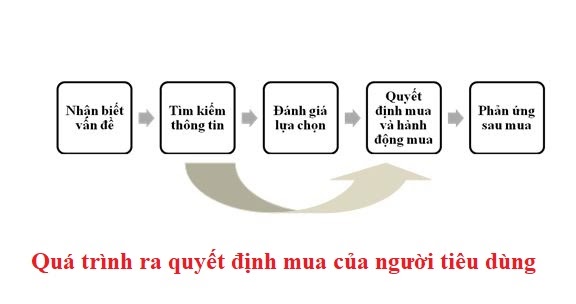
Need recognition
This is the first step in the buying process. Needs arise from both internal and external stimuli. For example: a person wants to eat something when they are hungry (internal stimulus), or when they pass a bakery and see attractively presented food (external stimulus).
At this stage, the marketer must anticipate what kind of need consumers will develop. Why do they have that need? How will they want to satisfy it? With which product? With which features? From there, they can deploy marketing programs that prompt consumers to respond when a need arises.
Information search
Gathering information helps consumers learn about different brands of a product and their characteristics. Upon receiving information, consumers will eliminate brands that don't fit their current needs. The remaining brands are evaluated, and a final decision is made. That is why marketers need to build the most perfect marketing strategies to bring their company's products closer to consumers — and to make it into the next stage.
The information sources consumers use to learn about products vary depending on the product being purchased and the characteristics of the buyer. Market researchers have identified four groups of consumer information sources:
-
Personal: information from family, friends, acquaintances, and neighbors
-
Commercial: information received from advertising, salespeople, packaging, trade fairs, and exhibitions
-
Public: objective information from mass media, government agencies, and organizations
-
Experiential: information customers gain through directly examining or trying out the product
Evaluation of alternatives
After searching for the necessary product information, the consumer moves on to the next step: evaluation, leading to a final choice.
Customers have many ways to evaluate products and services before making a final choice. Consumers typically tend to:
-
See each product as having multiple attributes, and evaluate the product through its attributes.
-
Note that each brand carries a distinct characteristic, which creates a brand image.
-
Choose to buy a brand that best satisfies the needs they are looking for.
Purchase decision
After evaluating, the consumer forms an intention to buy the highest-rated product and arrives at a purchase decision. However, between the intention stage and the decision stage, issues can arise that change the buyer's decision, such as other people's views, the opinions of family and friends, and situational factors. In addition, purchase intention can also change as a result of marketing activities. Marketers need to strongly influence consumers at this stage to drive the purchase decision.
Post-purchase behavior
After shopping, consumers use the product and typically experience either satisfaction or dissatisfaction.
Customers feel satisfied when the product meets what they expected. Satisfaction with the product influences later buying behavior — if a need arises, they will choose to buy your product again in the near future.
Conversely, if the product falls short of expectations, they will feel dissatisfied and frustrated, which can lead to spreading negative word of mouth to others, demanding refunds, filing complaints, and so on.
The marketer's task at this stage is to increase customer satisfaction or minimize dissatisfaction through after-sales support services, usage guidance, building relationships with customers, and encouraging them to provide feedback so the company can promptly correct its mistakes.
>> See more: Why Study Customer Behavior? And How?
Examples of consumer buying behavior
To better understand consumer buying behavior, SimERP will analyze a few examples — specifically the consumption behavior of tourists and Vietnamese consumption behavior.
Tourist consumption behavior

Today, as people's living conditions become increasingly comfortable, their living needs are no longer just adequate food and warm clothing, but delicious food, beautiful clothes, and even entertainment after tiring working hours. Because of that psychology, travel services have flourished accordingly.
Just like when buying other goods, before deciding on a destination, consumers also go through a process before making their final choice.
Basic characteristics of tourist consumption behavior
-
Large in scale and constantly growing.
-
Service consumers are very diverse and have different characteristics when purchasing and consuming travel products.
-
Constantly changing tastes in the consumption of travel products due to the influence of the environment and living conditions.
Factors affecting tourist consumption behavior
-
Culture: This is the foundational basis determining tourists' consumption behavior — what to eat, what to do, where to go, what to see, how to travel, and so on.
-
Cultural change and integration: It is precisely cultural integration and change that have created new travel products and services to attract more tourists. This has also changed tourists' consumption behavior.
-
Social class: In society, the higher a person's class, the greater their travel needs. When life is comfortable and abundant, people constantly think about entertainment and enjoyment.
-
Reference groups: the group that influences and governs an individual's travel consumption behavior. This group's consumption of travel services is often influenced by public opinion about the destination.
-
Family: Family members strongly influence the decision on a travel destination. For example: children like zoos and amusement parks, while parents prefer scenic, romantic places.
-
Psychology: This is also one of the factors affecting tourists' consumption behavior. For instance: when people are happy and life is comfortable, they will set aside time to travel. Conversely, someone who is always busy will not have time to go sightseeing and enjoy life.
-
Economic circumstances: This is an important factor in decision-making. A family with stable finances and high income will travel more than a low-income family.
-
Situation in the country: Tourists tend to travel to peaceful places where conflicts rarely occur. For example: during the recent COVID-19 outbreak, the number of tourists dropped significantly due to the epidemic, and so on.
In summary, tourist consumption behavior is influenced by many factors and can change over time. Therefore, organizations must constantly learn about and study this behavior in order to create unique travel services that attract more tourists.
Vietnamese consumption behavior

It can be said that today, consumer psychology and behavior in Vietnam are becoming increasingly complex and constantly changing. Our country is in the process of industrialization and modernization, so living conditions keep improving, and the consumption needs of the Vietnamese people have risen accordingly, specifically:
-
Nowadays, Vietnamese people tend to favor premium items such as Gumac, Gucci, and imported fruit, and so on. This consumption behavior occurs not only in cities but also extends to rural areas. These items have attractive designs and packaging, good quality… and make consumers feel more confident when using them.
-
Beyond using visually appealing products, quality and safety are also what Vietnamese consumers care deeply about. That is why they boycott and condemn poor-quality, unsafe products such as food and drinks.
-
Along with technological development, the Internet has become increasingly familiar and indispensable in everyone's life. Thanks to that progress, consumers can easily search for information about prices, product characteristics, low-end versus high-end goods, and factors affecting the business environment, and more.
As a result, this has become an advantage for businesses running brand advertising on social media. The trend of online shopping is also becoming more and more common across Vietnam and is gradually replacing traditional shopping.
Applied technology
Today, many businesses use software to manage and study their customer base. From this, they capture the behavior of consumers — their potential customers.
Many global companies today use various marketing and CRM software to study consumer behavior. Notable examples are two of the world's largest CRM software companies, HubSpot and Salesforce. The software from these two companies measures customer activities such as how long they read emails, which pages they view on a website, as well as what draws them to the product and why sales fail.
In Vietnam today, the market is also growing rapidly, and many Vietnamese-language CRM software products have been born to adapt to the digital technology era. SimERP is one of many software solutions with all the features of the products created by major global enterprises, designed specifically for the Vietnamese market. However, SimERP is known as an enterprise management software — meaning that in addition to the CRM module, SimERP also has many other modules such as accounting and warehouse management, helping many types of businesses across different fields solve individual problems. Moreover, SimERP is also open-source software, meaning the IT teams of different businesses can contribute to create their own modules and customize features to fit their company. This helps businesses not only solve the customer problem but also address many other issues in their management processes.
Conclusion
Those are some of the fundamentals of studying consumer behavior in the market that we have shared with all of you. We also hope you will deepen your knowledge of consumer behavior and distill some lessons for yourself when researching the market through this article.
In addition, using customer relationship management systems will also help you understand your customer base more clearly. For example, using a CRM lets you know who your key customers are, what they do for a living, and why sales fail. If you are interested, you can learn more with SimERP's CRM module!
Related articles
Bài viết liên quan

25 tháng 10, 2026 · 3 phut doc
2024年网页设计趋势预测如何? | Wotech Electronics
关于 2024 年网页设计趋势——步入 2024 年,年初正是我们为新事物预留时间的时刻。这也非常适合设计师群体唤醒我们内心的"艺术之魂"。闲话不多说,快来和 Markdao 一起浏览 2024 年的 UX/UI 设计趋势吧,说不定您就能为自己接下来的网页设计项目"迸发"出一个绝妙的点子呢!

25 tháng 10, 2026 · 1 phut doc
什么是网站(Website)?网站的详细定义及其带来的商业价值
什么是网站(https://www.markdao.com.vn/blog/website-la-gi)——这个问题或许已经无需定义,因为在如今这个信息时代,网站对每一家企业而言都是不可或缺的组成部分。正是网站帮助用户更近距离地接触企业所提供的产品和服务,从而提升经营效益。此外,要在当今竞争如此激烈的环境中求发展,网站是一个重要因素,它将带你走向品牌与销量上的双重成功。

25 tháng 10, 2026 · 1 phut doc
什么是SEO标准网站?一场"打赢"Google SEO标准的战役 | Wotech Electronics
99%的用户在购买前会先搜索信息,73%的用户只会访问排名前10的网站,并认定它们是值得信赖的品牌……在数字营销爆发的时代,这些数字有力地印证了SEO标准网站的重要性。然而,许多人对什么是SEO标准网站(https://www.markdao.com.vn/blog/huong-dan-toi-uu-seo-website-chuan-seo-on-page)仍然相当模糊,并未真正理解。达到SE…