
Sales Systems: The Art of Building and Managing Them Effectively | Wotech Electronics
Vũ Khôi
Tác giả tại Wotech Electronics Blog
Sales Systems: The Art of Building and Managing Them Effectively
Vũ Khôi
Author at Wotech Electronics Blog
Having an optimal, effective sales system helps a business grow revenue and develop more sustainably. However, building the sales system that best fits a business is no easy task. It requires deep understanding not only of the company and its products, but also of its customers. In addition, leaders must know how to manage the sales system using technological tools and software. Only then can business become more effective.
Understanding the difficulties businesses face when building and managing their sales systems, SimERP will suggest some optimal and effective methods in the article below.
What is a sales system? The role of a sales system
A sales system is the set of activities involved in selling products or services to consumers, including the points of sale receiving products, creating sales promotion activities, selling products and services to customers, and caring for customers after they buy.
The sales system plays an important role for every business, because it directly affects the company's business performance. Below are its three main roles.
-
Increases sales effectiveness: sales activities are optimized and synchronized within a defined system. Information flows faster and helps sales activities run smoothly.
-
Manages sales operations: sales activity follows a defined process. Information travels quickly both top-down and bottom-up, so employees can easily grasp their work items and managers can control sales operations more easily.
-
Supports building and executing sales strategy: with a tight process and fast information flow, the business can spot problems early, find their root causes and resolve them more easily. From there, it can build suitable sales plans and strategies to achieve the best results.
How to build a successful sales system
Businesses always understand the role of the sales system. However, building a successful sales system that fits the company is by no means easy. So SimERP will offer businesses suggestions for building the best possible system.
Build the sales system's organizational structure
The organizational structure should be built on the products, the nature of the business and its business objectives. Companies targeting international markets will have a different sales system from companies focused on the domestic market. In addition, different products call for different sales systems. For example, intangible products and services such as insurance and financial consulting have a sales system different from that of companies selling tangible goods like wooden furniture, bedding and mattresses. Businesses therefore need to analyze the factors carefully, including: the product, the nature of the business, and the business objectives.
Besides that, businesses can refer to the sales system structures of companies in their industry with a similar scale, both in Vietnam and abroad. From there, the company can build a sales system with a suitable organizational structure.
Build the sales process
To make selling go smoothly, the business needs to establish a common sales process of its own. These processes must be clear and easy to understand so employees can grasp them. Depending on the characteristics of the business, the company's strategy, its products and its target customers, each company has a different process. A typical sales process has 7 steps.
Prospecting
The salesperson searches for and approaches potential customers, determining whether they have a need for the company's products. You can find customer sources from company lists and social networks.
Preparation
In this step you must research the potential customer more deeply and find ways to connect your product with the customer's needs to prepare for the approach.
The approach
There are three main ways to approach customers: giving gifts or perks, asking questions to spark interest in the product, and providing free samples for customers to try.
The presentation
Prove to the customer that your product is of superb quality. But remember: don't just talk — listen, so you can better understand the customer's needs and wants regarding the product.
Handling objections
There will be times when customers push back on your claims about the product, saying its quality is not good or inferior to competitors. Handle this skillfully and gently, showing them they are mistaken.
Closing
This is when the customer agrees to buy your product. Depending on the business, there are different ways to close — for example, offering customers a choice of payment methods, giving them a promotion, or warning them about a future change to the product (usually regarding price or a product upgrade).
Follow-up
After closing the deal, maintain a good relationship with the customer and follow up to see whether they have any remaining issues with the product or the business. From there, turn them into a loyal customer.
Allocate resources
Resources play a vital role for any business. If you want to design a complete sales system, the business must know how to allocate them appropriately; otherwise it will be hard to achieve results.
Through metrics that assess employee performance and feedback from managers, the company can learn more about each employee's strengths and weaknesses. From there, divide the work so it matches each person's capabilities. Avoid situations where some people take on far too much while others do nothing, or where less capable people are assigned highly specialized or decision-making work.
Train employees

Many businesses skip or downplay the training process. Yet employees play a key role in the sales system. Train them, because they are the ones who create value for your business. Beyond professional knowledge, you must guide them through the company's and departments' processes. In addition, employees need to be able to use technological tools proficiently to boost their productivity and work more effectively.
Monitor and check the sales system
The business needs a system for storing documents and sharing sales processes — for example, a company server, Word or Excel. You should set milestones and mark the important events in the sales cycle. Today there are several sales management software programs on the market — SimCRM, for example — that can fully support you in doing these things quickly. In addition, the business should build a map to see the work cycles more clearly, in order to check for problems and fix them. Only then can you build a top-notch sales system.
How do you manage a sales system effectively?
When managing a sales system, a business needs to manage four main elements: products, inventory, employees and customers.
Product management
You need to manage information on the products added to the store and on the products sold each day. Each product type has a different barcode so the business can check them easily. Today there is software on the market that helps businesses manage their goods. The software automatically updates, generates reports and analyzes by period, making it easier for managers to keep track.
Inventory management
Mainly managing stock quantities and goods received, supporting the arrangement of goods in the warehouse, and the procedures for goods leaving and entering stock. To avoid errors that create risk for the business, companies should adopt warehouse management software, since such software is accurate and always delivers fast results.
Employee management
This is the team that works directly with customers. There is software that helps you manage employees daily and evaluate their performance against KPIs. ERP software such as SimERP helps you track each individual's work items and monthly KPIs, from which you can assess whether employees are working effectively.
Customer management
Customers bring you revenue. Track potential customers and turn them into real buyers of your products. This will be difficult without an optimal customer management system such as CRM. The software helps you improve customer relationships through streamlined processes.
If the business's budget does not allow it, you can use basic tools such as Excel or Outlook to enter customer data yourself. However, this is rather time-consuming and prone to errors during data entry, creating risk for the company.
Top 5 most optimal sales system management software today
Today the market offers quite a few different sales system management programs, helping businesses manage not just a single channel but an entire omnichannel sales system. To help businesses choose the best software, SimERP will suggest the top programs.
SimCRM
This is the all-in-one solution for businesses to manage their sales system best. With SimCRM, a business can easily manage human resources, customer relationships, sales, inventory and projects. With these four main functions, the company can track the entire sales process and its results completely and accurately. Managers can then devise suitable solutions to resolve issues in the system and grow the sales operation.
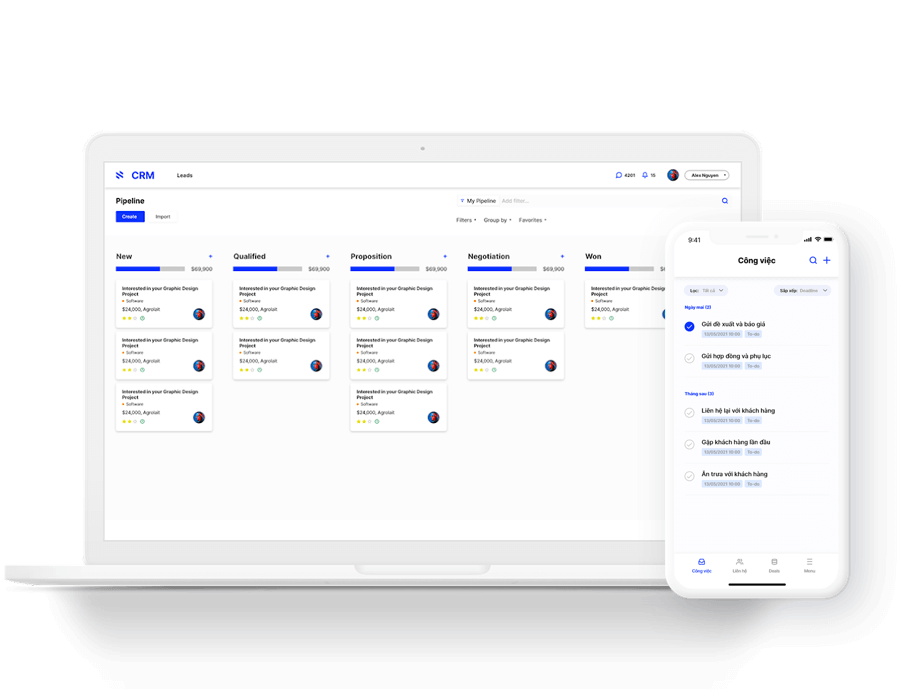
What's special is that SimCRM helps businesses manage an omnichannel sales system — not only through direct channels but also through online channels such as Shopee, Lazada and the company's own e-commerce site. Instead of using many different programs to manage different areas, a company can use SimCRM as a comprehensive solution for every sales channel.
SimCRM is currently offering a 30-day trial registration for businesses. So give SimCRM a try and experience it for yourself.
Sapo

Sapo is software quite familiar to every business. As an omnichannel management and sales platform, Sapo serves all types of businesses across different sectors, from fashion and retail to restaurants and coffee shops. The software is rated as quite easy to use and rich in features that help sell and manage stores effectively, such as fast checkout, invoice creation, and management of products, employees and customers.
However, Sapo mainly supports in-person selling. For online sales channels, the software only supports Facebook; channels such as Zalo, Shopee and Lazada are not yet supported. In addition, the company's mobile app does not support connecting with customers via Facebook.
KiotViet

The software's biggest strength is its simple, user-friendly interface, so applying it in your business is quite quick. KiotViet currently offers two product packages, for small businesses and for medium and large businesses, so customers can choose what suits their company. Its main features include invoicing, employee management, returns and exchanges management, business reporting and receivables management.
KiotViet's weakness is that customer management is not optimized — such as inbox management, online chat, and customer information from Facebook, Instagram, Shopee and more. The product is best suited to businesses that need warehouse management more than anything.
MShopKeeper – MISA sales software
This is relatively new software from MISA. The system mainly suits small and medium-sized businesses and fashion stores. For large enterprises with diverse industries and channels, MShopKeeper cannot provide support. Its main features include chain store management, barcode scanning, SMS marketing and integration with accounting software.
The software's advantage is its affordable price. Its drawback is that it does not yet support online business, focusing mainly on direct in-store sales.
POS365
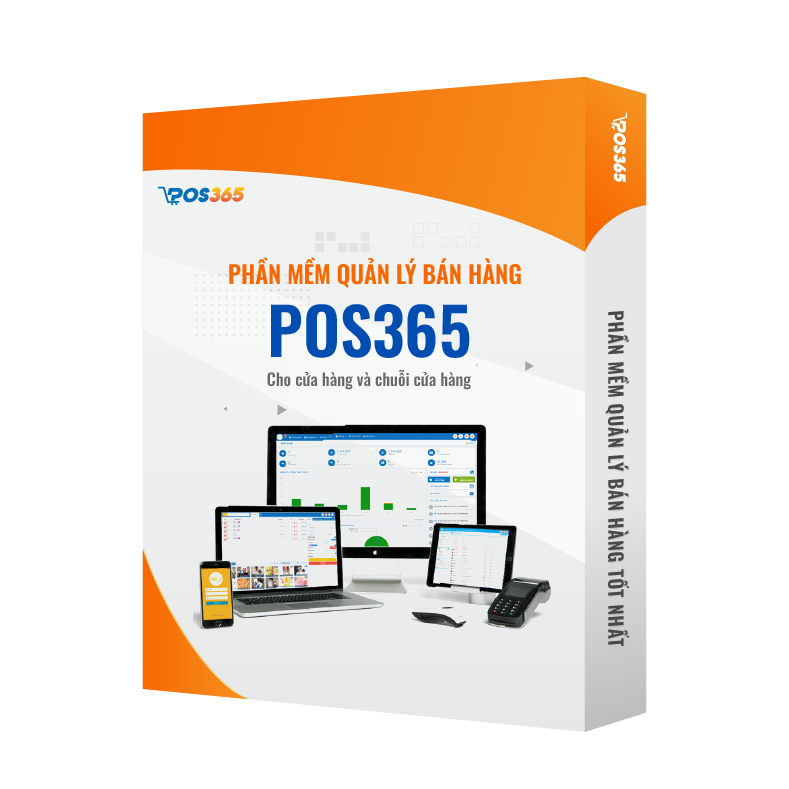
This is a tool that helps store owners check their business operations quickly and conveniently thanks to its powerful reporting features. The software lets you manage an unlimited number of items, easily look up inventory history, and reduce the risk of lost goods. In addition, POS365 manages cash funds by account, keeping tabs on the store's financial situation. Its customer relationship management tools are quite effective, helping you care for customers better.
However, it is not a tool for medium and large businesses, or those with omnichannel, multi-segment or multinational business models, since the software focuses mainly on small businesses.
Conclusion
With the suggestions above, businesses should be able to choose the optimal way to build and design their sales system, along with the sales system management software that suits them. For businesses selling online or offline directly through stores, simple, affordable software can be used to save costs.
However, for omnichannel businesses, or those that need to manage many different areas, a comprehensive solution like SimCRM is necessary. With its support for managing sales, HR, customer relationships and projects, SimCRM is certain to be the best option for managing your sales system effectively.
Related articles
Bài viết liên quan

25 tháng 10, 2026 · 3 phut doc
2024年网页设计趋势预测如何? | Wotech Electronics
关于 2024 年网页设计趋势——步入 2024 年,年初正是我们为新事物预留时间的时刻。这也非常适合设计师群体唤醒我们内心的"艺术之魂"。闲话不多说,快来和 Markdao 一起浏览 2024 年的 UX/UI 设计趋势吧,说不定您就能为自己接下来的网页设计项目"迸发"出一个绝妙的点子呢!

25 tháng 10, 2026 · 1 phut doc
什么是网站(Website)?网站的详细定义及其带来的商业价值
什么是网站(https://www.markdao.com.vn/blog/website-la-gi)——这个问题或许已经无需定义,因为在如今这个信息时代,网站对每一家企业而言都是不可或缺的组成部分。正是网站帮助用户更近距离地接触企业所提供的产品和服务,从而提升经营效益。此外,要在当今竞争如此激烈的环境中求发展,网站是一个重要因素,它将带你走向品牌与销量上的双重成功。

25 tháng 10, 2026 · 1 phut doc
什么是SEO标准网站?一场"打赢"Google SEO标准的战役 | Wotech Electronics
99%的用户在购买前会先搜索信息,73%的用户只会访问排名前10的网站,并认定它们是值得信赖的品牌……在数字营销爆发的时代,这些数字有力地印证了SEO标准网站的重要性。然而,许多人对什么是SEO标准网站(https://www.markdao.com.vn/blog/huong-dan-toi-uu-seo-website-chuan-seo-on-page)仍然相当模糊,并未真正理解。达到SE…