
A Detailed, Useful Guide to Email Marketing for Businesses
Vũ Khôi
Tác giả tại Wotech Electronics Blog
A Detailed, Useful Guide to Email Marketing for Businesses
Vũ Khôi
Author at Wotech Electronics Blog
Email marketing is the use of email to promote a company's products and services to consumers. It is currently a leading platform in terms of user numbers, and unlike other platforms, its reach is not subject to restrictions or controls. So how do you run email marketing effectively? Join SimERP in the useful email marketing guide below.
There are many situations where an email marketing strategy is worth using. Some of the most common include:
-
Building relationships: Build connections through personalized engagement.
-
Boosting brand awareness: Keep your business and services top of mind at the moment your potential customers are ready to engage.
-
Promoting content: Use email to share relevant blog content or useful content with your potential customers.
-
Generating leads: Entice subscribers to provide their personal information in exchange for content they find valuable.
-
Marketing products: Advertise your products and services.
-
Nurturing leads: Delight your customers with content that can help them succeed in their goals.
Email Marketing Guide: Building a Strategy

According to Campaign Monitor, each of your customers receives about 126 emails per day. To clear out their inboxes, customers often develop the habit of deleting annoying emails or marking them as spam without previewing the content. So how do you make your email stand out?
Sending emails the wrong way with irrelevant content can irritate customers and bring no benefits at all. To solve this problem, businesses need an effective email marketing strategy aimed at the right target audience.
Here are the 5 steps for building an email marketing strategy recommended by SimERP.
Define Your Target Audience
An effective email is one that is relevant and matches consumers' needs. You need to know the personality, interests, and behavior of the audience you're targeting. To do that, the business needs to build buyer personas.
Buyer personas can be created through research, surveys, and interviews. These methods are applied to potential customers as well as people outside the company's existing customer list — people who may fit the target profile.
Here are some practical methods for gathering the information you need to develop personas:
-
Review your customer list to uncover customer consumption trends.
-
When designing forms on your website, include key questions to mine customer information. For example, if your audience spans companies of varying sizes, you could add the question "What is your company size?".
-
Review feedback from the Sales team about customers. What new discoveries have they made about the customer persona? Have they noticed any needs or desires hidden deep within customers?
-
Interview customers and potential customers to discover what they like about the product or service.
Set Goals
For an email marketing strategy to be executed most effectively, goals are indispensable. To do this, you need to study your industry's average email statistics and the latest email marketing trends, as well as average open rates, average click-through rates, and more.
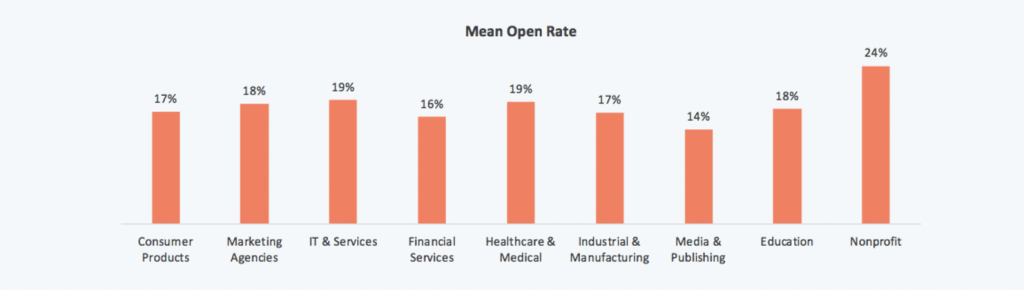
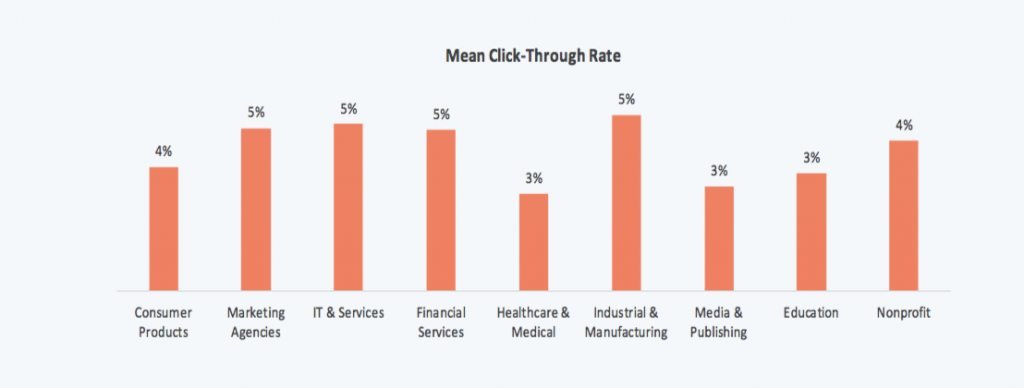
From this analytical data, set goals for each phase, sensibly divided across the whole campaign. Goals not only help employees shape the direction of their work, but also help the business measure campaign effectiveness better.
Build a Permission-Based Recipient List
An email list is a list of users who have permitted you to send them email. To achieve this, the business needs to build multiple ways to attract and persuade customers by offering the benefits they need.
And of course, the email list will be very small at first. The business needs to persevere and provide excellent customer care to those who have signed up, and you'll begin to see your email list grow organically.
Choose the Type of Email Marketing Campaign
Email campaigns differ from one another, and trying to decide among them can be overwhelming. Do you send a weekly newsletter? Should you send new product announcements? Which blog posts are worth sharing?
You can start by learning about the different types of email campaigns available, then decide which type is best for your audience. You should also set up separate lists for different types of emails so that customers and prospects only subscribe to the emails relevant to them.
Create a Schedule
Decide how often you plan to contact your email list, and give subscribers advance notice so they know what to expect. At the same time, stick to a consistent schedule to build trust and make a strong impression on your subscribers.
Measure Results
This is no surprise. Being meticulous about every key metric helps you make small changes to your emails that deliver big results.
After this email marketing guide on building a strategy, let's move on with SimERP to the steps for building an effective email list.
The Most Effective Steps for Building an Email List

Sending emails to the right audience helps businesses save time and money, increase conversion rates and revenue — without annoying customers. Here are two steps for building an effective email list:
Use Lead Magnets
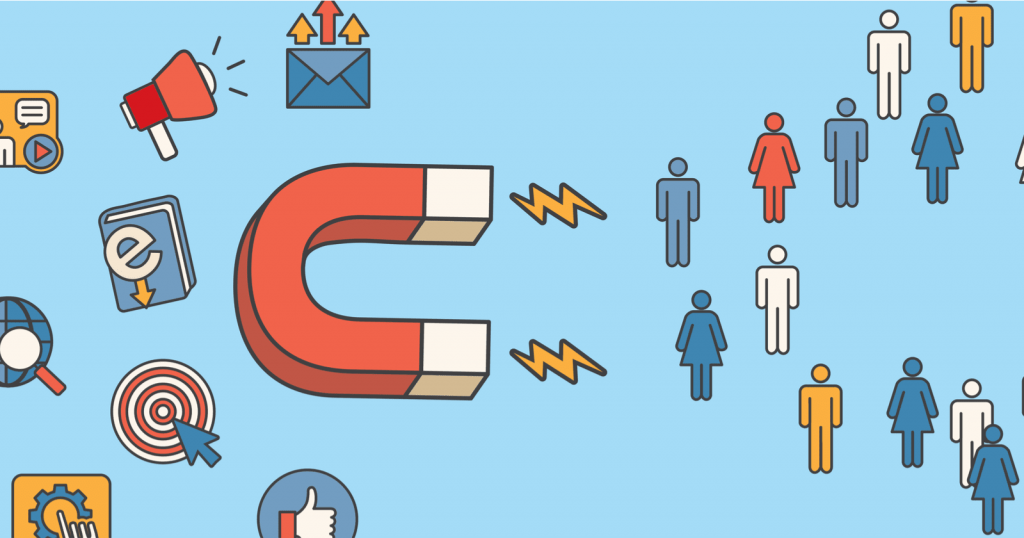
How do you get customers to subscribe to your emails? Make them genuinely interested in the products/services/activities or the content you can deliver. A lead magnet is exactly the vehicle a business can use to do this.
Asking customers for their email without offering something of corresponding value in return — such as discount coupons or promotional vouchers — will never produce results. A lead magnet is an invitation that promises some tangible benefit that makes customers interested and willing to subscribe. Here are some forms of lead magnets businesses can consider:
-
Ebooks
-
Infographics
-
Templates
-
Reports or research studies
-
Training videos and courses
An effective lead magnet must meet the following criteria:
-
The proposed solution is clearly oriented and actionable: provide useful information to solve a problem in a practical way.
-
Make sure the format of lead magnet you use is easy to use: whether it's a PDF, a web page, a video, or some other format, make it easy for your new prospects to obtain and use it.
-
Promise future content: nothing is worse than signing up for a great offer only to be disappointed by the content afterward. Make sure your offer matches the value you will deliver throughout your relationship with the customer.
-
Treat the lead magnet like a paid solution: by using a lead magnet with useful free content and proving the value your company delivers early on, your ultimate goal is to steer subscribers toward a paid offer — namely your products and services.
-
Create offers tied to each stage of the customer journey: Segment your customer list by letting them choose which distinct offers they want to subscribe to. From this data, you can more easily and effectively reach each group or audience segment through the things they care about.
Create an Attractive Signup Form
A signup form is how you capture potential customers' information to add them to your email list. A simple yet eye-catching signup form that still contains the necessary information is always the top choice for businesses in the digital age. Here are some tips for creating an attractive form:
-
Beautiful design with a compelling headline: Your form needs to carry your brand identity and stand out from the page, attracting customers to sign up with plenty of appealing offers.
-
Related to the offer: Although your goal is to get people to enter their information, the offers you present must be genuinely transparent so as not to erode subscribers' trust after they sign up.
-
Keep it simple: Asking for too much unnecessary information causes discomfort and makes customers suspicious of your offer. Simplify and only ask for the information you truly need and that customers are willing to enter.
-
Double opt-in form: It may seem counterproductive to ask subscribers to confirm twice, but a study of open rates has shown that customers prefer double opt-in emails 2.7 times more than welcome emails.
-
Make sure everything works: Before deploying the form, you need to test that it works as originally intended.
How Do You Execute Email Marketing?
The second part of SimERP's email marketing guide is how to run email marketing effectively.
Once you have an email marketing strategy with a suitable email list, consider the following:
Choose an Email Marketing Service Provider
Choosing the right email marketing service provider is a great move if you're struggling to execute your emails. Many providers today offer solutions to create, personalize, and optimize marketing emails effectively and professionally without a designer or IT expertise. This helps businesses reach customers more effectively. However, choosing a provider with a wide range of solutions must fit your business's situation, needs, and purpose.
Use Email Marketing Tips
To generate a large pool of potential customers, you need to invest more effort in your email marketing campaign. A successful marketing email should pay attention to the following email marketing tips:
-
Content: Your email content must match the message you want to convey and stick to a single topic.
-
Images: Choose images optimized for all devices — attractive and relevant.
-
CTA: Your call to action should lead to a relevant offer and stand out from the rest of the email.
-
Timing: Research the best times to send emails for each customer segment.
-
Responsiveness: According to Return Path, 55% of emails are opened on mobile devices. Therefore, your emails must be optimized for this device as well as all others.
-
Personalization: Sincere, friendly sentences are more readily accepted by customers than robotic, scripted wording.
-
Subject lines: Use clear, compelling language that is personalized and matches the email content.
Segment Your Email List
One of the email marketing essentials you need to master is segmenting your email list.
Email segmentation is the practice of breaking your email list into smaller sub-lists based on subscribers' personality traits and interests.
A study has shown that email segmentation generates 58% of total revenue for businesses. Each customer is at a different level of readiness to convert; segmenting your emails helps the business send emails with appropriate content to the right people, connecting with customers better and building trust. Here are some ways to segment emails effectively:
-
Geographic location
-
Awareness, consideration, and decision stages
-
Previous engagement with the brand
-
Language
-
Job title
In practice, you can segment your list in any way you like, as long as it fits the needs and goals your business has set.
Personalize Your Email Marketing
Email personalization means using the data collected from customers to deliver email content suited to each individual. According to a Campaign Monitor study, personalized emails have a 26% higher open rate and a 14% improvement in click-through rate compared to other emails. Here are the personalization-related steps in this email marketing guide:
-
Add the name field to your subject line and/or greeting
-
Customize based on geographic location where relevant
-
Only send emails related to the prospect's last interaction with the brand
-
Write about relevant personal events, such as holidays or birthdays
-
End your email with the signature of a specific individual
-
Provide CTAs with offers that appeal to the reader
Combine Email Marketing Automation
Automation is the action that puts your list segments to work. There are two ways to automate:
Autoresponders
Autoresponder emails (also known as drip campaigns) are a series of emails sent automatically after being triggered by a certain action, such as when someone downloads your ebook.
Use the same principles for writing emails that we discussed above to make sure readers find your emails useful and interesting. In addition, you need to decide the intervals at which emails will be sent, depending on your business's goals — every few days, a few weeks, or even months apart.
The great benefit of setting up autoresponders is that you only invest effort at the content-writing and scheduling stage. This saves staff time and effort while still achieving the goal.
Email Workflows
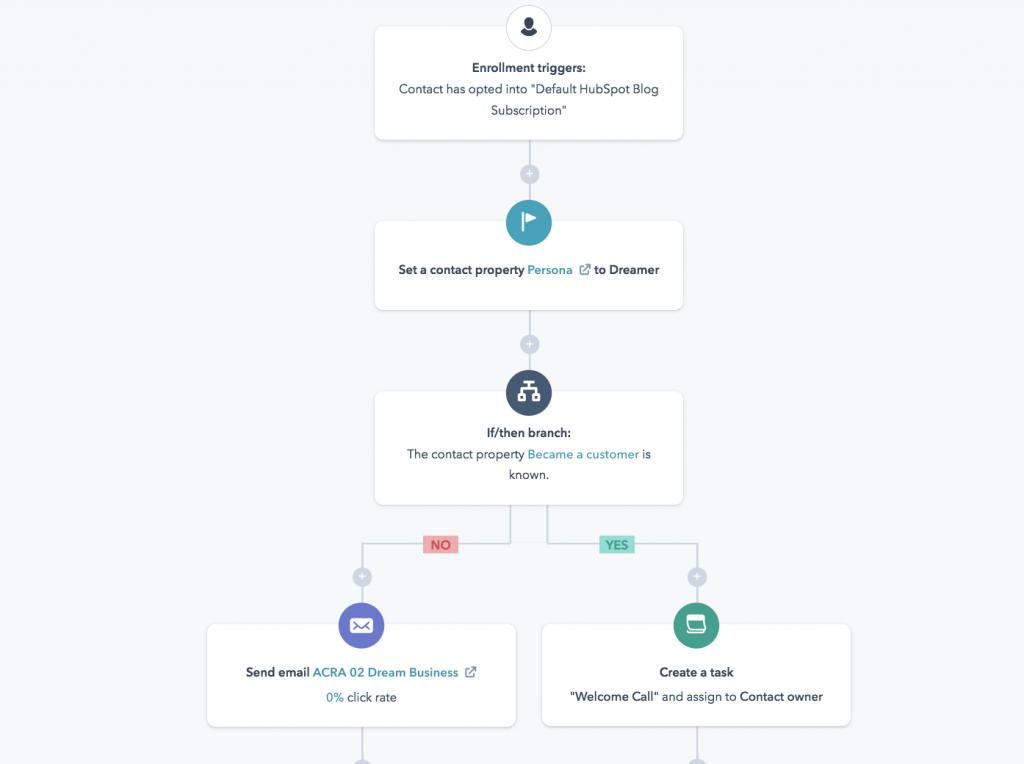
Once you have an automated email marketing workflow, sending emails becomes far more effective. Think of the workflow as a chart with yes/no branches that execute actions based on criteria you set.
A workflow has two main components:
-
The condition that starts the email workflow: the set of actions that trigger the process…
-
The goal: the action that removes the user from the workflow.
An automated email marketing workflow accurately predicts user actions and sets up a series of actions based on that behavior. That means it can send a sequence of emails or even change a lead's lifecycle stage based on user behavior.
The key difference from autoresponders is intelligent workflows: they can change the flow of your automated sequence based on what your leads do.
For example: if a new subscriber receives a welcome email, and the next email is set up to send them an offer they found and downloaded on your website, the email marketing engine adjusts. In an autoresponder, users receive a fixed set of emails at fixed intervals no matter what action they take.
Sending the right email at the wrong time hurts revenue. According to figures from McKinsey & Company, companies' revenue increased 20% when they sent emails based on lifecycle stages.
Use Email Marketing Templates
Nowadays, with the development of technology, a wide variety of email marketing templates have emerged as a useful resource that saves businesses a great deal of time designing and drafting emails.
Use Email Marketing Report Templates
The final email marketing step SimERP wants to share with you is using report templates.
Your data won't be used effectively if you can't report on it in an organized way. An email marketing report is a spreadsheet used to record achieved results in order to analyze KPIs and then set action plans to improve them. Here's how you should organize your report:
Questions to extract:
-
Is your email delivery rate higher than in previous periods?
-
How does your click rate compare to your open rate?
-
Is your unsubscribe count consistent with other emails?
-
Did your subject line perform better than others?
-
Does email length make a difference to the click rate?
-
Would a different type of CTA be more effective?
-
Have the offers matched each customer segment?
Conclusion: Email marketing is a popular marketing channel, rated as delivering the highest effectiveness, and one that businesses are investing heavily in. Through the detailed email marketing guidance shared above, SimERP hopes you will choose the right strategy and execute email marketing effectively, in line with your business's needs and goals.
Related Articles
Bài viết liên quan

25 tháng 10, 2026 · 3 phut doc
2024年网页设计趋势预测如何? | Wotech Electronics
关于 2024 年网页设计趋势——步入 2024 年,年初正是我们为新事物预留时间的时刻。这也非常适合设计师群体唤醒我们内心的"艺术之魂"。闲话不多说,快来和 Markdao 一起浏览 2024 年的 UX/UI 设计趋势吧,说不定您就能为自己接下来的网页设计项目"迸发"出一个绝妙的点子呢!

25 tháng 10, 2026 · 1 phut doc
什么是网站(Website)?网站的详细定义及其带来的商业价值
什么是网站(https://www.markdao.com.vn/blog/website-la-gi)——这个问题或许已经无需定义,因为在如今这个信息时代,网站对每一家企业而言都是不可或缺的组成部分。正是网站帮助用户更近距离地接触企业所提供的产品和服务,从而提升经营效益。此外,要在当今竞争如此激烈的环境中求发展,网站是一个重要因素,它将带你走向品牌与销量上的双重成功。

25 tháng 10, 2026 · 1 phut doc
什么是SEO标准网站?一场"打赢"Google SEO标准的战役 | Wotech Electronics
99%的用户在购买前会先搜索信息,73%的用户只会访问排名前10的网站,并认定它们是值得信赖的品牌……在数字营销爆发的时代,这些数字有力地印证了SEO标准网站的重要性。然而,许多人对什么是SEO标准网站(https://www.markdao.com.vn/blog/huong-dan-toi-uu-seo-website-chuan-seo-on-page)仍然相当模糊,并未真正理解。达到SE…