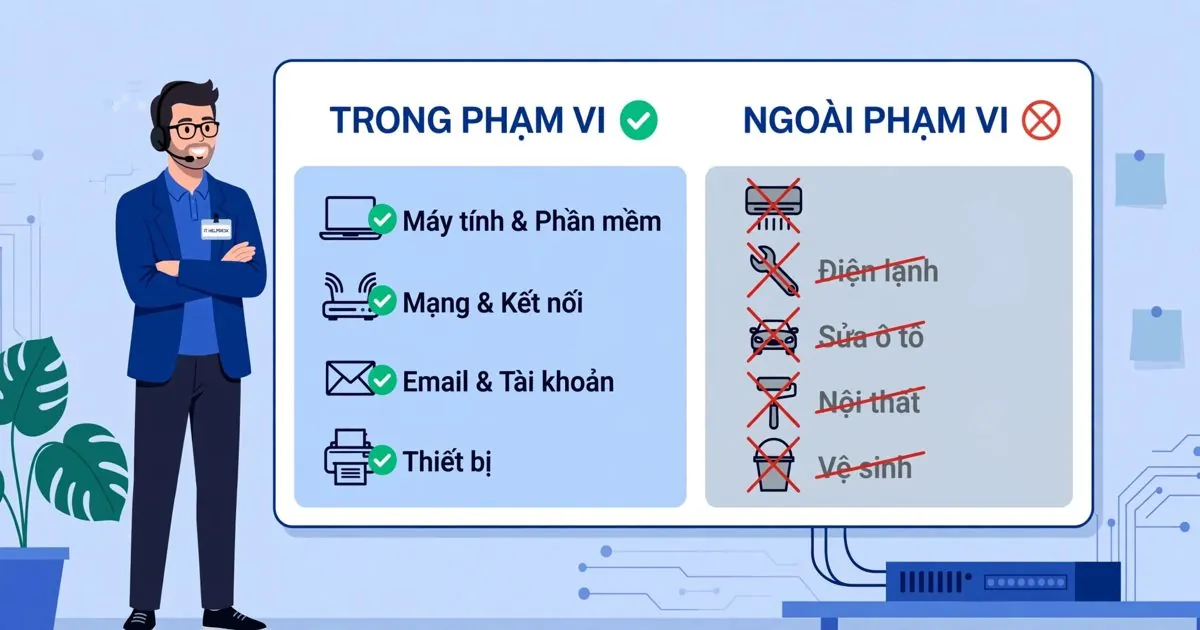
IT Helpdesk is not the 'fix-everything person': proper scope and professional standards
Vũ Khôi
Tác giả tại Wotech Electronics Blog

IT Helpdesk is not the "fix-everything person": proper scope and professional standards
In many Vietnamese companies, the word "IT" is treated as a universal rescue service: a broken computer, call IT; a paper jam, call IT; even electrical shorts, dripping air conditioners, or a broken personal phone — call IT. A view now gaining support in the IT community says: it is time to properly redefine the scope of the IT Helpdesk profession and build clear professional standards — protecting both the people doing the job and the business's operational efficiency.
The common misconception: "Call IT and everything gets fixed"
In professional groups such as Vietnam's IT Helpdesk communities, complaints about being assigned out-of-scope work are a familiar theme. IT staff get called up to fix electrical outlets, mount projector screens, install software on the boss's home computer, and are even treated as the company's entire mechanical and electrical department. The cause is very human: any device with a wire and a screen gets labeled "tech stuff", and IT is the department that "knows machines".
The cost of this misconception is far from trivial:
- For the professionals: their time is shredded by out-of-scope requests, leaving none for system upgrades, certification study, or preventive maintenance. Many leave the profession from burnout, not from the pay.
- For the business: genuinely critical incidents — slow servers, network outages, broken business software — queue behind all the "fix everything" chores, causing invisible operational damage nobody measures.
What is IT Helpdesk actually responsible for?
In short: all IT infrastructure and services that support the company's operations. Under the common classification in IT service management practice (the ITIL framework), a helpdesk's work falls into two main groups:
- Incident management: a computer that cannot access the system, a downed internal network, email that will not send, a faulty office printer, a locked account. The goal is to restore service as quickly as possible.
- Service request management: provisioning computers for new employees, installing software from the approved list, granting access permissions, booking meeting-room equipment.
There are also supporting tasks: guiding users through self-fixing simple issues, recording and maintaining a knowledge base, and reporting periodically on incident trends.
What falls outside the profession's scope
To build professional standards, the boundaries need to be named explicitly:
- Repairing household wiring, lighting, and air conditioning — that belongs to the facilities department or a specialized service provider
- Repairing employees' personal devices (private phones, personal laptops) outside the company's support policy
- Designing ad content, editing videos, retouching photos — that belongs to marketing/design
- Installing and maintaining specialized production equipment — usually the equipment vendor's responsibility under the warranty contract
This does not mean IT "won't help". In practice, IT can advise on purchases, walk users through usage, or connect them with the right service provider — but without taking over their role.
Build standards with process, not slogans
Professional standards exist only when they are written into policy and backed by the business. The minimum components:
- A service catalog: a public list of what IT does and does not support. Employees know which door to knock on, and IT has grounds for a professional refusal.
- A ticketing system with priority classification: every request goes through a single channel and is ranked by business impact rather than by "who shouts loudest".
- Response-time commitments (SLAs): a company-wide system outage gets the highest priority; a software installation request can wait its turn on the schedule.
- An escalation mechanism: IT is not expert at everything — when an incident belongs to a third party (the network carrier, the software vendor, facilities), the process must allow a fast handover with someone tracking it until the ticket closes.
- A knowledge base: self-service guides for the most repeated issues, reducing the load on both sides.
A perspective for Vietnamese businesses
In SMEs the IT department is often just one to a few people, so the boundaries blur even more easily — one person doubles as "computer repair", "network cabling", and "the one called to fix the air conditioner". Managers need to take the initiative:
- Answer clearly: "why does our IT department exist?" — the right answer is always tied to keeping the systems that serve the business running stably.
- Publish the service catalog and back up IT staff when they professionally decline out-of-scope requests.
- Measure IT effectiveness with incident data and recovery times — not by the feeling that "they must show up the moment I call".
Companies that do this well not only retain good people but transform IT from a "universal rescue service" into an internal service unit that can be measured and continuously improved.
Conclusion
"IT Helpdesk is not the fix-everything person" is not a complaint; it is a declaration that this profession has its own scope, standards, and value. When a company defines the boundaries correctly, invests in process, and respects the expertise, the IT support function delivers its real power: keeping the entire technology operation running smoothly — and that is what truly "fixes" the company's biggest problem.
Source: compiled from technical discussions shared on Facebook, edited by Wotech Electronics.
If your business needs advice on building a standardized IT Helpdesk process — from the service catalog and ticketing system to SLAs — the Wotech Electronics team is ready to work alongside you.
Bài viết liên quan
31 tháng 10, 2026 · 6 phut doc
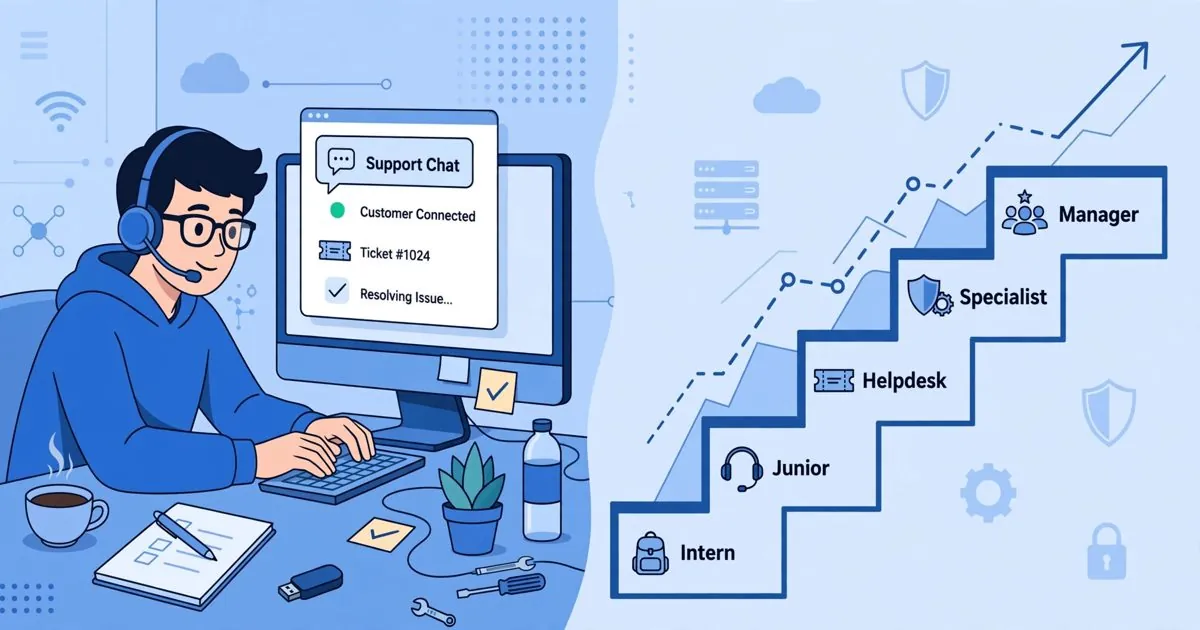
IT Helpdesk for fresh graduates: a 9.1 million VND salary and a career roadmap
Graduated in an IT field but not confident about writing code yet? IT Helpdesk is one of the most common entry gates into the industry — nearly every company with a few dozen employees or more needs …

30 tháng 10, 2026 · 5 phut doc
Nous Research's HermesAgent: an AI agent that learns skills and remembers across sessions
Most AI chatbots today "lose their mind" every time you open a new conversation: everything you taught them last time vanishes completely. An open-source project from Nous Research called HermesAgent…

29 tháng 10, 2026 · 5 phut doc
How to check whether your personal email has been leaked: breach lookups and response
"You think your email address is safe and nobody knows anything about you?" — a live experiment by the cybersecurity media channel Parlons Cyber made viewers reconsider that assumption. With nothing …