What Are High-End Customers? How to Reach High-End Customers? | Wotech Electronics
Vũ Khôi
Tác giả tại Wotech Electronics Blog
What Are High-End Customers? How to Reach High-End Customers?
Vũ Khôi
Author at Wotech Electronics Blog
In fact, research shows that 65% of a company's business comes from repeat customers, and 80% of a company's revenue is generated by the top 20% of its customer base. This 20% of customers are precisely your high-end customers. And among those buyers, the first 10% of customers are likely to spend three times more than average customers. This means that for every high-end customer who leaves, your business loses revenue equivalent to three customers.
In this post, let's explore the high-end customer insight. Who are they? What do they want? And how can a business retain this vital group of customers?
What are high-end customers?

High-end customers are customers who have a significant impact on a company's profits. These customers are extremely important to the business because they are the biggest buyers and can influence how others perceive your brand.
To easily find your high-end customers, start with customer segmentation. This is the practice of dividing customers into groups with shared characteristics, which then facilitates the business's commercial strategies.
You can segment customers in the following ways:
-
Demographic segmentation: use factors such as age, gender, income, occupation, etc. to segment customers.
-
Psychographic segmentation: by monitoring and analyzing customer behavior, you can produce accurate psychological analyses of your target customers to craft suitable advertising and business strategies.
-
Behavioral segmentation: studying customers by behavior, purchase reasons, desired benefits, usage rate, loyalty, etc. provides valuable information for the business's current and future campaigns.
How to find high-end customers
Many businesses attract high-end customers through ad campaigns targeted by behavioral and demographic factors.
But here is a mistake you might be making: You are building your high-end customer profile based on your entire customer base, including ordinary customers. This strategy reduces advertising effectiveness, because you are also paying to advertise to small buyers.
Instead, define your customer profile based on only your highest-value customers.
By targeting only high-end customers, you will see significant improvements in campaign performance and business growth.
Here are 4 steps to build a strategy for finding high-end customers.
>>>> Read more: 13 ways to find new potential customers for your business
Identify your core products to attract customers
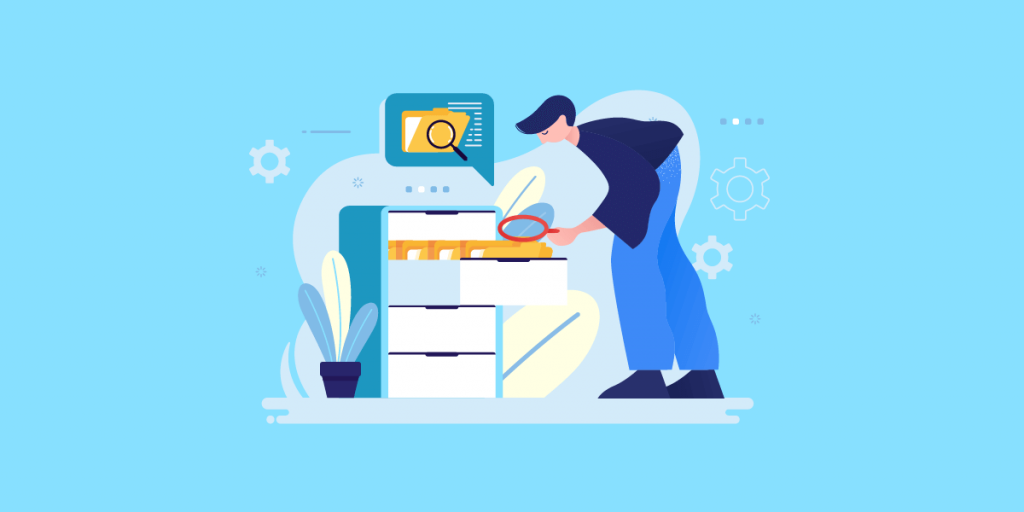
By identifying the products your customers buy most often, you can better understand what attracted your first-time buyers.
A few tips for you:
Before you begin, think about the level of product categorization you should use for analysis.
If you go too granular by comparing individual products, you may create too many tiny segments, which drives up campaign costs considerably. That will reduce your profit margins. On the other hand, categorizing products too broadly will not produce results you can act on for your campaigns.
Once you have categorized your products, start ranking each product category by the number of customers who have purchased from it. Then measure the value of those customers.
Collect customer data & filter customers who have purchased the products

Once you have created the product categories that tend to attract high-end customers, the next step is to collect potential customer data & analyze the customers who have purchased those products.
Build a segmented list of all buyers within one product category. Then add criteria to improve the quality and value of this segment. Those criteria include:
-
One-time buyers: Exclude customers who have purchased only once.
-
Gender: Do your core products apply to both male and female customers — or do you intend to design them separately for the two genders?
-
Email engagement: Include only customers currently subscribed to your company's email marketing.
-
Recent customers: Make sure you are targeting customers who are likely to still be interested in your brand and products.
As you continue filtering your customers against these criteria, you will notice the numbers shrink with each pass, but the value goes up.
>>>> Read more: 10 ways to collect customer information from Website, Facebook, Phone
Sketch the high-end customer profile from high-value segments
Here are 3 simple steps to do this:
Step 1: Process the data
From the data collected above, process and sort the information into groups so you can sketch a preliminary profile. Some ways to sort the information:
-
Personal information
-
Occupation
-
Income
-
Needs
Step 2: Sketch the customer profile
Once you have gathered sufficient customer data, start building the profile of your target audience with specific characteristics.
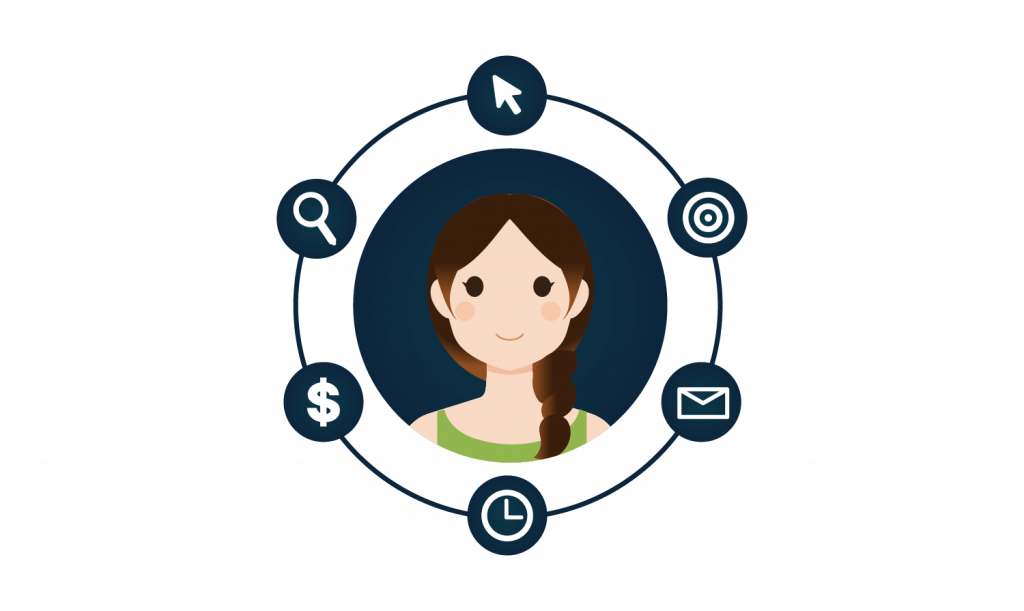
Go ahead and "name and draw a face" for this person, attaching psychological, behavioral, personality, and customer-journey traits as stickers on that portrait, so you can visualize your target customer as clearly as possible.
Step 3: Update the information
Naturally, you should strive to collect information comprehensively, with the most accurate data, while developing the profile concept. In practice, however, during initial testing you may notice characteristics you accidentally overlooked while studying the data. At that point, you should update the target customer information on the previously sketched profile.
>>>> Read more: What is customer classification? Why do it? How to classify?
Target customers toward your core products

Once you have sketched the customer profile, you need an effective product promotion strategy. Beyond traditional advertising such as posters, banners, and flyers, businesses are now increasingly running ads on popular social networks like Facebook, LinkedIn, and Instagram. Below, SimERP will point out the simplest tips for getting started with Facebook ads, so you can grasp customer insight and optimize your opportunities to reach high-end customers.
Here are some simple tips to help you get started:
-
Design separate ads for each distinct segment so you can evaluate the relative performance of each audience.
-
Experiment with different ad formats by creating separate Ads Sets combined with the audiences and criteria in your campaign.
At this point you can use the process of elimination to find the ad format with the greatest potential:
-
Story with feed
-
Single image versus Video and versus Carousel (ads with up to 10 images or videos)
Combining multiple ads within an Ads Set can also give you valuable customer insights. Here, consider testing different visuals and calls to action.
How to retain high-end customers
High-end customer groups are not always loyal to a business. If you don't care for them thoughtfully, they can turn into ordinary customers — or worse, abandon your brand. We all know that attracting new customers is hard and expensive. According to ClientHeartbeat, studies from the U.S. Chamber of Commerce show that acquiring new customers can cost 5 to 7 times more than retaining existing ones. At the same time, the profitability of each customer tends to increase the longer they stay with the business.
So the best way to grow your business is to keep your current high-end customers. Here are some suggestions to help you retain these true "gods":
Build a strong relationship

Your relationship with customers doesn't end right after they complete a purchase or use a service. Nurture your relationship with customers throughout your time working together and beyond. Send them marketing emails every one or two months, check whether the product meets their expectations, and whether they are satisfied with your product or service.
The more customers trust and are satisfied with you, the more likely they are to stay and recommend your brand to people around them.
>>>> Read more: 6 effective customer retention strategies every business should apply
Here are a few ways to build a strong relationship with customers:
Personalization in customer care
Product quality is no longer the only factor contributing to customer satisfaction. Don't treat customers as a task you must finish by the end of the day; see them as friends and offer them personalized services.
Handle negative feedback well:
Negative customer feedback is insight that helps improve the company's management system. Collect the feedback, admit mistakes, address them sensibly, and turn failure into success.
Build a loyalty program:
If you're looking for ideas to benefit customers and keep them close, try introducing loyalty programs and offering gift vouchers, discount codes, point-accumulation programs, etc.
Anticipate needs
Take a proactive approach to customer service and customer experience. Instead of waiting for problems to arise, implement predictive service to eliminate issues before they occur. This usually involves reviewing your operations closely and preparing a contingency plan for everything that could go wrong.
Here are 3 current demand-forecasting approaches:
Forecasting based on historical data
This data tells the business things like:
-
Who are the business's former customers?
-
What are their needs, preferences, and habits?
-
What are their demographic characteristics?
All of this is extremely valuable information for predicting customer needs.
Competitor analysis
This is also a very effective way to predict customer needs. Why do customers choose the competitor over you? How has the competitor met consumer needs? What makes consumers give priority to your competitor? Answering these questions will help your business uncover part of customers' current needs.
Conduct interviews and surveys
Interviews and surveys are also effective methods. Interviews and surveys can be conducted with questionnaires, phone calls, in-person interviews, survey forms, etc.
Build an effective Marketing strategy
Step 1: Leverage Social Media
Nowadays, maintaining social media presence is mandatory for every business. One of the benefits it brings is the ability to re-attract old customers in truly unique ways.
Suppose you work with a customer, they are happy with you, and then the relationship ends. Social media gives you the opportunity to occasionally give them a gentle "nudge" with an article or a small ad, reminding them that you're still around. This ensures you stay top of mind in case a friend or colleague of theirs is looking for the products or services you offer.
Actively listen and join conversations in your field
Most online conversations will not take place on the Facebook page or in the groups you create. That's why you need to actively monitor trending keywords and relevant hashtags being used on social media.
You can use a few tools like Social Mention to track phrases related to your business and industry: your company's name, your competitors' names; keywords related to common issues in your target market, etc.
Invest in paid Retargeting ads
If you haven't built a large social media following yet, you may need to invest in paid ads, especially retargeting ads, which are increasingly favored by businesses. This is a form of follow-up advertising based on users' activity on the business's website.
LinkedIn is a social network centered on businesses for the purpose of recruitment and expanding business networks. So advertising on LinkedIn can help your business reach managers, business professionals, or high-end customers.
Like Facebook, LinkedIn has a very high conversion rate and lets you target the most relevant groups across categories such as demographics, behavior, interests, and job titles.
Step 2: Focus on Email Marketing
Many businesses think that email marketing only works with existing customers. That is completely untrue!
Email is a wonderful channel for attracting new customers. You should focus on opt-in campaigns (inviting customers to subscribe to emails from your brand). If you simply buy a long email list and spam content to recipients, they won't want to share your emails with anyone. The first thing to keep in mind with email marketing is to make sure you have followers who are genuinely interested in your email content.
You can refer to email marketing software to start your own email marketing strategy. For example, SimCRM is currently offering a completely free 30-day trial!
Sign up for a trial by clicking the button below!
Send valuable offers
If you send genuinely valuable and interesting offers — whether discount information, download offers, or educational content — recipients will find it much easier to share the email with their friends and family.
Give recipients the tools to share
Don't forget to add a "Share with a friend" feature or social media share buttons in every email to encourage customers to spread the content. A typical marketing email today always includes these functions.
Step 3: Build a business blog and website

According to a recent HubSpot report, businesses that blog 6–8 times per month get double the customers. This shows that a blog is an effective channel for attracting potential customers.
In each blog post, insert prominent call-to-action (CTA) buttons and links to landing pages. The link should match the published content as if it were aimed squarely at the target audience.
In addition, the blog is also where you post customer reviews and testimonials. Consumers always tend to seek information and reviews from other customers before deciding to make a purchase or use a service. So this is a way to both boost blog traffic and increase your chances of attracting potential customers.
The method is simple: If customers are happy and satisfied, record their reviews and comments, ask permission to use them, and publish them on the blog where everyone can see. This is an inexpensive and highly objective way to advertise your services.
Seek opinions and record feedback
Feedback is always useful for a business. It gives you the most objective view of how you're doing, what your strengths and weaknesses are, and so on.
Survey both types of customers — high-end and ordinary — and then find out what makes these two groups different. High-end customers can reveal your strengths and unique qualities. On the other hand, ordinary customers provide insight into your weaknesses and show you how you can improve.
One survey you can use is the Net Promoter Score (NPS) — asking customers how likely they are to recommend your brand to friends. This survey asks participants to rate their likelihood to recommend on a scale of 1–10, while also allowing them to share their own opinions. With this survey, you can quickly identify who is most likely to recommend your brand and who is most likely to leave after interacting with it.
Conclusion
The top 20% of customers generate 80% of a company's revenue — with this level of customer segmentation, you can focus your advertising budget on the high-end customers who bring the most profit to the company.
We hope this article has helped you learn how to reach high-end customers and retain them as close friends of the brand. If you have any questions, leave a comment below this article so SimERP can answer you quickly!
Related articles
Bài viết liên quan

25 tháng 10, 2026 · 3 phut doc
2024年网页设计趋势预测如何? | Wotech Electronics
关于 2024 年网页设计趋势——步入 2024 年,年初正是我们为新事物预留时间的时刻。这也非常适合设计师群体唤醒我们内心的"艺术之魂"。闲话不多说,快来和 Markdao 一起浏览 2024 年的 UX/UI 设计趋势吧,说不定您就能为自己接下来的网页设计项目"迸发"出一个绝妙的点子呢!

25 tháng 10, 2026 · 1 phut doc
什么是网站(Website)?网站的详细定义及其带来的商业价值
什么是网站(https://www.markdao.com.vn/blog/website-la-gi)——这个问题或许已经无需定义,因为在如今这个信息时代,网站对每一家企业而言都是不可或缺的组成部分。正是网站帮助用户更近距离地接触企业所提供的产品和服务,从而提升经营效益。此外,要在当今竞争如此激烈的环境中求发展,网站是一个重要因素,它将带你走向品牌与销量上的双重成功。

25 tháng 10, 2026 · 1 phut doc
什么是SEO标准网站?一场"打赢"Google SEO标准的战役 | Wotech Electronics
99%的用户在购买前会先搜索信息,73%的用户只会访问排名前10的网站,并认定它们是值得信赖的品牌……在数字营销爆发的时代,这些数字有力地印证了SEO标准网站的重要性。然而,许多人对什么是SEO标准网站(https://www.markdao.com.vn/blog/huong-dan-toi-uu-seo-website-chuan-seo-on-page)仍然相当模糊,并未真正理解。达到SE…