What Is Customer Identification? 4 Skills for Identifying Potential Customers | Wotech Electronics
Vũ Khôi
Tác giả tại Wotech Electronics Blog
What Is Customer Identification? 4 Skills for Identifying Potential Customers
Vũ Khôi
Author at Wotech Electronics Blog
A good business doesn't just need good products; it needs customers to sustain revenue and lay the groundwork for the future. That is why customers are the most essential component of any business. However, a business is considered wise not when it serves every customer group, but when it knows exactly who its target customer base is. Read the article below to find out how to identify customers.
What is customer identification

Customer identification is the activity of sketching the portrait of potential customers, describing their needs and consumption habits. It uses factors such as purchase volume and frequency, available data profiles, and more to find and evaluate potential customers; from there it helps the business:
-
Determine the potential customer group that fits the company's products
-
Devise sales strategies to attract that customer group
Why is customer identification necessary?

It is undeniable that customers play the leading role in determining a business's revenue. In this new era, a business is considered wise not because it can serve every customer group or pours great effort into hunting for new customers; a business that wants to stand firm in this competitive market needs to know what it has and what it wants. Focusing on the target customer base allows the business to identify only the customer group that needs the products and can pay for them; to exploit and attract new potential customer groups as well as nurture existing ones.
Identifying potential customers — the BANT model

To assess the prospects of a potential buyer, the BANT model is one of the most effective frameworks for giving salespeople the clearest overview of the buyer and the rules for identifying potential customers. The model is typically applied on 4 main criteria:
Budget: the business needs to consider the customer's financial capacity — roughly how much they are willing to pay when purchasing. A potential customer is someone with a certain financial capacity, higher than or at minimum equal to the product's value. If they are only a prospect with a need but no ability to pay, every marketing expense is wasted. Could you really sell a million-dollar sports car to an ordinary employee earning three thousand dollars a month?
Authority: the business needs to determine whether the buyer is the decision-maker or is responsible for the purchasing decision. A potential customer should hold buying authority in the purchase process. The decision-maker in each family varies — it may be the father, the mother, even an older generation such as grandparents, or the children. This therefore demands keen observation, judgment, and analysis from marketers and salespeople.
Need: Clearly, a customer only counts as a potential customer when they have a need. Having a need and interest in the product or service is the necessary condition for calling someone a potential customer. The salesperson must gauge the customer's level of interest in and need for the product they intend to buy. Having a need is the first step in the entire sales cycle. Imagine marketing products to people with no need — like eagerly selling glasses to someone with normal vision, or selling medicine to someone with no health problem: would they listen to your pitch? So research your customers' needs thoroughly before running any marketing!
Timeline: the criterion that determines when the customer will make the purchase decision. For example, introduce products that fit each season of the year, or holidays, promotions on monthly payday, and so on.
The BANT model delivers high value to businesses in evaluating both existing customer groups and new potential customers. It allows a business to:
-
Understand the duration of each customer's transaction cycle;
-
Determine the customer's future ability to pay;
-
Allocate the sales team's time effectively;
-
Collect information about the purchase decision-maker.
Skills for identifying potential customers

Identifying potential customers through forums or social media communities
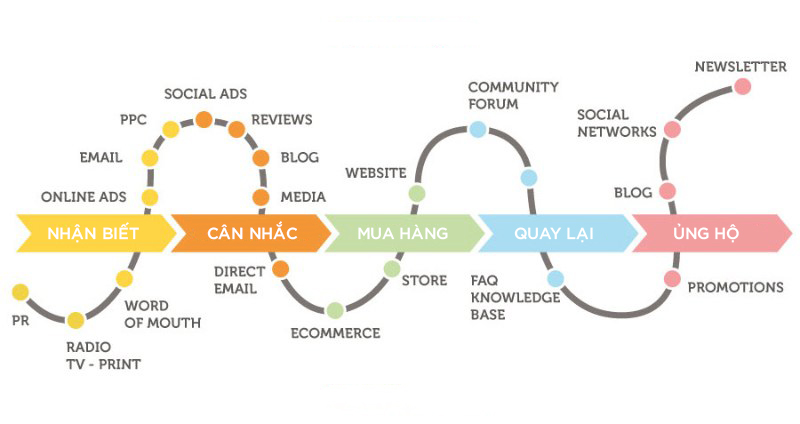
The advent of the internet has completely changed customers' consumption habits, from traditional in-person buying to online purchasing. Customers of the new era use the internet for every shopping activity, before and after the purchase. In the pre-purchase phase, customers with product needs search for information and other users' opinions in communities. During or some time after using a product, buyers share information (positive and negative) in groups/forums.
So why don't businesses seize this opportunity to identify potential customer groups: customers who can pay but don't yet know about or need the product; customers who know about it but are still weighing it up; and customers who have experienced it and can easily share information about the product with others. Thanks to social media and forums, sellers can also observe buying behavior, latent problems, or emerging needs to create the best experience for buyers.
Identifying potential customers through competitors
It may sound paradoxical, but a business new to the market can absolutely identify potential customers through its competitors. However, identifying customers through competitor analysis requires a great deal of skill. This approach requires similarity in product type, quality, and goals between you and the competitor. Still, you will learn a great deal from analyzing competitors:
-
Identify what consumer characteristics the competitor's target customers have and why that group needs this type of product;
-
What marketing methods the competitor has used to attract that customer base;
-
Analyze remaining problems and the gaps between customer needs and the competitor's capabilities in order to devise a suitable marketing strategy;
-
Learn from experience: through conversations with the competitor's sales staff and with customers, you can find out about their selling methods, product pricing, market model, customer information, and more.
Identifying customers with the help of technology software
As mentioned above, we can identify potential customers through groups and forums to see what customers are "gossiping" about. However, this is not yet an efficient method of customer identification, because sellers would have to spend enormous time and manpower on market research as well as unassisted interaction with customers.
With the help of technology such as artificial intelligence and cloud storage, a CRM customer information management system lets businesses identify target customer groups, store data on customers' purchase histories, and automate simple online customer care steps. This way, businesses not only save time finding potential customer groups but also save on personnel costs and improve work efficiency. In addition, CRM modules analyze data to identify demanding customers, helping sellers promptly provide the information these groups need and consistently run suitable campaigns.
Introducing the customer management application — SimCRM
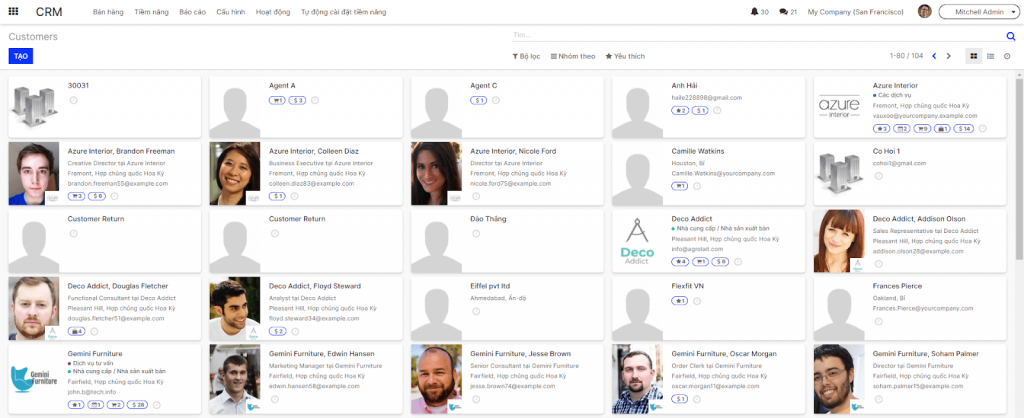
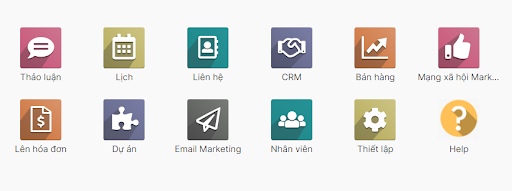
The SimCRM application, first upgraded in 2021, brings together the features businesses need for customer management. Its modules make it convenient for businesses to manage: Sales and invoicing; Project management; Social network; CRM; Employees; and more. The modules are interconnected so the business can perform multiple operations at once on a single platform, ensuring accuracy and consistency.
This application supports customer identification by:
-
Letting users access customer information from personal details to consumption preferences;
-
Searching for the keywords customers care about: through keyword searches, the business can find out whether the problems customers face match the product the company offers;
-
Automating shopping-activity statistics to analyze consumption behavior, sketch the target customer portrait, and launch campaigns to track and nurture that customer group;
-
Creating reminder schedules for the sales team so stores never miss any customer group;
-
Managing and tracking KPIs/sales revenue per country/salesperson/sales team;
-
Storing internal information and customer data: once customers are identified, the business can consolidate customer information on the system for management and set up future customer care activities, turning new prospects into loyal customers.
With so many features like these, businesses can now identify customers easily and control all of their activities. Visit now to try the SimCRM application for free!
Conclusion
Customer identification is essential work for businesses to define their marketing targets in order to improve user experience and increase revenue. In a competitive market, identifying potential customer groups is a wise move businesses should pursue. In particular, consider CRM modules such as the SimCRM application to cut the time spent identifying customers!
Related articles
Bài viết liên quan

25 tháng 10, 2026 · 3 phut doc
2024年网页设计趋势预测如何? | Wotech Electronics
关于 2024 年网页设计趋势——步入 2024 年,年初正是我们为新事物预留时间的时刻。这也非常适合设计师群体唤醒我们内心的"艺术之魂"。闲话不多说,快来和 Markdao 一起浏览 2024 年的 UX/UI 设计趋势吧,说不定您就能为自己接下来的网页设计项目"迸发"出一个绝妙的点子呢!

25 tháng 10, 2026 · 1 phut doc
什么是网站(Website)?网站的详细定义及其带来的商业价值
什么是网站(https://www.markdao.com.vn/blog/website-la-gi)——这个问题或许已经无需定义,因为在如今这个信息时代,网站对每一家企业而言都是不可或缺的组成部分。正是网站帮助用户更近距离地接触企业所提供的产品和服务,从而提升经营效益。此外,要在当今竞争如此激烈的环境中求发展,网站是一个重要因素,它将带你走向品牌与销量上的双重成功。

25 tháng 10, 2026 · 1 phut doc
什么是SEO标准网站?一场"打赢"Google SEO标准的战役 | Wotech Electronics
99%的用户在购买前会先搜索信息,73%的用户只会访问排名前10的网站,并认定它们是值得信赖的品牌……在数字营销爆发的时代,这些数字有力地印证了SEO标准网站的重要性。然而,许多人对什么是SEO标准网站(https://www.markdao.com.vn/blog/huong-dan-toi-uu-seo-website-chuan-seo-on-page)仍然相当模糊,并未真正理解。达到SE…