
Store Management: Skills, Processes, and Key Responsibilities
Vũ Khôi
Tác giả tại Wotech Electronics Blog
Store Management: Skills, Processes, and Key Responsibilities
Vũ Khôi
Author at Wotech Electronics Blog
Large corporations such as Coca-Cola or Vinamilk tend to establish and distribute through retail outlets — stores and branches located everywhere — so that consumers can easily access and pay for the company's services or products. That is why equipping store managers with management skills is extremely important for any retail business. In this article, SimERP will introduce you to the concept and process of store management, as well as explore what a store manager's job actually involves!
What Is Store Management?
Store management — often referred to as the store manager role — is the person in charge of a store, responsible for supervising and directing all activities within it. When issues arise, the store manager is the one who steps in to resolve them, and who bears the responsibility.

What Does a Store Manager Do?
Managing Sales Staff
A store manager's job involves scheduling and assigning tasks to employees; closely supervising and monitoring every activity in the store; and holding weekly or monthly meetings to address discipline issues or to motivate, encourage, and reward staff.
Training Staff in Skills and Processes
When hiring a store manager or employees, each person's competence and experience will naturally differ, which is why the store manager must personally take responsibility whenever staff make mistakes. The store manager is the one who directly guides and trains staff in professional practices. Well-executed work creates a good impression and a positive perception among customers.
Supervising and Managing the Sales Process
Store managers need to keep a close eye on daily sales revenue, identify and evaluate best sellers and the products customers are not choosing, and from there investigate the reasons and find appropriate solutions.
In addition, store managers should pay attention to product display — one of the sales arts that a store manager must master. A shelf that is neatly arranged, visually appealing, and makes products easy to identify will draw shoppers' attention.

Managing the Store
Store management here covers many tasks: managing staff, ensuring cleanliness and the store's appearance, and supervising and reporting quarterly, monthly, or annual sales results to senior management.
Coordinating with Other Departments for the Overall Growth of the Business
"If you want to go fast, go alone; if you want to go far, go together."
Unity and cooperation at work are indispensable if a business wants to grow. Collaboration between departments and store managers accelerates the development of the business in general and of retail stores in particular. Store managers are tasked with working closely with the company, studying the market and consumer buying behavior, and jointly building truly effective promotional and marketing strategies.
Market Research and Customer Surveys
-
Monitor the operations of competing stores in the same industry
-
Keep up to date with products gaining traction in the market and consider whether they fit the store's business
-
Learn about customer needs
-
Handle situations beyond employees' control
-
Manage the base of "loyal customers" and offer dedicated perks to retain them
-
Manage the store's wholesale customers
Reporting and Sales Planning
The store manager must track and stay firmly on top of the store's business operations in order to prepare reports for senior management. The store manager's responsibilities include reporting on revenue, current stock levels, inventory on hand, best sellers, slow-moving products, and so on. Based on this, the manager draws up the most suitable sales plan to boost revenue and move remaining inventory.
Payroll and HR Policy
Store managers are responsible for building a sound, rational HR policy, carrying out monthly attendance checks to prepare payroll, as well as disciplinary and reward records for each employee based on their attitude, KPIs, position, capability, and work productivity.
Handling Customer Complaints Well
In business, staff mistakes or carelessness and imperfect products cause trouble for the company — customers will complain and even threaten legal action. The person who directly handles customer complaints and questions is the store's manager. This requires the store manager to be skillful in communication and quick-thinking in problem-solving.
Other Duties
Beyond that, a store manager also takes part in other activities such as:
-
Taking part in the company's promotional programs
-
Participating in staff recruitment for the store
-
Handling ad hoc situations as proposed by the company
-
Monitoring and supervising store layout, repairs, and refurbishment, etc.

What Does Store Management Require?
As the head of a store's administrative function, the store manager position certainly demands a great deal of competence and skill. So what exactly does store management require?
Job Requirements for Store Manager Positions
-
A university degree in Business Administration, Marketing, or a related field
-
Experience working as a store manager or in related positions
-
Experience and knowledge of the business field is an advantage
-
Proficient communication skills
-
Proficient negotiation and persuasion skills
-
Experience applying conflict-resolution and team-development skills
-
Honest and adaptable
-
Customer-centric
The Competencies Needed to Become a Good Store Manager
Soft Skills
Below are the most basic and essential store management skills a store manager needs:
-
Communication skills
-
Training skills
-
Negotiation and persuasion skills
-
Conflict management skills
-
Team building and development skills
-
Self-learning and continuous self-improvement
-
Accountability

Work Attitude
-
Customer-centric
-
Honest
-
Protecting business confidentiality
-
Always proactive at work and ready to make timely changes when the business is underperforming
-
Far-sighted and visionary
The Store Management Process
Store operations run smoothly when the store manager follows a structured, disciplined store management process.
Merchandise Management
Supply Sources
Inefficient management of goods entering and leaving the store will inevitably lead to loss of control over stock quantities, directly affecting the store's sales process and, in turn, the productivity and sales of the entire business.
Therefore, to manage incoming goods, outbound shipments, and inventory effectively, the owner needs scientific management methods suited to an intelligent sales management software system.
For those who are both the manager and the owner of the store, additional supplier management skills are needed. The quality of goods entering the store matches the supplier's reputation; once you choose the most suitable supplier, the flow of goods runs smoothly, limiting disruption to the store's overall operations.
Inventory Control
Controlling inventory effectively, using scientific methods, limits product loss as well as revenue shortfalls. For that reason, neglecting rigor in inventory control leads to many problems. A perfect store manager will never skip re-counting remaining stock, and will then decide how to handle it.

Whether you manage with traditional methods such as paper records and documents, Excel, or intelligent sales management software, make sure you always classify the items you sell — newly stocked, slow-moving, hard to sell — into specific, clearly defined categories so they are easy to control.
Sales Management
Every step — confirming orders, creating orders, preparing goods, packing, and handing over to carriers — is part of the sales management process. An efficient management chain makes everything run smoothly and avoids bottlenecks, so that products reach customers in better condition than ever.
Shipping and Delivery
The shipping process can sometimes run into problems such as lost orders, late deliveries, or even damaged goods arriving at the consumer's door. That's why you should ensure the packing and shipping processes are as thorough and careful as possible, so products reach customers in the best condition and avoidable complaints are minimized.
Staff Management
Recruitment
Always make sure your store's job postings are clearly described; candidates will then trust your business and put their full effort into applying. In addition, complete and detailed job information saves considerable time when screening and interviewing potential candidates.
Recruiting experienced staff is the most common and wisest approach — these candidates have already been properly trained, so you won't need to spend much time helping them adapt or learn how to sell, promote, and care for customers.
Training and Career Development
Regular Training
Don't feel bound to textbooks or formal materials — you can absolutely draw on practical knowledge and hands-on experience from real customer-care situations, problem-solving cases, or sales experience shared by long-serving, core employees, so your staff can learn and apply it more easily.

Always Empower Your Employees
As a smart manager, you need to know when to enforce strict rules and when to give your staff the freedom to think creatively. Applying rules too rigidly will prevent your employees from unlocking their latent selling potential.
This not only brings you fresh, original ideas, but also shows your employees respect — and they will in turn stay committed to your store for the long term.
Keeping Staff Up to Date with the Latest Knowledge
Organizing weekly or monthly staff training programs is also a way to help your sales team stay informed about new products, features, uses, and how to use them, so they can advise, care for, and promote to customers more effectively.
It is never easy to impress a customer who walks into your store, so always make sure your staff can retain customers with attentive advice and dedicated customer care.
Setting KPIs for Employees
For retail systems such as beauty products or fashion, many store managers set a KPI of total monthly revenue to be sold per employee. From there, they build pay policies appropriate to each member of the sales team.

KPIs need to be specific and measurable, and recently businesses have strongly favored setting KPIs using the SMART model (Specific, Measurable, Achievable, Relevant, Time-bound) so employees can strive and adjust their work to achieve the best results.
Financial Management
Profit–Loss Assessment
Profit = Revenue – Expenses
After subtracting all expenses from revenue, you get your net profit for the period:
-
If profit is less than 0, you are operating at a loss; what you need to do is cut unnecessary costs and step up promotional strategies to raise revenue more effectively.
-
If profit equals 0, this is your break-even point. If this figure appears in the early stage after opening, it is easy to understand. However, if the situation persists for many months, you need to review your selling methods and promotional strategy — they may well be what is holding sales back.
-
If profit is greater than 0, this is clearly a welcome sign that your business is profitable and you can keep selling. Even so, managers should not become complacent; they must continue to push and get more creative with brand-building and marketing strategies so that sales productivity keeps climbing.
Debt Management
A store's debt refers to amounts receivable or payable from customers or product suppliers. To control these obligations, the store owner must be able to retain all related documents to ensure clarity and effectiveness in settling and collecting them.

Cash Flow Management
Cash flow management in business and retail means controlling receipts and payments — the invoices and documents for transactions arising on any given day, month, or period.
This lets you monitor all of the money flowing into and out of the store. From there, the store owner can identify necessary income and expenses to adjust sales, promotion, and distribution plans in the most appropriate way.
Customer Management
Never take lightly the care of customers who have bought from your store or potential customers. Consumer loyalty to the store is a measure of how effectively the business — and the retail store in particular — is operating. Good customer service, attractive discounts, and regular incentive programs will retain buyers in the most solid way.
The Most Effective Store Management Methods
Managing the Store with Paper Records
For traditional retail households such as grocery stores and food shops, owners favor managing sales with paper records and documents.

Writing things down trains the manager's long-term memory of stock quantities and related figures as they record data into the book. However, this method carries many drawbacks: it demands a high level of accuracy (and is error-prone), and it is hard to control and re-record for larger-scale businesses.
Installing Remote Store Surveillance Cameras
Ensuring security in business is vitally important and necessary. It not only makes it easy to manage staff operations, but also allows you to monitor and detect fraud or theft that should never happen. And if your store does lose goods, footage from the cameras will make the investigation easier than ever.

Managing Merchandise with Excel
Excel has long been the go-to software for business owners. This smart tool helps you manage and take stock of total goods shipped out and total goods received into the warehouse quickly, efficiently, and accurately. Store owners can check at any time to see the store's sales pace and productivity.
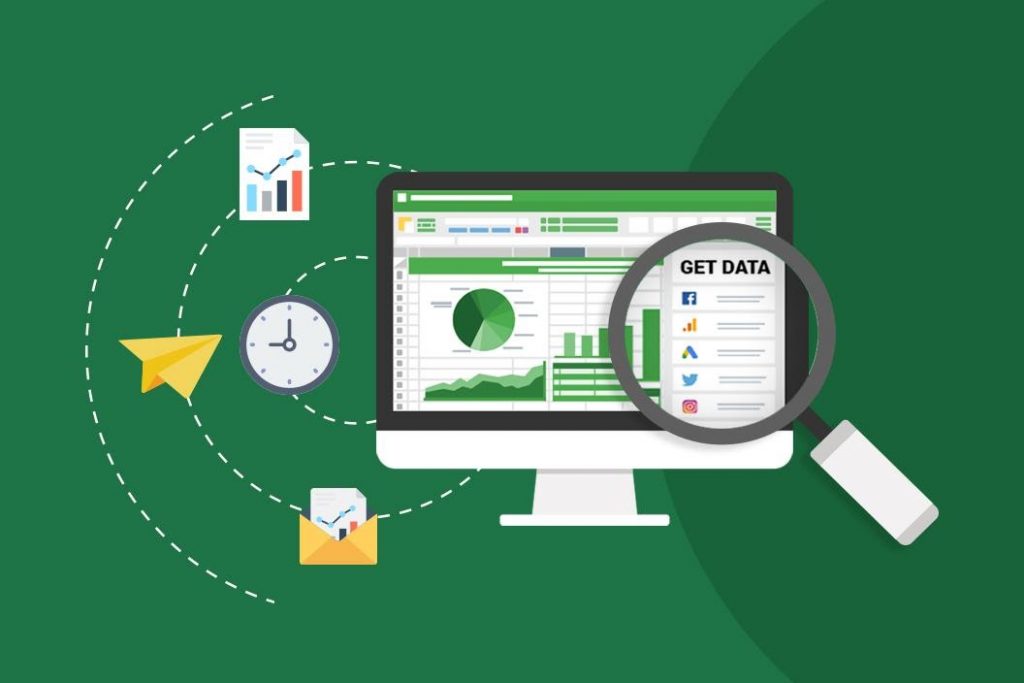
Managing sales with Excel helps adjust quantities and prevent losses in business. However, traditional Excel still has drawbacks when it comes to sales management:
-
Data is not secure and confidentiality is low.
-
For businesses with complex sales management processes, the Excel file becomes overloaded, processing slows down, or it lacks the features to store and process information.
-
Excel typically only offers basic features — managing goods, customers, warehouse in/out, income and expenses, inventory, and so on — and managers also spend a great deal of time building detailed statistical tables and reports.
-
In addition, Excel functions and formulas are quite difficult and complex; users must thoroughly understand the software's features and how it works in order to use it effectively and flexibly.
Using Software to Manage the Store
The 4.0 technology era is a wonderful gift for business owners. With advanced machinery and technical equipment, business managers can check and monitor operations comprehensively while saving time, with errors minimized. Today, many extremely convenient and intelligent management software solutions have appeared on the Vietnamese market, notably SimERP, MShopKeeper, AnVietsoft, Dantrisoft, and more.
Conclusion
That's SimERP's full rundown of the concept of store management, the skills involved, a store manager's duties, and store management processes. SimERP wishes all managers a truly enjoyable and successful experience after reading this article!
Related Articles
Bài viết liên quan

25 tháng 10, 2026 · 3 phut doc
2024年网页设计趋势预测如何? | Wotech Electronics
关于 2024 年网页设计趋势——步入 2024 年,年初正是我们为新事物预留时间的时刻。这也非常适合设计师群体唤醒我们内心的"艺术之魂"。闲话不多说,快来和 Markdao 一起浏览 2024 年的 UX/UI 设计趋势吧,说不定您就能为自己接下来的网页设计项目"迸发"出一个绝妙的点子呢!

25 tháng 10, 2026 · 1 phut doc
什么是网站(Website)?网站的详细定义及其带来的商业价值
什么是网站(https://www.markdao.com.vn/blog/website-la-gi)——这个问题或许已经无需定义,因为在如今这个信息时代,网站对每一家企业而言都是不可或缺的组成部分。正是网站帮助用户更近距离地接触企业所提供的产品和服务,从而提升经营效益。此外,要在当今竞争如此激烈的环境中求发展,网站是一个重要因素,它将带你走向品牌与销量上的双重成功。
25 tháng 10, 2026 · 1 phut doc
什么是SEO标准网站?一场"打赢"Google SEO标准的战役 | Wotech Electronics
99%的用户在购买前会先搜索信息,73%的用户只会访问排名前10的网站,并认定它们是值得信赖的品牌……在数字营销爆发的时代,这些数字有力地印证了SEO标准网站的重要性。然而,许多人对什么是SEO标准网站(https://www.markdao.com.vn/blog/huong-dan-toi-uu-seo-website-chuan-seo-on-page)仍然相当模糊,并未真正理解。达到SE…