
What Is Fashion Store Management? What Needs Doing and How to Manage Effectively? | Wotech Electronics
Vũ Khôi
Tác giả tại Wotech Electronics Blog
What Is Fashion Store Management? What Needs Doing and How to Manage Effectively?
Vũ Khôi
Author at Wotech Electronics Blog
Fashion has never stopped being a hot field, and it keeps growing, drawing more and more people to invest in the business. However, the number of people leaving the industry is also rising, as they keep posting losses with ineffective business strategies and poor store management. So what is the best way to manage a fashion store? Follow along with SimERP in the article below.
How to Manage a Clothing Store
Coming up with a business idea is hard enough; implementing and managing it so the business runs smoothly is even harder. This is especially true in fashion, where competition grows ever fiercer and consumer trends and demands shift constantly, forcing businesses to keep innovating in their business and management strategies.
So what does fashion store management involve?
Warehouse Management
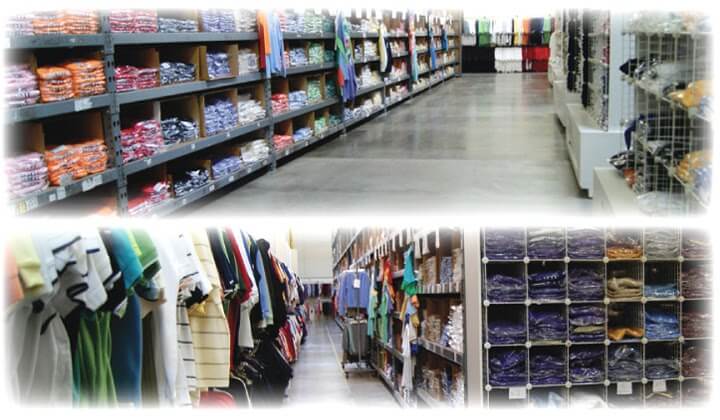
One essential activity in fashion store management that cannot be overlooked is warehouse management. This covers the following tasks:
Arranging Goods in the Warehouse
The warehouse at fashion stores is usually a set of shelving holding product boxes, stored in a room at the back of the shop. Arranging goods scientifically, combined with keeping the warehouse map updated, boosts staff productivity, so operations deliver results as expected.
For goods to be arranged effectively, you need to identify and mark the storage zones for specific items, and label shelves and boxes sensibly. To make this task easy, make sure your warehouse is tidy, easy to navigate, and easy to pick from before you start receiving stock.
In addition, you can organize your warehouse smartly with the following tips:
-
Use SKU codes (item codes): a code of digits and letters assigned according to the store's own rules that encodes all product-related information — it can include the manufacturer/brand name, material, purchase date, storage symbol, condition, and more.
-
Arrange by category and zone: you can arrange by row with sizes from small to large, by category such as adult or children's lines, or by product type such as dresses, tops, pants, and so on.
-
Follow the first-in, first-out principle: goods received earlier have less remaining shelf time than goods received later, which helps you monitor stock condition and avoid long-standing inventory.
-
If you don't have a warehouse, use pallets to place goods on, prioritizing heavier items at the bottom.
-
Reserve a dedicated area for defective goods: this is a situation no store wants, and setting aside a separate zone makes handling it easier.
-
Set aside a packing area: this should be a spacious enough zone to let you pack orders comfortably, especially for large stores that must prepare a large volume of goods each day.
Carrying Out Goods In/Out Procedures
This is a process every fashion store must carry out, comprising the following activities:
-
Receiving and checking the documents and paperwork requesting goods in and out as required.
-
Carrying out goods receipt and issue operations for customers who are individuals, organizations, or businesses.
-
Recording and storing warehouse in/out invoices.
-
Performing the daily activities related to managing stock in, out, and on hand, reconciling against the minimum stock level.
Tracking Minimum Stock Levels and Stocktaking
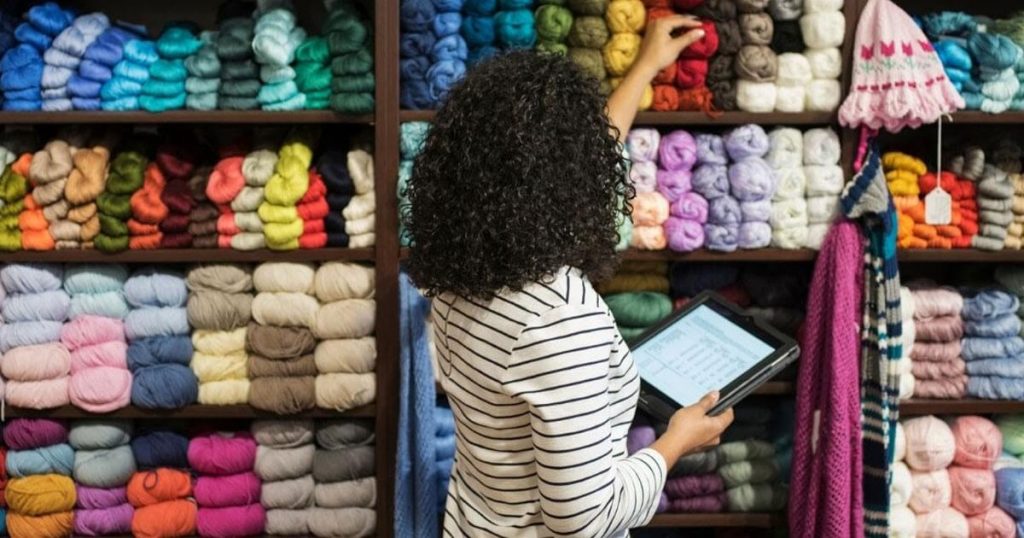
This task requires the manager to closely monitor the minimum stock level daily and ensure goods in the warehouse always meet the minimum stock threshold. Each store will have a different minimum stock level depending on the nature and scale of its business. That said, the threshold must match the movement of goods in and out of the warehouse.
In addition, you should conduct periodic stocktakes to identify and analyze differences for each item, thereby building a more accurate and effective warehouse management process.
Complying with Warehouse Safety Regulations
A mandatory activity in warehouse management is requiring all employees to strictly follow fire prevention and firefighting rules and every activity related to warehouse safety, such as periodically inspecting warehouse infrastructure (emergency exits, ventilation systems, electrical equipment, premises, storage areas) and the condition of the goods (protecting against damage, damp, pests, etc.).
Product Management

Beyond warehouse management, managing products and orders is also absolutely necessary. You need to know how many items are sold each day, which types of goods they are, which products are selling fast, and so on, in order to grasp market trends and make wise decisions in time when building campaigns to attract new customers and loyalty and incentive programs for existing ones, to grow the business.
Although information on products sold is stored in the order list, you will still find it difficult to take stock of and analyze sales volumes — especially when the store carries many product types with a large number of orders every day. Applying information technology to fashion store management is therefore a wise choice for resolving this worry.
Financial Management

This is a critical activity in fashion store management that you need to control tightly. Building a financial plan helps you track and assess the store's business situation and performance. From there, you can evaluate, comment, and forecast and adjust the capital needed to operate during the year, as well as the amounts to spend and the profit earned from sales.
Below are the points to consider when managing cash flow:
-
Prepare a cash flow forecast: predict the amounts that need to be spent at each point in time.
-
Manage customer receivables well: think carefully when deciding to sell on deferred payment or on credit, with tight monitoring and effective debt collection measures.
-
Balance purchasing: understand customer demand well to make wise decisions on inventory and new stock.
-
Reserve for large investments: set aside funds for expanding product lines or scaling up the store.
-
Set weekly and monthly sales targets: this helps you grasp the business situation and staff productivity, and informs sensible customer acquisition strategies.
-
Make the most of supplier promotions: plan smartly to use promotion programs without tying up capital or piling up stock.
Staff Management
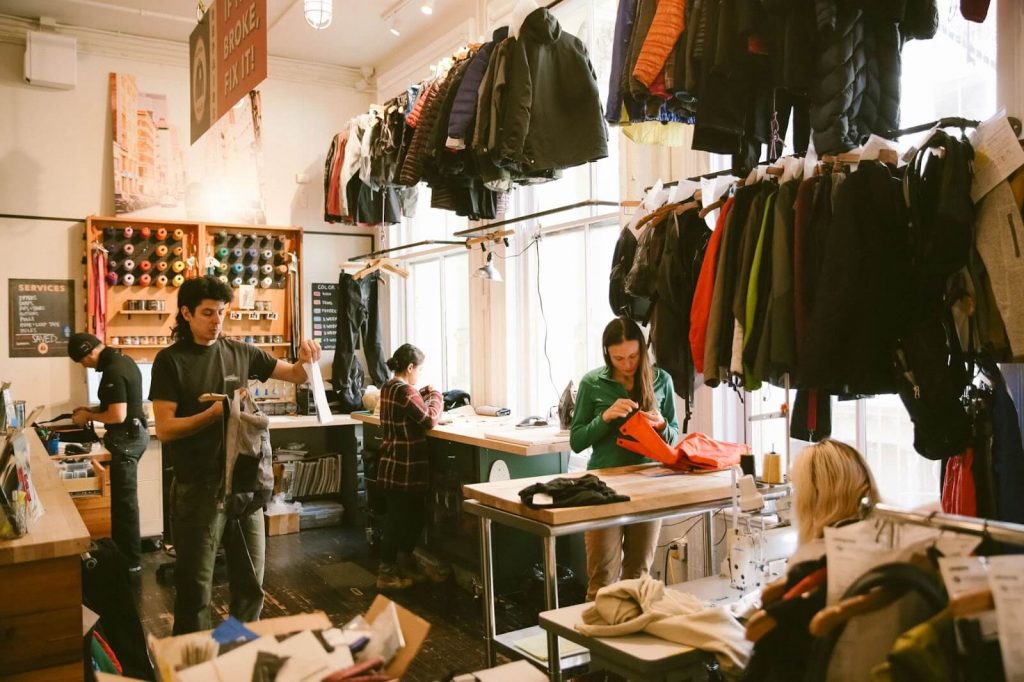
With so many tasks to perform across warehouse management, product management, revenue, and sales, in your first year of business you may be able to handle all of the above yourself. However, once operations are up and running and the workload grows — especially when you want to expand with more product lines or open more stores — you will need support from employees.
Hiring staff helps you divide and handle the work quickly, effectively, and productively. How to manage them well, though, is a difficult problem each store must solve in its own way. Below are some situations store owners commonly face, with corresponding suggested solutions you can consider.
Inventory Shrinkage
This is a situation every store has encountered in fashion store management in particular, and retail in general. The diversity of designs and product types, constantly changing with market trends, makes it hard to manage a growing volume of goods. Shrinkage happens easily for the following reasons:
-
Losses due to staff failing to record transactions in time, entering wrong data, or deliberately failing to enter full stock-out records into the system, causing an imbalance between revenue and the quantity of goods sold.
-
Losses due to customer theft: common at stores with lax security or heavy customer traffic that is hard to control.
-
Losses due to staff theft: commonly seen at small stores where security systems are lax, shifts are not scheduled, and there is no proper supervision.
To resolve this situation, you need to change your review and stock-check process sensibly:
-
Strengthen the security system if resources allow.
-
Assign weekly inventory management duties appropriately.
-
Assign and store data on staff shifts and propose sensible supervision methods.
-
Act immediately when shrinkage is detected: if it occurs between employees, let them resolve it themselves before coming to the store owner. For shrinkage in the store, work out a way to find the culprit and propose appropriate handling.
Sales Price Fraud

This is a common problem in fashion store management when the owner does not fix selling prices. It stems from the common consumer habit of haggling, preferring cheap products and promotion programs. As a result, many stores allow staff to apply discounts or throw in free products in many cases without recording each item specifically in the system. This is a major loophole that enables staff to skim a small amount per item — which can grow substantially when order volumes are large.
However, the owner usually cannot easily detect which employee is cheating or by how much, yet cannot cancel the promotion program either. Therefore, the most effective solution in this case is to print the product logo with a barcode and the specific selling price on every clothing tag.
With a smart barcode system, simply scanning the barcode at checkout makes the system display the item's information instantly, letting staff know which item is discounted and by how much. Every data entry and sale is automatically stored in the system, making it easy for the owner to manage.
In addition, you can install a security system and require staff to process payments in front of the camera — as a reminder about honesty, and as an easy way to supervise that employee's sales activity.
Giving Wrong Information About Products or Promotions

When you decide to hire staff, the first thing to do for a smooth fashion store management process is to train a professional team. Advising customers wrongly about product or promotion information will disappoint them at the point of purchase. And this will seriously damage the store's image if you fail to explain, apologize, and placate the customer promptly and properly.
To train staff professionally, you need to hold training sessions to convey accurate information about products, promotion programs, and upcoming events so employees stay up to date. Of course, in the early days on the job, staff will often make mistakes. Spotting those mistakes to issue corrective warnings while encouraging staff to keep trying is a skill every manager needs.
Working-Time Fraud
How do you ensure your employees keep the prescribed working hours when you are not at the store?
In cases where employees do not keep the prescribed hours — arriving late, leaving early, taking overly long lunch breaks, and so on — you can apply spot checks to detect and issue appropriate warnings. This creates pressure and raises employees' work discipline. If your store has a large number of employees, use a smart badge-swipe timekeeping system, as commonly seen at stores like KFC and other companies, to record and check when employees start and finish work.
If employees work on side jobs during working hours, beyond spot checks, you can install a camera system to monitor them and issue reasonable warnings.
Applying Information Technology to Store Management

In this era of integration and ever-advancing Industry 4.0 technology, applying technological achievements to fashion store management is an excellent choice that helps you solve the thorny problems arising from traditional store management.
Below are the 2 most commonly applied approaches for you to consider.
Using Excel
Excel is a familiar tool to many businesses, having been widely preferred before store management software became known. Excel has the following advantages:
-
Saves on usage costs.
-
Easy to operate, manage, and use.
-
Provides many suitable calculation functions for recording business figures.
However, alongside these advantages, Excel has notable drawbacks:
-
Limited storage capacity — too much data slows down the system.
-
It cannot integrate automatic data updates; data must be entered by hand, costing time and effort.
-
It cannot synchronize operational data across the departments that need to manage it.
-
Data can be lost or stolen.
Given these pros and cons, Excel only suits small fashion stores with a small volume of goods to manage and few orders, where everything can be controlled and entered by hand. If you are a large store with a large scale of goods and a high number of transactions, read on to the second approach.
Using Clothing Store Management Software
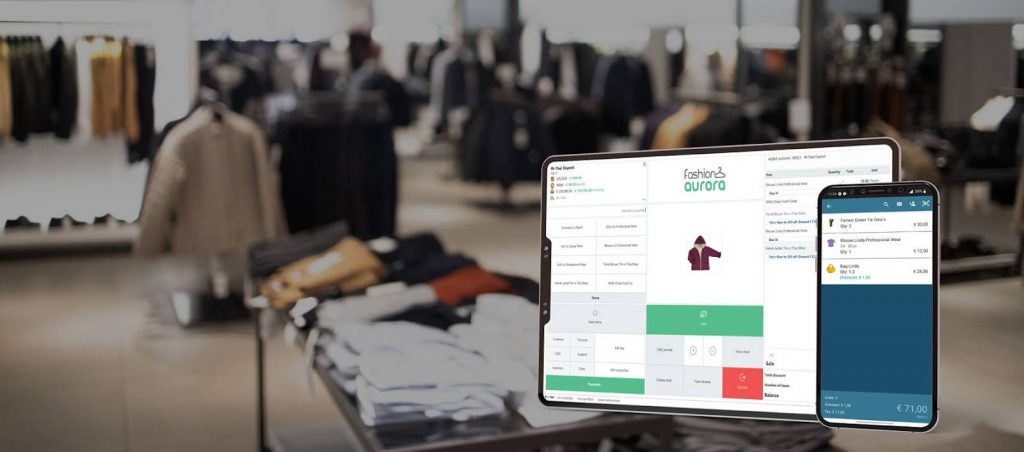
The most widely applied effective fashion store management method today is using clothing store management software. In particular, this is a necessary solution for chain store management — when the number of stores grows, so do the number of entities and tasks to manage, and building a systematic process to manage everything tightly is what every owner needs to consider.
Some representative retail management software you can look into today includes: SimERP, KiotViet, Sapo, Haravan Retail, Trustsales, ABIT, and more.
Depending on their needs, scale, and the nature of their business, each store/chain can choose software with different integrated functions. Below are the common features you can consider:
-
Goods management: manage every item in detail, easily, by specific classification such as material, design, fabric, and so on; offers chain warehouse management features (checking stock and making inter-store transfers easy).
-
Staff management: manage information and work schedules, and evaluate sales performance by monitoring every sales activity of each employee, stored in the system.
-
Financial management: control the budget for income and spending of each store, with real-time sales reporting features that give the owner a comprehensive view of the business and support wise decisions.
-
Customer management: manage customer data easily by specific segment, and apply promotion programs and incentive policies suited to each group.
Conclusion: With the sharing above on effective fashion store management, SimERP hopes you will design a management process suited to the nature, scale, and business goals of your own store.
Related Articles
Bài viết liên quan

25 tháng 10, 2026 · 3 phut doc
2024年网页设计趋势预测如何? | Wotech Electronics
关于 2024 年网页设计趋势——步入 2024 年,年初正是我们为新事物预留时间的时刻。这也非常适合设计师群体唤醒我们内心的"艺术之魂"。闲话不多说,快来和 Markdao 一起浏览 2024 年的 UX/UI 设计趋势吧,说不定您就能为自己接下来的网页设计项目"迸发"出一个绝妙的点子呢!

25 tháng 10, 2026 · 1 phut doc
什么是网站(Website)?网站的详细定义及其带来的商业价值
什么是网站(https://www.markdao.com.vn/blog/website-la-gi)——这个问题或许已经无需定义,因为在如今这个信息时代,网站对每一家企业而言都是不可或缺的组成部分。正是网站帮助用户更近距离地接触企业所提供的产品和服务,从而提升经营效益。此外,要在当今竞争如此激烈的环境中求发展,网站是一个重要因素,它将带你走向品牌与销量上的双重成功。

25 tháng 10, 2026 · 1 phut doc
什么是SEO标准网站?一场"打赢"Google SEO标准的战役 | Wotech Electronics
99%的用户在购买前会先搜索信息,73%的用户只会访问排名前10的网站,并认定它们是值得信赖的品牌……在数字营销爆发的时代,这些数字有力地印证了SEO标准网站的重要性。然而,许多人对什么是SEO标准网站(https://www.markdao.com.vn/blog/huong-dan-toi-uu-seo-website-chuan-seo-on-page)仍然相当模糊,并未真正理解。达到SE…