
Order Management: Process, Methods, and Optimal Software
Vũ Khôi
Tác giả tại Wotech Electronics Blog
Order Management: Process, Methods, and Optimal Software
Vũ Khôi
Author at Wotech Electronics Blog
Designing a suitable order management process helps a company's business operations achieve higher efficiency. That is why this activity is always one of a business's top concerns. So do you clearly understand what order management is and how the process is carried out? Let's follow along with SimERP in the article below.
What is order management?

Order management is the process of tracking order status and carrying out all the steps to complete order fulfillment, including picking, packaging products, shipping, and handling after-sales requests.
Depending on scale and the nature of the business, a store/company will choose a suitable order management model, including:
-
Direct management: dividing employees into small groups responsible for certain orders from specific customers under a team leader's supervision.
-
Functional management: dividing personnel by different functional departments depending on the organization's nature.
-
Product-based management: managing by categorized product groups.
-
Geographic management: the management team divides customers by geographic region to apply suitable management methods.
As can be seen, the order management process involves not only the company's internal resources and facilities but also suppliers and customer care activities.
Therefore, order management is never easy — it requires coordinating many stages smoothly and seamlessly while ensuring customers get the best possible experience. So as an order management staff member, what tasks do you need to perform? Let's continue with the next section.
What does order management involve?

Broadly speaking, order management work includes the following main tasks:
-
Receiving orders and supporting customers during order placement
-
Planning the order fulfillment process to meet the committed standards and requirements
-
Monitoring and continuously updating order status among the relevant departments
-
Working with suppliers/technical and materials departments to secure sufficient quantities and quality of materials for the order fulfillment process
-
Controlling and monitoring order processing progress and coordination between departments, and devising solutions when necessary
-
Maintaining close contact with customers throughout the process to capture additional product requirements and answer questions that arise
-
Recording and reporting costs, revenue earned, and order-related expenses to the finance department
Doing these jobs well requires the order management staff to thoroughly understand the order management process and have the necessary knowledge and experience in this role or similar positions. In addition, staff need a strong sense of responsibility, a willingness to learn, good communication and negotiation skills, and quick thinking to handle the many unexpected issues that can disrupt operations.
The optimal order management process

Designing an effective order management process delivers the following benefits:
-
Avoiding excess inventory or stock shortages
-
Minimizing errors in order processing such as wrong deliveries/addresses or late shipments. These mistakes can seriously damage the company's reputation.
-
Saving time by investing in an effective management system
Depending on scale and characteristics, each company will have a different order management process. But broadly, they all include 3 basic steps: receiving orders, processing orders, and handling after-sales issues.
Step 1: Receiving orders

Today, with the explosive growth of Industry 4.0 technology, receiving online orders is increasingly common and makes up the majority of all orders placed. There are 4 types of orders in e-commerce:
-
Pre-order: orders placed when a product is about to launch, usually requiring an upfront deposit. This type of ordering is used to spark curiosity and buzz among customers so the product gets a good start before hitting the market.
-
Backorder: orders a retailer accepts for out-of-stock products. Right after that, they contact the supplier to replenish goods in time and meet customer demand.
-
Customer-ordered items: goods ordered by customers, which may or may not be in the seller's stock. If not available, the seller will source them to sell to you.
-
Purchase order: an order placed with suppliers from whom the business buys raw materials or products.
Understanding order types helps managers monitor and track orders appropriately. However, when order volumes are large, you also need to consider the following:
-
Choose a reliable, highly secure payment system to ensure no orders slip through without full payment, which would affect sales and revenue.
-
Flag important orders that require strict monitoring of the fulfillment process and delivery time.
-
Use an order management system to filter and compile orders from multiple channels, which improves management efficiency and overall sales revenue.
>>>> See more: What is warehouse management? The tightest and most effective warehouse management process
Step 2: Processing orders

This is the most important step, determining whether the packaged goods meet the customer's needs and the goods inspection criteria. Therefore, the two key factors to watch in this step are speed and accuracy in order processing.
In practice, depending on the company's scale and needs, there are 3 important ways to process orders:
-
Warehouse fulfillment: the company owns its own warehouse and manages all order fulfillment activities itself. This model suits two types of companies: those with large scale and budget, and new businesses capable of handling warehouse management on their own.
-
Dropshipping: the seller doesn't actually own the goods, but contacts a supplier who ships directly to the buyer. This model is widely used on e-commerce platforms.
-
Third-party fulfillment: outsourcing all activities in the order management process to external services. This is considered the optimal solution for small and medium-sized companies.
Whichever method you choose, the order fulfillment process goes through the steps of picking, packaging, and shipping to the customer.
Step 2.1: Picking
Picking the right items from the warehouse is the first step you need to take. However, with thousands of orders per day of many different styles and types, finding and picking the right items is very difficult. To solve this problem, here are 4 approaches you can apply:
-
Single order picking: selecting only one order at a time before moving on to the next. This is the most common approach for newly operating retailers or small companies with few orders (under 20 orders/day).
-
Batch picking: multiple orders are grouped into a batch, and one worker is responsible for one batch, picking items in a single pass. This method is applied when order volume is high with few products or single-item orders.
-
Zone picking: all workers are assigned to their own zones in the warehouse, so an order moves through all the corresponding zones until complete. This method suits retailers with large order volumes and many products.
-
Wave picking: each worker is assigned to a zone in the warehouse, picks the items available in their zone, and brings them to the packing area, where the packing station consolidates these products into one order. This method suits retailers that ship large volumes of orders with many items.
>>>> See more: What is supplier management? The optimal supplier management process
Depending on scale and the nature of the business, after choosing a suitable method, companies need to lay out the warehouse zones sensibly so picking runs smoothly through an efficient process.
Step 2.2: Packaging
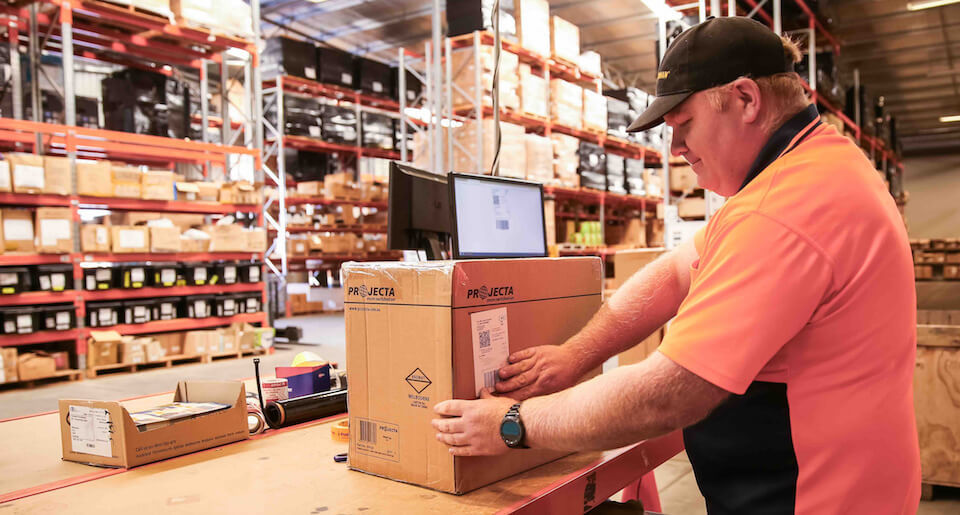
Packaging goods is extremely important — it makes items easy to distinguish, preserves their condition, and creates the best conditions for shipping to customers.
The packaging process involves: choosing packaging materials of suitable size, weighing the package, and attaching the label to the packing slip (containing weight, dimensions, item details, quantity, and SKU number).
Depending on the size and nature of each type of goods, there will be different suitable packaging methods that ensure safety, quality, and compliance with packaging standards and specifications. However, in many cases, even carefully packaged goods still don't reach the right customer, and execution falls short of high efficiency. To solve this, consider the following:
-
Use barcode scanners to find and identify the right items easily, quickly, and accurately
-
Many shipping companies today are incorporating box dimensions into shipping fees. So you need 3–5 standard box sizes to choose from appropriately, avoiding unexpected shipping surcharges
-
Some packaging materials protect goods well but cost more. Therefore, choose packaging appropriate to each item to avoid waste while achieving high efficiency
-
Record the correct information on the packing slip to avoid errors during shipping
Step 2.3: Shipping
The final step in the order fulfillment process is delivering the order to the right customer. Tasks include:
-
Printing shipping labels and invoices
-
Marking orders as shipped in the sales channel or management software system
-
Sending a shipping confirmation email with order status so the customer can track it
Step 3: Handling after-sales requests

Delivering goods to the customer is not the last step of the order management process. To give customers the best experience and build their loyalty and trust in the brand, you need to resolve issues that arise after the customer receives the goods.
By listening and empathizing, you need to clearly understand the problem the customer is facing — wrong items delivered, long delivery times, poor-quality goods, missing items, etc. Then offer suitable remedies to appease the customer, which may include refunds, exchanges or returns, discounts, and so on.
>>>> See more: What is a sales discount? Rules and how to calculate sales discounts
Managing effectively with an order management app

Store management means being responsible for and directing all store operations — product management, warehouse, orders, staff management, sales revenue, etc. With so many tasks requiring close supervision, managers need proper planning and investment in suitable equipment to achieve the desired management results.
Even with a suitable order management process in place, in many cases, without careful supervision you will still run into these common mistakes:
-
Not filtering orders carefully: errors here lead to packing and shipping mistakes, so you need suitable order filtering — by express delivery, paid status, priority level, etc.
-
Not monitoring stock levels well: inventory management is always a critical activity in any business. Through regular warehouse monitoring, you'll know whether stock can cover customer orders and what the expected delivery time will be.
-
Not attaching order tracking codes: this causes orders to get lost, leaving managers/customers unclear about delivery progress and making management difficult.
-
Not applying the first-in, first-out (FIFO) rule: failing to carefully record orders by the rule means you'll miss older orders and make data-entry errors that hurt business operations.
On top of that, a non-automated management process is another important issue companies should consider. Using management software makes management easier and more effective, especially with large order volumes and complex processes.
Below, SimERP introduces two effective ways to manage online orders: managing orders with Excel and using a management software system.
Managing orders with Excel
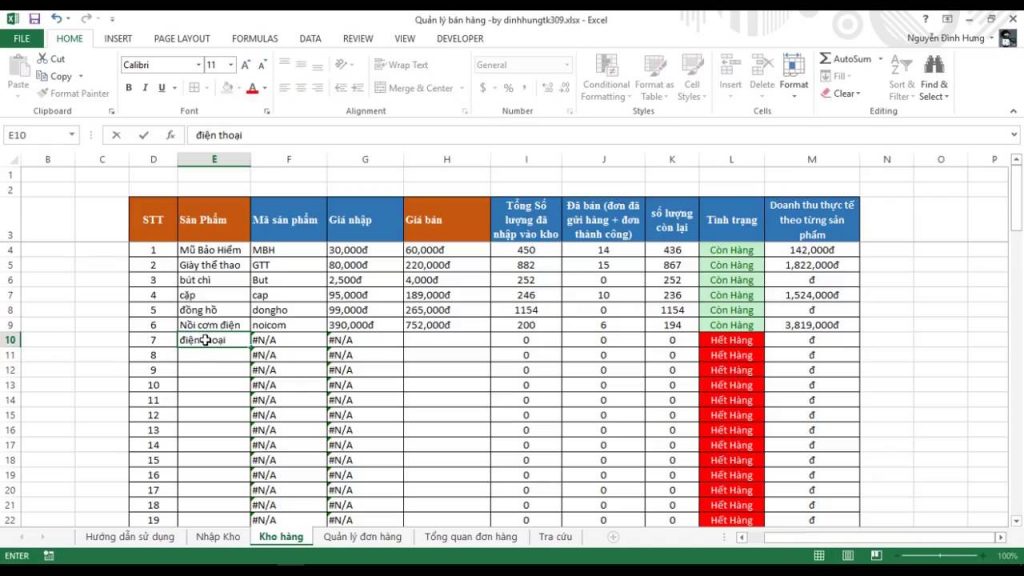
As one of the most common tools for effective management, you can absolutely manage orders easily with Excel. Below is an Excel template you can reference and implement.
Excel template for effective management
An online order management sheet can include the following pages:
Order status tracking
This page helps you track your order status accurately — whether the order has been delivered, whether the customer has received it, payment status, etc. — with the following essential tracking information:
-
Order code
-
Product name
-
Product category
-
Product code
-
Unit of measure
-
Order status
-
Responsible staff name (if any)
-
Contact phone number
-
Customer name
Order information
This sheet stores all information related to orders that arise, including:
-
Order code
-
Delivery date
-
Product name and code
-
Unit of measure
-
Quantity
-
Customer information
-
Unit price
-
Total amount
-
Responsible staff
Order report
Compiling a report helps you specifically tally the orders received over each time period, so you can monitor the quantity of goods sold and audit achieved sales accurately. The report can include items such as:
-
Date/month.year
-
Sales volume
-
Order status
-
Responsible staff
-
Staff sales figures
Pros and cons of managing with Excel
Compared with the traditional method of storing information on paper, using Excel has these excellent advantages:
-
It's free software
-
Easy to operate and use
-
Fast searching and filtering of information
-
Provides many built-in functions that support accurate data management
However, alongside those advantages, Excel still has the following drawbacks:
-
Only suitable for small, scattered order volumes with simple order information
-
Requires correct use of Excel functions and great care when entering data
-
Low security — data can be lost or stolen
-
Difficulty syncing orders from multiple channels
-
Management is hard and it's difficult to control and monitor information across devices
Given these risks, how can a company manage orders easily, accurately, quickly, and in line with every management need? The answer is to use sales management software.
Software solutions for effective order management

As part of store management, order management plays an important role in every business, helping increase the customer base, control goods quantities, and grow revenue effectively.
The development of the digital era has enabled companies to access and use order management applications that optimize business processes wonderfully. So what are this software's outstanding advantages?
Advantages of online order management software
-
Saves delivery time: once processed, orders are automatically and quickly forwarded to the designated delivery unit
-
Effective delivery order control: monitors order status accurately from the moment goods are picked from the warehouse until delivery to the customer
-
Payment status tracking: makes it easy to calculate the shipping fee for each unit and precisely manage the amount collected by the shipper from customers
-
Flexible operation: allows updating information for each order easily anytime, anywhere with just an internet connection
-
Saves time, effort, and money compared with traditional manual management
Today the market has many order management software providers you can consider, such as SimERP, KiotViet, Sapo, Haravan, etc. You can try free order management apps for 7–15 days — visit each application's homepage to follow along!
SimERP's effective sales management software
For businesses with higher demands for software that integrates multiple management functions to optimize business processes, SimERP is exactly the software solution you're looking for.
Specifically, SimERP's sales management software provides the following essential management features:
-
Quotation and sales management: track/convert quotations into invoices via email to customers, support converting quotations into orders, and track order details for each sales team
-
Order management: track detailed order status and sales figures, automatically create revenue, receivables, and stock-issue journal entries
-
Product and customer information management: store, update, and look up product and customer information quickly and easily
-
Automated reporting: track revenue, productivity, and work quality quickly, and display reports in many different formats
With these effective features, we believe SimERP is the right choice to solve the risks of manual management methods that consume so much time and effort. With SimERP, you'll connect with customers more effectively, your sales process will be optimized, and your business's selling activities will be supported in a more professional and systematic way.
Conclusion: With the knowledge shared above, SimERP hopes you will design an effective online order management process suited to your business's scale, operating characteristics, and goals.
Related articles
Bài viết liên quan

25 tháng 10, 2026 · 3 phut doc
2024年网页设计趋势预测如何? | Wotech Electronics
关于 2024 年网页设计趋势——步入 2024 年,年初正是我们为新事物预留时间的时刻。这也非常适合设计师群体唤醒我们内心的"艺术之魂"。闲话不多说,快来和 Markdao 一起浏览 2024 年的 UX/UI 设计趋势吧,说不定您就能为自己接下来的网页设计项目"迸发"出一个绝妙的点子呢!

25 tháng 10, 2026 · 1 phut doc
什么是网站(Website)?网站的详细定义及其带来的商业价值
什么是网站(https://www.markdao.com.vn/blog/website-la-gi)——这个问题或许已经无需定义,因为在如今这个信息时代,网站对每一家企业而言都是不可或缺的组成部分。正是网站帮助用户更近距离地接触企业所提供的产品和服务,从而提升经营效益。此外,要在当今竞争如此激烈的环境中求发展,网站是一个重要因素,它将带你走向品牌与销量上的双重成功。

25 tháng 10, 2026 · 1 phut doc
什么是SEO标准网站?一场"打赢"Google SEO标准的战役 | Wotech Electronics
99%的用户在购买前会先搜索信息,73%的用户只会访问排名前10的网站,并认定它们是值得信赖的品牌……在数字营销爆发的时代,这些数字有力地印证了SEO标准网站的重要性。然而,许多人对什么是SEO标准网站(https://www.markdao.com.vn/blog/huong-dan-toi-uu-seo-website-chuan-seo-on-page)仍然相当模糊,并未真正理解。达到SE…