What Is Supplier Management? The Optimal Supplier Management Process | Wotech Electronics
Vũ Khôi
Tác giả tại Wotech Electronics Blog
What Is Supplier Management? The Optimal Supplier Management Process
Vu Khoi
Author at Wotech Electronics Blog
For businesses and shops, suppliers are always among the top concerns in the course of doing business. However, not every business owner knows how to manage suppliers in a way that delivers effective production and business results. Only with a sensible management process can your work run stably, smoothly, and deliver high efficiency. If you don't yet clearly understand supplier management work or the skills it requires, let's explore it together in SimERP's article below!
What is supplier management?
Supplier management is the activity by which businesses and shops control information, classify supplier units, and manage payables with each supplier. This is an extremely necessary task in the relationship between a business and its suppliers, helping the business carry out its production and business activities in the best possible way.

That is because suppliers are the parties that directly affect a company's business — not only supplying quality materials and goods at reasonable prices, but also increasing the company's competitiveness in the market.
Why do businesses need to manage suppliers?
Suppliers are the units that provide the materials and goods that serve a company's production and business activities. Choosing a quality supplier together with an effective management process will greatly determine the company's profitability and competitiveness in the market. Below are the major benefits when a business manages its suppliers effectively:
Smoother business operations
A good supplier is considered an invaluable resource for businesses and shops. They not only deliver the right goods, in sufficient quantities, with guaranteed quality and on time, but also support the business with payments and costs.

This makes business operations smoother and easier, thereby contributing effectively to raising the company's profits. Good management and a strong, trusting relationship with suppliers will help a business operate more effectively than competitors who fail to do this.
Receiving support from suppliers
A good and close relationship with a supplier lays the groundwork for developing a mutually beneficial, symbiotic relationship. Suppliers can share information and skills that help the business manage inventory and build better goods-purchasing processes. In addition, trusted suppliers can also support the business with matters related to payments, payables, costs, and more.
Beyond that, the business will also receive strong support when developing new products as well as in sales activities. This is an enormous advantage that helps a business achieve outstanding success in its business.
The supplier management process
Today, supplier management at many businesses is still not truly rational or highly effective. The main reason is the lack of a suitable and scientific management process. A standard supplier management process needs to ensure the following activities:
Step 1: Compile the supplier list
For businesses, choosing a good supplier is an important factor in making business operations run smoothly and effectively. That is why compiling the supplier list is an indispensable step.

You will need to gather a list of potential suppliers, then begin researching information about them to prepare for evaluation and selection.
Step 2: Establish supplier evaluation criteria
To evaluate suppliers as accurately and comprehensively as possible, a business needs to establish its own criteria. Based on the characteristics of the goods, the nature of the business, and any special purchasing requirements, the business owner can build suitable criteria. Some criteria businesses should establish are:
-
Product quality: This is considered the top criterion for choosing suppliers. You can base it on quality standards in the market, warranty policies, and the supplier's commitments to establish this criterion.
-
Cost: Another fairly important factor in evaluating suppliers is the price of materials and products, along with any additional charges incurred when ordering from them. You should compare suppliers with one another on cost, and also weigh it against the company's budget.
-
Delivery time: A good supplier must guarantee on-time delivery; otherwise it will significantly affect the company's production and business activities. Business owners should rely on actual delivery-time data to know precisely how reliable their suppliers are.
Step 3: Evaluate and select suitable suppliers

The business owner assesses the suitability and reliability of each supplier based on the information gathered as well as the established criteria. After evaluating and comparing, the owner selects the most suitable supplier. The chosen supplier must not only meet the set requirements but also fit the nature of the company's production and business.
Step 4: Use tracking tools
Using tracking tools such as ledgers, Excel, and sales management software is an indispensable step if your business wants to control supplier information as effectively and accurately as possible. These tools record every detail of the transactions arising between the business and its suppliers. From there, the business can track all activity with suppliers as well as clearly understand what it owes them.
How to manage suppliers effectively
Aim for the shared goal of the entire supply chain
To manage suppliers effectively, a business must take part in the procurement process of a supply chain with many parties — the company itself, suppliers, transporters, and possibly regulatory agencies — because each party has its own roles and responsibilities and affects the overall results to a greater or lesser degree. This requires everyone to work and coordinate smoothly toward the shared goal.

A business can achieve this by setting out clear rules and commitments in contracts or cooperation documents of equivalent legal effect. However, for cooperation to last long, each party should build its own degree of brand credibility.
Build reasonable and comprehensive measurement and evaluation metrics
Building a system of sensible metrics and using it as the basis for evaluating suppliers helps a business manage them more effectively. Rather than existing only as a theoretical document, these metrics need to be put into practice by the business.
Measuring and evaluating all the factors that can directly or indirectly affect the supply chain helps the business orient itself and plan ahead for future production and business plans.
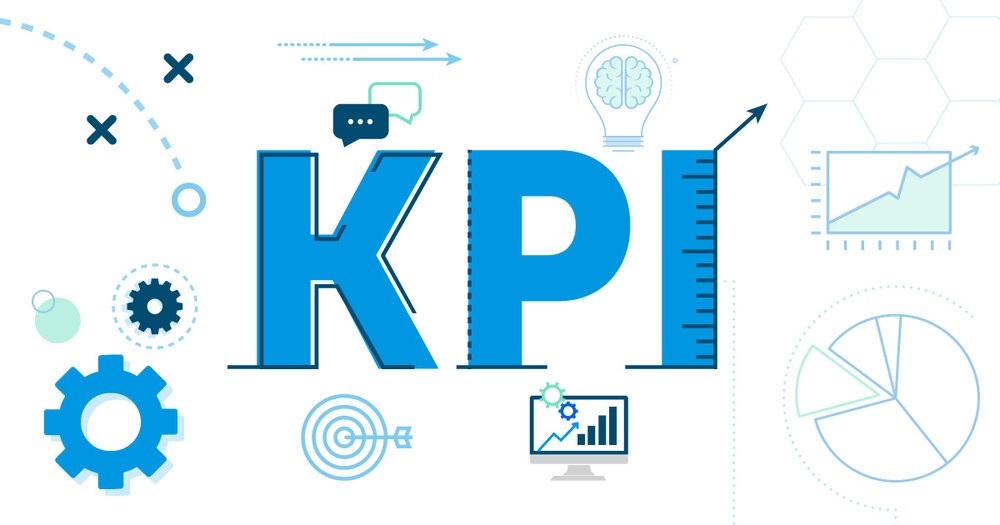
5 extremely effective supplier evaluation KPIs for businesses:
- Compliance rate
The first supplier evaluation KPI is the compliance rate.
This metric helps determine whether the supplier meets the company's requirements.
-
To fulfill this metric, the supplier must comply with various requirements such as delivery times, maximum response time when problems arise, special discount offers, and so on.
-
This is a very important component in providing guidance on operating procedures and in cutting costs through negotiation with suppliers.
-
Performance benchmark: For an ordinary business (not counting multinational enterprises with millions of suppliers or end users), achieving an overall 50% compliance rate is a reasonable target to set.
-
Purchase order cycle time
This metric indicates who will handle the company's urgent purchase orders.
-
It covers the entire ordering process: from the moment the order is created to when it is approved, received, invoiced, and finally paid.
-
This metric focuses on the order itself and does not include the production and distribution of products or materials.
-
If an order is urgent, you will need to know which suppliers can handle it quickly.
-
Performance benchmark: reduce the time to place an order, thereby improving the flow of other activities, employee productivity, and the overall cost of the procurement process.
-
Supplier availability
Availability is another important supplier evaluation KPI that businesses should note.

This metric allows businesses to measure a supplier's capacity to meet urgent demands:
-
It refers to the number of times a supplier guarantees goods are in stock or guarantees supplying the full quantity of orders placed. It is important to manage suppliers effectively so that goods are always available whenever an order is placed.
-
By tracking the amount of stock suppliers keep on hand, a business can understand how reliable they are.
-
Performance benchmark: maintaining supplier availability above 90% will keep your supply chain running well and achieve higher efficiency.
-
Supplier defect rate
This metric helps the business evaluate the quality of a supplier's products and services:
-
Measures the percentage of products received from the supplier that fail to meet quality requirements and specifications.
-
Tracks defect rates across different suppliers while categorizing the most common errors, giving the business detailed insight into which suppliers are more effective and reliable, and which types of errors occur most often.
-
Performance benchmark: measure and track defect rates across suppliers while identifying the ones operating most effectively and reliably.
-
Production lead time
This metric helps the business measure the total time to complete an order:

-
Measures the time from the start of procurement until the finished product is received, including manufacturing and management time (project and supply chain management).
-
Order cycle time differs from production lead time, because the cycle ends when the order is confirmed, whereas production lead time runs from when the request is made until delivery and final testing.
-
Performance benchmark: reduce production lead time as much as possible while still maintaining good quality.
Change your mindset
Many businesses still think: "The supply chain starts at the warehouse and ends on the shelf."
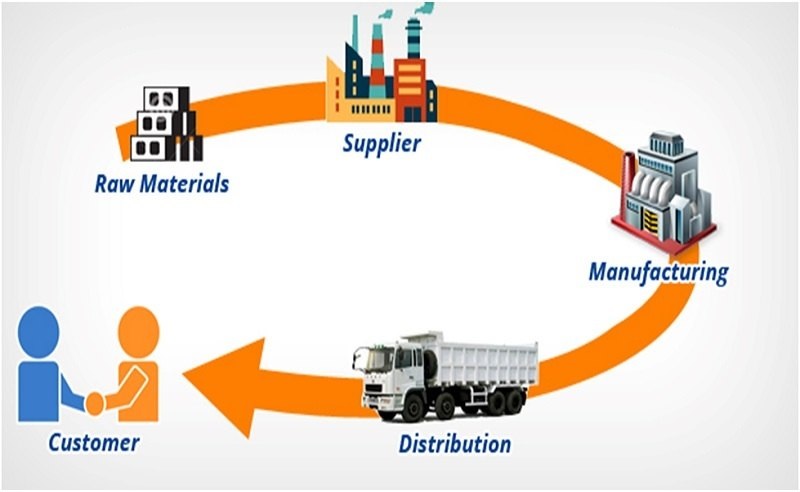
In reality, however, what matters more than the product being placed on the shelf is whether customers embrace your product.
Businesses need measures to track how products are selling — which products customers love, and which they don't favor. From this, the company can plan part of its overall supply chain management strategy, and its supplier management in particular.
Using supplier management software
Today, tracking tools have been automated, making management more convenient and easier than ever. Software with built-in supplier management programs is the most typical example of this.
Advantages
Supplier management software delivers many wonderful benefits for business administration, including:
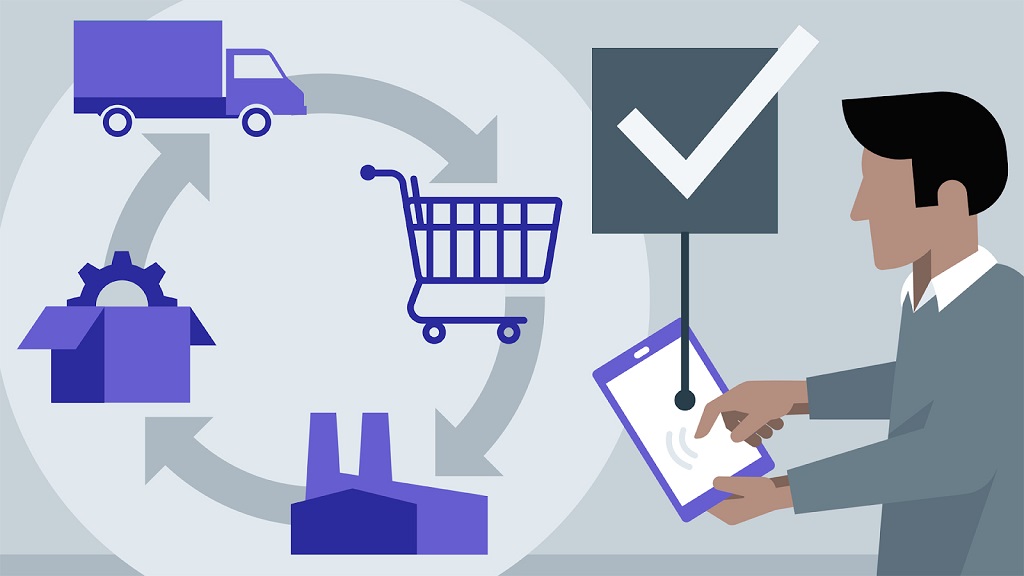
– Higher investment efficiency: Because the management process is fully automated — from inventory entry and storage to distribution and shipping management — the time needed to carry out logistics operations is significantly reduced, and the links in the supply chain fit together more tightly. Businesses can deliver goods to customers faster and more accurately, helping speed up cash flow.
– Cost cutting: Modern management software can forecast market demand accurately and operates at high efficiency, allowing businesses to reduce labor costs, minimize inventory costs, and avoid unnecessary waste and losses.
– Trend and business data analytics: beyond cutting costs and optimizing inventory limits, supplier management software also helps businesses increase revenue by identifying high-performing products. This supports decision-making by analyzing information from the market as well as from within the company.
– Full visibility and effective control: supplier management software gives businesses the broadest possible view, controlling all activities from production workshops and storage warehouses to distribution channels, customers, and more.
However, alongside these benefits, applying supplier management software to business operations can be a "burden" for small businesses and shops in terms of operating costs. That said, if the business or shop deploys it successfully and optimizes it, this issue can easily be eliminated.
Some supplier management software available today
SimERP's Purchasing Module
With SimERP's supplier management module, businesses can improve procurement performance and warehouse management. The main features are:

– Supplier evaluation:
-
Evaluate suppliers by supply history using flexible reports: quantities ordered, discount negotiations, delivery times, and more.
-
Initiate a tender process, compile supplier exchanges within that process, and compare supply agreements.
-
Add, edit, delete, or update information and look up suppliers
-
Import supplier price lists with ease, enabling smarter purchasing decisions.
– Quotation request management:
-
Customize to automatically send quotation requests to suppliers.
-
Send quotation requests by email or by post.
-
Add product variants to orders in a grid/matrix format, displaying product attribute combinations such as size, color, and more.
– Purchase order management:
-
Track order and quotation statuses (number of orders, expected delivery dates, etc.).
-
Automatic ordering based on warehouse stock status.
-
Track inbound items to stay informed of the supplier's delivery progress.
– Invoice management:
-
Look up supplier invoice statuses.
-
Create draft invoices that can be easily canceled or modified.
-
Organize shipment arrangements between warehouses.
– Analysis and forecasting
-
Analyze purchasing by multiple criteria (purchase quantity, purchase price, delivery date, etc.).
-
Forecast quantities based on confirmed orders.
-
Display reports in various formats (charts, tables, graphs, and more).
Easy supplier management with KiotViet
With KiotViet sales management software, you can:
– Search and organize your supplier list: After entering the supplier catalog into the software, KiotViet organizes these suppliers according to the available information. This helps businesses take the initiative in managing information. In addition, you can search for suppliers by various criteria quickly and accurately on KiotViet.
– Track import history: To track import information, users simply enter the data and the software automatically stores it in the system. Tracking order history becomes far more convenient and easier, with complete and accurate information about order codes, times, and amounts.
– Manage supplier payables: The software supports businesses greatly in managing payables, letting you track each supplier's balance in the greatest detail, order by order. From there, business owners can plan payments in the most suitable and fastest way.
GSOFT supplier management software
With GSOFT supplier management software, users can:
– Manage the supplier list:
-
Supplier information is managed in great detail, including: name, contact information, field of operation, address, and more.
-
This information is entered only once. When the user performs actions such as entering contracts, entering assets, creating call-off slips, entering work tools, and so on, the supplier's information is linked automatically without needing to be re-entered.
– Evaluate suppliers:
There are many criteria for evaluating a supplier; this software offers the 4 most fundamental ones for businesses to evaluate:
-
Delivery: Are goods and materials delivered on time? Is the condition of the goods still intact upon receipt?
-
Quality: Does the quality of the goods and materials match the original commitment between the two parties?
-
Warranty: Does the supplier handle warranty service quickly or slowly? After the warranty work, is the quality assured?
-
Complaints: How does the supplier handle the business's feedback and complaints?
For each criterion, the user assigns a score rating it as good, average, or poor.
Scoring scale:
-
From 8.00 – 10.00: Very good;
-
From 6.50 – 8.00: Fair/Good;
-
From 5.00 – 6.50: Average;
-
Below 5.00: Weak/Poor.
Evaluating suppliers by scoring them on the 4 criteria above helps unify the evaluation approach across every department and unit of the business. As a result, evaluations are no longer based on gut feeling but follow a defined standard.
– Create evaluation periods:
-
Supplier evaluation is not done just once, but in periodic rounds.
-
Regularly conducted evaluation periods help check whether suppliers are performing consistently, so the business can make accurate purchasing plans and always choose the most suitable suppliers.
Supplier management on CloudPro CRM software
– Manage supplier information conveniently:
Effectively managing supplier information helps you easily store and update data as well as control your supply sources. This is extremely important work in maintaining the relationship between a business and its suppliers, helping the business process run smoothly and effectively.
The information that can be managed includes:
-
Supplier information: name, email, phone number, website, contact address, and more.
-
Product information: the products this supplier can provide to you.
-
Purchase orders: manage information about orders transacted with the supplier and the status of those orders.
-
Contacts: information about the individuals at the supplier.
– Easy list management:
Managing the list not only helps you easily search for suppliers, but also lets you compare costs between them to find the best price. This supports you greatly in evaluating and selecting suppliers.
You can manage suppliers by region, by industry, by priority level, or by any criterion you choose.
– Fast communication:
Communicating with suppliers is one of the important, necessary, and frequent requirements, so being able to email a supplier or their contacts directly within the software creates enormous convenience for the business.
Maintaining regular contact helps the business build a better relationship with the supplier. This lays the groundwork for a long-term, mutually beneficial partnership.
Conclusion
Reliable suppliers bring great opportunities that help businesses and shops succeed in their business. Therefore, you should understand the importance of, and pay special attention to, building a supplier management process in today's real-world business. If you have any questions, leave a comment below this article so SimERP can answer you promptly!
Related articles
Bài viết liên quan

25 tháng 10, 2026 · 3 phut doc
2024年网页设计趋势预测如何? | Wotech Electronics
关于 2024 年网页设计趋势——步入 2024 年,年初正是我们为新事物预留时间的时刻。这也非常适合设计师群体唤醒我们内心的"艺术之魂"。闲话不多说,快来和 Markdao 一起浏览 2024 年的 UX/UI 设计趋势吧,说不定您就能为自己接下来的网页设计项目"迸发"出一个绝妙的点子呢!

25 tháng 10, 2026 · 1 phut doc
什么是网站(Website)?网站的详细定义及其带来的商业价值
什么是网站(https://www.markdao.com.vn/blog/website-la-gi)——这个问题或许已经无需定义,因为在如今这个信息时代,网站对每一家企业而言都是不可或缺的组成部分。正是网站帮助用户更近距离地接触企业所提供的产品和服务,从而提升经营效益。此外,要在当今竞争如此激烈的环境中求发展,网站是一个重要因素,它将带你走向品牌与销量上的双重成功。

25 tháng 10, 2026 · 1 phut doc
什么是SEO标准网站?一场"打赢"Google SEO标准的战役 | Wotech Electronics
99%的用户在购买前会先搜索信息,73%的用户只会访问排名前10的网站,并认定它们是值得信赖的品牌……在数字营销爆发的时代,这些数字有力地印证了SEO标准网站的重要性。然而,许多人对什么是SEO标准网站(https://www.markdao.com.vn/blog/huong-dan-toi-uu-seo-website-chuan-seo-on-page)仍然相当模糊,并未真正理解。达到SE…