
What Is Customer Relationship Management? How to Do It? What Are the Models? | Wotech Electronics
Vũ Khôi
Tác giả tại Wotech Electronics Blog
What Is Customer Relationship Management? How to Do It? What Are the Models?
Vũ Khôi
Author at Wotech Electronics Blog
Today, with the continuous growth of the economy in general and technology in particular, customers are developing new consumption and service needs that leave many businesses taken aback. Moreover, with fierce competition from rivals, businesses need to retain their existing customers while reaching new groups of potential ones. Read on below to discover why customer relationship management matters and the models behind it!
What Is Customer Relationship Management?

Customer relationship management — CRM (Customer Relationship Management) — is the activity of interacting and communicating with customers; managing their information and monitoring their consumption behavior in order to deliver better service. The information-gathering activities within CRM allow a business to find the right customer care strategy and build close relationships with customers, thereby supporting higher sales, optimized marketing, and improved service.
The Benefits Customer Relationship Management Brings

For Managers
With the economy growing constantly and the Internet exploding, customer behavior changes daily and new consumption needs keep appearing. Thanks to customer management activities, managers grasp customer psychology, outstanding issues in the purchasing process, and new consumption needs. As a result, they can:
-
Devise customer care plans that increase sales effectiveness
-
Introduce new products and run supporting campaigns that create the best possible customer experience while capturing the attention of new groups of potential customers
-
Build sales strategies suited to the target customer group
For Stores and Store Staff
Thanks to sales management activities, sellers and staff can easily support customers through communication and interaction with them. Timely support during the buying process gives customers a good experience, which in turn increases store revenue. In addition, CRM customer relationship management software automates the sales process through specialized system features, simplifying operations related to compiling statistics and interacting with customers, reducing working time and increasing productivity.
For Customers
Customer relationship management not only benefits the business and individual stores — customers also profit from it. In the past, when customers had a product problem or a need or question, they found it extremely difficult to communicate with the store owner or brand. Today, not only are customers' questions answered and small problems solved, they are also offered supporting services tailored to each individual (birthdays, International Women's Day, and so on).
How Do You Manage Customer Relationships Effectively?

CRM customer management includes software designed to automate interactions with customers and a customer information management system. The stages of implementing a customer relationship management system include:
Define the Needs of the Business
Before deciding which CRM system fits your business, find out why your company needs a customer relationship management system, and avoid blindly trusting software vendors' recommendations that every business needs a CRM system.
We should only deploy a CRM system when we need to manage customer relationships: if your business needs to expand its customer base, or if your type of business needs to retain customers through daily interaction and communication, then using a CRM system is reasonable. For example, industries (online sales, beauty salons, wholesale) that need to interact with existing customers and potential customer groups to improve service experience genuinely need CRM. In these industries, buyer loyalty is the key to the company's success. Therefore, each customer needs to be cared for and interacted with regularly to complete all orders and bring them back to use the product.
However, if your business does not yet need to grow its customer count, and your product does not require much customer interaction, then a CRM system may not be necessary. Suppose your product offering is based on long-term contracts and all customer dealings are direct, person-to-person interactions — then you certainly should not spend too much budget on a customer relationship management system.
Therefore, a retail store should not deploy a CRM system in its operations, because editing the details of each customer contact is virtually impossible. Customer loyalty for such goods will rest on their opinions of the quality of the products they bought and of the store's service in general.
Build the CRM Implementation Team
Building a good CRM implementation team is essential. A professional CRM implementation team makes execution faster and easier. The business needs to prepare an implementation team before deploying the system:
-
Project manager: plays the leadership role across the company's entire CRM transition plan
-
Application analyst: responsible for data processing
-
Application developer: responsible for adapting the system to each customer's individual needs
-
Test team: carries out system/application trial runs
-
Representatives of the main customer-facing teams: the sales, marketing, and customer care teams
Define the Goals of the Business
A business setting strategies must clearly define its goals. The reason: after the CRM system has been implemented, how will you know whether this implementation is effective? Here are the steps for the business to define its goals:
-
Analyze the company's current situation;
-
Identify the problems the business is facing: poor interaction, declining revenue, poor customer feedback on service, and so on;
-
Set the goals the CRM system will address.
Research Customer Relationship Management Systems and Choose a CRM System
There are quite a few CRM systems with a high degree of specialization. Businesses have various options: choose a CRM system dedicated solely to the sales department, tracking marketing activity, and controlling the organization's services; or choose a CRM system to manage business processes in general, and so on. This choice depends entirely on the needs and specific situation of each company. The company should select software based on:
(1) The company's current problems, to improve effectiveness in a short time;
(2) The business's future goals and direction;
(3) The company's budget.
Build an Implementation Plan

Build a detailed plan for implementing the CRM system. If your business is young and does not face many difficulties adopting technology, that is clearly a good sign. However, many long-established businesses today struggle with digital transformation. Businesses without experience in digital transformation need to:
-
Identify the opportunities and challenges this technology brings to the business;
-
Calculate the cost of implementing the system, including the opportunity cost of running only one CRM module;
-
Allocate time for entering and integrating data into the system. At this step, you can seek help from experienced specialists or a third party to deploy the system and customize features to fit the company's roadmap.
Run a Trial
After implementing and adjusting the features in the system, the business needs to run trials to see whether the features have adapted to the company's needs and stated goals. If problems arise, the business should work with the third party or its IT team to avoid system failures in the future.
Train Staff to Use the Platform

As mentioned above, not every business finds it easy to transform itself in the digital transition. Business owners and managers need to act quickly on training, to avoid a situation where, during the change, staff are not yet proficient at applying CRM to daily activities — leaving CRM underused or its features overlooked.
Evaluate and Measure the Effectiveness of the CRM System
The business needs to track the data and the system's effectiveness against its stated goals. Some metrics the business should consider:
-
System activity: examine the number of actions completed by users on the system. Check whether users are logging in and actually using the system as trained.
-
Information update capability: check whether the system regularly updates staff information or customer information.
-
Quality of output: analyze whether the customer behavior research the CRM produces matches customers' actual psychology and behavior, and evaluate employee performance on each task.
-
Business metrics: reviewing business metrics verifies whether the CRM is delivering business results for you. If sales volume has lifted revenue by 40% since the new CRM was implemented, that is a good sign — proof that adopting digital technology has paid off.
Customer Relationship Management Models
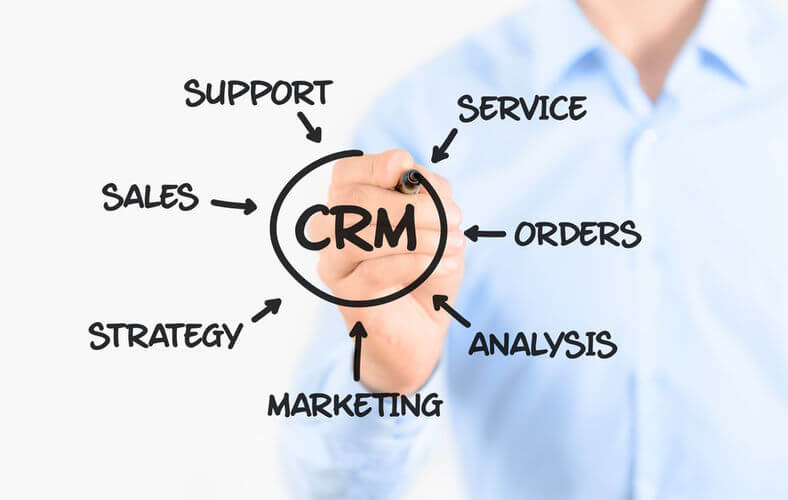
The main purpose of the CRM model is to meet customer needs, secure sales, and improve marketing effectiveness. The customer relationship management model applies the following standards across the entire chain of customer tracking and care:
Customer service and support (CSS): the customer relationship management tool gives the business a database:
-
Detailed customer information and aggregated statistics to find the problems customers are facing and take timely action to resolve them;
-
Promotional or points-accumulation programs for customers on special occasions such as birthdays, International Women's Day, holidays, and so on.
Sales force automation (SFA): this application allows the business to manage the activities of its dealers and retailers:
-
Provides the company with an overview of sales results;
-
Analyzes sales progress and the work results of dealers;
-
Automatically creates price lists and commercial quotations suited to the conditions and status of each customer base, and more.
Marketing automation (MA): this model provides methods for analyzing target audiences; establishing groups of customers with different characteristics. In addition, the model identifies and analyzes customer requirements to set appropriate business plans. Along with that, it develops plans for marketing campaigns and analyzes the results of these campaigns for each customer group.
Information processing: the CRM model can analyze and process customer information across the following 3 different features:
-
Operational sales process: the sales process includes registering for and accessing event information pages online, as well as the customer's transaction history. However, with the support of the CRM system, the business can automate accessing and storing customer information. This information includes: contact details, history of operations and completed transactions. From there, the business can increase its level of engagement with customers when working through the CRM system.
-
Analytical sales reporting and analysis: after reporting purchase/sales information, the system produces reports from many different angles, including: the sales funnel, analysis of marketing campaign results, analysis of sales effectiveness in the context of the product, customer segmentation, and sales effectiveness by region. In-depth marketing and sales analysis is the key for a business to find effective strategies for customer groups, products, and regions.
-
Customer interaction: the CRM model supports organizing close interaction with customers through conducting surveys to improve the quality of the product or service process, tracking web pages on customers' order status, sending SMS notifications, and more.
Conclusion
Retaining and communicating with the loyal customer group is one of a company's most important activities, helping the business grow steadily and sustain itself in the marketplace. Building an effective CRM system not only allows the business to communicate with customers, but also to uncover hidden problems and customers' new needs. The SimCRM system (free 30-day trial) lets your business experience a comprehensive, effective CRM customer management system — find out more here!
Related Articles
Bài viết liên quan

25 tháng 10, 2026 · 3 phut doc
2024年网页设计趋势预测如何? | Wotech Electronics
关于 2024 年网页设计趋势——步入 2024 年,年初正是我们为新事物预留时间的时刻。这也非常适合设计师群体唤醒我们内心的"艺术之魂"。闲话不多说,快来和 Markdao 一起浏览 2024 年的 UX/UI 设计趋势吧,说不定您就能为自己接下来的网页设计项目"迸发"出一个绝妙的点子呢!

25 tháng 10, 2026 · 1 phut doc
什么是网站(Website)?网站的详细定义及其带来的商业价值
什么是网站(https://www.markdao.com.vn/blog/website-la-gi)——这个问题或许已经无需定义,因为在如今这个信息时代,网站对每一家企业而言都是不可或缺的组成部分。正是网站帮助用户更近距离地接触企业所提供的产品和服务,从而提升经营效益。此外,要在当今竞争如此激烈的环境中求发展,网站是一个重要因素,它将带你走向品牌与销量上的双重成功。

25 tháng 10, 2026 · 1 phut doc
什么是SEO标准网站?一场"打赢"Google SEO标准的战役 | Wotech Electronics
99%的用户在购买前会先搜索信息,73%的用户只会访问排名前10的网站,并认定它们是值得信赖的品牌……在数字营销爆发的时代,这些数字有力地印证了SEO标准网站的重要性。然而,许多人对什么是SEO标准网站(https://www.markdao.com.vn/blog/huong-dan-toi-uu-seo-website-chuan-seo-on-page)仍然相当模糊,并未真正理解。达到SE…