
How to Design a Customer Survey About a New Product the Right Way | Wotech Electronics
Vũ Khôi
Tác giả tại Wotech Electronics Blog
How to Design a Customer Survey About a New Product the Right Way
Vũ Khôi
Author at Wotech Electronics Blog
In today's marketing era, information has become the yardstick for every situation and every action, so we all strive to gather it exhaustively and use it effectively.
Such information is useful and necessary for businesses, but what matters most is collecting the right information. Doing so helps a company avoid wasting time and resources amassing data that delivers no benefit.
To gather information that is genuinely valuable and serves the company's long-term business strategy, you can run customer surveys. Surveys can be useful to you, but they can also irritate customers if you deploy them clumsily.
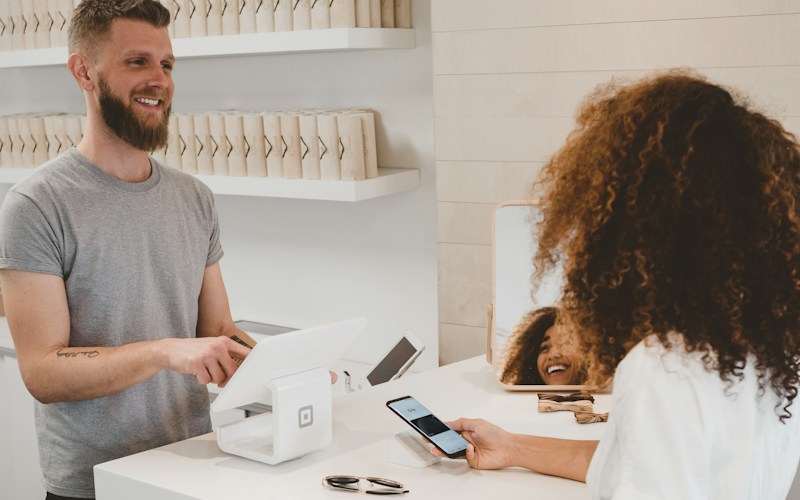
Choosing the right moment to survey customers about a product is extremely important. It is a treasure trove of information because surveys can help a business improve customer satisfaction, generate ideas for building and developing new content and services, and re-evaluate recently executed marketing plans.
Below is one thing you should keep in mind when surveying customers about a product.
When to Survey Customers About a Product
Survey Immediately After the Customer Interacts with the Business
One of the most perfect moments to survey customers about a product is right after they interact with your business.
Ask for their opinion after the product has been delivered, when the customer contacts you for support, or when they have an unpaid item sitting in their cart.

If a customer has a bad experience with your business, chances are they won't want to stay with your brand — and worst of all, they may not leave any feedback or complaints to let you know. Survey customers about your products and services as soon as they interact with you, giving them a chance to express satisfaction or disappointment so you can make timely, appropriate changes.
Reviewing and fixing bad experiences is a highly effective way to keep customers with you long term. It's estimated that customer churn drops by 67% if the customer's problem is resolved at the moment it occurs — and of course, you have to know what the problem is before you can fix it, which is entirely achievable through surveys.
Unfortunately, quite a few businesses survey at the wrong time, in the wrong place, and with the wrong audience. They often wait a long time after a customer interaction before surveying. Waiting a few days may simply be too late. On the other hand, you shouldn't "bombard" customers either — choosing exactly the right moment is the key to success.
The Best Time to Survey Is Before Making Big Changes

Businesses naturally look for ways to improve and grow. However, not every change will please your loyal customers — the people who are already familiar with the old products.
Sending out a customer survey before making changes can help you enormously. First, let customers know that your business is about to make some changes and convince them of how the change will positively affect their interests.
In fact, asking customers about your company's changes makes them feel more engaged and closer to you, as if the change required their approval.
In addition, surveying lets you convey useful information about what the change will bring to your customers. It also gives them a chance to voice their opinions if the changes create any obstacles or affect their interests. If you receive a lot of negative feedback, it means the change won't satisfy customers — you'll need time to revisit your plan and make more sensible adjustments.
After a Marketing Campaign Ends: The Golden Moment to Survey
Tracking the results of a marketing campaign is essential; otherwise, you may be wasting time and money.
One way to measure the effectiveness of a marketing campaign is to survey customer satisfaction. The survey helps the marketing team determine whether the campaign succeeded, and it should be done at the end of every campaign.

Simply by sending out surveys, your marketing team will receive positive or negative feedback from customers. Management can then see how the campaign went and whether anything was lacking. Without surveys, it will be very hard to understand your audience, and you won't know whether what you're doing is effective.
A marketing campaign survey should include questions about how user-friendly the tool was, whether customers would recommend your company's services to friends and family, and whether they find your brand easy to reach and familiar.
Survey Customers When They Stop Using Your Products or Services
Survey customers when they decide to stop using your product or service. This is an excellent way to uncover the company's weak points and reduce churn in the future.
It lets the business learn why and what made customers decide to leave, so you can prevent further mistakes in time and keep other customers from abandoning your brand as well.
Planning a Customer Survey About a Product

Before you start designing a customer survey about a product or service, make sure you can clearly answer these three questions:
-
What is the goal of the survey?
-
Which tool will you use to create the survey?
-
How will you deliver the survey to customers?
Let's look at each of these questions in more detail:
Define the Goal of the Survey
Just like launching a business campaign or any other initiative, you must have a clear goal before deciding to run a customer survey about a product.
The more specific the goal, the more genuinely useful information you will gather for your business.
Examples:
– Identify which elements of your products and services customers value most. The business can then focus on improving these elements effectively and quickly.
– Collect feedback from customers who bought products through online channels to determine whether the checkout process and delivery times are reasonable.
Find out which customer needs your business is failing to meet. You can then add or develop additional value-added product and service features for customers.
Setting specific goals makes the survey simpler to create, easier for customers to answer, and produces a higher response rate — so the information gathered will be extremely useful to your business.
Choose a Customer Survey Tool
Which format will you use to conduct the customer survey?
-
Manual paper surveys (printing questionnaires and handing them to customers).
-
Surveys via online channels (creating online questionnaires and sending them to customers).
Depending on the nature of the business, the survey's goal, and the customer segment, you can choose one of the two formats — or run both. For online deployment, you can use a few free tools such as Google Forms and Typeform. These are the two most representative customer survey tools, with the following features.
Google Forms

Among the market survey tools is a name from the giant Google. Some of Google Forms' features:
-
Unlimited surveys
-
Unlimited number of respondents
-
Answers and data automatically collected in Google Sheets
-
Multiple theme options
-
Add your own logo
-
Add images and videos
-
Embed surveys in email and websites
-
Add collaborators
Typeform
Typeform's interface is stunningly beautiful, reflecting the tool's philosophy: questions must be easy, human, and engaging. Among the best survey tools, Typeform deserves the crown for creativity and originality.
The free version provides basic services, including:
-
Unlimited questions
-
Unlimited respondents
-
Data export
-
Custom themes or themes chosen from templates
-
Basic reporting
Determine the Channel for Delivering the Survey to Customers
How you distribute the survey depends heavily on one question: "Where are your customers most active?"
In other words, think about where your customers will engage with and complete the survey. That could be:
-
The company's website or blog
-
Email
-
Phone
-
In-person meetings
You can also use multiple channels at once. For example, if the survey is placed on your company's website, you can send the link to customers by email. As for the email channel, you should use email marketing so you can leverage personalization tools to improve your open rates. You can try SimCRM with its full email marketing feature completely free for 30 days.
Designing the Survey About the New Product
How do you design a survey so customers can interact with it as easily as possible?
Start with the…
Customer Survey Introduction
The survey introduction should include the following elements:
-
Business information: A brief description of the company and its products and services to jog customers' memory of who you are.
-
Survey goal: Explain why you are conducting this survey. You can describe these goals from the business's perspective, but you should also explain the benefits customers get from answering.
-
Survey instructions: Provide a brief explanation of how to complete the survey. Note that you can skip this if customers find it unnecessary.
-
Survey length: Tell customers how long the survey will take to complete. This helps them budget their time, which increases the response rate.
-
Privacy statement & commitment template: Whether or not your survey is anonymous, commit to protecting customers' information.
Brainstorm the Survey Questions
Designing survey questions is never easy. You'll need to think about the key factors when building a question set that elicits accurate information and is easy to fill out.
Closed-Ended Questions
Dichotomous question: A question with two answer options.
Multiple-choice question: A question with more than three answer options.
Likert scale: A statement where the respondent indicates how strongly they agree or disagree.
Example: Our customer service is excellent.
1: strongly disagree, 2: disagree, 3: undecided, 4: agree, 5: strongly agree
Intention scale: A scale describing the respondent's intention to take an action.
Example: If Company A launches a new product, I will…
1: definitely use it, 2: probably use it, 3: not sure whether I would use it, 4: probably not use it, 5: definitely not use it.
Open-Ended Questions
Free-response question: A question the respondent can answer based on their own opinions and impressions.
Example: What suggestions do you have for Company A to improve its service quality?
Sentence completion: These are incomplete statements that respondents fill in the blank for, according to their impressions.
Example: When shopping at Store A, the thing I would choose is…
How to Order the Questions
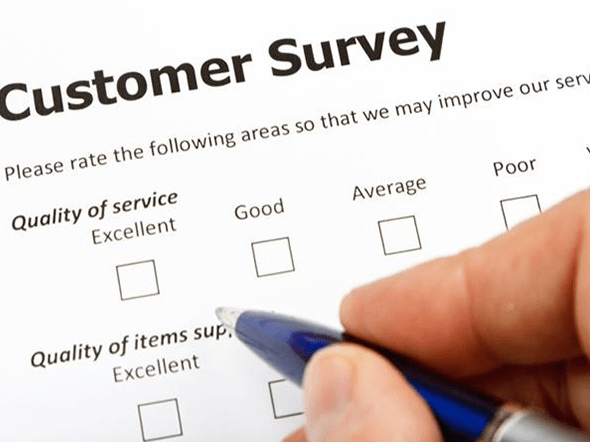
The order in which questions appear may seem like a small matter, but it directly affects how customers answer your survey.
Customers are often influenced and led by the "first" question. For instance, if you put an overall question first and the customer has an extremely satisfying overall experience with the business, they will convince themselves that every other aspect of the product and service is wonderful — even when reality doesn't quite bear that out.
Conversely, when you place specific questions first (about the checkout process, delivery, and so on) and the customer has an unpleasant experience with that process, it colors their assessment of the entire business negatively (even though they initially felt satisfied overall).
So how should you order the questions?
This thorny question has no definitive answer. Instead, remember that these biases exist — and keep them in mind when you later analyze the survey results.
A few tips from us on ordering questions in a survey:
Logic
Questions should relate to one another. Typically, the first questions are broader and later ones dig into specific issues. Don't open with a question like "Why don't you use Product A?" Such questions are too specific and presumptuous. Instead, find out whether the respondent has a negative or positive perception of Product A before asking why.
Put Less Important Questions Last
If you place the important questions at the end, survey participants may lose interest before answering them. Also, if the business wants participants' personal information, that information must be kept confidential and strictly protected.
How to Order the Answer Options
The way you list the answer options can also significantly influence customer responses.
This arises when your survey question offers multiple options to choose from. For example, the survey question is: "What are you most satisfied with about our service?" and you present the respondent with options such as:
-
Customer care service
-
Product quality
-
Price

A conducted survey showed that customers tend to pick the first answer they see — even when other options might be more accurate.
The more respondents follow this tendency, the less reliable the survey results become.
To reduce this risk, you can randomize the order of the answers. While this won't eliminate bias in each individual's responses, at least it will prevent results from clustering on a single answer.
Notes:
-
Randomization only works with multiple-choice answer types like the above. Do not apply it to scale-based answers such as: Very satisfied, satisfied, dissatisfied…
-
To randomize answers, you must use paper surveys, because free online tools may not have this feature.
Closing the Customer Survey
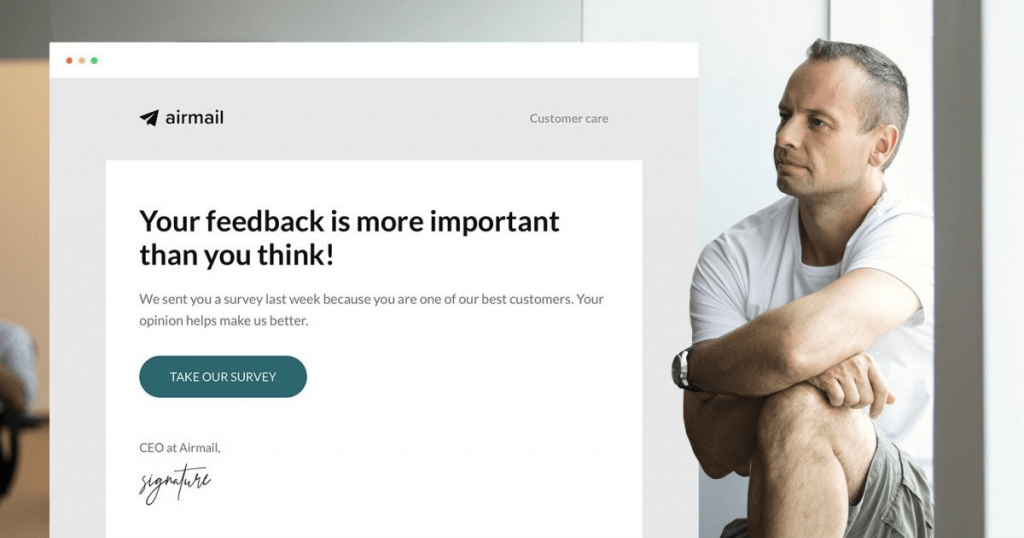
First, use the final page of the survey to thank customers for taking the time to help your business improve its products and services. This small gesture of appreciation reminds customers that your company truly values their feedback and the effort they put into the survey. You can attach a few small gifts or surprise offers for customers who complete the survey.
Also on the last page, if applicable, politely ask for the customer's contact information. The reason for putting the request for personal information last is that if you put it first, some customers who don't want to share personal details won't take the survey at all.
Conclusion
By now, you understand how necessary and important customer feedback is to a business. It helps you steer your business strategies and marketing ideas, reduce churn, guide product and service innovations, and manage changes within your company. If you have any further questions about how to survey customers about a product, leave a comment below this article so SimERP can answer you quickly!
Related Articles
Bài viết liên quan

25 tháng 10, 2026 · 3 phut doc
2024年网页设计趋势预测如何? | Wotech Electronics
关于 2024 年网页设计趋势——步入 2024 年,年初正是我们为新事物预留时间的时刻。这也非常适合设计师群体唤醒我们内心的"艺术之魂"。闲话不多说,快来和 Markdao 一起浏览 2024 年的 UX/UI 设计趋势吧,说不定您就能为自己接下来的网页设计项目"迸发"出一个绝妙的点子呢!

25 tháng 10, 2026 · 1 phut doc
什么是网站(Website)?网站的详细定义及其带来的商业价值
什么是网站(https://www.markdao.com.vn/blog/website-la-gi)——这个问题或许已经无需定义,因为在如今这个信息时代,网站对每一家企业而言都是不可或缺的组成部分。正是网站帮助用户更近距离地接触企业所提供的产品和服务,从而提升经营效益。此外,要在当今竞争如此激烈的环境中求发展,网站是一个重要因素,它将带你走向品牌与销量上的双重成功。

25 tháng 10, 2026 · 1 phut doc
什么是SEO标准网站?一场"打赢"Google SEO标准的战役 | Wotech Electronics
99%的用户在购买前会先搜索信息,73%的用户只会访问排名前10的网站,并认定它们是值得信赖的品牌……在数字营销爆发的时代,这些数字有力地印证了SEO标准网站的重要性。然而,许多人对什么是SEO标准网站(https://www.markdao.com.vn/blog/huong-dan-toi-uu-seo-website-chuan-seo-on-page)仍然相当模糊,并未真正理解。达到SE…