
What Is Landing Page Design? Why We Need Landing Pages | Wotech Electronics
Vũ Khôi
Tác giả tại Wotech Electronics Blog
What Is Landing Page Design? Why We Need Landing Pages
Vũ Khôi
Author at Wotech Electronics Blog
Landing page design gives businesses an advantage
Web design is an essential need of modern businesses. Building a website that attracts customers and increases revenue is the goal every business is aiming for. But to bring together all the necessary content so users don't have to navigate away, with a more eye-catching design, you need landing pages. So what is a landing page? Does it really matter in promotional or sales campaigns?
Join Markdao Agency Vietnam as we take a deeper look at landing pages and why they are considered one of the most important elements of a digital marketing campaign in the article below.
What is a landing page? The purpose of landing page design
A Landing Page (destination page) is a web page designed for one specific conversion goal, such as capturing leads, selling a product, or registering attendees for an event. A landing page differs from an ordinary web page in that it focuses on a single action you want the user to take.
All the information users need to read and see is compiled and displayed on this page, with the purpose of persuading and guiding users to make a purchase or leave their contact details with the business. A landing page can be a page within a website or a standalone website with its own domain. Each advertising campaign should have its own Landing Page focused on the content users are searching for (Intent). There are 3 types of Landing Pages commonly used by businesses:
-
Sales landing pages
-
Lead-generation landing pages
-
Landing pages introducing a product or promotion
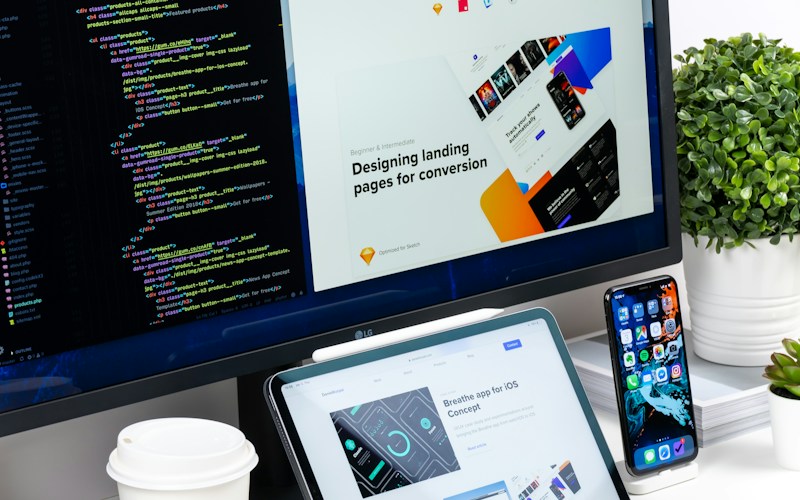
"ONE PAGE, ONE PURPOSE" - The purpose of a Landing page is to persuade visitors to perform one specific action. A landing page's conversion rate is usually higher than you'd expect compared with an ordinary web design page. A landing page is not a page for users to wander around and learn about your brand, nor is it a page designed lavishly with stunning imagery. The only reason a landing page is built is to consistently collect contact information. And no other page can do this the way a landing page can.
An effective landing page with a high conversion rate must achieve the following elements:
-
A striking, effective headline
-
Standard layout and sizing, with a minimalist style prioritized
-
Clean images that match the content the landing page targets
-
Highlighting the most outstanding features of the product/service, showing customers the benefits of clicking the action button
-
A clear, prominent call-to-action button
-
Use of testimonials
-
Mobile-first design
-
Fast page load speed (Under 3 seconds is an ideal benchmark)
Comparing ordinary web design and landing page design
To avoid confusing landing page design with ordinary web design, Markdao Vietnam has compiled the differences between the two below:
-
Content aimed at the right audience: Ordinary website: You introduce affordable website design services to multiple customer groups, but customers won't see the common ground between you and them. Landing page: Focused on one specific customer group, such as restaurants. You emphasize the interfaces and the fact that their competitors are using your service successfully, and the features that drive online conversions such as table reservations, e-menus, and meal cost estimation tools. Finish with a call to action to leave their information for a quote, promising a quote within 3 hours to make customers more interested. If possible, you can even create real-time flash coupons that compel customers to leave their information.
-
Accessibility: Ordinary website: Pages can easily be revisited via the navigation bar. Landing page: You must remember the exact URL of the page or the landing page's domain.
-
Promotional campaigns: Ordinary website: You can use SEO, SEM, Facebook, and many other channels to promote the site, since it serves a long-term purpose. Landing page: The page is usually prioritized for ads on Facebook, other social media, and SEM — even SEO, provided your landing page sits within a strong website domain, its keywords are optimized, and it has a high level of backlink authority.
-
Defining the purpose: Ordinary website: Can serve more than 1 purpose, such as branding, sales, providing useful information, entertainment, and experience. Landing page: A single goal and a defined audience group maximize conversions and reduce advertising costs for the business.
In conclusion, a website serves diverse purposes for businesses and individuals, while a landing page targets a fixed audience and action goal.
Why is landing page design important in a digital marketing campaign?
Landing pages are an indispensable part of marketing campaigns — especially a powerful tool for finding your potential customers. Specifically, what benefits does landing page design bring to a business?
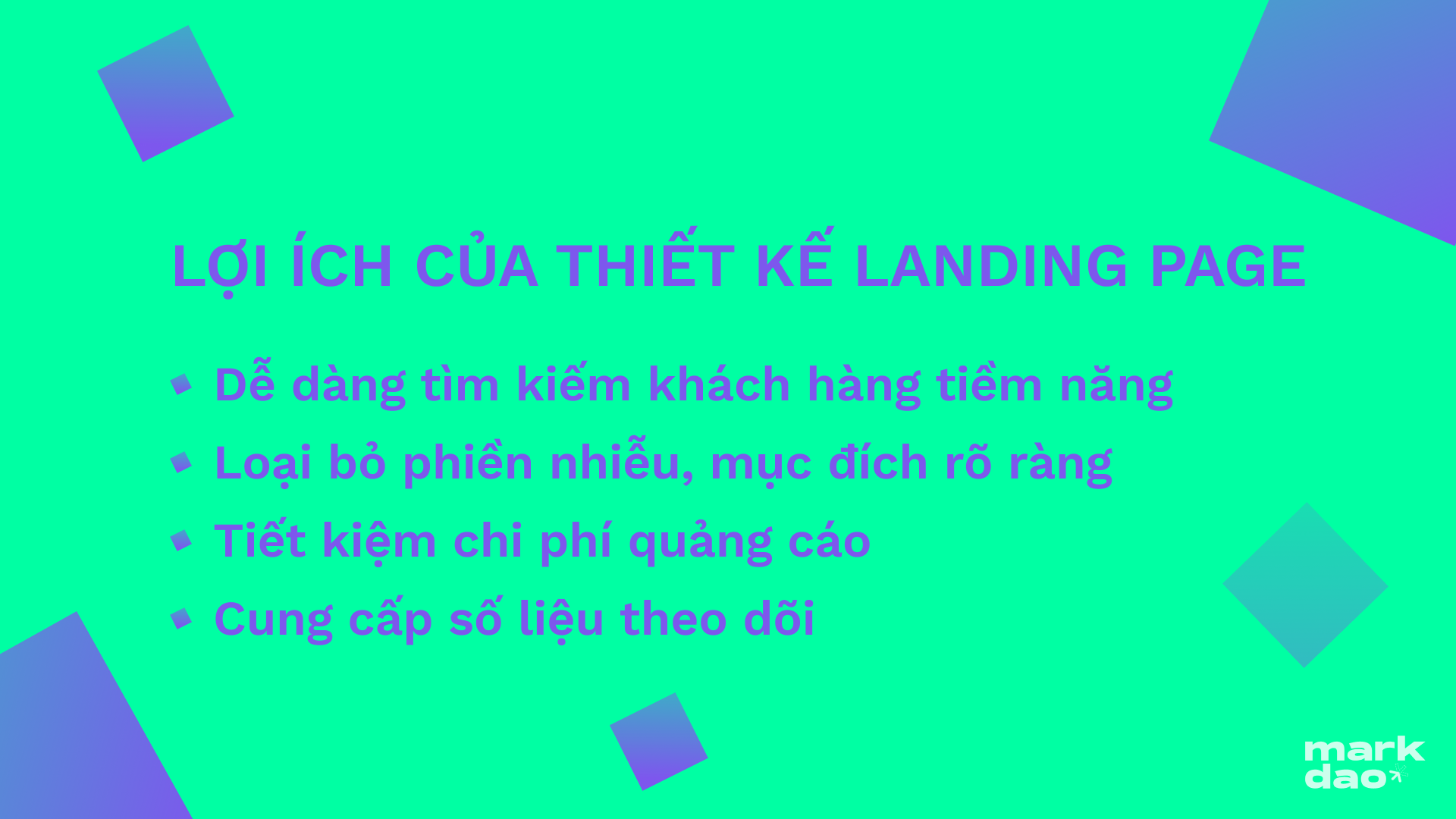
EASILY FIND POTENTIAL CUSTOMERS:
Experience shows that marketers retain potential customers at higher rates by directing them to a landing page rather than the main website. So it's fair to say the landing page is the most effective element for generating leads and converting them into actual customers. So how does a landing page retain potential customers?
As shared above, the purpose of landing page design is to have visitors give you their information in exchange for consultations, promotions, gifts, service access, and so on — by clicking the call-to-action button and filling out the form. The form must contain contact information so you have the opportunity to reach potential customers. In addition, demographic information in the form — age, gender, family, income, occupation, education — helps you understand potential customers and segment them more effectively. This also gives your sales team more valuable conversations. It all leads to the final result: improved revenue.

LANDING PAGES ELIMINATE DISTRACTIONS, WITH A CLEAR PURPOSE:
Many users are indecisive, and that doesn't help you at all when you lead them to your main website. On your main site, the web design style is geared toward providing lots of information and content about the business. So users can take many different actions — from reading the blog and learning your history to watching videos and clicking social media links to see your page on Facebook, Twitter, etc. While that's a good thing, it's not really what you want to happen. More importantly, it can delay the consumer's action.
Generally speaking, the more options you give a person, the lower the chance they make a decision. A landing page, on the other hand, is a single page, simply designed and focused on one message — so how could customers get distracted? The landing page does exactly what you need: it represents a single offer, and customers fill out the form in exchange for that benefit.
EXAMPLE: Suppose you want to sell a line of used Microsoft Surface products on a landing page. You would create a page clearly divided by use case: products for Office, Graphic Design, and Web Browsing. In each section, you list the products that suit their budget and needs. Point out clearly how much they save compared with buying a new machine. Reinforce trust with customer reviews. Highlight your store's "Best Sale" computer with a headline declaring it the best choice for them, along with the remaining stock to create scarcity. In this case, the call to action should be receiving a coupon, since your pricing is already shown on each product — pushing "buy now" would make customers hesitate, and you'd end up with no information to close the deal.
SAVE ON ADVERTISING COSTS:
When talking about digital marketing, you can't skip paid advertising. With pay-per-click advertising (PPC), you ensure more users click through to your website when searching keywords. PPC gives you a competitive advantage over rivals. However, if you spend too much on PPC ad placements, it will hurt your overall business performance. Moreover, you may see fewer tangible conversion results. Meanwhile, landing page design helps you get more conversions without spending more on advertising. Once you have a landing page, you can pool the savings from running this keyword campaign and reinvest them in advertising for other keywords.
As mentioned in the "clear purpose" section, choosing the right call to action gives you higher conversions. That way, the goal of this landing page is not to sell directly, but to gather information from customers who are searching, follow them on Facebook and the Google Display Network, and proactively contact them via Zalo for consultations. Instead of users not clicking "buy" and you ending up with no information at all.
PROVIDES TRACKING DATA:
The advantage of digital marketing over traditional marketing is the ability to receive the metrics and statistics you need. These figures help you plan your next steps. Of course, data from landing pages can be tracked, and from there you can understand how engaged potential customers are. Beyond that, you can monitor the metrics to better understand how well the marketing campaign you're running is performing, then adjust and optimize your page accordingly.
How many ways are there to design a landing page?
No matter what industry you're in, you can use landing pages to run your advertising campaigns. There are quite a few ways to design a landing page to suit different purposes. The three most common types are:
- Sales landing page: designed to persuade customers to buy right on your landing page. A sales landing page has these characteristics:
-
A striking headline, compelling enough to keep customers reading below
-
Detailed product/service content throughout the page, including: benefits of using the product/service, standout features of the product/service, testimonials from customers who have actually used the product/service, etc.
-
A pricing table and company policies, giving customers all the information they need to make a purchase decision.
- Lead-generation landing page: used to collect customers' contact and demographic information for later marketing campaigns, or to use that information to segment and make sales calls. Web design for this type of landing page needs:
-
A powerful headline and sufficiently engaging content
-
A description of the benefits of providing information, such as discount vouchers, gifts, ebook materials, etc.
-
A registration form for contact information
- Click-through landing page: no purchase registration and no information form — a click-through landing page directs readers to another conversion page you want. Typically, businesses use landing pages to promote attractive information about a product and lead customers to the shopping cart on the main website.
Through this article, we hope you'll find the right answer for your business. For any questions about full-package design and web design services, contact Markdao Agency Vietnam right away:
Address: 5D Phung Khac Khoan, Dakao Ward, District 1, Ho Chi Minh City (We ship websites globally) Hotline: +84 2871 099 090 Email: [email protected]
Related articles
Bài viết liên quan

25 tháng 10, 2026 · 3 phut doc
2024年网页设计趋势预测如何? | Wotech Electronics
关于 2024 年网页设计趋势——步入 2024 年,年初正是我们为新事物预留时间的时刻。这也非常适合设计师群体唤醒我们内心的"艺术之魂"。闲话不多说,快来和 Markdao 一起浏览 2024 年的 UX/UI 设计趋势吧,说不定您就能为自己接下来的网页设计项目"迸发"出一个绝妙的点子呢!

25 tháng 10, 2026 · 1 phut doc
什么是网站(Website)?网站的详细定义及其带来的商业价值
什么是网站(https://www.markdao.com.vn/blog/website-la-gi)——这个问题或许已经无需定义,因为在如今这个信息时代,网站对每一家企业而言都是不可或缺的组成部分。正是网站帮助用户更近距离地接触企业所提供的产品和服务,从而提升经营效益。此外,要在当今竞争如此激烈的环境中求发展,网站是一个重要因素,它将带你走向品牌与销量上的双重成功。

25 tháng 10, 2026 · 1 phut doc
什么是SEO标准网站?一场"打赢"Google SEO标准的战役 | Wotech Electronics
99%的用户在购买前会先搜索信息,73%的用户只会访问排名前10的网站,并认定它们是值得信赖的品牌……在数字营销爆发的时代,这些数字有力地印证了SEO标准网站的重要性。然而,许多人对什么是SEO标准网站(https://www.markdao.com.vn/blog/huong-dan-toi-uu-seo-website-chuan-seo-on-page)仍然相当模糊,并未真正理解。达到SE…