Effective Web Design in 7 Simple Steps | Wotech Electronics
Vũ Khôi
Tác giả tại Wotech Electronics Blog
Effective Web Design in 7 Simple Steps
Vũ Khôi
Author at Wotech Electronics Blog
A guide to how to design a website in 5 steps for beginners:
-
Find a reliable website design platform (Webflow, Elementor, Wix, Squarespace)
-
Choose a ready-made theme for your website that matches your topic
-
Customize and combine the pre-built designs within the theme for your website
-
Adjust your website content according to an on-page SEO structure
-
Review the website design on mobile devices and publish
Web design for showcasing your products/services not only makes it easy for a business to reach potential customers, but also allows it to build its brand image effectively. However, owning a quality website requires careful research and an investment of time. To succeed, a business cannot stop at simply having a website — it must aim to build one that is effective and high-quality.
So how can a business get its own website to showcase its products/services? To build a truly effective, high-quality website, you can follow the 7-step website design process, explained in detail below.
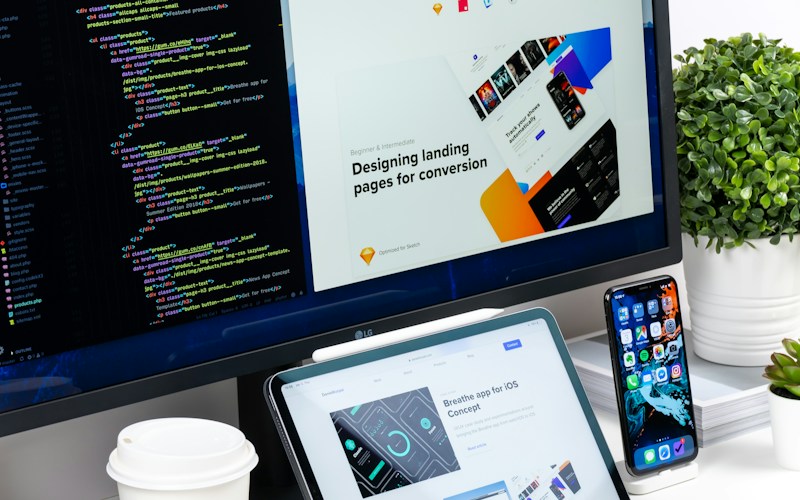
What is web design?
Wondering what "web design" is? Why is it so important and necessary for businesses? This article will help answer your questions!
What does web design actually mean?
Simply put, website design is the work of creating a web page for a business to serve its needs for showcasing products/services and building its brand image. In today's technology-driven era, as online shopping demand keeps growing, professional and effective web design is the solution that helps a business reach potential customers in the easiest and fastest way possible. In other words, today a website is the face of a company — its business card — allowing it to welcome, interact with, and transact with customers over the Internet.
A web designer's main job is to build and design a website that harmonizes with and suits each different industry and field in which a business operates, in both content and appearance. With this goal, web design gives a business a unique website with its own distinctive character and helps it build the most differentiated image in the market. Beyond designing an eye-catching, attractive website by creating unique, interesting visuals (logo, banner, video, etc.) and arranging a sensible layout for each section of the site (toolbar position, menu bar, etc.), polishing the website's content is also extremely important and necessary (regularly creating and delivering useful content to customers, helping customers stay updated on the company's new programs and information, etc.).
Why do businesses need web design?
Surely it is no coincidence that the term "web design" is becoming increasingly common among today's businesses. There are 4 main reasons why businesses treat it as a top-priority choice:

1. Customers use the Internet every day, every hour
According to statistics reported by VTV at the end of 2017, Vietnam had more than 64 million Internet users, ranking 6th in Asia and 12th in the world — mostly young people, a segment with extremely high shopping demand. Moreover, in recent years the online shopping trend has been growing strongly and has become a vibrant marketplace in the business world. Not only that, most consumers today have the habit of using the Internet to look up information about companies, products, and services before making a purchase. And obviously, transactions carried out over the Internet — booking hotel rooms, buying plane tickets, and so on — are always highly rated by consumers for the convenience and speed they offer.
In today's digital economy, if a business does not invest in web design, it is directly giving up the opportunity to reach potential customers while also reducing its ability to compete with other businesses.
2. Sell at any time, from anywhere
Web design is an effective solution that lets a business operate 24/7. Customers can visit the company's website at any time and from anywhere to look up product/service information and make purchases. Obviously, this is extremely convenient for customers, which makes them more satisfied with their online shopping. That is a big plus for the business in engaging with customers and nurturing its brand. In addition, online shopping helps a business maximize its sales opportunities and strongly boost revenue.
3. Save on business costs
With a website, a business can easily own an "online store" without having to pay heavy costs for renting premises, hiring staff, or renting facilities as it would when investing in a physical store. This helps save on operating costs effectively. On the other hand, through an e-commerce website, businesses and customers can carry out transactions easily and quickly — for example, customers can check out swiftly via ATM cards or other electronic payment methods.
4. Build and nurture the company's brand image and reputation
A website that is effective and high-quality in both content and appearance easily makes a good impression, attracts customers, and builds brand trust among them. From there, the business can increase orders and strongly boost sales.
7 simple but effective web design steps
So how do you design an effective website for your business? To build a site that is truly effective and high-quality in both content and appearance, beyond choosing a good service, a business should pay attention to the following 7 steps:
The web design process at a glance
-
Define goals: The business needs to discuss with the web design service provider to clearly identify the target customers it wants to reach with its online store, while also setting out its criteria for that online store.
-
Plan the project: Once the goals are clear, the business and the web design service provider will jointly plan the website development project. Specifically: how many pages the website needs, what functions each page will have, and the timeline for completing the project.
-
Create the sitemap and wireframe: Next, the business and the service provider begin building a detailed site map that fully shows the pages of the website and each page's functions.
-
Build the content: This is the crucial stage that determines the quality and effectiveness of the website. The content of each individual page must be optimized to harmonize with the overall theme and become search-engine friendly.
-
Visual design: Now it's time to polish the website's look and feel! The web design service provider will start building the website according to the standards for layout, color, imagery, and style requested by the business.
-
Test the website: At this stage the website is nearly ready to go live, but to ensure it works well and that no errors occur once it is in use, the business and the web design provider need to run a testing phase. Set up a preview so customers can access the website. The business and the provider will monitor and analyze how the website performs, then make reasonable adjustments and improvements.
-
Launch the website! Once everything is confirmed to be working well, it's time to plan and execute the launch of your website! Your launch plan should include both a launch schedule and a clear communication strategy — specifically, when your website will officially go live and how customers will find out about it.
The 7 simple steps of effective web design in detail
1. Define your goals:
Before deciding to build a website, a business needs to clearly identify the target customers it wants to reach with its "online store." The following questions can help define the right target audience:
-
Who is the website's target audience?
-
What information can customers find on this website?
-
What is the main purpose of the website? Selling products? Providing information? Or entertainment?
-
Does the website need to convey the company's brand message?
-
Are there competing websites? If so, how should the business's website be built to stand out from the competition?
This is considered one of the most important stages in the web design process. If a business cannot clearly define its target audience from the very beginning, the website will never reach its full potential, no matter how beautiful it is.
Tools for the goal-definition stage:
-
Audience personas
-
Ad directories
-
Competitor analysis
-
Brand attributes
2. Plan the project:
One of the hardest parts of the web design process is sketching things out and planning the project. The business sets a goal. But that goal will keep evolving and expanding. It may even change completely from the original intention. The web design service provider not only builds a website that is complete in both content and appearance for the business, but also sets up a web application, email, and notifications.
A Gantt chart is used at this stage as a tool that helps both the business and the service provider manage and control the project more easily by presenting activities and tasks against specific milestones. In other words, a Gantt chart is a plan that shows the business and the provider which activities and tasks need to be carried out and when they must be completed.
Project planning tools:
-
Roadmap
-
Gantt chart
3. Create the sitemap and wireframe:
A sitemap is the basic foundation of an effective, high-quality website. Thanks to the site map, the service provider and the business can easily visualize the website's information architecture and clarify the relationships between different pages and between content elements.
Designing a website without a sitemap is like building a house without blueprints — and clearly, it is very hard to get good results.
The next step is building the wireframe, an indispensable part of the website design process. A wireframe is a visual tool used to present and store the proposed visual design elements (functionality, structure) and the website's content. In other words, a wireframe is a detailed drawing of the functions, structure, and content displayed on the website. A wireframe also helps surface problems and defects present in the sitemap.
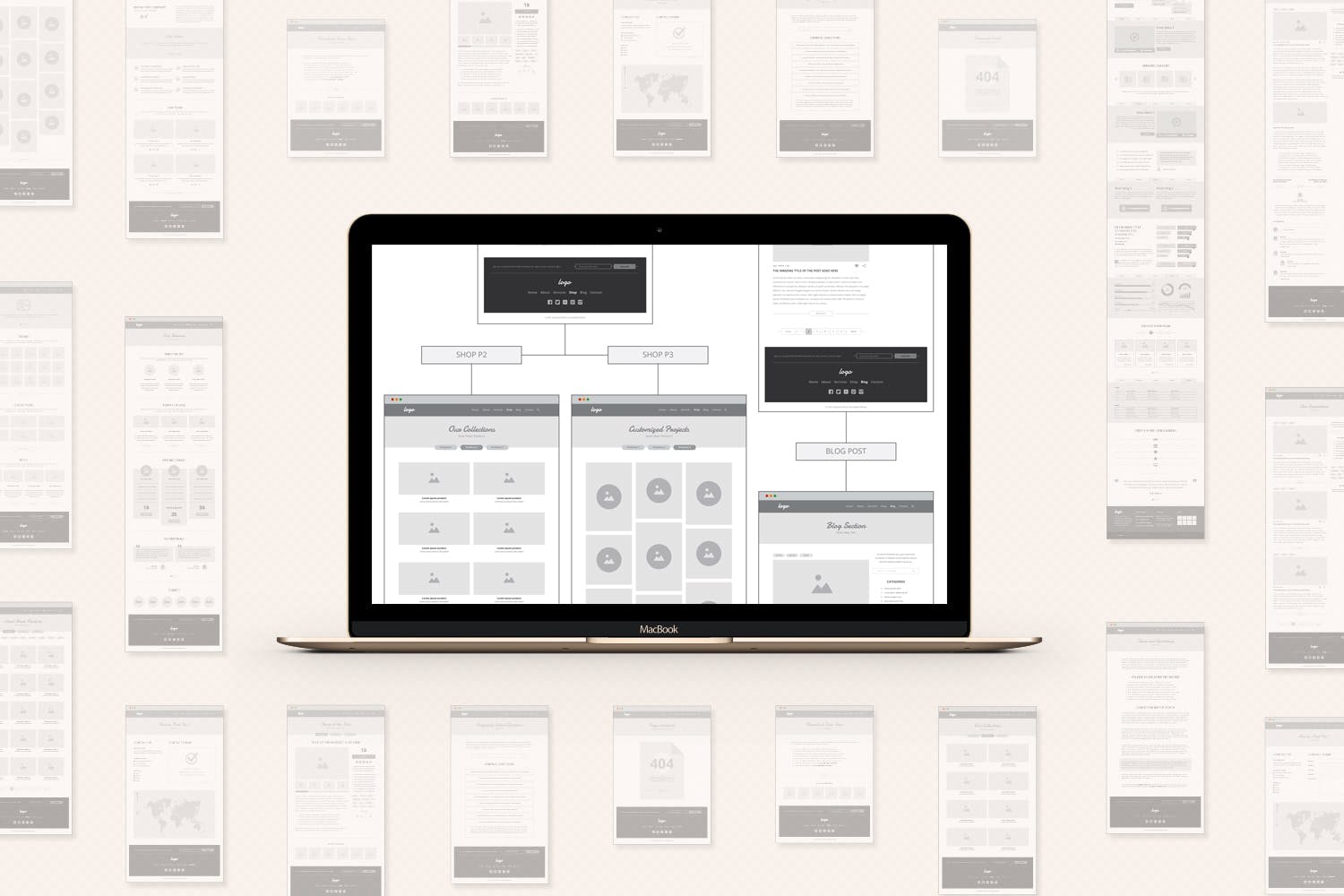
Although a wireframe contains no final design elements, it also serves as a guide for how the web page will appear. Some designers use tools like Balsamiq or Webflow to create their wireframes.
Tools that support sitemap building and wireframing:
-
Pen/pencil and paper
-
Balsamiq
-
Moqups
-
Sketching
-
Axure
-
Slickplan
-
Writemaps
-
MindNode
4. Build the content:
Once the site map is in place, it's time to begin the most important stage of the web design process: creating and building the website's content.
The two main goals of content creation:
1. Create content that drives customer behavior
Useful content attracts visitors to the website and prompts them to take the steps needed to achieve the site's main purpose. To do this, the business's website must optimize both the content (text) and how it is presented (typography and article layout).
An article with no useful value and excessive length will struggle to reach customers. Instead, articles of an appropriate length with engaging content and a clear structure easily attract customers and encourage them to click through links to other pages. If your pages need to convey lengthy content, the advice is to break it up into short paragraphs to avoid overwhelming the reader. An article with useful content and a clear layout always leaves a good impression and makes customers feel more comfortable engaging with it. This is an absolutely essential factor that businesses must keep in mind when designing their website.
2. Optimize content for search engines:
Content plays a key role in increasing the website's visibility on search engines. Creating and building good content to improve the website's ranking on search engine results pages during the web design process is called search engine optimization, or SEO.
Having a suitable, high-quality keyword set is a critical factor in the success of the web design process. You can use Google Keyword Planner to build your keyword set. With this tool, you can see search traffic for each keyword and potential keyword phrase, and from there build a suitable keyword set for your website. In addition, Google Trends is also a useful tool that lets you identify the keywords customers search for most frequently.
An effective, high-quality website must be built on standard SEO criteria. To succeed at keyword SEO and optimize the website across search engines, you must insert keywords into the main heading and subheading tags of the website. Specifically, keywords must appear in the H1, H2, and H3 heading tags, in the meta description, and throughout all content presented on the website.
There are two ways to build website content. The business and the web design service provider can jointly publish SEO-standard content (content with keywords inserted sensibly): the business supplies the articles and the provider offers advice on keyword insertion and editing the content against SEO criteria. Alternatively, the business states its content requirements and the web design service provider takes responsibility for producing SEO-standard content — that is, useful articles with a clear structure and sensible keyword placement.
Content publishing tools:
-
Google Docs
-
Dropbox Paper
-
Quip
-
Gather Content
-
SEO tools
-
Google Keyword Planner
-
Google Trends
-
Screaming Frog's SEO Spider
5. Visual design:
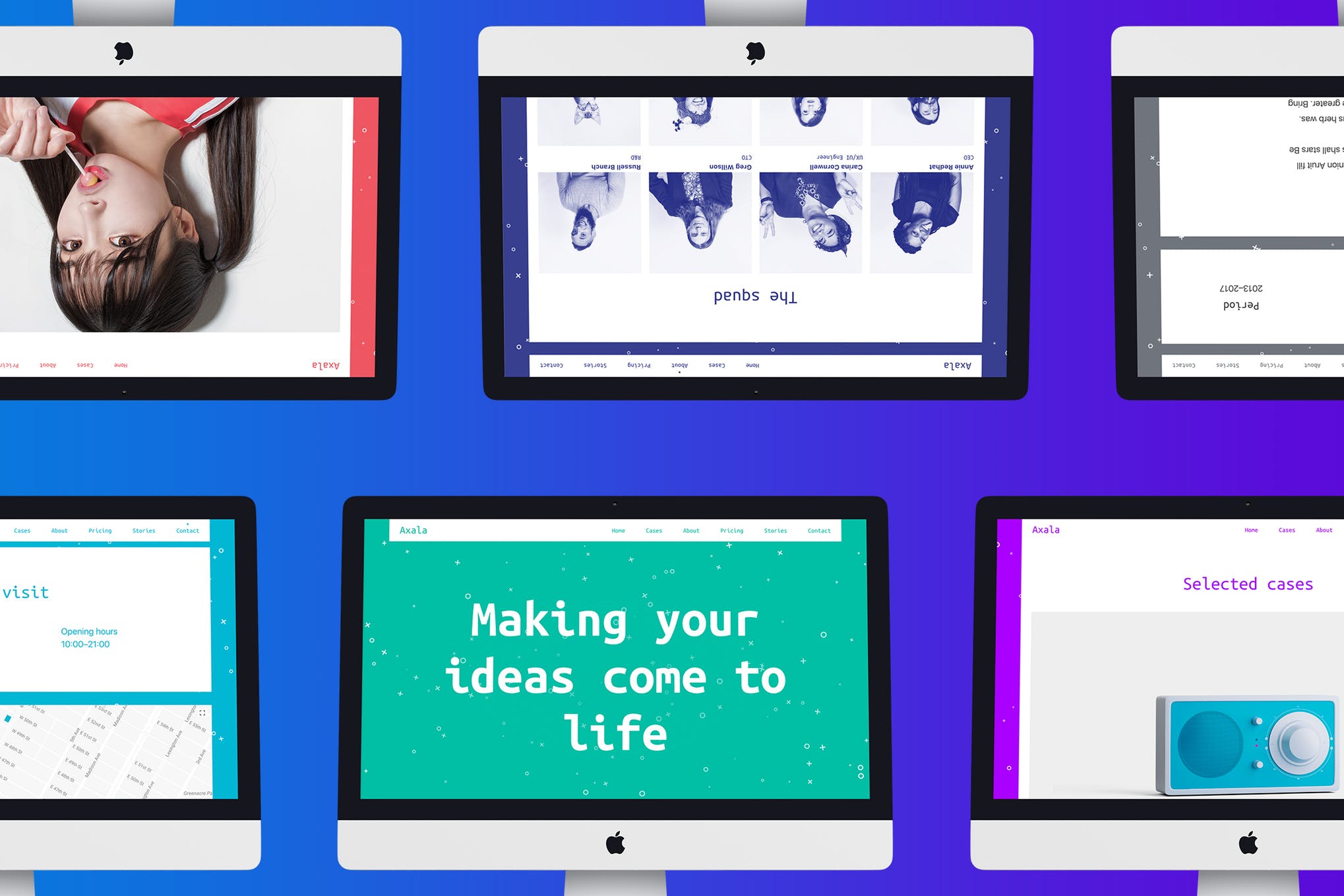
At last, it's time to invest in the website's look and feel! This stage of web design depends on existing brand elements, the choice of colors and logo, and the customer's requirements.
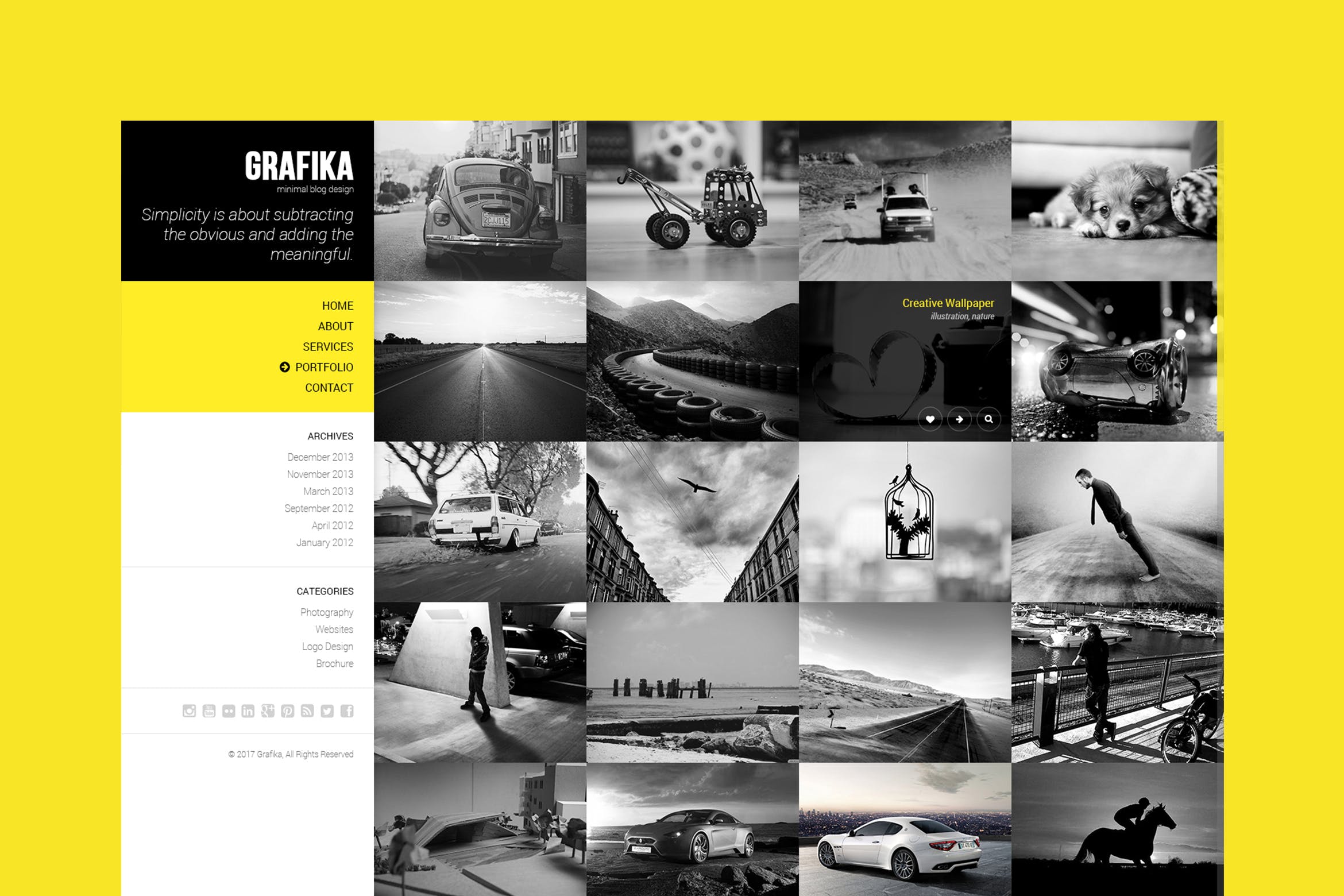
In web design, imagery is impossible to ignore. Image quality not only gives an e-commerce website a professional appearance but also conveys the company's message, thereby building brand trust among customers. For that reason, website images must be able to adapt to every interface: phone, computer, tablet, etc.
Visually presented content plays an important role in effectiveness and quality. Customers are easily drawn in by unique, striking images, which strongly increases clicks, engagement, and revenue. The more images a site has, the more accessible it is to customers. Naturally, customers always find it easier and more comfortable to absorb a company's message and content through vivid images than by reading blocks of text.
The advice for businesses is to find a website design provider capable of producing high-quality, unique, and eye-catching images. Remember: the higher the quality and the more beautiful the images, the more traffic they attract. Optimizilla is a great suggestion for getting quality images. This tool lets you compress images while keeping image quality unchanged — saving page load time while still looking great.
Visual design is a way to communicate with and attract users to your website. Invest in this stage properly to maximize the website's chances of success.
Website design tools:
-
Usual suspects (Sketch, Illustrator, Photoshop, etc.)
-
Moodboards, style tiles, element collages
-
Visual style guides
6. Testing:
Once your website has been fully optimized in both content and appearance, your site is ready for the testing phase.
Check each page carefully to make sure links work properly and the website runs well on both mobile and desktop (framework). At this stage, certain website errors may surface, such as encoding errors — these are not easy to detect and can even be difficult to fix. So make every effort to perfect both content and appearance so the website doesn't end up with hard-to-fix issues.
Note: You should use Screaming Frog's SEO Spider for this website testing phase. It lets you perform a large number of checks and audits within a single tool and is completely free for up to 500 URLs.
Review the heading tags and meta descriptions of each page carefully. The order of heading tags can also affect the page's performance and search-engine friendliness.
Webflow has a very good article on the pre-launch preparation process for a website.
Tools that support website testing and auditing:
-
W3C Link Checker
-
SEO Spider
7.Launch the website!
The most anticipated stage has finally arrived! By this point, you can officially launch your website. Once everything has been thoroughly checked and you are happy with both content and appearance, it's time to roll out the site. Don't expect your website to run perfectly — of course there will still be small errors to fix. Web design is a continuous process that requires regular maintenance. But don't worry too much: the website design provider will always be ready to help you resolve issues stemming from both the content and the appearance of the website.
Good web design, simply put, is a balance between a site's form and function. You must use the right fonts, colors, and design templates. But how people interact with and experience the website is also extremely important and something you need to pay attention to. A reputable, professional service provider must be able to balance the website's form and function — that is, build a search-engine-friendly website optimized in both appearance and content.
Note: Even though the website has officially launched, that doesn't mean everything is finished. Optimizing content and appearance is a never-ending story. Once the site is live, you still need to keep testing new content and features, while regularly monitoring, analyzing, and managing your content and messaging.
In today's digital age, a website is a valuable tool that helps a business become more competitive in the market. We hope this article gives you a more comprehensive view of websites and the steps a quality web design agency will take when partnering with your brand.
Read more: What should you pay attention to when designing a beautiful website?
Need further advice? Contact us today for a free consultation!
Phone: +84 28 7109 9090
Email: [email protected]
Related articles
Bài viết liên quan

25 tháng 10, 2026 · 3 phut doc
2024年网页设计趋势预测如何? | Wotech Electronics
关于 2024 年网页设计趋势——步入 2024 年,年初正是我们为新事物预留时间的时刻。这也非常适合设计师群体唤醒我们内心的"艺术之魂"。闲话不多说,快来和 Markdao 一起浏览 2024 年的 UX/UI 设计趋势吧,说不定您就能为自己接下来的网页设计项目"迸发"出一个绝妙的点子呢!

25 tháng 10, 2026 · 1 phut doc
什么是网站(Website)?网站的详细定义及其带来的商业价值
什么是网站(https://www.markdao.com.vn/blog/website-la-gi)——这个问题或许已经无需定义,因为在如今这个信息时代,网站对每一家企业而言都是不可或缺的组成部分。正是网站帮助用户更近距离地接触企业所提供的产品和服务,从而提升经营效益。此外,要在当今竞争如此激烈的环境中求发展,网站是一个重要因素,它将带你走向品牌与销量上的双重成功。

25 tháng 10, 2026 · 1 phut doc
什么是SEO标准网站?一场"打赢"Google SEO标准的战役 | Wotech Electronics
99%的用户在购买前会先搜索信息,73%的用户只会访问排名前10的网站,并认定它们是值得信赖的品牌……在数字营销爆发的时代,这些数字有力地印证了SEO标准网站的重要性。然而,许多人对什么是SEO标准网站(https://www.markdao.com.vn/blog/huong-dan-toi-uu-seo-website-chuan-seo-on-page)仍然相当模糊,并未真正理解。达到SE…