Top 20 Best Website Platforms in 2024 | Wotech Electronics
Vũ Khôi
Tác giả tại Wotech Electronics Blog
Top 20 Best Website Platforms in 2024
Vũ Khôi
Author at Wotech Electronics Blog
In today's tech era, building and designing a website is no longer overly difficult. And if you're researching and don't know where to start, this article is for you. You'll be introduced to 4 popular website platforms along with suggestions for the best choices.
1. The most popular free open-source website platform in the world
Open source is arguably the largest, free, and most popular website platform in the world today. Not just because it's free, but also because it's easy to use and the resulting website quality is extremely good.
a. What is an open-source CMS
A CMS (Content Management System) is a content management system that allows users to create, manage, and edit content on a website without needing much programming knowledge.
And "open source" means the source code is open. Platforms of this type have publicly published source code that anyone can freely use, modify, or share. The important thing is that you can use them for free, saving significant costs in developing and maintaining a website, especially for individual users.
One of the main benefits of open-source CMSs is that they usually have a very large developer base. This means these CMSs never stand still — they are constantly improved to keep up with users' needs.
Here are the most famous open-source website platforms you can consider:
b. WordPress
WordPress is the most beloved and popular open-source website platform in the world today. WordPress is used by millions of websites, from personal blogs to large business sites. Here is why you should prioritize WordPress:
-
Easy to use: WordPress is a very user-friendly website design platform, allowing beginners to easily set up and manage a site without much programming knowledge. The intuitive admin interface makes it easy to add posts, pages, and do many other things.
-
Highly customizable: WordPress offers thousands of ready-made themes and plugins, letting users customize their site's look and functionality without writing code.
-
An enormous, powerful support community: With the largest community of users and developers among CMS website design platforms, WordPress has abundant support resources ranging from forums and blogs to online seminars and WorkCamps worldwide. Users can easily find help, learning resources, and handy tips for using WordPress.
-
Many useful plugins: Plugins are created to serve many purposes when designing a website. For example, with the WooCommerce plugin, you can turn an ordinary website into an online store with remarkable ease.
-
SEO friendly: WordPress is known for being very SEO-friendly. SEO standards are built into the platform, and there are many plugins like Yoast SEO and All in One SEO Pack that optimize your site effectively.
c. Drupal
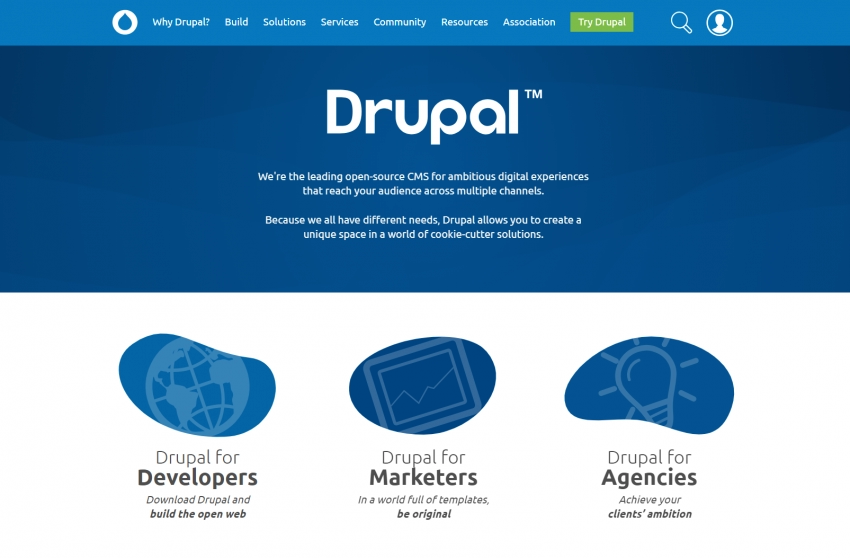
Drupal is one of the most powerful and flexible open-source website platforms, often used for sites with demanding technical requirements and complex structures. Here are some notable facts about Drupal:
-
Modular architecture: Drupal operates on a module system, where functionality can be added or removed easily. This allows high customization and good scalability, making it suitable for the diverse needs of organizations.
-
High performance: Drupal is known for its powerful handling of large volumes of data. It suits websites with heavy traffic and complex structures, such as government, education, and large organizations' sites.
-
Strong security: Drupal is famous for its safety and security. The Drupal community takes security issues very seriously and updates regularly to counter the latest threats.
Compared to WordPress, the Drupal website platform is better suited to people with specialized knowledge or with the support of a web developer.
d. Joomla
Another familiar name you can consider is Joomla. Website design with Joomla is fun because it comes with many themes and utilities. Although it has a friendly user interface, Joomla is slightly more complex than WordPress, requiring users to have a certain degree of technical knowledge to use this website platform effectively.
Joomla offers more customization options than WordPress, but requires deeper technical knowledge to exploit all these features. Joomla is considered one of the website platforms suited to web projects with complex requirements and multi-tiered structures.
e. Typo3
Typo3 is designed to handle large, multifunctional website projects. Typo3 offers far greater customization and extensibility than WordPress. This website platform strongly supports managing multiple sites from a single interface and provides many advanced customization options. However, Typo3 has a more complex admin interface and demands specialized expertise from users.
In addition, Typo3 has strong security, suitable for large projects with high security requirements such as business, manufacturing, travel, or education.
f. Grav
Grav is one of the modern CMS website platforms known for its simplicity, high performance, and ease of use. Grav's standout point is that it is a database-less CMS (flat-file CMS), meaning it stores data in plain text files rather than a traditional database like MySQL. This makes it lightweight and fast, simplifies backing up and restoring the website, and boosts the site's overall performance.
Like WordPress, Grav has a friendly admin interface that makes content management easy. In addition, Grav supports Markdown for content editing, letting users create and manage content easily without knowing much HTML. Grav suits both small personal websites and larger projects where functionality and performance are top priorities.
2. Headless CMS website platforms
This is an advanced web model that requires users to have programming skills. Headless CMS is secure, fast, and omnichannel. And given its technical nature, choosing this CMS will be costly.
a. Headless CMS
A Headless CMS is a website design platform without a fixed front-end interface for displaying content. While traditional CMSs, like WordPress, provide both content management functionality (back-end) and the way content is displayed (front-end), a Headless CMS focuses only on the back-end, where you create and manage content. The content is then distributed via API to any type of front-end interface, such as web applications, mobile apps, or Internet of Things (IoT) devices.
b. Contentful
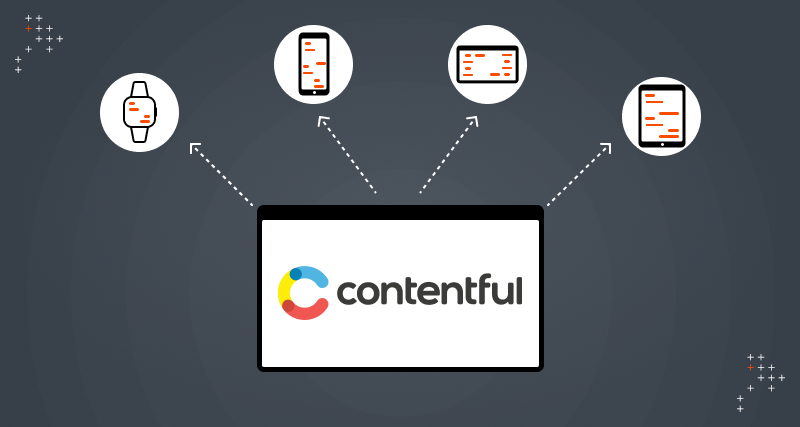
Contentful is one of the leading Headless CMS website platforms and is widely used in the web development community. The platform supports a variety of APIs such as RESTful, GraphQL, Content Delivery API, Content Preview API, etc. Contentful enables seamless content distribution across many channels and devices such as websites, apps, or IoT devices.
Contentful has an intuitive, friendly interface that is easy to use, and provides many teamwork support tools like Workflow, Compose, and Launch. In addition, Contentful has features that support website content creation, such as a WYSIWYG editor and a theme library… This CMS also supports SEO as well as bulk management features that save time and money.
c. Kontenstack
Kontentstack is a wonderful website design solution for those seeking an omnichannel content management platform, especially when they need freedom in designing the user experience. Contentstack also lets you organize your content flexibly and create content models that scale with your project's needs.
In addition, Contentstack provides workflow management tools that allow content and technical teams to collaborate effectively. You can also protect content and manage access better thanks to strong security options and advanced user permission support.
d. Prismic
The Prismic website platform has a highlight in its "Slices" feature, which lets users easily and flexibly design page layouts. And compared to Contentful, Prismic's interface is friendlier to users, especially those without strong technical skills.
While Contentful excels at creating complex, highly customized content models, Prismic focuses on simplifying workflows, with features like content approvals and publishing schedules. Prismic suits organizations that need a fast and easy website design solution.
e. Sanity
The standout feature of the Sanity website platform is its direct integration with static site generators, connecting straight to the front end to simplify content management. The ability to preview all the content the application stores enables seamless front-end delivery.
Not only that, you can also easily manage and edit content from anywhere thanks to this website design platform that works in the cloud. Advanced data analytics features also help optimize content development quickly and conveniently.
f. Strapi
Strapi is one of the leading Headless CMS website platforms, with a simple, intuitive interface as well as full customizability — where it truly shines. This platform, built 100% on JavaScript, delivers a content-rich experience, making it easy to move from the presentation layer to the final channels where content is displayed.
If you choose Strapi for website design, you'll have an active community of developers and users who constantly share detailed information about the tool and Headless CMS solutions in general.
3. E-commerce website platforms
And one website platform that is indispensable in today's era of online buying and selling is E-commerce. This type of CMS is designed specifically to help users easily create, manage, and run an online store. This website design platform provides the tools needed to handle every aspect of online selling, from listing products and processing orders to managing inventory and payment methods.
a. Shopify
This is one of the leading E-commerce website platforms, designed to let anyone easily set up their own online store without much technical skill. Shopify provides an intuitive user interface with simple, easy-to-use operations suitable for both small and large businesses.
Shopify supports integrated multichannel selling on Facebook, Instagram, Amazon, and eBay. Notably, you can use Shopify with peace of mind thanks to its high security and reliable payment integration.
b. Woo-commerce
Woo-commerce is a free WordPress E-commerce plugin that can turn any WordPress website into a powerful online store. The great thing here is that you can start designing your website for free. Costs only arise for hosting, themes, and extension plugins. And since it's a WordPress plugin, you gain a big advantage by being part of the WordPress community.
So if you're using WordPress and want to add selling capability to your current website, Woo-commerce is the best choice.
c. BigCommerce

This is a cloud-based website platform that provides a comprehensive solution for every stage of a business's growth. BigCommerce is designed to suit both technical and non-technical users.
BigCommerce is also highly rated for having a whole suite of necessary features and tools built in. This means you depend less on third-party apps or utilities, thereby reducing additional costs. Whatever field your business operates in and whatever website design needs you have, BigCommerce can deliver.
d. Haravan
For Vietnamese users, Haravan is a popular choice for boosting online business. Haravan supports multichannel selling on Facebook, Tiki, Shopee, Lazada, etc. Currently, Haravan provides free hosting with fast load speeds and unlimited bandwidth. In addition, Haravan also offers free SSL security to better protect your website.
This website platform has an intuitive interface friendly to Vietnamese users and comes pre-integrated with domestic and international payment gateways. You'll also get active support from the large user community in Vietnam whenever you need help.
4. No-code website builders
The final platform introduced in this article is the No-code website design platform. As the name suggests, this platform allows users to create and manage websites without programming knowledge.
a. What is a no-code website
These No-code website design platforms provide a visual interface — usually drag-and-drop — so users can design and customize website elements without writing code. No-code platforms offer a wide range of professional design templates that users can choose to start designing a website without building from scratch. In addition, the platforms provide tools to support search engine optimization (SEO) and other marketing strategies.
b. Webflow
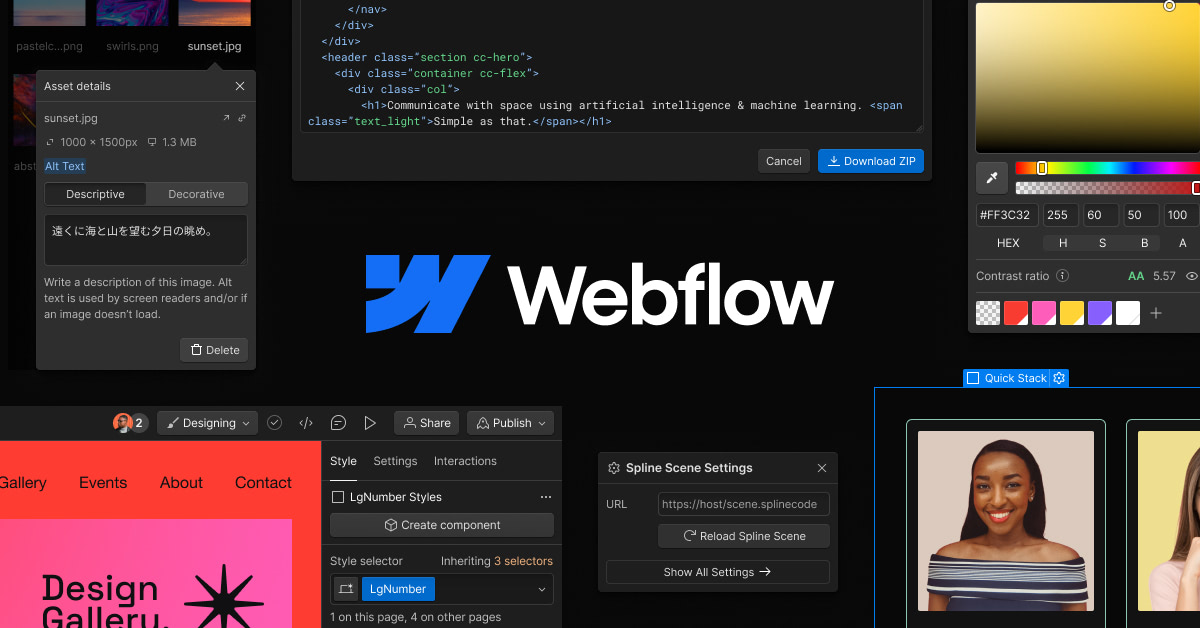
Webflow is a familiar name among website design platforms. Webflow is highly flexible, allowing in-depth design without writing a single line of code. The platform has an extremely rich library of pre-built themes, so even new, inexperienced users can easily design and customize. Notably, Webflow also integrates a CMS as well as SEO support features to make creating and managing content easier and more effective.
c. Wix
Wix is a No-code website design platform launched in 2006 with a very easy-to-use "drag-and-drop" interface for any user. Not only that, Wix also has an excellent image editor, making building and designing a website easier for you. Wix has hundreds of ready-made templates suited to a wide variety of industries and personal tastes.
Wix's strength is that it's not just for building an online store — users can use Wix for many different purposes. Another advantage of Wix is multilingual support. The platform lets users switch the website to a language of their choice quickly and conveniently.
d. Squarespace
If you're a blogger, you should consider using this No-code website design platform. Squarespace has beautiful, modern, professional designs that stay on trend. In addition, the powerful blogging tools and SEO optimization features will support you to the fullest in writing blogs and editing content. And of course, E-commerce integration is indispensable, letting you easily add selling functionality and manage products.
e. EditorX
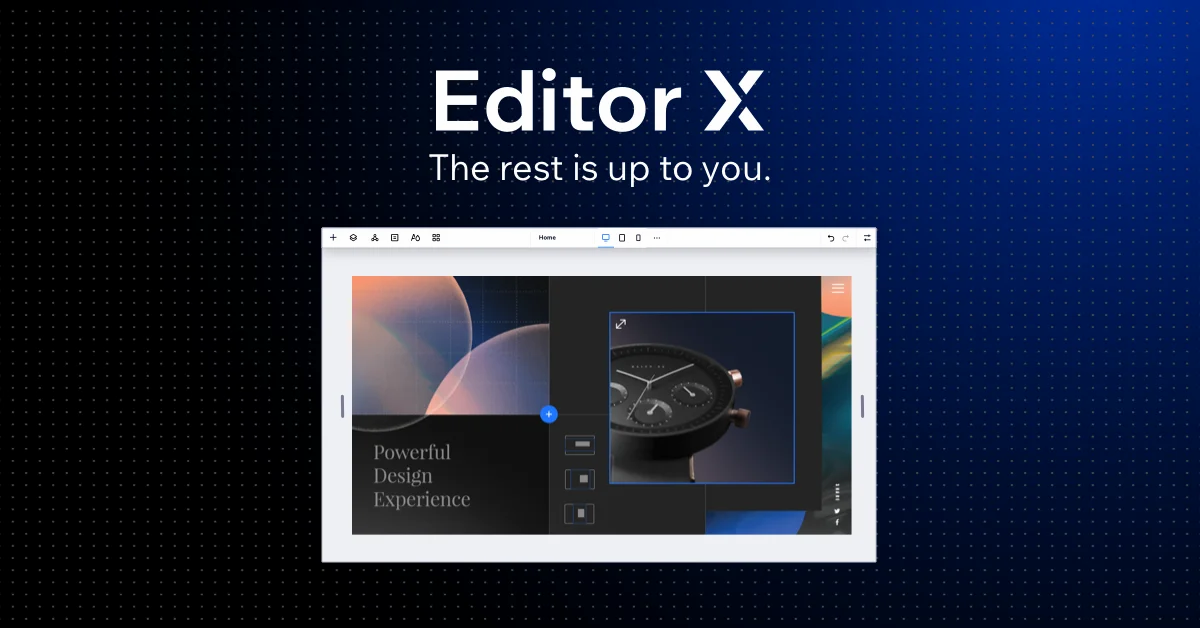
If your user group is designers who want to build a website with superb aesthetics, you'll love this website design platform. EditorX is a website provided by Wix, integrating professional design tools suitable for people already familiar with graphic design tools.
The highlight of this platform is providing powerful tools to create web pages that respond perfectly on every device. Its e-commerce functions are also rich, helping you design an online sales website within easy reach.
f. Framer
Framer is a No-code website design platform launched in 2016. It is entirely a wonderful no-code platform for designing websites. Framer uses its own hosting to store websites and gives you a free domain when you design.
Framer also integrates a CMS with SEO to help you easily customize, design, and create quality content. And especially, Framer supports integrated 3D interactions — an important feature for modern design, especially for creating highly interactive apps and websites.
You can use 3D components and effects to create dynamic, visually appealing interactions. This improves the user experience and makes the interface livelier and more engaging.
g. Dorik
This is the most affordable AI-powered website platform available today. With Dorik, anyone can easily create a beautiful website in just a few minutes without any design or coding experience.
You can design a website in any language and easily create content (text and images) with the help of AI. Your job is simply to pick a favorite template, drag and drop elements, and customize until you have a look you're happy with.
So, we've just gone through the top 20 best website platforms in 2024. Depending on your purpose, experience, specialized knowledge, and budget, you can choose the platform that fits you.
Related articles
Bài viết liên quan

25 tháng 10, 2026 · 3 phut doc
2024年网页设计趋势预测如何? | Wotech Electronics
关于 2024 年网页设计趋势——步入 2024 年,年初正是我们为新事物预留时间的时刻。这也非常适合设计师群体唤醒我们内心的"艺术之魂"。闲话不多说,快来和 Markdao 一起浏览 2024 年的 UX/UI 设计趋势吧,说不定您就能为自己接下来的网页设计项目"迸发"出一个绝妙的点子呢!

25 tháng 10, 2026 · 1 phut doc
什么是网站(Website)?网站的详细定义及其带来的商业价值
什么是网站(https://www.markdao.com.vn/blog/website-la-gi)——这个问题或许已经无需定义,因为在如今这个信息时代,网站对每一家企业而言都是不可或缺的组成部分。正是网站帮助用户更近距离地接触企业所提供的产品和服务,从而提升经营效益。此外,要在当今竞争如此激烈的环境中求发展,网站是一个重要因素,它将带你走向品牌与销量上的双重成功。

25 tháng 10, 2026 · 1 phut doc
什么是SEO标准网站?一场"打赢"Google SEO标准的战役 | Wotech Electronics
99%的用户在购买前会先搜索信息,73%的用户只会访问排名前10的网站,并认定它们是值得信赖的品牌……在数字营销爆发的时代,这些数字有力地印证了SEO标准网站的重要性。然而,许多人对什么是SEO标准网站(https://www.markdao.com.vn/blog/huong-dan-toi-uu-seo-website-chuan-seo-on-page)仍然相当模糊,并未真正理解。达到SE…