
How to Draw Up an Automotive Business Plan to Increase Revenue | Wotech Electronics
Vũ Khôi
Tác giả tại Wotech Electronics Blog
How to Draw Up an Automotive Business Plan to Increase Revenue
Vũ Khôi
Author at Wotech Electronics Blog
With today's fierce competition in the automotive market, store owners need to build a business plan carefully to beat competitors and reach customers faster. What's more, a suitable automotive business plan will help the store develop sustainably in the future. So how do you create an effective automotive business plan?
Step 1: Choose a Business Model for Your Plan
Before building an automotive business plan, you need to decide what automotive products or services you want to sell. Each model has different characteristics when planning. Here are the three main types on the market today:
Running an auto repair garage

This is the type of business many people choose today. With this model, the main field of operation is car repair and maintenance, and the target customers are car owners. In addition, to run an auto garage you'll need to rent a fairly large premises with enough space to service and repair many cars at once. Staff must have high technical skills — not only knowledge of many car brands but also an understanding of how each car works, the types of engines, spare parts, and so on, in order to propose suitable repair solutions.
Running a car rental business

With this type of business, the target customer base differs from that of the auto parts or garage models. The potential customers a store owner should target are individuals who don't own a car but want to rent one for self-driving or with a driver, as a time-based service.
In that case, the owner needs to pay attention to the vehicles they own and the drivers they work with. Typically, buying used cars is the cost-saving choice for store owners. However, avoid cars that have been used for too long and break down often, since you'll have to spend money restoring them. You need deep enough knowledge of cars to judge which are good quality at a reasonable price. The owner will also need to prepare for fees such as road fees, car insurance, and more.
Selling auto parts
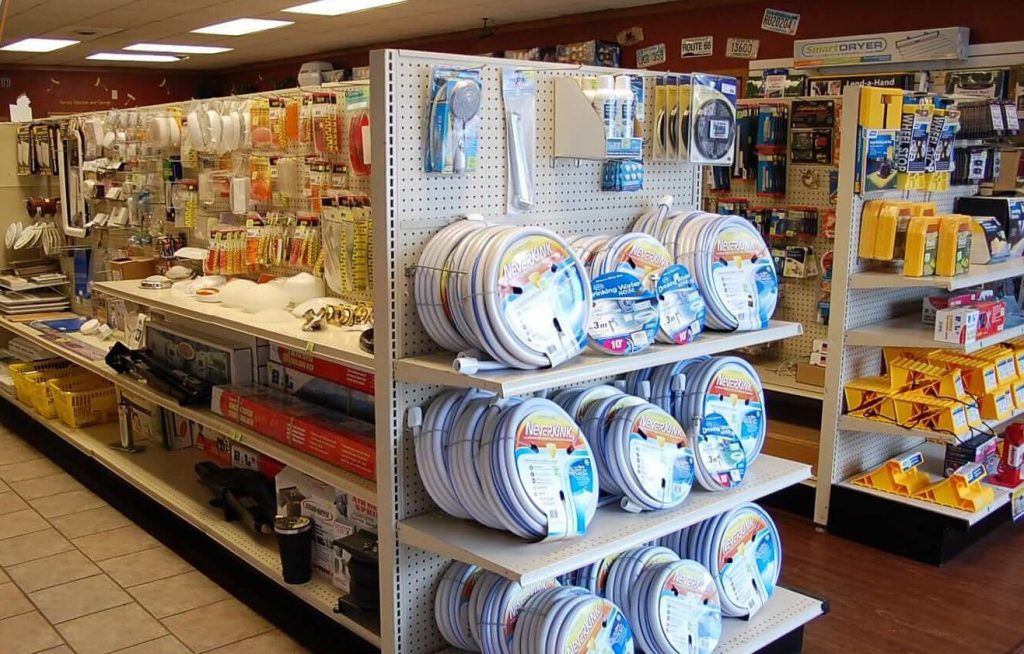
For selling auto parts, the store owner needs to decide whether to operate wholesale or retail. If wholesale, your customers will be garages and repair shops, and retail stores. If retail, you'll target car owners. The products are also very diverse — from parts used for car repair to products for car tuning and decoration.
Step 2: Identify Your Potential Customers
This step is extremely important, because once you know who your customers are, you can devise approaches that fit the target audience. Each automotive business model has different customer groups.
For example, if you run an auto garage or sell auto parts, your targets are mostly people who own cars. With car rental, customers are individuals and businesses that don't own — or lack — vehicles for getting around. In addition, the owner should sketch a detailed profile of potential customers using information such as gender, age, location, and specific requirements for products and services...

After identifying the potential groups, the store owner should break down and classify customers to devise suitable outreach and care approaches.
For example, when planning a car rental business, the owner can divide the audience into two main groups: individual customers and corporate customers. Among individual customers, you can further segment by income — average income and high income. For corporate customers, the owner should segment by rental duration (short-term or long-term).
Step 3: Analyze the Automotive Market
Every market — including automotive — is constantly changing and shifting. There are two major environments a store needs to watch: the micro environment and the macro environment. Macro environments include:
-
Policy and legislation;
-
The natural environment;
-
Society and culture;
-
Economic conditions.
For example, when the COVID-19 pandemic hit and the economy slumped, consumers lacked the money to own cars. Not only did demand fall — many people even sold their cars because they no longer needed them. This had a considerable impact on the automotive industry (including car sales, auto parts, repair services, and more).

Beyond the macro factors, micro issues — competitors, market conditions in industries related to automobiles, supply sources, and market prices — are also things the store owner needs to watch. With competitors in particular, you need to learn their strengths and weaknesses, draw lessons for yourself, and find ways to beat them.
For example, if you sell auto parts, competitors might be parts suppliers 5 km away from you and online stores on e-commerce platforms. Supply sources would be wholesalers in China, Taiwan, Japan, the US, and so on, or famous brands such as Sparco, Denso, and Bosch.
Step 4: Determine Your Automotive Sales Channels
Once you've identified your customers and analyzed the market, the store owner needs to decide where to sell those products and services. Today there are two main forms: online and offline. Different channels suit different products and services.
If you choose to run an auto garage and repair cars, offline will be the main channel, with a website and Facebook used to reach customers. If you sell products such as auto parts, then e-commerce marketplaces like Shopee, Lazada, and Tiki, shopping websites, or Facebook will be the channels that most easily generate orders.
Step 5: Plan the Budget

Budget planning needs to be specific and detailed. The more detailed it is, the easier it is to manage. There are four main items you need to plan for: personnel, sales channels, incoming materials, and marketing. However, because services and products differ, not every product line will have the same cost structure.
With car repair, you'll spend a lot on the workshop premises. But if you sell auto parts, the owner can save on premises costs by mainly selling online.
Step 6: Prepare Automotive Business Licenses
Whatever automotive product or service you deal in, you need to prepare the relevant paperwork for business registration. Because there are many types of products and services, the requirements for establishing a business differ.
If you sell car accessories, you'll need to register for a business license. The registration dossier includes:
-
The household business registration application;
-
A list of the founding individuals;
-
Certified copies of citizen ID cards or ID cards of the participating individuals;
-
A certified copy of the group meeting minutes on establishing the household business.

However, if you run an auto garage, the licenses are completely different. The conditions for operating car repair services must follow the provisions of Article 21 of Decree 116/2017/ND-CP. The car repair business license is also entirely different, including:
-
The application for a warranty facility certificate;
-
The business registration certificate;
-
A declaration of the facility's physical capacity;
-
Documents proving the warranty facility under clauses 1, 5, 7, 8, 9, and 10 of Article 21 of Decree 116/2017/ND-CP.
Step 7: The Staffing Plan

Personnel play an important role in any type of business. When planning staffing for an automotive business, you need to set specific requirements: headcount, job requirements, and daily job descriptions.
For example, for car repair and maintenance services, staff must have technical competence and deep knowledge of car engines and machinery. For a car rental business, staff need knowledge of car models, and drivers need driving experience. You also need a separate training plan for employees. The higher the technical requirements, the more investment training demands. If you run an auto garage, you could even open classes to teach new employees.
Step 8: Build a Marketing Plan for Your Automotive Business
Marketing contributes a great deal to helping a store grow revenue. Today, online marketing is the most widely used approach. There are three main channels you should invest in to promote your products and services: a website, Facebook and Google Ads, and e-commerce marketplaces. However, the methods differ by industry.
For example, if you're marketing an auto garage, the website and Facebook will be the two things you focus on most. The owner will optimize the website's SEO, grow the Facebook channel, and run Facebook Ads. With a bigger budget, you can even run Google Ads to increase customer reach. But if the owner sells auto parts through e-commerce marketplaces, then beyond the website, Facebook, and Google Ads, marketplaces like Shopee and Lazada are the marketing channels to push.
You should also offer promotions to customers — discounts on the first order, discounts for buying multiple products or services, buy-two-get-one-free, and so on. You can even issue promo codes for special occasions like birthdays, Christmas, and New Year.
Step 9: Manage and Review Your Automotive Business Plan
This is the stage of execution and checking whether your automotive business plan is working. By managing automotive operations closely, the store owner quickly spots problems as they arise and responds fast.
However, if you manage with manual methods or simple software, mistakes will occur, leading to future risks. Moreover, the business won't be optimized and takes longer to run. That's why the store owner needs dedicated software such as SimERP. With SimERP, you can easily manage the entire business — from sales and accounting to HR, customer relationship management, and projects.
SimERP currently lets you use SimCRM free for 30 days. Register to experience it completely free here!
Conclusion
Drawing up an automotive business plan is not easy — it demands deep knowledge of the market, your customers, and your resources. In addition, the store owner needs effective management methods, ongoing review and the best possible decisions, and thorough resolution of problems as they arise. We hope that with the article above, you now know how to build an accurate business plan that grows your store's revenue.
Related Articles
Bài viết liên quan

25 tháng 10, 2026 · 3 phut doc
2024年网页设计趋势预测如何? | Wotech Electronics
关于 2024 年网页设计趋势——步入 2024 年,年初正是我们为新事物预留时间的时刻。这也非常适合设计师群体唤醒我们内心的"艺术之魂"。闲话不多说,快来和 Markdao 一起浏览 2024 年的 UX/UI 设计趋势吧,说不定您就能为自己接下来的网页设计项目"迸发"出一个绝妙的点子呢!

25 tháng 10, 2026 · 1 phut doc
什么是网站(Website)?网站的详细定义及其带来的商业价值
什么是网站(https://www.markdao.com.vn/blog/website-la-gi)——这个问题或许已经无需定义,因为在如今这个信息时代,网站对每一家企业而言都是不可或缺的组成部分。正是网站帮助用户更近距离地接触企业所提供的产品和服务,从而提升经营效益。此外,要在当今竞争如此激烈的环境中求发展,网站是一个重要因素,它将带你走向品牌与销量上的双重成功。

25 tháng 10, 2026 · 1 phut doc
什么是SEO标准网站?一场"打赢"Google SEO标准的战役 | Wotech Electronics
99%的用户在购买前会先搜索信息,73%的用户只会访问排名前10的网站,并认定它们是值得信赖的品牌……在数字营销爆发的时代,这些数字有力地印证了SEO标准网站的重要性。然而,许多人对什么是SEO标准网站(https://www.markdao.com.vn/blog/huong-dan-toi-uu-seo-website-chuan-seo-on-page)仍然相当模糊,并未真正理解。达到SE…