
What Is a Sales Discount? Regulations and How to Calculate Sales Discounts | Wotech Electronics
Vũ Khôi
Tác giả tại Wotech Electronics Blog
What Is a Sales Discount? Regulations and How to Calculate Sales Discounts
Vũ Khôi
Author at Wotech Electronics Blog
Sales discounts are one of the most effective ways to stimulate purchases and are widely used by businesses in their marketing. Join SimERP in the article below to explore the concept of sales discounts, sales discount calculation tables, and sample discount policy templates.
What is a sales discount?
A sales discount is a percentage price reduction that the seller grants to the buyer. Sales discounts encourage bulk purchases. They usually come with conditions such as: payment in cash or by Visa card, or a minimum purchase quantity to qualify for the discount. These conditions are agreed upon in economic contracts or purchase/sale commitments.

The purpose of a sales discount may depend largely on the circumstances, but it is usually to compete, attract customers, introduce new products, retain customers, or even clear out old inventory quickly. The discount rate is usually chosen to be equivalent to the cost of capital and can be easily adjusted. This requires careful calculation by the business. In addition, the discount rate is closely related to issues such as risk, currency turnover, and other factors in the economy.
Regulations on sales discounts
On invoices for trade discounts
Pursuant to Point 2.5, Clause 2, Appendix 4, Circular 39/2014/TT-BTC on VAT invoices for goods sold with discounts.
The three cases in which invoices with sales discounts may be issued:
-
Issuing a discount invoice for each individual purchase.
-
Issuing a discount invoice for bulk purchases.
-
Issuing a discount invoice at the end of promotional programs.
On value-added tax (VAT)
Under Clause 22, Article 7, Circular 219/2013/TT-BTC on the taxable price of goods sold with trade discounts:
-
The taxable price is the discounted price.
-
Where the trade discount is granted after the sales invoice has been issued, the seller must issue an adjustment invoice for the discount amount, tax, and revenue.
-
The seller and buyer rely on the adjustment invoice to reconcile purchase revenue, sales revenue, and tax.
On corporate income tax
After the adjustment invoice is issued, both the seller and the buyer must reduce their recorded purchase and sales revenue accordingly and not declare it when calculating corporate income tax.
How to calculate sales discounts
The two most common and quickest ways to calculate sales discounts today are: the general method and mental arithmetic.
The general method

This is considered the most common method, applying the definition of sales discount and various mathematical formulas. The steps are as follows:
-
Step 1: Determine the discount rate: depending on the corresponding conditions, while staying consistent with the cost of capital to ensure profitability.
-
Step 2: Calculate the discount amount: multiply the original price (before discount) by the discount rate.
-
Step 3: Calculate the discounted price: subtract the discount amount from the original price.
Example: At Food Company A, VAT invoice No. 0014658 issued in October to Company B (payment by bank transfer later) records:
Product X: 1,000 kg x 100,000 = 100,000,000 VND
Product Y: 2,000 kg x 70,500 = 150,000,000 VND
September trade discount: 10 kg of Product X and 20 kg of Product Y, equivalent to: 1,000,000 VND + 1,500,000 VND = 2,500,000 VND
Total: 100,000,000 + 150,000,000 – 2,500,000 = 247,500,000 VND
VAT 10%: 24,750,000 VND
Grand total: 272,250,000 VND
The mental arithmetic method
Just as the name suggests, this method lets you calculate extremely quickly in your head without a calculator. It is very convenient when you are negotiating with a customer and need to give a specific figure immediately. This method works especially well for discount rates ending in 0 or 5 — such as 15%, 20%, and 50% — which are quite common.
The steps are as follows:
-
Step 1: Round the original price to the nearest ten, then divide by 10 (this gives number A).
-
Step 2: Divide the discount rate by 10 and take the integer part (this gives number B).
-
Step 3: Calculate the discount amount: multiply the two results above (A x B) and add (A/2).
-
Step 4: Calculate the discounted price: subtract the discount amount from the original price.
The essence of this mental arithmetic method is to produce an approximate result, giving you the fastest possible estimate. It can be explained simply as follows: suppose the original price is X and the discount rate is t %; then the discount amount is calculated by the formula:
X.t% = X.t/100 = X/10 . t/10
In steps 1 and 2, rounding to the tens makes it easier to divide the numbers by 10. In step 3, add the 5% remainder of the original price A/2 (which was dropped in step 2) to the product (A x B) to get the discount amount closest to the exact figure.
Example: The original price of Product A is 69,000 VND, and you offer the customer a 25% discount. The customer wants to know exactly how much they save and how much they must pay — you just need to run through the steps above mentally to answer quickly:
-
Round the product price (70,000 VND) and divide by 10: 70000/10 = 7,000.
-
Divide the discount rate (25%) by 10: 25/10 = 2.5, taking the integer part of 2.
-
The discount amount is: 7,000*2 + (7000/2) = 17,500.
-
Calculate the price: 70,000 – 17,500 = 52,500 VND.
After just a few quick mental steps, you can tell the customer they save about 17,000 VND and will pay only about 53,000 VND per product. If you use a calculator and apply the first method, you will get the exact figures: 17,250 VND and 52,750 VND respectively — very close to the mental estimate.
Calculating discounts with sales management software
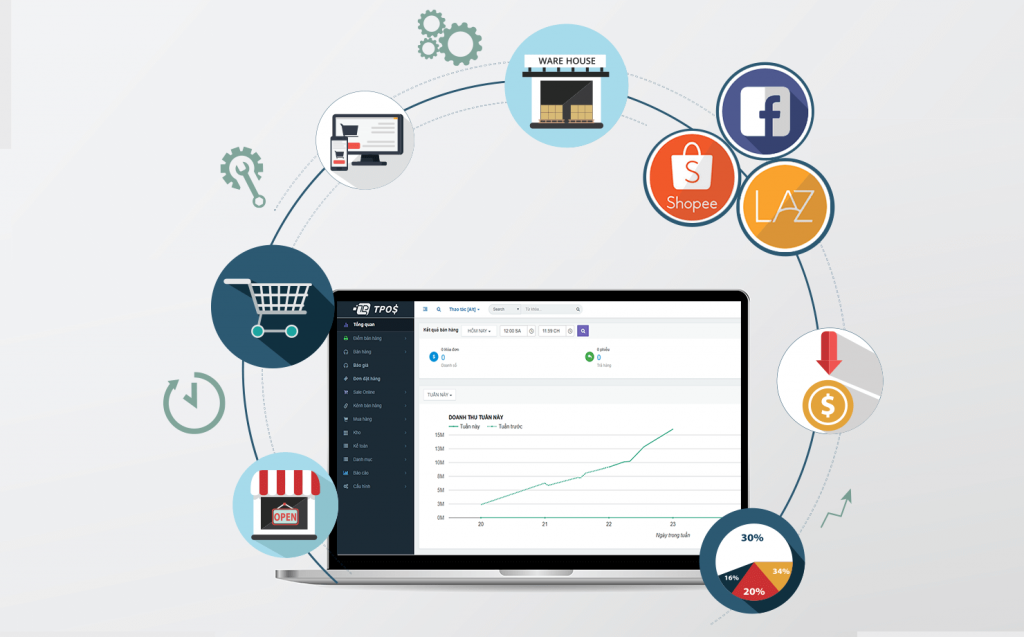
Sales management software is developed to automate the entire sales process of stores and businesses on a computer system. These processes can include every step from receiving an order to delivery and invoicing. Users can carry out the full sequence of steps or configure them to their own specific needs. Everything is processed and calculated completely automatically and stored in the system, helping to avoid errors and make management easier.
With sales management software, you can manage discounts flexibly, setting up and applying many different discount methods. The software can calculate discounts by customer, customer group, warehouse, item, item group, or even combinations of these criteria — offering many flexible ways to calculate and manage discounts.
In addition, sales management software lets you apply multiple discount methods within the same transaction, in cases where a customer qualifies for several discounts on a single purchase.
To try out sales management software, consider SimCRM with 30 days completely free. Sign up for a trial by clicking the button below.
Sales discount policies
Legal regulations on promotions and price reductions

Under the 2005 Law on Commerce, promotion is one of the activities to promote trade. Article 88 of the 2005 Law on Commerce defines promotion as follows:
"Article 88. Promotion
Promotion is a commercial promotion activity by a trader to boost the purchase of goods and provision of services by offering customers certain benefits."
Promotions are intended to influence customers and stimulate consumer demand. Businesses and stores use promotions with the aim of earning more profit from sales through price reductions and promotional offers.
Regulations on forms of promotion in Article 92 of the 2005 Law on Commerce include:
Free samples and trials: Providing sample goods for customers to try free of charge.
Gifts: Giving products to customers or providing services without charge.
Price reductions: Selling goods or services at a lower price than before, applied during the registered or announced promotion period. For goods or services subject to State price management, promotions are carried out under Government regulations.
Vouchers: Selling goods or services accompanied by purchase vouchers or service vouchers that give customers certain benefits.
Contest entries: Selling goods or services accompanied by contest entries for consumers, with prizes awarded according to published rules.
Games of chance: Selling goods or services accompanied by participation in games of chance. Participation is tied to the purchase of goods or services, and winning depends on the participant's luck under the published rules.
Loyalty programs: rewards for consumers based on the quantity or value of goods and services the customer has purchased. These take the form of customer cards, purchase-recording slips, or other formats.
In practice, stores and businesses often apply these forms quite flexibly and frequently combine two or more of them together.
Legal regulations on discount activities
A discount is understood as a reduction in the selling price that the seller grants the buyer when buying or selling a specific quantity, where the parties have so agreed in a contract.
Discount activities are agreed by the two parties in a sales contract according to commercial practice — agreements on specific conditions of value, quantity, and delivery terms of each contract. Therefore, a trade discount is not a form of promotion defined in commercial law, but is applied by stores and businesses as a commercial practice.
Many readers ask: "Does a sales discount need to be registered?" Currently, Vietnamese law has not issued specific regulations on sales discounts. However, once the two parties have agreed in a contract that the seller will reduce the price for the buyer, the rights and obligations of both parties follow civil law provisions on performing civil transactions under contract.
Sample sales discount contract
A sales discount contract has the general nature of a civil contract — an agreement between buyer and seller, oral or written, that establishes, changes, or terminates rights or obligations in the relationship of buying, selling, and exchanging goods and services.
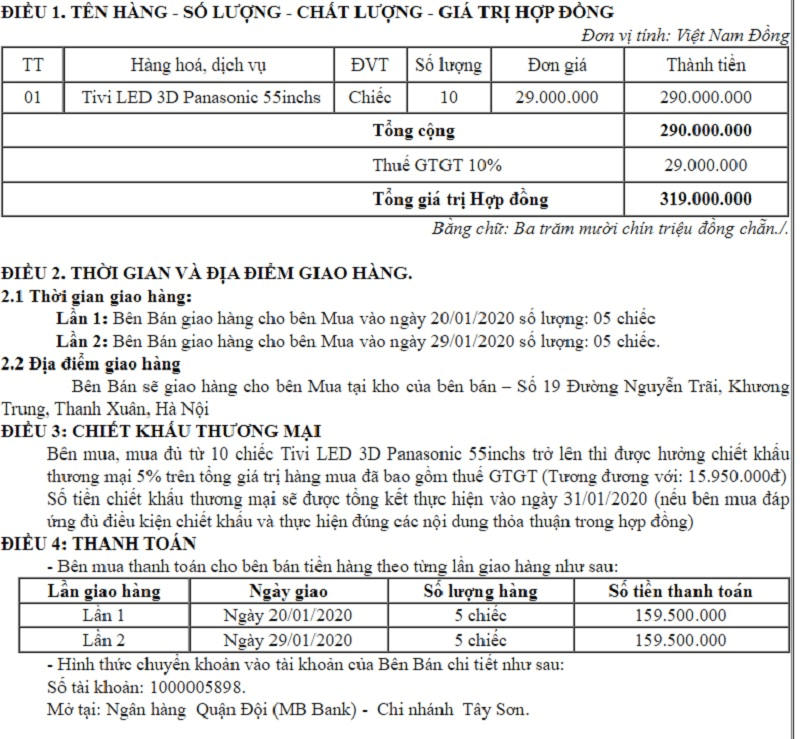
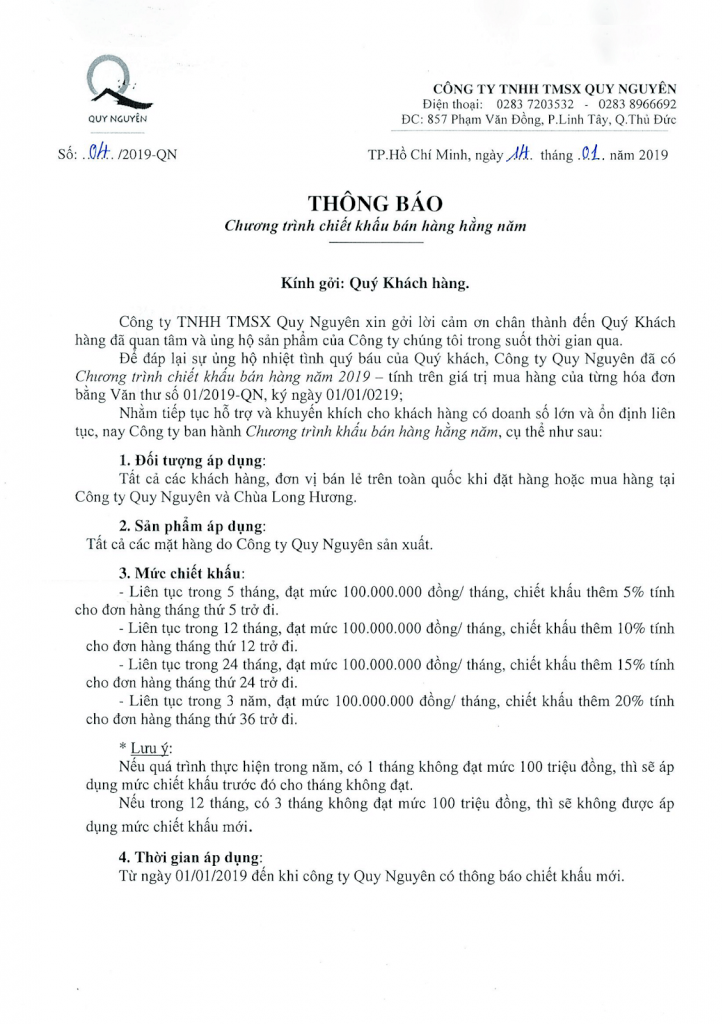
Sample sales discount document:
Accounting entries for sales discounts
Accountants use account 521 (5211) to record the sales discounts that the business grants to customers.
Remember: only discounts actually granted during the period, shown on invoices under the discount policy the business signed in the economic contract or its commitment, should be posted to this account.
If the discount applies to each individual purchase, the discount the buyer receives is recorded as a reduction in the selling price when the invoice is issued. The amount shown on the invoice follows the already-discounted unit price. Accounting does not need to record a discount line on the invoice, and the discount is not posted to account 521.
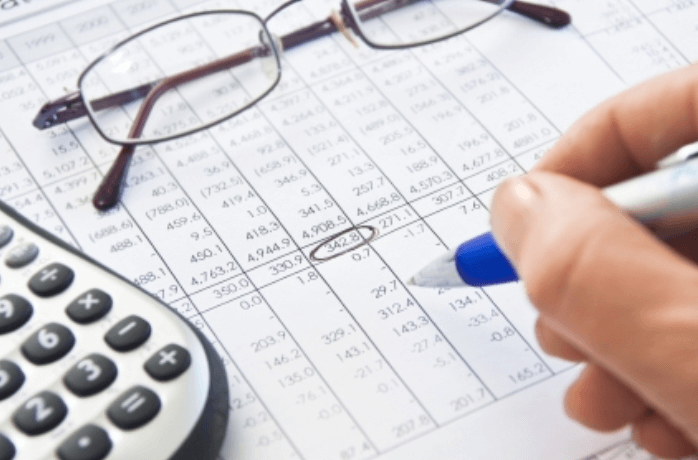
If the buyer only qualifies for the trade discount after multiple purchases, the discount is recorded as a reduction in the selling price on the final sales invoice. The invoice states clearly the sales discount amount the customer receives, along with the invoice numbers that received the discount. The economic contract between the two parties is used to identify the final purchase. Since the amount on the invoice has been discounted, the seller relies on the discounted revenue and tax to make the entries. Accounting does not post the sales discount to account 521.
Where the two parties sign an agency contract or apply discounts periodically, the accountant must determine the final day to reconcile receivables and calculate the discounts. The final day for closing receivables and calculating discounts is December 31 each year. When an adjustment invoice is issued, the accountant then posts the discount amount to account 521.
Discounts can use adjustment invoices for the discounted revenue, but the discount amount can also be calculated and paid in cash if the final sale amount is insufficient to cover the discount.
Sales discount entries for the seller, declaring VAT by the deduction method
Based on the sales invoice, accounting posts:
Recording revenue and output VAT:
-
Debit account 131: Trade receivables.
-
Credit account 511: Revenue from sales of goods and provision of services.
-
Credit account 3331: Output VAT.
Transferring cost of goods sold:
-
Debit account 632.
-
Credit account 156.
Based on the invoices bearing discounts and the discount amounts, the accountant records:
-
Debit account 521: Trade discounts.
-
Debit account 3331: Output VAT.
-
Credit account 131: Trade receivables.
Sales discount entries for the buyer, declaring VAT by the deduction method

Like the seller, if the discount applies to each individual purchase, the buyer must record revenue and input tax at the discounted price. If the buyer only receives the discount after multiple purchases, entries are made as follows:
When purchasing goods
-
Debit account 156: Goods.
-
Debit account 133: Deductible VAT.
-
Credit account 331: Trade payables.
When receiving the discount invoice
If the discount relates to goods still in inventory, record a reduction in inventory cost and deductible VAT:
-
Debit account 331: Trade payables.
-
Credit account 156: Goods (allocated to inventory cost).
-
Credit account 133: Deductible VAT.
If the discount relates to goods already sold:
-
Debit account 331: Trade payables.
-
Credit account 632: Cost of goods sold (allocated to the goods sold in the period).
-
Credit account 133: Deductible VAT.
Conclusion
Sales discount policies help customers pay more attention to your products. Sales increase — and not only for the discounted items, because at this point you can easily attract potential customers to your other products as well.
Through this article, you now understand what a sales discount is and the tricks for using discounts effectively. We hope you will know how to apply sales discounts intelligently and selectively — increasing your customer base while generating profit and credibility for your business. Good luck!
Related Articles
Bài viết liên quan

25 tháng 10, 2026 · 3 phut doc
2024年网页设计趋势预测如何? | Wotech Electronics
关于 2024 年网页设计趋势——步入 2024 年,年初正是我们为新事物预留时间的时刻。这也非常适合设计师群体唤醒我们内心的"艺术之魂"。闲话不多说,快来和 Markdao 一起浏览 2024 年的 UX/UI 设计趋势吧,说不定您就能为自己接下来的网页设计项目"迸发"出一个绝妙的点子呢!

25 tháng 10, 2026 · 1 phut doc
什么是网站(Website)?网站的详细定义及其带来的商业价值
什么是网站(https://www.markdao.com.vn/blog/website-la-gi)——这个问题或许已经无需定义,因为在如今这个信息时代,网站对每一家企业而言都是不可或缺的组成部分。正是网站帮助用户更近距离地接触企业所提供的产品和服务,从而提升经营效益。此外,要在当今竞争如此激烈的环境中求发展,网站是一个重要因素,它将带你走向品牌与销量上的双重成功。
25 tháng 10, 2026 · 1 phut doc
什么是SEO标准网站?一场"打赢"Google SEO标准的战役 | Wotech Electronics
99%的用户在购买前会先搜索信息,73%的用户只会访问排名前10的网站,并认定它们是值得信赖的品牌……在数字营销爆发的时代,这些数字有力地印证了SEO标准网站的重要性。然而,许多人对什么是SEO标准网站(https://www.markdao.com.vn/blog/huong-dan-toi-uu-seo-website-chuan-seo-on-page)仍然相当模糊,并未真正理解。达到SE…