What Is CRM? Benefits, Processes, and Features of CRM Software
Vũ Khôi
Tác giả tại Wotech Electronics Blog
What Is CRM? Benefits, Processes, and Features of CRM Software
Vũ Khôi
Author at Wotech Electronics Blog
What is CRM? Why are businesses today applying CRM in their organizations? To answer that question and clear up questions about the benefits CRM brings to businesses, read the insights on CRM software in the article below!
What is CRM?

CRM (Customer Relationship Management) is a strategy aimed at improving the relationship between a business and its potential customers. Leveraging CRM helps businesses optimize their order conversion rate based on the information gathered from customers.
What is CRM software?
CRM software is the tool that helps businesses operationalize their customer relationship management strategy. It allows team or company leaders to analyze and understand customers through their buying journey on the system.
The goal of CRM is to maintain business relationships and devise strategies to attract more potential customers in order to generate profit. Using a CRM tool with rich functionality helps businesses manage relationships across the entire customer lifecycle, from marketing interactions to sales, commerce, and customer service.
How CRM software operates within a business
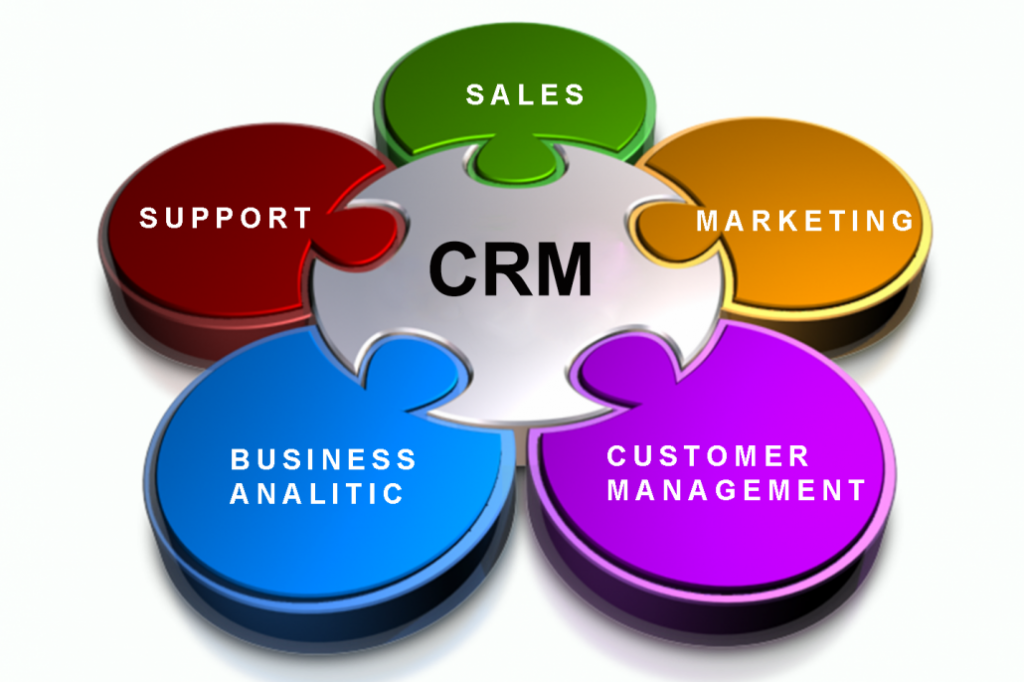
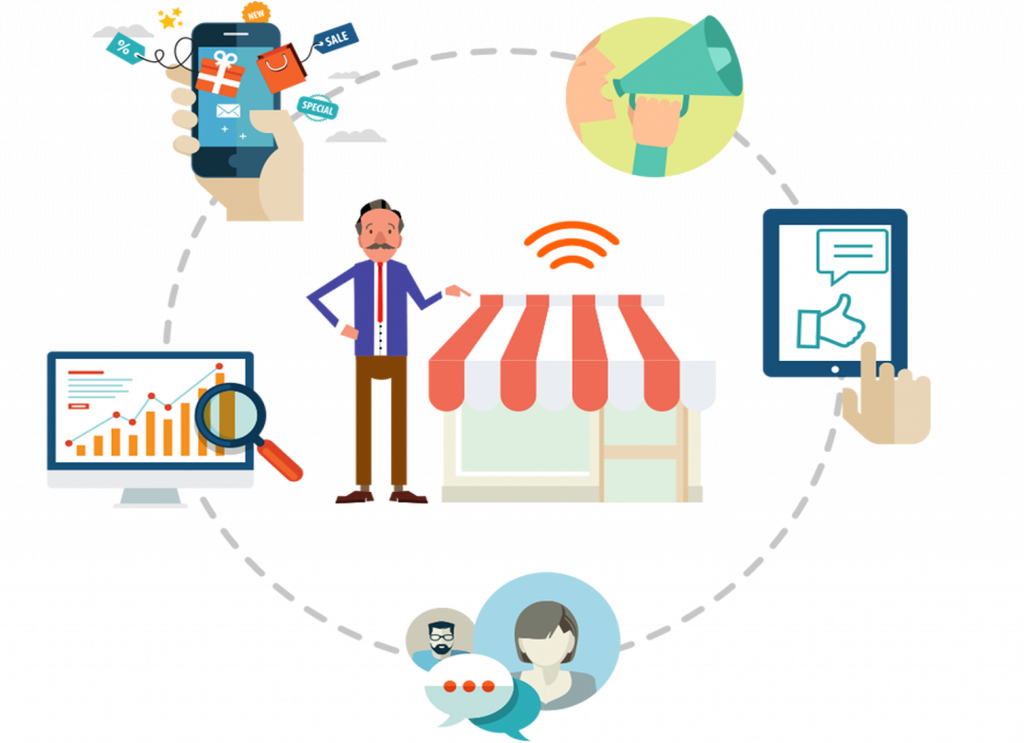
The operating process of a CRM system is a closed loop with 5 points: Sales – Marketing – Service – Analysis – Collaborative. The customer sits at the center of these 5 activities.
Marketing
Marketing carries out activities to attract potential customers. Through marketing content and media, the business reaches customers and stimulates their needs. Customers then leave their contact information with the business.
Sales
Sales staff store the information of potential customers and carry out a series of stage-by-stage activities, from making contact and qualifying to proposing, and finally converting the opportunity into a successful customer. Activities include sending emails, calling, sending quotations, requesting demos, etc. After performing the necessary activities, sales staff convert potential customers into final customers.
Customer service (Service)

These are the activities a business carries out to retain customers. Customer care activities include sending thank-you and congratulatory emails, giving appreciation gifts, etc., or answering and resolving customers' problems throughout the purchasing process and while using the products and services. With these customer care activities, the business builds goodwill and retains customers.
Customer data analysis (Analysis)
Once you have a list of potential and successful customers, the business needs to analyze them. In addition, the sales and management teams need to analyze issues and propose suitable solutions to meet customer needs, raise the conversion rate to successful customers, and shape the Marketing, Sales, and Customer Service strategies for the next period.
Building customer relationships across channels (Collaborative)
Thanks to the integration capabilities of CRM software, businesses can reach customers across channels — email, phone, messaging, website, etc. From there, they can manage the customer base and serve them better, building and strengthening the relationship between customers and the business.
The benefits of CRM for businesses
Improved customer service
CRM provides automated customer information storage tools, making it easy for businesses to access customer profiles, transaction history, and omnichannel feedback (social media, email, chat, etc.). This not only saves time but also improves communication and customer understanding, so customer service keeps getting better.
Most importantly, when service improves, existing customers referring new ones becomes a free customer acquisition channel for you. You can absolutely increase profit or revenue thanks to this feature.
Managing and adjusting marketing activities appropriately

With CRM, businesses can carry out marketing activities quickly and effectively. They can create marketing activities such as event announcement emails, promotions, marketing campaign planning, etc. Tasks can be customized to ensure connection with every customer.
Increased sales
With the strong growth of multichannel selling today, integrating multiple communication channels — social media, email, chat, etc. — on a single platform to streamline and improve the sales process is very important. CRM tools make this easy for businesses, and can even increase transactions with customers and deliver brand messages on the right channel at the right time.
This also partly solves the problem of scattered selling efforts. Managers can also join in to see which customers a salesperson spends the most time on, and spot whether any customers are being neglected.
Effective customer retention
Customer retention rate and churn rate are two key metrics behind business success. Using various CRM tools — such as customer psychology analysis and customer support — helps raise the retention rate. Analytics tools also generate statistics that look directly at the customer lifecycle and predict the reasons behind rising churn, so businesses can promptly put the right solutions in place.
For example, say you sell a consumer product or software. When the consumer has used the product or the product's usage period is ending, sales staff can proactively seize the moment to invite the consumer to continue using the product.
Better data analysis

Equipped with many effective analytics tools, CRM makes it easy for businesses to tap into their data warehouse and make decisions quickly, with an easy-to-use interface and flexibly organized information suited to the business's purposes.
This improved data analysis suits not only managers but also sales staff. Salespeople know their time and revenue in real time. This also means no customer is ever forgotten.
Features of CRM software
CRM tools include many different functions designed to fit a business's purposes.
Automated customer information storage

CRM automatically stores customer information, transaction history, and feedback from various channels such as social media, Email Marketing, SMS, etc., on a single platform. This centralizes information and makes it easily accessible, so businesses can categorize customers into functional segments corresponding to their marketing plans, and plan customer care and acquisition.
Potential customer analysis
Based on the customer data CRM generates, businesses learn about their customers, categorize them, and gain an accurate view of customer behavior. Businesses can then propose rollout plans or consultation scripts for each customer type.
Lead management
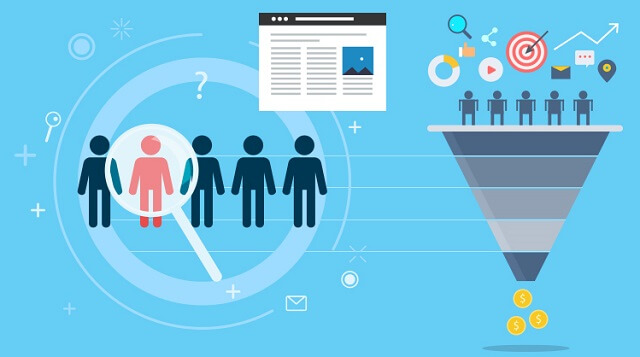
CRM allows businesses to create, edit, and track lead lists both before and after purchase. It also supports assigning suitable caretakers to each prospect and records transaction processes, feedback, and customer evaluations across integrated channels.
This is one of CRM's most important elements. With CRM's statistics, you can determine which customers should be prioritized and handled first, avoiding the trap of focusing too much on low-profit customers.
Business process automation
Activities from sending emails and scheduling meetings to sending quotations are all automated with a CRM system. Users save time, increase productivity, and reduce the risks involved in carrying out those activities.
Automated statistics and reporting support
Based on the data warehouse of customer information, transaction history, and feedback, CRM produces detailed statistics and chart-based reports. Businesses can then evaluate the ROI of their marketing plan through lead analysis data and devise more effective customer service. From the statistics tables, businesses can easily track sales, lead conversion rates, and monitor KPI progress in real time.
Greater team effectiveness
When customer data is integrated on one platform, the Sales, Marketing, and Customer Service teams can easily share information while working together. CRM also lets businesses build a knowledge base and set up effective team workflows: eliminating duplicate tasks, flagging important tasks, etc. Dashboards and analytics pages help the team gain deeper insight into their work and thereby optimize business processes.
Types of CRM
Classification by deployment method

Cloud CRM
Cloud CRM is customer relationship management software where all data is stored on the CRM provider's servers, and customers access the software via the internet. This type of software is known as SaaS (Software as a Service).
Characteristics of Cloud CRM:
-
Monthly service subscription
-
Data stored on the cloud provider's servers
-
Automatic updates
-
Deployment is not overly difficult
-
A dedicated, secure server system
-
Fast deployment, no overly high investment cost
Self-hosted CRM
With Self-hosted CRM, the customer installs and stores all information and data on their own server. Maintenance and data security are the customer's responsibility.
Characteristics of Self-hosted CRM:
-
Buy the software for perpetual use
-
Data stored on the company's server
-
Deployment takes time and costs a lot
-
Software updates are done manually
-
Requires skilled staff to implement.
-
Requires building a secure server system.
Classification by license
Open Source CRM
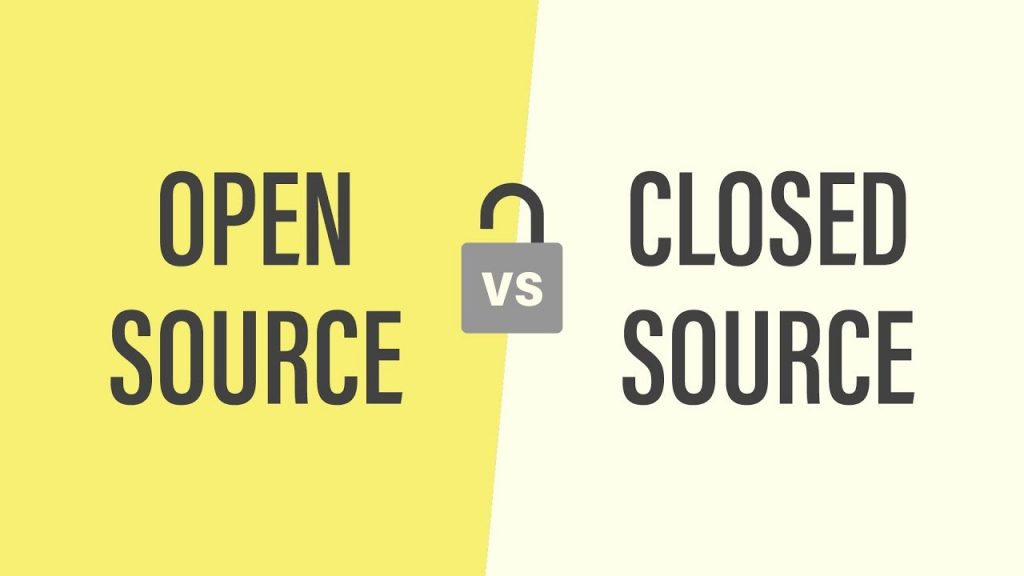
Open Source CRM is a customer relationship management tool that uses open-source code, allowing users to download and modify the code to suit their purposes. Open Source CRM lets businesses customize it to fit their model and goals.
Characteristics of Open Source CRM:
-
Highly adjustable, suited to businesses' expansion needs or business model changes.
-
Provides all the necessary features.
-
Requires staff capable of installing and customizing the software to fit the business.
Closed Source CRM
Closed Source CRM is business management software researched, built, and developed by a single organization or company. To use it you usually have to buy a license, and only the company that built the software can modify it or add features.
Characteristics of Closed Source CRM:
-
Low adjustability, hard to meet businesses' expansion needs.
-
Customization requires requesting the provider.
-
Offers fewer features, but they are specialized and go deep into each field.
Who is a CRM tool for?
A CRM strategy is indispensable in any business, and effective customer relationship management requires a CRM tool. This means: CRM is for everyone who benefits from the tool — sales, marketing, customer service, or any other line of business. Each type of CRM user plays a different role, specifically:
System administrators
These are the people responsible for setting up and installing the CRM and creating the database. They then configure the system and group users.
Managers

Managers use CRM primarily to manage lead information and the productivity of their sales staff. In addition, based on the available data, managers evaluate team and business plan performance and devise suitable business strategies for the next period.
End users
Employees use CRM to manage specific leads at each stage. They also use CRM to build and execute daily plans such as writing emails, tracking contracts, creating quotations, scheduling meetings with customers, etc.
Considerations when choosing CRM for small businesses
Limited staff and budget, plus incomplete business processes, are always worries for many small businesses today. Choosing suitable CRM software helps manage customer relationships better with fewer staff.
Most CRM software today comes with many features supporting effective customer relationship management. To choose software that matches their needs, businesses should consider the following criteria:
Simple and easy to use
In the digital era where everything is optimized to be user-friendly, simplicity and ease of use are extremely important. They save time learning how the software works and training employees, and make it easy to control and review data.
Integration capability
Make sure the CRM software your business chooses can integrate with other systems such as sales management, accounting management, retail management, etc. Integrating diverse software optimizes business processes and saves time and money.
Company culture
The CRM system must be built to fit the business's culture and processes. Every business has its own customer care, sales, and marketing processes, depending on its business characteristics, products, and target customers.
Budget
Besides limited budgets, small businesses also lack quality IT staff and time to train employees to use the software. Therefore, weighing the budget available for suitable software is very important.
Effective customer management with SimERP's CRM tool
Today the market has many CRM providers, and SimERP stands out among them. With SimERP, businesses can fully use the CRM tool to optimize their operations.
Customer information management
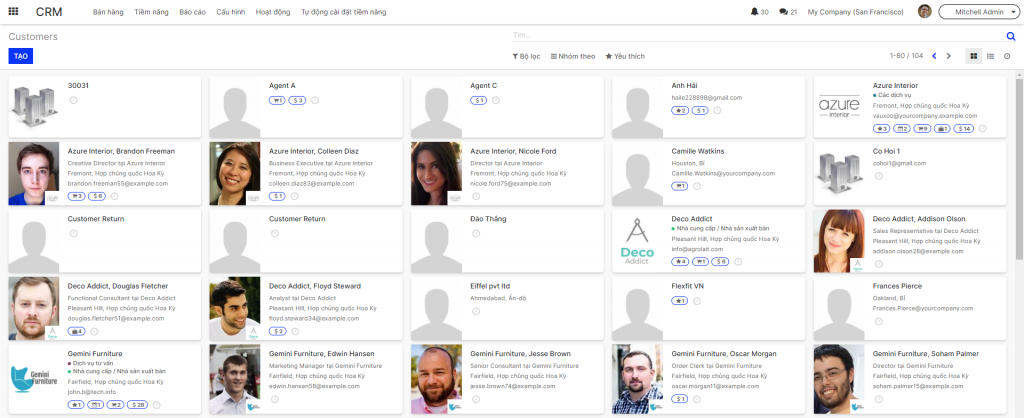
With SimERP, businesses can update and manage a massive amount of customer information. Every detail — name, company, contact info, Zalo, etc. — is updated and stored in the system. Businesses can easily manage their customer list through actions like adding, editing, deleting, creating potential customer lists, and assigning suitable caretakers to each prospect.
Tracking the customer's purchase journey
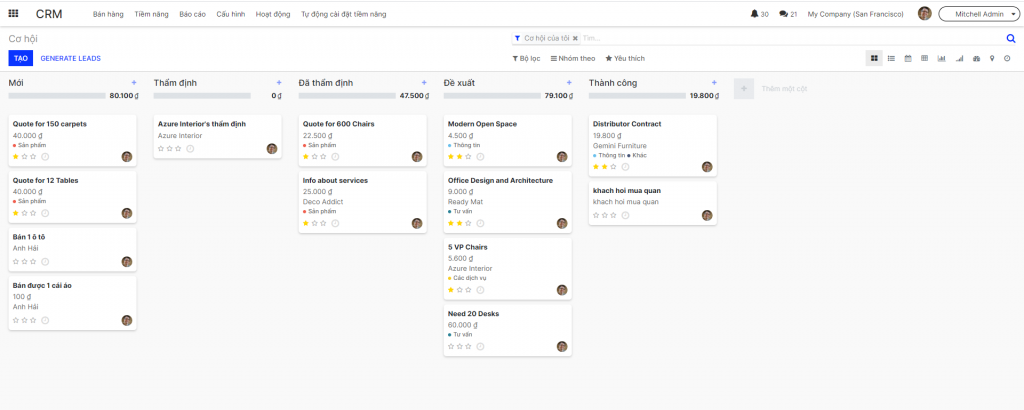
Businesses manage the customer's purchase journey through stages from initial contact to qualification, qualified, proposal, and success. Sales staff know the status of each customer, closely follow their buying activity, and take suitable actions to persuade them to buy.
Setting up customer activities
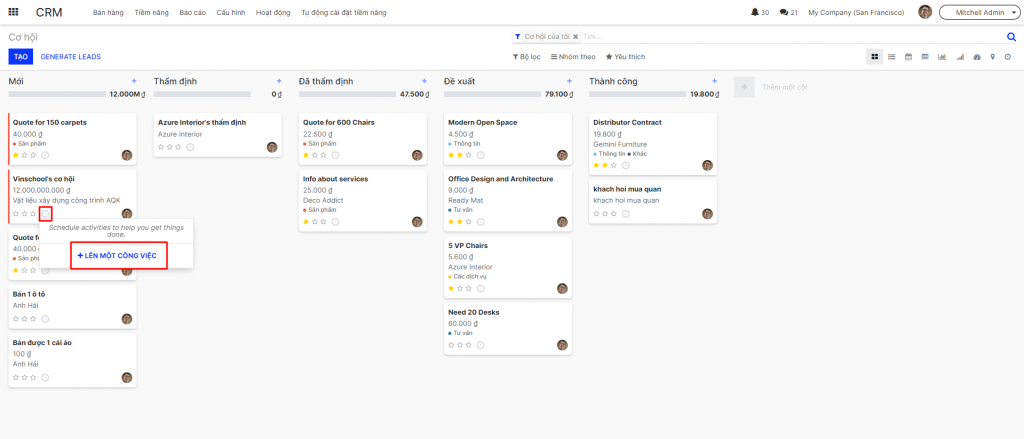
SimERP helps businesses set up suitable activities for each prospect by stage — email, calls, meetings, quotations, etc. — to turn potential opportunities into successful ones. Users can flag the priority level and status of each task, making it easy to follow every customer activity.
Sales opportunity management
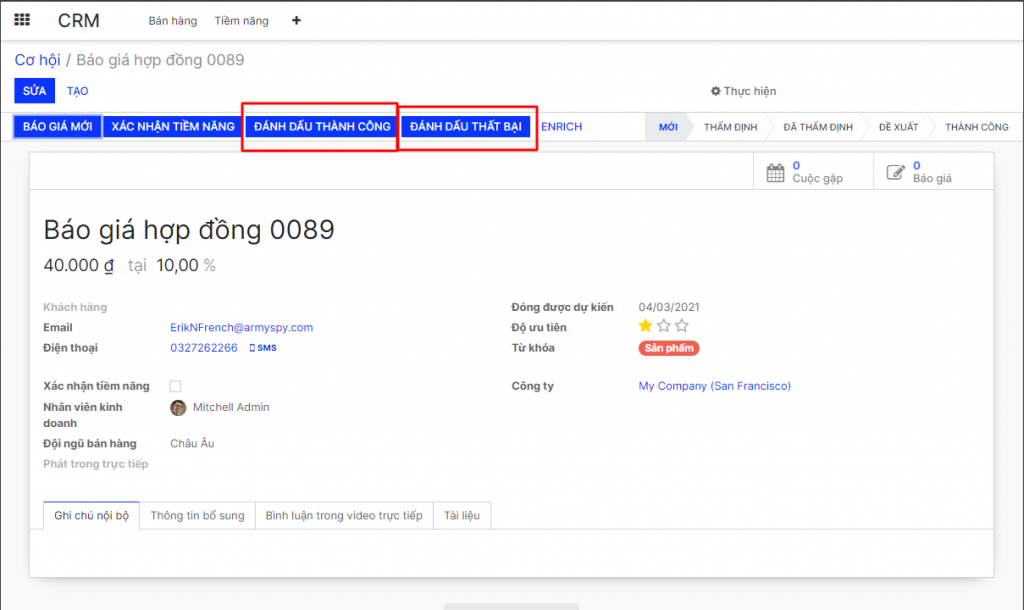
Businesses can update lead information with full details — contact info, priority order, responsible salesperson, etc. Then, based on the exchange with the customer, you can assess whether it is an opportunity. If so, convert it into a sales opportunity or group related sales opportunities together so sales staff can handle them easily.
Evaluating sales opportunities
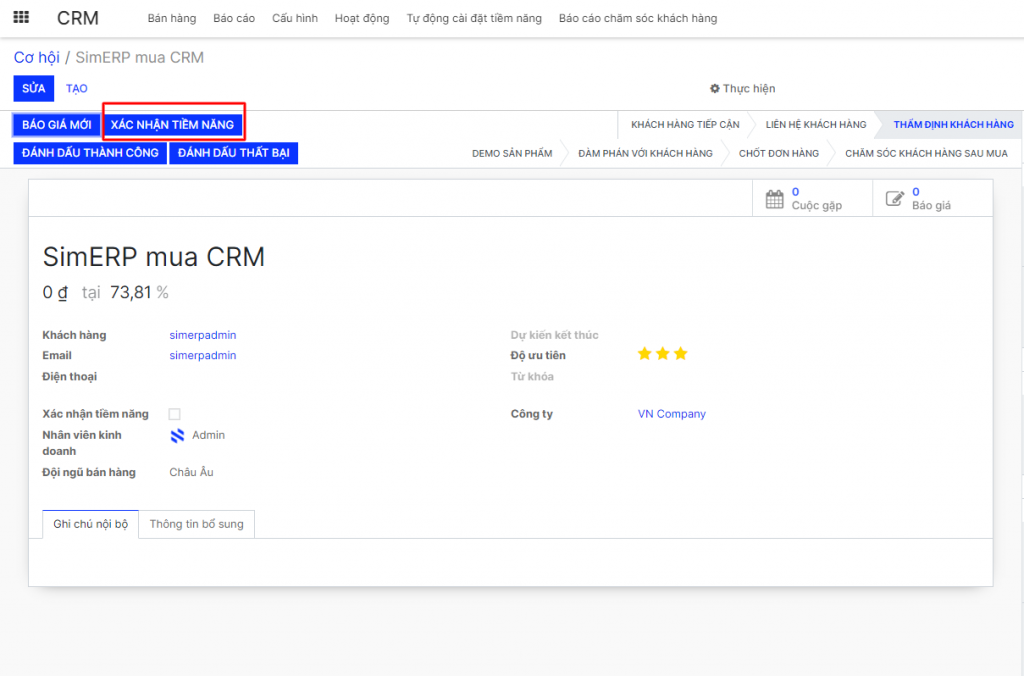
Based on the working process with the customer, businesses can assess whether the opportunity will succeed by marking it as successful or failed. For failed opportunities, you must record the reason.
You can even categorize successful and failed opportunities for easier tracking.
Sales team management
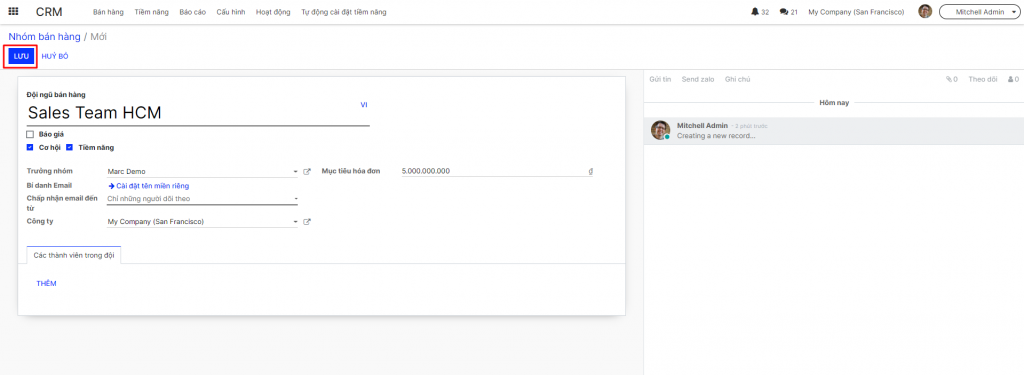
To improve business performance, users can create different sales teams by region or product group. Information about team leaders, members, goals, emails, etc. is all updated. Businesses can even measure the performance of teams and individual members.
Email management
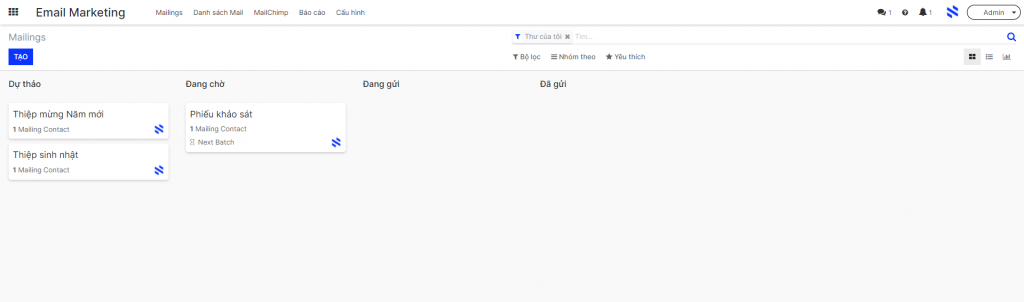
Businesses can build email templates for customers — quotations, product discussions, customer care emails, etc. Key email marketing metrics are displayed in SimERP, helping users closely follow and evaluate their email campaigns.
Reporting support
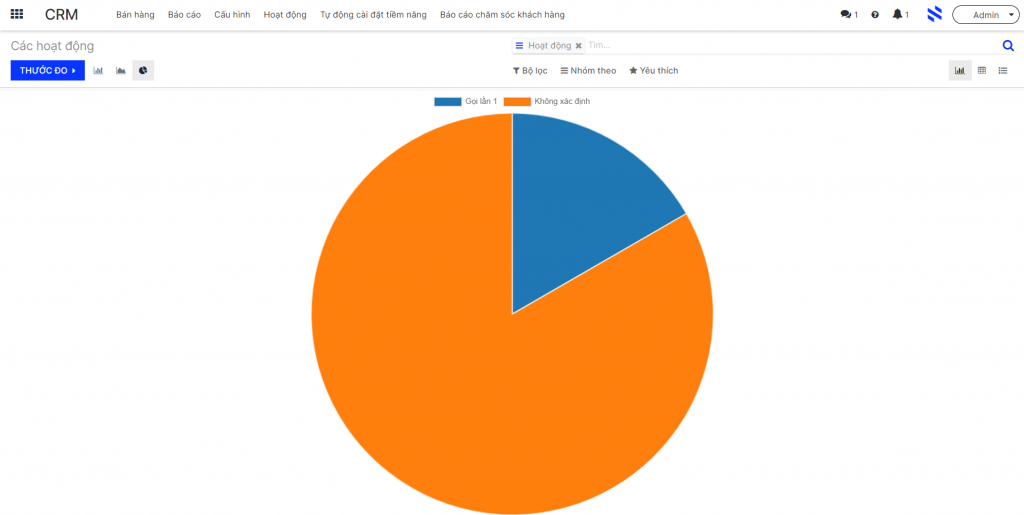
SimERP's CRM system consolidates data, then automatically analyzes and reports the results on sales, KPI progress, and lead behavior analysis to evaluate the ROI of marketing campaigns. From there, businesses can devise new strategies for the future more effectively.
Today, SimERP offers a SimCRM package with a free 30-day trial. Sign up to experience the CRM features right now!
Conclusion
For many businesses today, the challenge of managing customer relationships effectively is always a hard question. With CRM, just a few small, simple steps and all customer information and transaction history is clearly analyzed through reports. Now, reaching customers and planning customer care is easier and more effective.
Related articles
Bài viết liên quan

25 tháng 10, 2026 · 3 phut doc
2024年网页设计趋势预测如何? | Wotech Electronics
关于 2024 年网页设计趋势——步入 2024 年,年初正是我们为新事物预留时间的时刻。这也非常适合设计师群体唤醒我们内心的"艺术之魂"。闲话不多说,快来和 Markdao 一起浏览 2024 年的 UX/UI 设计趋势吧,说不定您就能为自己接下来的网页设计项目"迸发"出一个绝妙的点子呢!

25 tháng 10, 2026 · 1 phut doc
什么是网站(Website)?网站的详细定义及其带来的商业价值
什么是网站(https://www.markdao.com.vn/blog/website-la-gi)——这个问题或许已经无需定义,因为在如今这个信息时代,网站对每一家企业而言都是不可或缺的组成部分。正是网站帮助用户更近距离地接触企业所提供的产品和服务,从而提升经营效益。此外,要在当今竞争如此激烈的环境中求发展,网站是一个重要因素,它将带你走向品牌与销量上的双重成功。

25 tháng 10, 2026 · 1 phut doc
什么是SEO标准网站?一场"打赢"Google SEO标准的战役 | Wotech Electronics
99%的用户在购买前会先搜索信息,73%的用户只会访问排名前10的网站,并认定它们是值得信赖的品牌……在数字营销爆发的时代,这些数字有力地印证了SEO标准网站的重要性。然而,许多人对什么是SEO标准网站(https://www.markdao.com.vn/blog/huong-dan-toi-uu-seo-website-chuan-seo-on-page)仍然相当模糊,并未真正理解。达到SE…