Customer Evaluation: Its Importance and the Criteria for Assessing Customers | Wotech Electronics
Vũ Khôi
Tác giả tại Wotech Electronics Blog
Customer Evaluation: Its Importance and the Criteria for Assessing Customers
Vũ Khôi
Author at Wotech Electronics Blog
With the continuous growth of the Internet, customers in the new century are gradually shifting their shopping habits from traditional to modern through online purchasing. Customer care today goes beyond providing quality products — it also involves care activities that extend continuously from pre-sale to after-sales. Some customers take time to close a deal, while others pester the salesperson with pointless questions and then never place an order, costing the business a great deal of consulting time. Evaluating customers helps solve this problem and makes the process easier. In the article below, you will learn how to evaluate customers and why doing this helps a business optimize costs and increase sales effectiveness.
What Is Customer Evaluation?

Customer evaluation is the process of collecting information related to a potential customer's purchasing behavior. During customer evaluation, you can ask yourself a number of questions to better understand the customer:
-
Their ability to pay;
-
The size of their orders;
-
Their prospects for cooperation/repeat business;
-
The seriousness of their purchase intent;
-
Their psychological profile;
-
How long the customer will take to make a decision.
By evaluating customers, salespeople can determine whether a deal will happen and whether the time spent answering the customer's questions is worthwhile.
The Importance of Customer Evaluation
Evaluating customers can help you accomplish several important tasks in sales management:
-
Identify the customer group that is ready to buy and has a solid budget;
-
Allocate staff time properly: in reality, many managers spend a great deal of time on customers who don't buy or buy very little;
-
Redirect commercial potential toward customers who will buy expensive goods;
-
Develop improvement proposals based on the information collected to create the best possible customer experience;
-
Increase sales conversion rates by focusing on and nurturing interested customers;
-
Shorten the deal cycle: by focusing on customers already interested in the product, salespeople don't have to spend excessive time.
For these reasons, customer evaluation is essential for optimizing costs (staff, time, risk, and opportunity) and increasing sales effectiveness through higher conversion rates.
Criteria for Evaluating Potential Customers
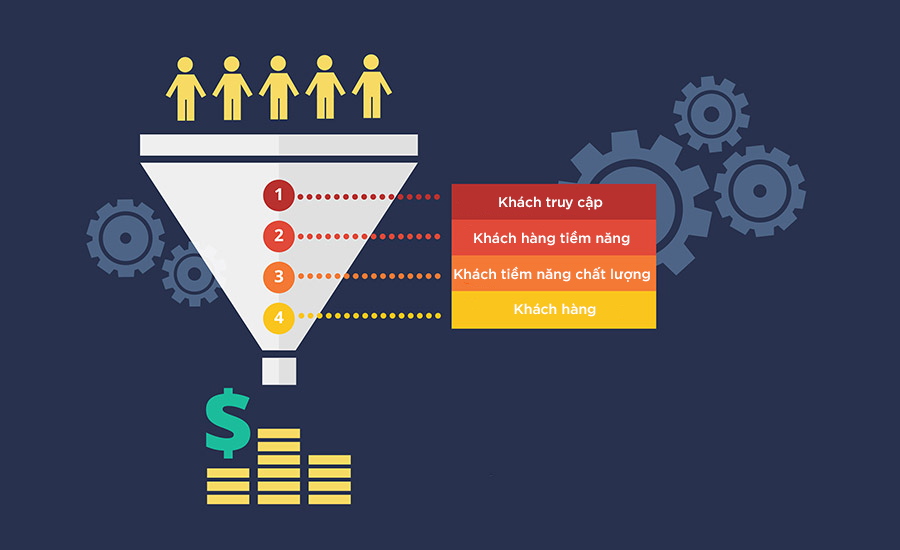
Potential customers generate profit for a business because they are willing to pay for the products they want. So what are the criteria for evaluating potential customers?
-
Need: A customer needs a product and finds it on sale right in your online store. Without hesitation, they decide to buy the product shown on the website because they are satisfied and don't have much time to look for other retailers.
-
Prior interest: Customers who have ordered before are those who already liked the product beforehand. These customers are usually regulars or people who already had a certain level of interest in the product.
-
Sufficient budget: The customer has enough budget to complete the order. They have the financial means to pay for the order and don't spend too much time weighing the financial side (product price, shipping costs, service fees, etc.).
In business, online stores need to seriously evaluate these characteristics to optimize transaction time. For example, a potential customer may really need a product but not have enough money to buy it. As a result, he will spend time borrowing money or arranging a loan, which affects time costs and risk. He may also start looking for other sellers with lower prices or choose a similar product from another brand, so your online store will not earn the profit you expected.
Criteria for Evaluating Other Customer Groups and B2B Customers

Beyond evaluating potential customers, businesses also need to consider assessing the remaining customer groups and B2B customers. Some criteria for evaluating B2B customer groups:
-
Fit with the target buyer persona. One of the most important steps in customer evaluation is checking whether customers match your company's target customer profile. If the group you are evaluating doesn't match the target persona, the likelihood of fit and retention will be low;
-
Determining whether you can actually meet the buyer's requirements. At this stage, the manager identifies the buyer's needs and then compares them against the store's capabilities. If the business cannot meet the customer's needs, either drop the customer or make a different offer;
-
Identifying the customer type — proactive deal-closers versus passive/slow decision-makers. If a manager is dealing with a customer who cannot make a decision or takes too long to consider, the process may not end as desired. Therefore, the business needs to:
(1) communicate skillfully to increase the purchase rate of passive customer groups, or drop them entirely if they seem unviable;
(2) increase engagement and introduce new product types to proactive customers.
Customer evaluation is extremely important during a crisis, when the number of buyers is shrinking. Applying customer evaluation methods helps managers collect information and thereby reach potential customers, determine how serious their purchase intent is and their actual financial situation — so they can decide whether to nurture the prospect or drop them, saving staff and costs for the business over the long run.
Evaluating Customers Using the ABC and XYZ Models
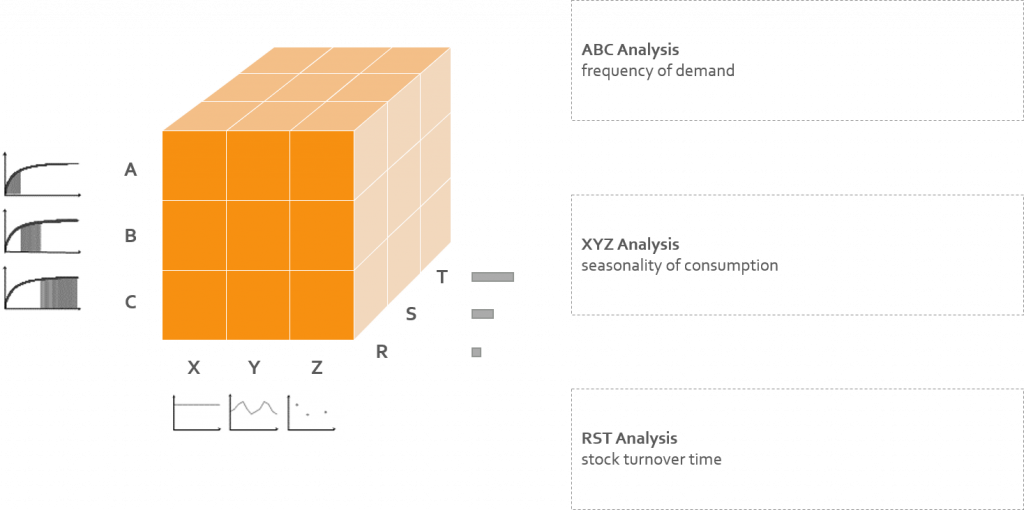
The ABC and XYZ analysis models are quantitative research models, performed before in-depth interviews and qualitative customer research, and focus primarily on:
-
ABC — order volume
-
XYZ — order frequency
The ABC and XYZ analysis includes the following stages:
-
Define the objective of the analysis: identify what frequent, high-spending customers have in common;
-
Select the metrics to analyze: annual sales, monthly net profit, etc.;
-
Calculate value increases and decreases and build the matrix;
-
Assign categories to customers (taking into account their contribution and activity during the reporting period).
How Do You Evaluate New Customers?

New customers should be evaluated while the salesperson is communicating with them. We can divide customers into the following groups:
-
Cold Lead customers: the group that is unfamiliar with the company's products and offers;
-
Warm Lead customers: the group that has some experience interacting with the store in the past but may not yet have the financial means to buy;
-
Hot Lead customers: the group that already loves the company's products, has considered them, and is almost ready to close the deal — the business only needs one more step to reach an agreement.
Identifying which group a new customer belongs to helps the business develop appropriate communication and engagement strategies, improving sales effectiveness and its ability to evaluate new potential customers.
The BANT Evaluation Framework
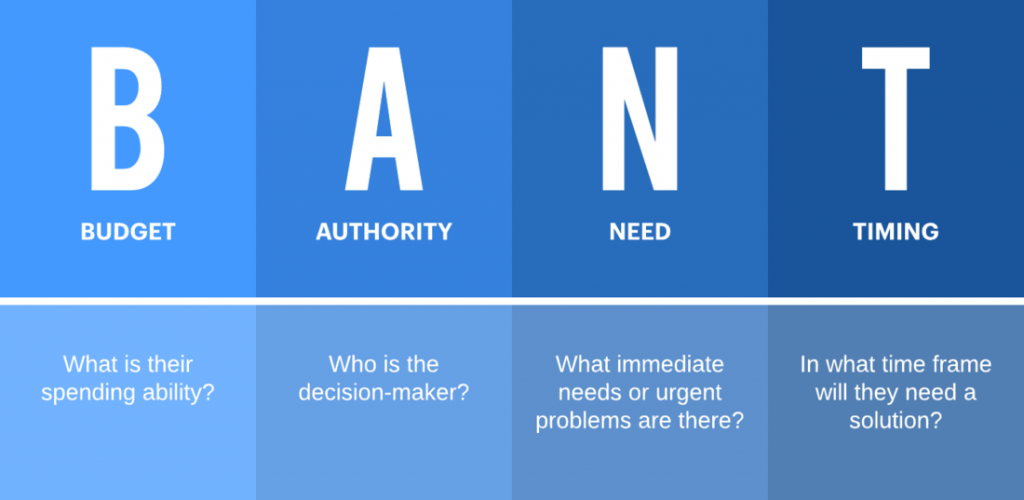
Beyond the criteria discussed above, the BANT model is another highly effective tool for assessing the prospects of a potential buyer. It is typically applied based on 4 main criteria:
-
Budget: the salesperson should assess the customer's financial capacity — the approximate amount a customer is willing to spend when shopping online;
-
Authority: the business needs to determine whether the buyer is the decision-maker or is responsible for purchasing authority;
-
Need: determine how interested the customer is in the product they intend to buy and how much they need it;
-
Timeline: the criterion for determining how long the customer will take to make a decision.
The BANT model delivers high value for businesses evaluating both existing and new potential customer groups. It allows a business to:
-
Understand the duration of each customer's deal cycle;
-
Determine the customer's future ability to pay;
-
Allocate the sales team's time effectively;
-
Collect information about the purchase decision-maker.
A scoring system is updated for each customer for each question. The more points a customer receives, the higher their potential. Each criterion comes with several more detailed questions to thoroughly assess the factors that influence the customer's buying behavior.
What to Do with the Collected Data?

Customer evaluation allows a business to decide whether to continue working with a buyer. The results of customer evaluation can be used to achieve the following goals:
-
Segment potential customers: customers will be divided into different groups, helping the business develop special offers for each group;
-
Adjust the sales strategy;
-
Identify the hidden difficulties and needs of potential customers;
-
Change the lead generation strategy.
The App for Consolidating and Managing Customer Information — SimCRM
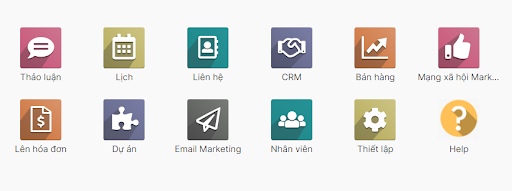
Once customer information has been collected, the manager's next task is to consolidate and manage it; divide customers into different groups and nurture the potential customer segment. Today, a number of applications have emerged to meet businesses' needs for managing and storing customer information. These applications' strengths are optimizing workflows, improving management efficiency, and saving time. One application worth mentioning in 2021 is SimCRM, a customer relationship management software that lets businesses manage customer information online as well as easily consolidate and nurture their target customer groups.
The application was refined into its most complete version in 2021, with a wide range of features that make it convenient for businesses to manage their modules: Sales and invoicing; Project management; Social network; CRM; Employees; and more. The modules are linked together so the business can perform multiple operations at once on a single platform, ensuring accuracy and seamless flow. This application helps businesses ensure:
-
Order consistency: avoids the cases of duplicate, missing, or incorrectly recorded orders.
-
Control and statistics: compiles data on order volumes and revenue for each period to inform specific sales strategies.
-
Storage of internal and customer information: the business can consolidate customer information in the system for easier management.
Summary
Customer evaluation can be performed on both existing and new customer groups to assess purchasing performance across all areas of e-commerce. Consumer trends are changing every day, and the business's task is to grasp customers' new or latent needs. The priority task is to identify promising buyers and drop those who demand too much, take too long, and yield few orders. In addition, leveraging customer management applications like SimCRM makes the customer care process even more effective!
Related Articles
Bài viết liên quan

25 tháng 10, 2026 · 3 phut doc
2024年网页设计趋势预测如何? | Wotech Electronics
关于 2024 年网页设计趋势——步入 2024 年,年初正是我们为新事物预留时间的时刻。这也非常适合设计师群体唤醒我们内心的"艺术之魂"。闲话不多说,快来和 Markdao 一起浏览 2024 年的 UX/UI 设计趋势吧,说不定您就能为自己接下来的网页设计项目"迸发"出一个绝妙的点子呢!

25 tháng 10, 2026 · 1 phut doc
什么是网站(Website)?网站的详细定义及其带来的商业价值
什么是网站(https://www.markdao.com.vn/blog/website-la-gi)——这个问题或许已经无需定义,因为在如今这个信息时代,网站对每一家企业而言都是不可或缺的组成部分。正是网站帮助用户更近距离地接触企业所提供的产品和服务,从而提升经营效益。此外,要在当今竞争如此激烈的环境中求发展,网站是一个重要因素,它将带你走向品牌与销量上的双重成功。

25 tháng 10, 2026 · 1 phut doc
什么是SEO标准网站?一场"打赢"Google SEO标准的战役 | Wotech Electronics
99%的用户在购买前会先搜索信息,73%的用户只会访问排名前10的网站,并认定它们是值得信赖的品牌……在数字营销爆发的时代,这些数字有力地印证了SEO标准网站的重要性。然而,许多人对什么是SEO标准网站(https://www.markdao.com.vn/blog/huong-dan-toi-uu-seo-website-chuan-seo-on-page)仍然相当模糊,并未真正理解。达到SE…