What Is Email Marketing? Why Should Businesses Use Email Marketing? | Wotech Electronics
Vũ Khôi
Tác giả tại Wotech Electronics Blog
What Is Email Marketing? Why Should Businesses Use Email Marketing?
Vũ Khôi
Author at Wotech Electronics Blog
As the technology era advances, finding and using tools that save time and money while delivering high engagement with customers is always a priority for businesses. Compared with underperforming traditional marketing channels, email marketing emerged as a smart solution for businesses — it is the marketing channel most chosen by companies for optimizing business processes and achieving expected revenue.
What Is Email Marketing?

Email marketing is the use of email to deliver commercial messages — such as promotions, sales, and product/service marketing — to a target customer group.
Unlike the mass product-marketing emails we commonly see, email marketing targets a specific customer group or even particular individuals, notifying them about product/service offers, messages, and company updates according to a carefully planned strategy.
With two major advantages — low cost and easy implementation — building email marketing effectively not only helps customers access products/services quickly, but also serves as a medium for the business to convey its brand message while minimizing costs.
Why Should You Use Email Marketing?
According to a report from VentureBeat, no marketing channel has the longevity of email marketing. While some marketing trends come and go, email remains the most powerful channel always available to modern marketers, and one that many businesses prioritize.
Here are 5 reasons why you should use email marketing.
Email Marketing Has Massive Reach
According to statistics from Statista, there are currently about 3.9 billion email users every day, and that number is expected to rise to 4.3 billion by 2023.
This may surprise you at first. But think about your own online behavior: when you sign up for a website, you must enter your email address to create an account; you even need an email address to create a Facebook or Twitter account. Moreover, Facebook and Twitter use email to notify users about activity on their platforms. Meanwhile, email is the tool that delivers information from the websites you've subscribed to based on your interests — news, events, job postings, promotions from businesses, and so on.
So when it comes to connecting with customers and prospects, no channel has the reach of email marketing.
Delivers Cost and Economic Efficiency
According to a study by Shop.org and Forrester Research, 85% of US retailers consider email marketing one of the most effective customer acquisition tactics. What's more, email marketing is the channel with the highest return on investment (ROI). According to research by VentureBeat and the Direct Marketing Association (DMA), every $1 spent on email marketing can generate $40 in ROI.
So compared with traditional marketing methods such as handing out flyers or door-to-door selling, email marketing saves a business considerable expense — especially small businesses with limited budgets.
Personalized and Customizable
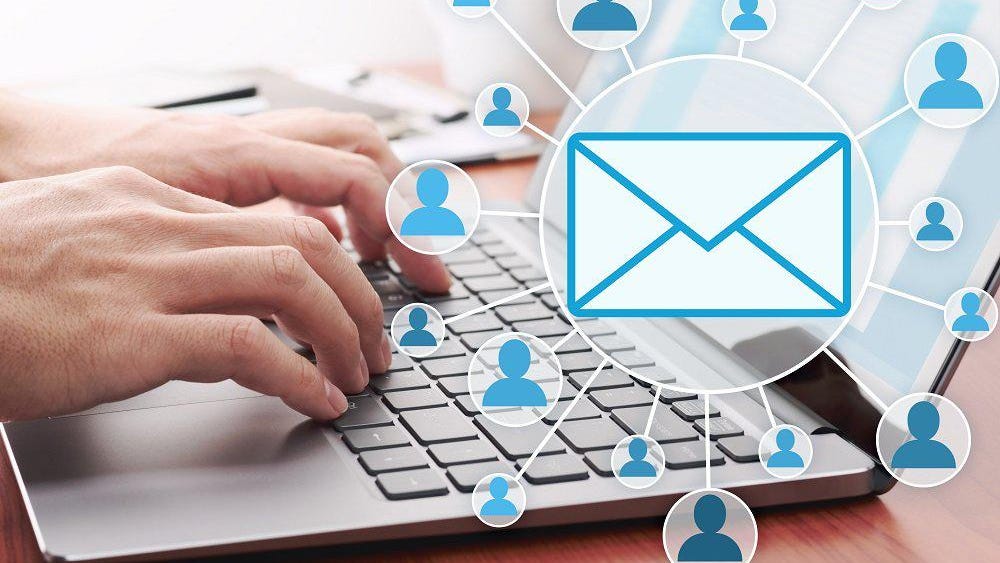
The key step in building effective email marketing is segmenting customers into different groups according to pre-planned criteria. Segmentation allows the business to deliver the right messages precisely to each specific group or audience.
According to the DMA, emails correctly segmented by target audience generate 58% of total revenue. So how can a business segment customers effectively? Today the market offers plenty of email marketing software that helps businesses do this well. With functions such as creating and grouping customers and assigning permissions by topic, staff can manage everything with ease.
Never send too many unnecessary messages to customers' inboxes. When customers feel bothered, they will immediately mark your mail as spam. So beyond choosing the right customers and personalizing emails to send the right message at the appropriate time, the business also needs to pay attention to customer feedback in order to adjust its email marketing strategy for better results.
Drives Conversions and Enables Measurement
In fact, the average click rate of an email campaign is around 3% (of total recipients), far higher than other media channels. In addition, according to a survey by Monetate, 4.24% of visitors from email marketing tend to buy something, while only 2.49% of visitors from search engines and 0.59% from social networks make a purchase.
On the other hand, many email marketing software packages today provide functions to measure the effectiveness of your email marketing strategy through statistics on clicks, forwards, website visits, social media shares, and more.
By using email marketing, a business can successfully drive customer conversions and make sound decisions, adjusting its strategy appropriately based on report analysis.
Email Marketing Is an Open Platform
In reality, many businesses spend enormous sums to increase engagement on social networks. However, Facebook frequently updates its algorithm to reduce the number of followers who will see a brand's posts — unless those posts are paid ads. Meanwhile, Twitter is owned and controlled by a third party, forcing businesses to comply with whatever changes the platform makes. Email marketing, on the other hand, is not controlled by any individual or organization. It is an open communication platform with countless service providers offering access to send and receive email.
So by taking advantage of this and building your own customer list, you can easily reach your target audience and execute business strategies effectively without restrictions.
3 Email Marketing Scenarios You Can't Afford to Miss
To achieve the expected click volume, engagement, and better ROI, a business needs an effective email marketing strategy. So how do you upgrade that strategy? Below are 3 email marketing scenarios you should consider!
Focusing on Basic Email
Characteristics
The first scenario usually appears when a company has just started using email marketing or hasn't yet realized its true potential. Since the main goal is selling, the email content is mostly promotional, driving purchases by announcing new products and discounts.
The three main components of this strategy are: the database, the email campaigns, and the results reports. Because the focus is purely on sales, optimization and personalization of emails are rarely done.
Results Achieved
While this strategy is easy to execute and saves a lot of time, when it comes to long-term performance it can fail, because results are measured only by email open rates and click-through rates. With open rates rarely exceeding 15%, and up to 50% of subscribers possibly becoming inactive within six months under this scenario, declining campaign results over time are completely normal.
How to Improve
-
Create engaging campaigns to attract and re-engage inactive customers
-
If customers don't want to engage with you, ask for their feedback at the unsubscribe step and use it to improve your strategy next time
-
Send emails at the right moment and time. Avoid timezone conflicts between domestic and international customers
-
Rethink your email design and start building responsive emails to reach readers on mobile devices. Also, depending on your purpose, you can refer to the wide variety of sample email marketing templates available online and in books to optimize your emails further
-
Grow your database with signup forms or use landing pages to generate leads
Optimizing Results
Characteristics
In this scenario, you use many different email marketing tactics to optimize campaign results. For you, email marketing isn't just about engaging existing contacts — it's also about acquiring new subscribers and building a larger customer base.
This is the scenario most widely used by marketers. With the goal of maximizing results from email marketing, your content is both promotional and informational. This strategy involves more components, such as: database, email campaigns, reports, segmentation, and landing pages. Signup forms and landing pages are used to generate leads and enrich the database. Segmenting customers by demographics is used to split the database and send relevant content to each group, significantly improving open and click rates.
Results Achieved
By taking into account email open rates, clicks, forwards, and unsubscribes, along with the level of user engagement across different devices, you will get an overall picture of how effective the campaign is. In this scenario, email open rates range from about 16% to 25%.
How to Improve
-
Review your list-building strategy, the leads generated from signup forms, and your landing page design.
-
Use selective, high-converting information in your signup forms
-
Integrate post-signup online surveys into your email marketing strategy to collect additional data about subscribers and feedback for further improvement
-
Segment by subscriber actions (opens and clicks) to estimate their level of engagement and communicate accordingly
-
Use A/B split testing to optimize your email subject lines — from the sender name and email content to the send time.
Building Relationships
Characteristics
This is the best scenario a business should consider adopting. Your goal in this scenario is to build strong relationships and loyalty throughout the customer lifecycle through effective engagement.
The content conveyed by email includes product/service promotional information, information useful to customers, and educational content.
Your email strategy includes many components, such as the database, email campaigns, reports, signup forms, landing pages, online surveys, A/B split testing, integrations, segmentation, autoresponders, social media, dynamic content, and RSS campaigns.
Results Achieved
This is the strategy that requires the most time and effort to achieve the best results. In this scenario, welcome email open rates can rise from 25% to 99%.
How to Improve
-
Use email marketing software that supports multi-channel integration — such as email, mobile marketing, and social media — to engage customers in the best way possible
-
Continuously adjust and improve your strategy
-
Plan regular email testing for each specific segment
Conclusion
Building effective email marketing not only helps customers stay informed about the company's products, services, and activities, but also helps the business reach the right customers, increase conversions and customer engagement, save costs, and significantly boost revenue. Through the information shared above, SimERP hopes you now have an overall view of the importance of email marketing, so you can build a specific, suitable strategy and achieve the best results.
Related Articles
Bài viết liên quan

25 tháng 10, 2026 · 3 phut doc
2024年网页设计趋势预测如何? | Wotech Electronics
关于 2024 年网页设计趋势——步入 2024 年,年初正是我们为新事物预留时间的时刻。这也非常适合设计师群体唤醒我们内心的"艺术之魂"。闲话不多说,快来和 Markdao 一起浏览 2024 年的 UX/UI 设计趋势吧,说不定您就能为自己接下来的网页设计项目"迸发"出一个绝妙的点子呢!

25 tháng 10, 2026 · 1 phut doc
什么是网站(Website)?网站的详细定义及其带来的商业价值
什么是网站(https://www.markdao.com.vn/blog/website-la-gi)——这个问题或许已经无需定义,因为在如今这个信息时代,网站对每一家企业而言都是不可或缺的组成部分。正是网站帮助用户更近距离地接触企业所提供的产品和服务,从而提升经营效益。此外,要在当今竞争如此激烈的环境中求发展,网站是一个重要因素,它将带你走向品牌与销量上的双重成功。

25 tháng 10, 2026 · 1 phut doc
什么是SEO标准网站?一场"打赢"Google SEO标准的战役 | Wotech Electronics
99%的用户在购买前会先搜索信息,73%的用户只会访问排名前10的网站,并认定它们是值得信赖的品牌……在数字营销爆发的时代,这些数字有力地印证了SEO标准网站的重要性。然而,许多人对什么是SEO标准网站(https://www.markdao.com.vn/blog/huong-dan-toi-uu-seo-website-chuan-seo-on-page)仍然相当模糊,并未真正理解。达到SE…