Delegating Tasks to Subordinates: Principles, Processes, and Skills | Wotech Electronics
Vũ Khôi
Tác giả tại Wotech Electronics Blog
Delegating Tasks to Subordinates: Principles, Processes, and Skills
Vũ Khôi
Author at Wotech Electronics Blog
How to delegate tasks to employees so as to make the most of their capabilities remains a puzzle that gives many managers headaches. Not knowing which tasks to delegate and which to do yourself, or how to delegate without things going wrong — especially during the stressful pandemic period when remote work is mandatory — makes this even harder.
Today, let's join SimERP in discussing everything a manager needs to know in order to delegate tasks effectively to their employees.
What Is Effective, Proper Task Delegation?
According to John Hunt, professor at the London School of Economics: "Only 30% of leaders think they are good at delegating tasks to employees. And only one-third of those are recognized as good delegators by their subordinates. This means only 1 in 10 leaders truly knows how to delegate tasks to employees."

Task delegation means how managers apply each individual's talents to the work that suits them. Delegation is effective when you make the most of your subordinates' knowledge and skills, the team's overall productivity improves, and workflows run smoothly with fewer complications.
There are two ways to delegate tasks to employees: meeting face to face to discuss, or indirectly via chat apps, email, or software. Whichever way you delegate, to achieve maximum effectiveness the task must be assigned to the right person, with the purpose defined for when the work is completed (work results, opportunities for personal development, improved teamwork, etc.).
What Are the Principles of Delegating Tasks to Employees?
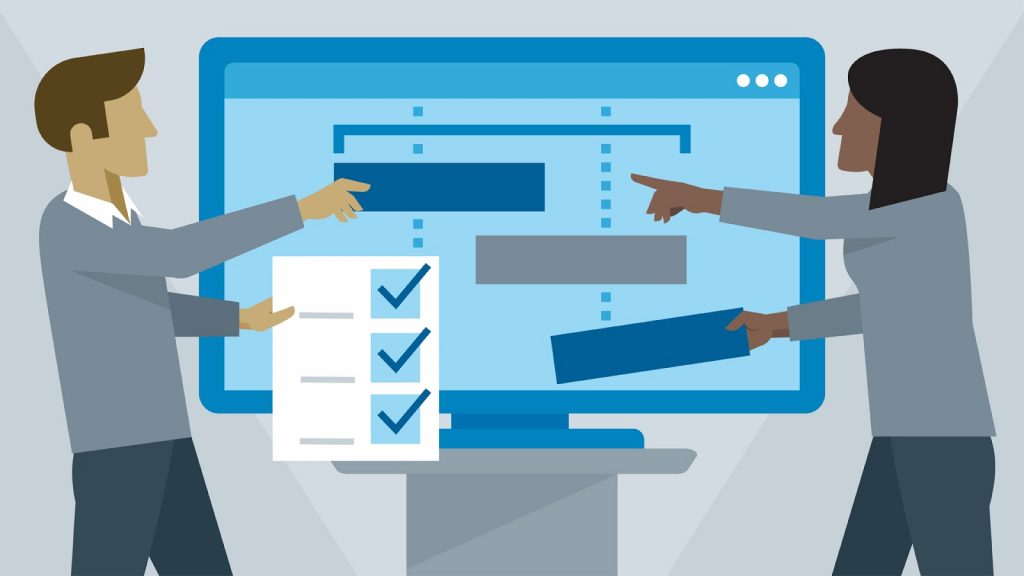
# Delegate Tasks According to Employees' Abilities
Everyone has strengths and limitations. The manager's job is to study and observe to discover employees' advantages and bring them into play. Tasks assigned in line with an employee's abilities and strengths will be completed in the best way.
# Divide Work Clearly and Set Specific Deadlines
Work needs to be divided clearly and transparently, to avoid rivalries and internal conflicts. In addition, when delegating tasks to employees, you need to discuss your requirements thoroughly to save time on corrections.
Deadlines are indispensable for building a scientific, professional, and principled working culture. As a smart manager with delegation skills, you should know how to set appropriate deadlines that save time and make the most of your employees' capabilities.
# Regularly Check and Supervise the Work
To keep work on schedule, managers need to check and supervise regularly. However, you should not interfere too deeply in their work. You should evaluate your employees through the effectiveness of their work rather than overemphasizing the process or the methods used.
# Review and Draw Lessons Promptly
Whenever the delegation process ends, the manager should meet and talk directly with their employees about your assessment of the work just completed. If it fell short, remind them and draw lessons; conversely, encourage and reward them if deserved. A leader needs to keep an objective, frank attitude, with clear praise and criticism, to lead the team toward improvement.
The Process of Delegating Tasks to Employees
Step 1: Prepare by Clarifying the Following:
-
Describe the task to be delegated: the goal of the work, why you are assigning it to this employee, when it starts, and the requirements to ensure the work gets done.
-
Check the employee's current workload to avoid putting pressure on them.
-
Do you need to provide additional skills training so the employee can handle the task?
-
How will you delegate so the employee works happily and wholeheartedly? You should know your employees well: their strengths and weaknesses, capabilities, and work motivations. The reason you trust them with this task. What your employees will gain from completing this work well.
Step 2: Delegate the Task

The first thing a manager needs to do at this step is arrange a direct or online discussion to hand over the task. At this step, both parties must clearly understand and agree on the work-related matters, such as:
-
Discuss the goals of the task thoroughly.
-
How much authority will you grant the employee? When can they make decisions on their own, and when must they consult you?
-
What support and resources can the employee request and use?
-
Define the execution time, the deadline, and the regular reporting points for evaluating progress.
Step 3: Monitor and Control the Work
To ensure the work is completed on schedule and achieves the expected results, you need to closely monitor and check the execution process so you can propose timely solutions.
Depending on the employee's capability and experience, managers will consider the corresponding way of controlling the work and providing support.
However, you also should not interfere too much in the execution process. This will only make them feel you do not trust your employees.
The Risks of Delegating Tasks to Employees via Zalo, Skype, or Email

Nowadays, many Vietnamese businesses still use traditional tools (such as Excel, Email, etc.) or chat tools (such as Zalo, Facebook, Viber, Skype, Slack, etc.) to communicate and delegate tasks to employees.
These tools are very popular and easy to use. However, in practice, using them to manage work is causing a great deal of trouble for businesses — for both managers and employees:
For the Manager
-
Not knowing which employee is responsible for which task, or when the deadline is.
-
Not grasping the overall progress of the work.
-
Not being able to accurately assess employees' work performance.
-
If you are not at the office, it is difficult to supervise employees remotely.
For the Employee Assigned the Task
In group chats with many members, delegation messages inevitably get lost.
-
Frequently forgetting assigned tasks, missing deadlines, forgetting to submit periodic reports, etc.
-
Not knowing how to allocate time reasonably and scientifically to complete work effectively.
Task Delegation Software – The Optimal Solution for Business Managers

If you only manage a small group and are not organized into departments, things are fairly simple. But a business with many departments, significant functions, and a considerable number of employees demands a more complex management process.
Especially during the stressful pandemic period, when businesses are forced to work remotely, delegating tasks to employees and managing work becomes even harder. At such times, work management software is the effective solution.
Project management software is usually an all-in-one platform where teams and departments can plan projects, assign tasks, track progress, get deadline reminders, and automatically report the final results of a project, etc.
Thanks to this, managers can delegate tasks to employees effectively, while employees can also proactively grasp their own work. Instead of constantly checking and tracking progress through employees' reports, you can capture it easily through suitable progress reports.
A Completely Free Work Management and Task Delegation Software
SimERP is an ERP enterprise resource planning software with an effective project management and task delegation module.
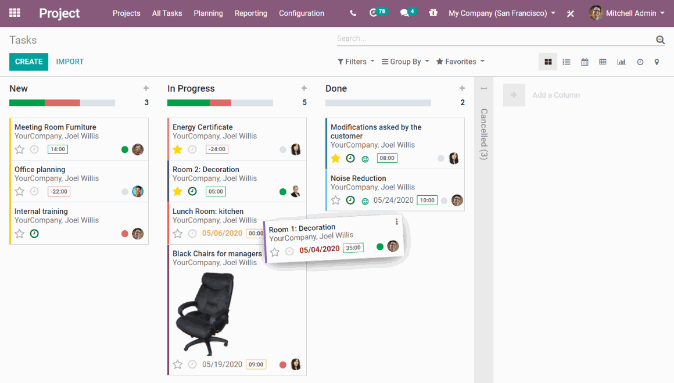
The software's project management module comes with many integrated features:
-
A modern, simple interface design that lets both bosses and employees easily grasp the work and maintain projects at every level.
-
SimERP's standout feature is that users can track work on both web and mobile versions anytime, anywhere. This lets managers keep an overview of the tasks they have assigned to employees even when they are not at the office.
-
The software automatically customizes task statuses and sets deadline notifications and reminders, helping employees complete their assigned work on time.
-
Effective collaboration and division of work across departments on a single unified platform. Users can communicate directly on each task.
-
In addition, SimERP automatically generates reports at the end of each project and task. Employees save time on reporting, while managers get an overview and detailed view of the work assigned to employees, from which they can evaluate, comment, and draw lessons for next time.
With those outstanding advantages, SimERP has become a partner of many Vietnamese businesses, such as Flexfit Furniture, 24hVISA, and more.
Conclusion
Delegating tasks to employees is a simple matter, but delegating effectively requires a manager who is intelligent, skillful, and understands their employees. Once you master the art of delegation, all resources in the business will be optimized, work will be carried out effectively, and both bosses and employees will feel comfortable and more connected to each other. However, in the current technological trend, business managers should consider using task delegation software for employees to save time and improve work performance, thereby creating a competitive advantage over rivals in the market.
Related Articles
Bài viết liên quan

25 tháng 10, 2026 · 3 phut doc
2024年网页设计趋势预测如何? | Wotech Electronics
关于 2024 年网页设计趋势——步入 2024 年,年初正是我们为新事物预留时间的时刻。这也非常适合设计师群体唤醒我们内心的"艺术之魂"。闲话不多说,快来和 Markdao 一起浏览 2024 年的 UX/UI 设计趋势吧,说不定您就能为自己接下来的网页设计项目"迸发"出一个绝妙的点子呢!

25 tháng 10, 2026 · 1 phut doc
什么是网站(Website)?网站的详细定义及其带来的商业价值
什么是网站(https://www.markdao.com.vn/blog/website-la-gi)——这个问题或许已经无需定义,因为在如今这个信息时代,网站对每一家企业而言都是不可或缺的组成部分。正是网站帮助用户更近距离地接触企业所提供的产品和服务,从而提升经营效益。此外,要在当今竞争如此激烈的环境中求发展,网站是一个重要因素,它将带你走向品牌与销量上的双重成功。

25 tháng 10, 2026 · 1 phut doc
什么是SEO标准网站?一场"打赢"Google SEO标准的战役 | Wotech Electronics
99%的用户在购买前会先搜索信息,73%的用户只会访问排名前10的网站,并认定它们是值得信赖的品牌……在数字营销爆发的时代,这些数字有力地印证了SEO标准网站的重要性。然而,许多人对什么是SEO标准网站(https://www.markdao.com.vn/blog/huong-dan-toi-uu-seo-website-chuan-seo-on-page)仍然相当模糊,并未真正理解。达到SE…