
What Is Bookkeeping (Hach Toan)? Basic Types and Their Principles | Wotech Electronics
Vũ Khôi
Tác giả tại Wotech Electronics Blog
What Is Bookkeeping (Hach Toan)? Basic Types and Their Principles
Vu Khoi
Author at Wotech Electronics Blog

To fully reflect and provide accurate, timely information to the board of directors, bookkeeping must be used. The different types of bookkeeping serve to the fullest the tasks of managing and supervising production and business activities and using capital effectively.
Most people who teach themselves bookkeeping consult instructional materials but rarely pay attention to the definitions of the terms used in this field. This article will help you explore the concept of bookkeeping and its basic classification, giving learners and accountants the most accurate view of the field.
What is bookkeeping?
Bookkeeping (hach toan) is a term used to describe the work of specialized personnel, including: observing, measuring, calculating, and recording business and economic activities in the process of social reproduction.
Bookkeeping in English is Keep Business Accounts.

Where:
-
Observation: confirming the existence of the objects to be collected.
-
Measurement: used to quantify the objects to be collected using specific units of measurement.
-
Bookkeeping calculation: the process of using analytical, computational, and synthesis methods to further quantify the objects into indicators.
-
Recording: the process of systematizing and noting each period and place of occurrence in a certain order, thereby providing an information basis for making appropriate decisions.
Through these activities, a business can simultaneously gather and supply all the information needed for the reproduction process. This serves the direction and inspection of economic activities, brings optimal efficiency to the reproduction process, and meets the needs of society and social life.
Bookkeeping requires accuracy and timeliness in content as well as consistency in methodology, thereby meeting certain standards and making the bookkeeping figures comparable with one another.
Due to the constant development of the productive forces, bookkeeping always undergoes many changes in technique, organization, and data-processing methods, and it always plays the role of an extremely important management tool of the State.
3 basic types of bookkeeping
Below are the 3 basic types of bookkeeping you need to know to make your work more effective and easier.
Operational bookkeeping (Business accounting)
What is operational bookkeeping?

Operational bookkeeping is the process in which accounting staff combine methods of observing, monitoring, and reflecting each individual economic transaction in detail, thereby carrying out regular and timely direction.
The objects of operational bookkeeping are the accounting tasks related to production economics and engineering, such as:
-
The progress of supplying materials and supplies, the production process, and the consumption of goods and products.
-
The movement and use of the inputs of the reproduction and business process.
A characteristic of operational bookkeeping is that it is not tied to any single unit of measurement; instead, it depends only on the nature of each transaction and the management requirement. This form uses one of three types of measures: money, physical units, or labor.
With operational bookkeeping, the worker only needs to use very simple means to collect and convey information, such as a telephone or word of mouth.
Because the objects of this type of operational bookkeeping remain very general and can only be handled with simple methods, this form has not yet been regarded as an independent science.
Operational bookkeeping for business license tax

Business license tax is paid annually. Companies already in operation that have declared and paid business license tax do not have to file license tax returns for subsequent years if there are no changes to the factors that alter the amount of tax payable (under Article 17 of Circular 156/2013/TT-BTC).
Therefore, if your business does not change its business registration certificate or charter capital — the factors affecting the amount of license tax payable — the business only has to pay the tax, with the deadline being January 30.
Business license tax is a business management expense, and it is counted as a deductible expense when determining corporate income tax.
Statistical bookkeeping (Accounting statistics)
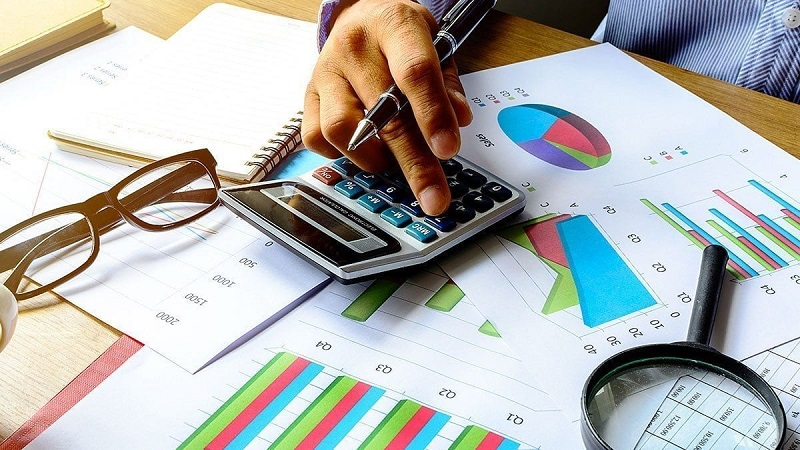
"What is statistical bookkeeping?" is a question SimERP frequently receives. Unlike operational bookkeeping, this is recognized as a science. This form studies all the "qualitative" elements in their relationships with the "quantitative" elements of all economic and social phenomena, corresponding to specific conditions of time and place.
The main purpose of this form is to derive the essence and the patterns in the development of economic phenomena.
Its objects of study:
-
The improvement of labor productivity
-
The value of total output and pricing
-
Labor income
Precisely because of this, the information that statistical bookkeeping provides is systematic in nature but not regular or continuous. In addition, this type of bookkeeping uses analytical methods such as averages, statistical surveys, statistical grouping, relative numbers, indices, and absolute numbers. It also uses the same three types of result measures.
Accounting bookkeeping (Accounting)
What is accounting bookkeeping?
What is accounting bookkeeping in English? Accounting bookkeeping in English is Accounting. It is regarded as a science with the function of recording and supplying all sources of information on the use of assets, in order to measure how effectively the resources from the economic and financial activities arising in agencies and businesses are used.

Characteristics of accounting bookkeeping
Accounting bookkeeping continuously, comprehensively, and systematically tracks and reflects the entire current situation of an agency or business, together with the movements of all types of assets and the sources from which those assets are formed in organizations and units.
Thanks to this characteristic, accounting bookkeeping can continuously track all processes before, during, and after production and business activities are carried out, thereby evaluating whether the use of the company's capital has been effective.
Accounting bookkeeping applies scientific research methods such as documentation, valuation, double-entry accounts, synthesis, and accounting balance sheets. Among them, preparing accounting documents is considered the first step and is mandatory in every economic transaction that arises. Therefore, the figures provided by accounting activities guarantee accurate reflection and a solid legal basis.
What measures does accounting bookkeeping use?
There are 3 types of measures used in accounting bookkeeping.
Physical measure: uses physical units of measurement that depend on the natural properties of the object being measured, such as weight (kg, quintal, ton…), area (meters, centimeters…), and volume. The physical measure allows accounting bookkeeping to measure each individual object precisely, but physical measures cannot be used to process raw information into aggregated information about multiple objects.
Labor measure: uses time-based units such as man-days and man-hours to measure the objects of bookkeeping. The labor measure is generally used only to calculate labor costs, thereby aggregating indicators of labor productivity in organizations and businesses.
Value measure: uses monetary units to measure objects. The outstanding advantage of the value measure is that it allows this form to aggregate information from all raw data and individual objects. However, the limitation of choosing the value measure lies in the choice of a suitable monetary unit. The value of money is governed by inflation, so in many cases, using the value measure inadvertently reduces the accuracy of the information provided by accounting bookkeeping.
Despite these limitations, money remains the most widely used measure in bookkeeping. Money is used broadly and can cover every economic and financial transaction.
Thanks to this measure, accounting bookkeeping can supply complete aggregated figures, actively serving inspection and management, thereby making the execution of economic plans simpler, faster, and more economical in time and money.
Principles of accounting bookkeeping

Accounting bookkeeping applies methods including: documentation, double-entry accounts, valuation, and synthesis. Among them, the first and mandatory procedure for every economic and financial transaction that arises is preparing accounting documents. This ensures accuracy and creates a solid legal basis for later management and control activities.
Each different type of bookkeeping has its own characteristics and methods of implementation, yet they are closely interconnected, supporting and complementing one another, together performing the function of reflecting and managing the process of social reproduction.
Accounting bookkeeping information under Circular 200

The information of accounting bookkeeping is dynamic information related to the circulation of capital. In organizations and businesses, the panoramic picture of the production and business process (from the first step of supplying materials for production to the final step of selling products) is reflected fully, in detail, and vividly through accounting information.
In addition, the information in this form always concerns both sides of every object, phenomenon, and process: capital sources and assets, increases and decreases, costs and results, and so on. This information is enormously meaningful for applying business bookkeeping. Its core content is financial independence, material incentives and material responsibility, and covering expenses with revenue…
Every piece of information obtained is the result of a two-sided process: information and verification. Therefore, when discussing accounting bookkeeping and the information obtained from this activity, the two most fundamental characteristics — information and verification — cannot be separated.
The 4 biggest challenges in bookkeeping work today
Data control

Today, bookkeeping in general and accounting in particular are among the jobs that have applied information technology most quickly and deeply into their operating processes. Instead of the complex, cumbersome processes of the past, bookkeeping has fundamentally changed, with most of the work now supported by information technology — from bookkeeping entries to preparing financial statements.
However, this rapid change has created a major challenge: data control has become more complicated than before, requiring workers to have basic information technology skills. If staff do not master the accounting processes — from collecting, processing, and entering data to handling information within the software system — failure to control the data becomes a very real risk.
Complying with new standards and legal regulations
With the rapid development of the market, accounting standards and regulations also change. Therefore, accounting staff need to pay special attention and regularly update the latest notices and changes, thereby avoiding fines, explanations, or unnecessary complications.
Reducing costs, increasing productivity

Because of the difficult economy and the outbreak of the COVID-19 pandemic, businesses all want to optimize costs by cutting budgets and eliminating unnecessary spending to maximize profits. This change also has a certain impact on the company's accounting department.
Whereas previously each accountant handled a separate task, now one accountant may have to take on several different tasks due to staff cuts.
Preventing fraud
According to a recently published report by the Association of Certified Fraud Examiners (ACFE), the average business loses about 5% of revenue to fraudulent activities. However, only about 35% of businesses apply proactive management methods to prevent and guard against fraud.
Using accounting software is considered the optimal and most effective solution today. Specialized accounting software can automate many of the traditional manual operations of the past, such as data entry and report preparation. Cost calculation and inventory management are also automated, significantly reducing the manual operations that are both time-consuming and prone to errors.
In addition, all information and data on finances, materials, equipment, assets, and more are updated specifically, continuously, accurately, and completely in a single piece of software, and managers can monitor everything at any time, from anywhere, on any device. In particular, the internal control department can easily conduct the management, inspection, and monitoring of materials, goods, and products, as well as the labor productivity of departments within the business, thereby gaining an overview for conducting random, periodic, or regular supervision and checks to minimize possible fraud.
Sustainable growth with SimERP
Introduction to SimERP

About SimERP
As an enterprise resource planning software, SimERP is built on the Odoo platform — the world's most popular ERP software, with more than 2,500 partners and 5 million users. Inheriting and developing from Odoo, SimERP possesses outstanding, superior advantages including:
-
An accounting module compliant with Vietnamese standards
-
Powerful permission management
-
Flexible adjustment of the number of users
-
Diverse deployment models suitable for every type of business
SimERP's solutions
All of SimERP's applications are integrated on a single platform, easy and convenient to use on both the Web and mobile devices. Those applications include:
-
Project management: a solution that helps businesses operate effectively with the ability to manage a large number of company projects.
-
Accounting management: an accounting management system compliant with Vietnamese and international accounting standards.
-
Human resource management: managing recruitment, personnel information, timekeeping, and the company's facilities.
-
Retail management (POS): maximally supporting the management of retail chains in fashion, cosmetics, food, and other sectors.
-
CRM management (customer relationships): approaching and communicating with customers effectively and systematically.
-
Sales management: improving sales capability, making the company's business operations more professional and methodical.
-
Warehouse management: helping managers know the exact quantities of goods, materials, and equipment in the warehouse, and making control and management easier and more effective.
-
Purchasing management: tightly managing suppliers and the company's purchase orders.
-
Manufacturing management: Manufacturing, Product Quality, Maintenance, and Product Life Cycle management integrated on a single platform.
SimERP's outstanding advantages
– Vietnam-standard accounting features
-
The accounting module complies with Circular 200 of the Ministry of Finance, suitable for every type and size of business in Vietnam.
-
Reports: reports such as the business performance report and the balance sheet are compiled and built easily and systematically.
– Powerful permission management: SimERP assigns user permissions based on job position, role, and title. As a result, users can access the software, but they cannot see other people's data without permission from the administration team.
– Flexible number of users: SimERP was built and developed to provide a complete, comprehensive management solution suitable for businesses of every size across all fields, from retail and wholesale to service provision, and more. Therefore, startups (with fewer than 10 users) through to large enterprises (over 300 users) can all use it.
– Diverse, flexible deployment models: businesses can choose and deploy the model that suits them best:
-
On-premise: a model deployed directly on the company's own server, with a dedicated IT department to operate it.
-
On-cloud: a model deployed on the cloud platform, without customization.
-
Hybrid: a combination of on-premise and on-cloud, for comprehensive application development.
SimERP's customers
SimERP has been providing a comprehensive, effective planning solution at a reasonable deployment cost, bringing success to many Vietnamese and international businesses, including: 24h VISA, Trung Nguyen Group, Flexfit Furniture, Bibomart, Drinkies by Heineken, and more.
Getting to know SimERP's Accounting Module

SimERP's Accounting module is regarded as one of the optimal solutions for measuring, managing, and tracking a company's accounting, financial, and production and business situation.
Outstanding advantages
-
Complies with Vietnamese accounting standards.
-
Controls invoices and accurately forecasts future costs.
-
Tracks revenue, expenses, and contracts corresponding to payments.
-
Sets up configuration automatically, fitting each company's financial accounting system.
-
Tax accounting and internal accounting are controlled within a single system.
Main features
– Sales accounting management:

Journal entries are recorded automatically, corresponding to purchase and sales transactions and warehouse receipt and issuance:
-
Manage invoices for each order from suppliers, distributors, or customers.
-
Track and manage refund invoices extremely effectively at different stages.
-
Supplier payments are managed effectively and tightly.
-
Manage payments, products, and customer information professionally.
– Management accounting:
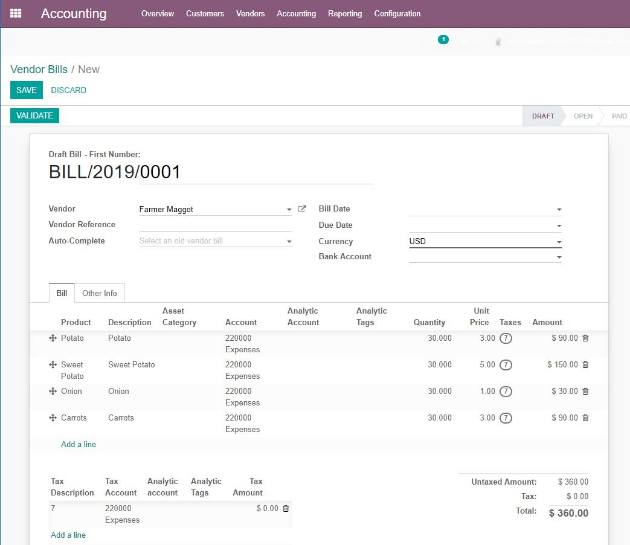
Management accounting transactions are managed effectively and professionally
-
Manage revenue and budgets tightly.
-
Manage general ledger entries.
-
Manage asset entries effectively.
-
Enter deferred revenue.
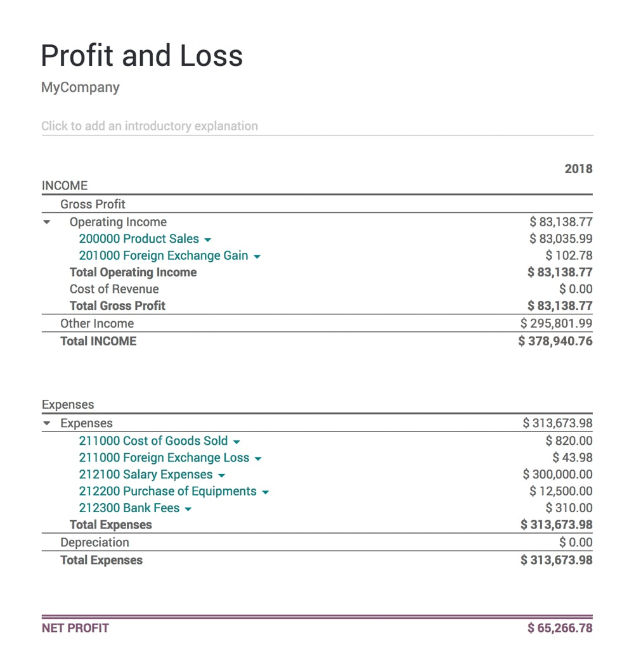
– Fast, accurate synthesis and reporting:
-
Profit and loss reports and VAT declaration reports.
-
Prepare account balance sheets, cash flow statements, and general journals.
-
Budget reports and profit margins for goods and services.
-
Asset reports and deferred revenue reports.
– Flexible customization capability:
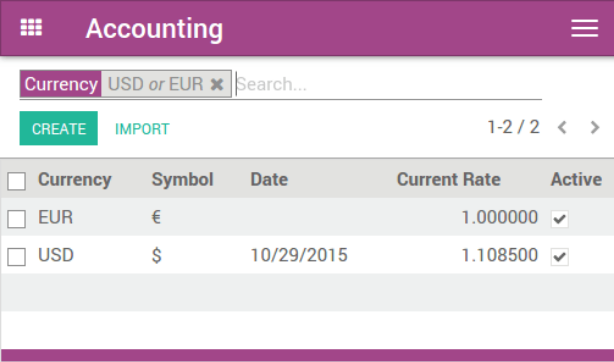
-
Set up the full system of accounts, currencies, and taxes.
-
Set up payment terms professionally and track payments tightly.
-
Set up financial positions, bank accounts, and the general ledger.
-
Set up analytical account groups and payment service providers.
– Powerful application integration: modules and applications such as Human Resource Management, Retail Management, CRM Management, Accounting Management, and more are integrated on a single platform.
Conclusion
Those are the fundamental and in-depth information and knowledge about bookkeeping, helping students and candidates pursuing economics-finance and accounting careers to learn and grasp it easily in the course of their work. We hope the information we provide will help you do your job well. If you have any further questions, leave a comment below this article so SimERP can answer you promptly!
Related articles
Bài viết liên quan

25 tháng 10, 2026 · 3 phut doc
2024年网页设计趋势预测如何? | Wotech Electronics
关于 2024 年网页设计趋势——步入 2024 年,年初正是我们为新事物预留时间的时刻。这也非常适合设计师群体唤醒我们内心的"艺术之魂"。闲话不多说,快来和 Markdao 一起浏览 2024 年的 UX/UI 设计趋势吧,说不定您就能为自己接下来的网页设计项目"迸发"出一个绝妙的点子呢!

25 tháng 10, 2026 · 1 phut doc
什么是网站(Website)?网站的详细定义及其带来的商业价值
什么是网站(https://www.markdao.com.vn/blog/website-la-gi)——这个问题或许已经无需定义,因为在如今这个信息时代,网站对每一家企业而言都是不可或缺的组成部分。正是网站帮助用户更近距离地接触企业所提供的产品和服务,从而提升经营效益。此外,要在当今竞争如此激烈的环境中求发展,网站是一个重要因素,它将带你走向品牌与销量上的双重成功。

25 tháng 10, 2026 · 1 phut doc
什么是SEO标准网站?一场"打赢"Google SEO标准的战役 | Wotech Electronics
99%的用户在购买前会先搜索信息,73%的用户只会访问排名前10的网站,并认定它们是值得信赖的品牌……在数字营销爆发的时代,这些数字有力地印证了SEO标准网站的重要性。然而,许多人对什么是SEO标准网站(https://www.markdao.com.vn/blog/huong-dan-toi-uu-seo-website-chuan-seo-on-page)仍然相当模糊,并未真正理解。达到SE…