Accounting Information System: Concept, Components, and Role in the Enterprise
Vũ Khôi
Tác giả tại Wotech Electronics Blog
Accounting Information System: Concept, Components, and Role in the Enterprise
Vũ Khôi
Author at Wotech Electronics Blog
Today, with the relentless advance of science and technology, the most advanced technologies have been applied to every field of human activity — from production and business to monitoring and management. Technology helps people manage work more efficiently and quickly, while providing timely and reliable information. Accounting is one of the most important parts of the economic-financial management system, playing a major role in controlling, managing, and running a company's production and business activities, especially in the present period.
That requires businesses to apply technology to organizing their accounting work, with the aim of creating an effective accounting information system. Such a system must be rational and rigorous, providing truthful, timely, and reliable information with the most advanced processing techniques. This not only contributes to increasing competitiveness but also improves operational efficiency in the enterprise. It is an inevitable development trend that fits the reform process, especially in the current period of economic integration.
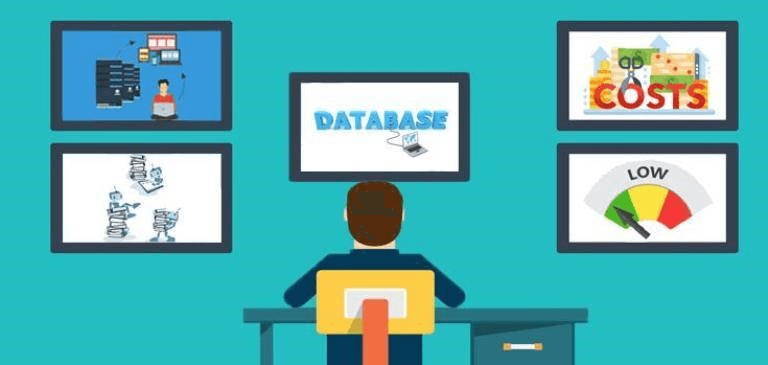
In this article, let's explore with SimERP the concept of the accounting information system and how to develop an accounting information system in the enterprise.
What is an accounting information system?
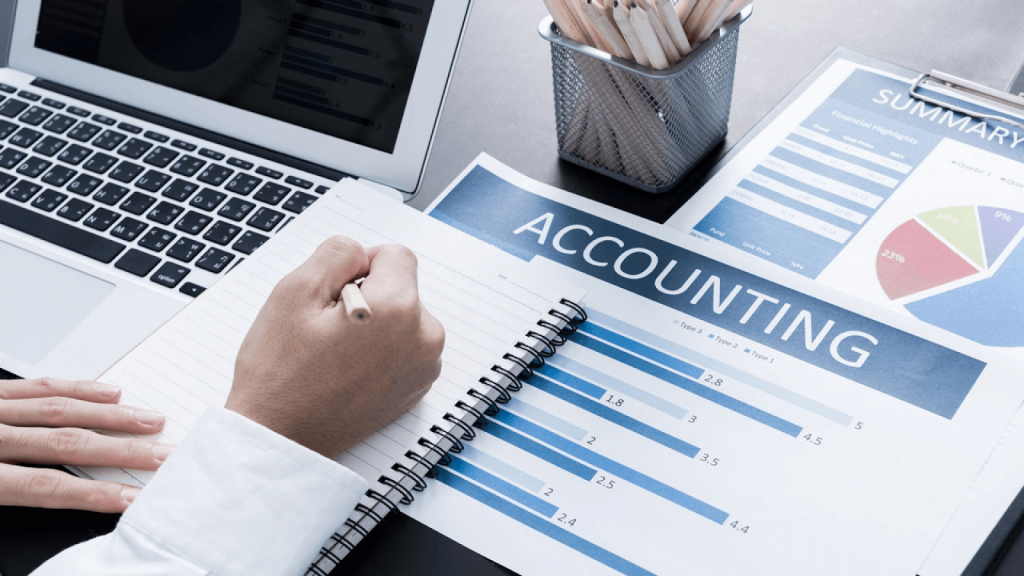
An accounting information system (AIS) is the structure that an agency or business uses to collect, compile, manage, store, process, retrieve, and report its financial and accounting data. An accounting information system can be used by accountants, consultants, business analysts, management, chief financial officers (CFOs), auditors, regulators, and tax authorities.
Accountants are deeply trained to work with the AIS, ensuring the highest accuracy in the company's financial transactions and record-keeping activities, as well as ensuring financial data is always available for use while preserving the original data.
Components of an accounting information system
A basic accounting information system typically consists of four main components: people, procedures and instructions, data, and software. Let's examine each component in detail below.

People
The people in an accounting information system are simply the system's users. The specialists who need to use the system in an organization include: accountants, consultants, business analysts, managers, chief financial officers, and auditors. The accounting system helps different departments in the business coordinate smoothly.
With a well-designed accounting information system, every employee in the organization can be authorized to access the system and receive the necessary information. The system also simplifies providing information to parties outside the organization when needed.
An accounting information system should be designed to meet users' needs — effective, easy to use, and requiring minimal upgrades.
Procedures and instructions
The procedures and instructions of an accounting information system are the methods it uses to collect, compile, store, manage, retrieve, and process data. These methods all operate automatically. Data can come from both sources: internal (for example, employees within the company) and external (for example, customers' online orders).
These procedures and instructions are encoded into the accounting information system through documentation and training. For maximum effectiveness, the procedures and instructions must be followed consistently.
Data
To store information, the accounting information system must have a database structure such as Structured Query Language (SQL), the computer language commonly used for databases. The system will also need various inputs for entering data for each system user, as well as different output formats to meet the needs of different users and different types of information.
The data held in the system is all the financial and accounting information relevant to the business's actual operations. Any business data that affects the company's financial system must go into the system.
The type of data in the accounting information system depends on the size and type of business, but it can include the following kinds of data:
-
Sales invoices
-
Customer payment reports
-
Business analysis reports
-
Purchase requisitions
-
Vendor invoices
-
Check registers
-
The general ledger
-
Inventory data
-
Payroll information
-
Timesheets
-
Tax information
These types of data can then be used to prepare accounting reports. Storing all this data in a single place — within the accounting information system — facilitates record keeping, analysis, reporting, auditing, and decision-making. For data to be truly useful, it must be complete, accurate, and reliable.
Software
The software of an accounting information system consists of the computer programs used to store, manage, retrieve, process, and analyze the company's financial and accounting data. Before computers, these were manual, paper-based systems; today, however, most businesses use accounting software as the basis for the system.
Functions of the accounting information system
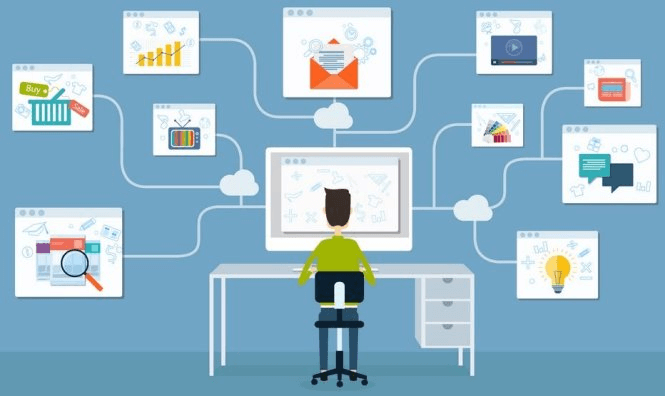
– Collecting and storing data on the company's production and business activities.
– Processing and providing useful information to stakeholders, such as:
-
Providing financial reports to parties outside the business (customers, investors, auditors).
-
Providing accurate, timely, and reliable information to support planning.
-
Providing useful information for managing, checking, and controlling plan execution.
-
Providing fast and accurate information for daily business operations.
– Supporting control activities within the enterprise.
-
Controlling compliance with the company's production and business procedures.
-
Protecting the company's physical assets and intellectual property.
-
Controlling information-related activities in the company to ensure they are always processed accurately and promptly.
The accounting information system in the enterprise
Today, building and developing management information systems in general — and accounting information systems at Vietnamese businesses in particular — still faces many difficulties. Designing information systems in the Industry 4.0 era must be done and refined quickly to strengthen management effectiveness and raise businesses' competitiveness.
Designing an accounting information system in the enterprise
To design an accounting information system in your business effectively, you can refer to our suggestions below.
First, the business must organize its accounting apparatus by combining financial accounting and management accounting. For the accounting information system to operate effectively, businesses need to organize a management accounting apparatus combined with financial accounting within the same department. However, this combination still requires clear separation and assignment of duties regarding content, scope of information provided, and the relationship between management accounting and financial accounting, and between the detailed accounting section and the consolidated accounting section, to avoid overlaps and delays in processing and providing information.
Second, a document flow process for accounting records must be established. The business needs to redesign its document flow process to serve the accounting information system effectively. First of all, additional production documents need to be created to serve cost management and cost calculation in accounting. At the same time, specify roles such as process author, approver, and reviewer. In addition, the content should cover: the catalog of documents in use; rules on document circulation time and deadlines; and the deferred payment process.
Third, develop the chart of accounts toward providing management information. Based on the accounting system of accounts issued by the Ministry of Finance, the business can redesign its accounting information system table to track fixed costs, variable costs, and management codes suited to its information management needs.
Fourth, build the accounting books toward providing information for management. The detailed ledgers, consolidated general ledger, balance sheet, and business performance reports of the accounting book system all serve management accounting. The accounting information system is not required to follow a prescribed format. Based on management purposes, the business will create a system of books to track and provide timely, accurate information to managers.
Fifth, organize the reporting system. The reporting software in the accounting information system is designed, created, and presented flexibly to suit users' needs.
Based on the scale, type of business, and managers' requirements, the following types of reports are needed: information and reports serving managers' planning function; serving managers' inspection work; and information and reports serving managers' decision-making activities.
Applying information technology is the key that helps businesses analyze and quickly process the information collected, as well as produce timely reports, ensuring the usefulness of the information.
Controlling the accounting information system

To ensure the security of the information system in general — and the accounting information system in particular — the business needs to focus on implementing the following measures:
First, protect the accounting information system from unauthorized access: illegally penetrating accountants' computers and the servers holding accounting software and data can create many risks for the business. Therefore, protecting the company's data system from unauthorized access is the first measure that should be prioritized.
Second, monitor system access activity: in addition to preventing illegal access, the business must also track and monitor all access to the accounting information system. To do this, the company can use access logs — usually part of the operating system's security module — to track and control login times, the type of access request, the access code, and the data accessed.
Third, protect against unauthorized physical intrusion into processing equipment: to minimize the risk of losing computer equipment or having information leaked or sabotaged, strictly controlling physical access to the company's computer systems is essential.
Fourth, use advanced technologies to prevent data sabotage: in practice, data security risks are quite closely related to theft or alteration of data using technological techniques. Therefore, to secure the accounting data system, the business also needs to use corresponding technologies to prevent data sabotage.
Fifth, ensure security for storing accounting data: measures to secure the storage of accounting data include storage devices such as floppy disks, hard drives, compressed disks, CDs, USBs, or magnetic tape, as well as data backups.
Sixth, ensure security for data transmission: businesses need to monitor the computer network closely to detect security weaknesses early, and thereby strengthen maintenance and data backup activities… to reduce risks and threats.
Seventh, plans for recovering and rebuilding lost data: businesses need a prevention and recovery plan built on data backups. Especially important data should be kept somewhere safe, as far outside the business as possible. At the same time, the company should install software applications that allow the fastest recovery of lost data.
The role of the accounting information system

Storing and processing data
Science and technology keep advancing, driving the strong growth of other economic sectors. That has posed an enormous challenge to businesses in storing and managing financial and accounting information. At this point, the system's role is maximized. The accounting information system takes on the task of storing and processing information to deliver the most useful and reliable information for the company's strategic decisions.
A bridge between the operating system and the management system
The accounting information system is developed as a bridge between an organization's management system and its operating system. Beyond its main role of storing and processing information, the system is also tasked with statistical consolidation to produce accurate accounting reports, allowing businesses to handle accounting work quickly and increase interactivity in the workflow.
Saving time and costs
The accounting information system contributes significantly to saving costs and time for the businesses that use it. When using the system, managers avoid unnecessary errors in storing information. This partly limits potential losses and helps the company avoid serious financial damage.
In short, the accounting information system has partly solved three major problems of today's private enterprises. First, it supports and raises the business's competitiveness; second, it supports business decision-making; and finally, it supports operations and production and business activities, helping the company grow ever more prosperous.
Conclusion
Those are the compiled insights on the accounting information system in the enterprise. We hope that through this article, readers have grasped the role of the AIS in organizing, managing, and running a business. If you have any further questions, leave a comment below this article and SIMERP will answer you promptly!
Related articles
Bài viết liên quan

25 tháng 10, 2026 · 3 phut doc
2024年网页设计趋势预测如何? | Wotech Electronics
关于 2024 年网页设计趋势——步入 2024 年,年初正是我们为新事物预留时间的时刻。这也非常适合设计师群体唤醒我们内心的"艺术之魂"。闲话不多说,快来和 Markdao 一起浏览 2024 年的 UX/UI 设计趋势吧,说不定您就能为自己接下来的网页设计项目"迸发"出一个绝妙的点子呢!

25 tháng 10, 2026 · 1 phut doc
什么是网站(Website)?网站的详细定义及其带来的商业价值
什么是网站(https://www.markdao.com.vn/blog/website-la-gi)——这个问题或许已经无需定义,因为在如今这个信息时代,网站对每一家企业而言都是不可或缺的组成部分。正是网站帮助用户更近距离地接触企业所提供的产品和服务,从而提升经营效益。此外,要在当今竞争如此激烈的环境中求发展,网站是一个重要因素,它将带你走向品牌与销量上的双重成功。

25 tháng 10, 2026 · 1 phut doc
什么是SEO标准网站?一场"打赢"Google SEO标准的战役 | Wotech Electronics
99%的用户在购买前会先搜索信息,73%的用户只会访问排名前10的网站,并认定它们是值得信赖的品牌……在数字营销爆发的时代,这些数字有力地印证了SEO标准网站的重要性。然而,许多人对什么是SEO标准网站(https://www.markdao.com.vn/blog/huong-dan-toi-uu-seo-website-chuan-seo-on-page)仍然相当模糊,并未真正理解。达到SE…