
What Is Customer Insight? How to Identify Customer Insight
Vũ Khôi
Tác giả tại Wotech Electronics Blog
What Is Customer Insight? How to Identify Customer Insight
Vũ Khôi
Author at Wotech Electronics Blog
To launch suitable products and services and an effective approach, businesses need a deep understanding of customer insight. However, finding and identifying customer insight is by no means easy, because it is a process in which the business must collect data, analyze it, and draw sound conclusions about customers' underlying truths.
In the article below, SimERP will help you understand what target customer insight is and how to build customer insight correctly.
What is customer insight?

Customer insight refers to customers' daily behaviors, habits, and tendencies, based on data collected from them. A business must collect, study, and analyze information and data about customers and the market to draw accurate conclusions about target customer insight. Based on this, the company can formulate suitable marketing strategies, make product changes that bring new benefits to customers, and improve its business operations.
Characteristics of customer insight
It is the result of a research process
Producing customer insight is not simple — it clearly cannot rest on gut feeling, but must be based on a research process using concrete data. Typically, to clarify and identify target customer insight, a business must have a dedicated research team to collect and study data. Only from the study's results can the business derive customer insight and use it as the "guiding compass" for strategies to change products, expand markets, or market new customer segments.
It is drawn from multiple types of data

To reach accurate conclusions about customer insight, a business must rely on various kinds of data. Marketers must turn this data into useful figures, exploit and analyze it, and thereby find insight and propose suitable solutions. In addition, marketers must combine multiple data sets. Today, several types of information are commonly combined and applied to derive customer insight, such as: market trends, customer surveys, customer feedback and reviews, data on consumer behavior, and more.
It drives practical actions
From customer insight, a business will know how to propose suitable plans to change products and argue its case more persuasively. For example, suppose your company sells skincare products and notices a recent trend: female office workers over 24 worry about premature aging due to long hours in front of computers, work pressure, and late nights. From there, the company can launch anti-aging products suited to that age group and run ads tied to the problems this customer segment is facing, in order to reach these customers.
It can persuade customers to change their behavior
By understanding customer insight, a business can create advertising and communications that suitably influence customers' psychology and perceptions. For example, if a business sells acne treatment products, it can release educational ads that briefly and concisely explain acne and the appropriate treatments. Customers then understand the different types of acne better and choose your products sensibly for their skin condition.
The role of customer insight in a business's operations and marketing
Increasing competitive advantage and winning priority
Researching customer insight helps a business grasp customer psychology, anticipate future customer needs, and read market trends. Based on the analytical and research results, the company can exploit the market effectively. The business can launch suitable products and reach and serve customers better. This earns it a competitive advantage and priority standing in the market.
Improving the customer experience
Understanding customer insight gives a business directions and approaches suited to its target customers. Customers then have wonderful experiences when using your products and services.
For example, Wayfair, an online home goods retailer, studied detailed customer information and dug deep into their insight. It found that customers want products and services that best fit them, quickly and visually. The company therefore developed a user-experience app that lets customers photograph and share the products they like, so the company can recommend more of those products. With this data, Wayfair can fully analyze and deliver products that match customer needs.
Adapting to market changes
The market changes constantly, requiring businesses to adapt and adopt suitable strategies. Analyzing customer insight helps a business anticipate shifts in purchasing behavior and customer needs, foresee market movements, and devise suitable plans to adapt. Conversely, if it cannot keep up with the market, the product becomes outdated, fails to meet customer needs, and the approach becomes far less effective.
How to build and develop customer insight
Step 1: Build a customer insight research team
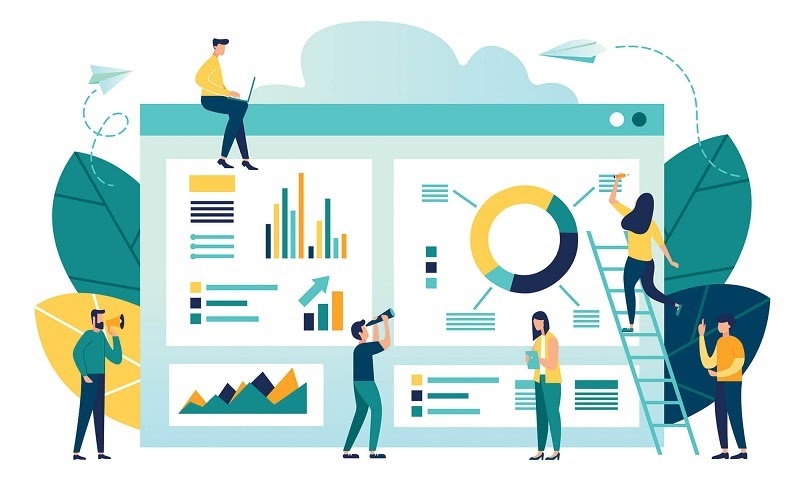
A business needs a capable, specialized team to collect, analyze, and accurately identify customer insight. Beyond skills in collecting, analyzing, and researching data, insight team members must have open and highly creative minds. They are the ones who decide which data is important to study, and they must work with customers to formulate questions for data collection. The necessary functions within a customer research team include:
-
Collecting information about customers and the market.
-
Researching customer information.
-
Analyzing customer information.
Step 2: Answer the questions needed to build customer insight
To build customer insight, marketers must answer the following 6 questions:
WHY – Why identify customer insight
With this question, the business needs to clarify the objective of running this customer insight research plan.
-
What is the desired outcome of the customer insight research plan?
-
What will the customer insight data be used for — launching and developing a product, or supporting the marketing and advertising of an existing product?
WHEN – When to build customer insight
The business needs to build a specific roadmap for each distinct task, as well as measure resource and risk factors throughout the project. From this plan, the business can closely monitor and manage the project, and prepare solutions for problems that arise. This helps ensure the customer insight identification plan runs more smoothly.
-
When will data collection start? And when will the data be analyzed?
-
When will the project be completed?
-
When will results be delivered to the relevant departments?
-
When will that data be applied to Marketing?
WHAT – What type of data to collect?
With this question, you need to clarify the types of data to collect and analyze, and also identify the problems you must solve and the difficulties that arise during the project.
-
What form of data do you need to collect and analyze?
-
Which data do you need to classify and clarify?
-
What difficulties and problems arise when analyzing the data?
HOW – How to find customer insight?
After clarifying the subjects, timing, and types of data to investigate, marketers must know how to collect and analyze customer data.
-
How will the data be collected? What data sources can be tapped?
-
What method will be used to analyze customer data? What tools will be used to analyze the data?
WHO – The research subjects
Companies usually have many different audiences. Therefore, to ensure accurate customer insight research, the business needs to classify and clearly and specifically define its target audience.
-
Who is this customer insight research aimed at?
-
What are the characteristics of the customer group you need to study? (Age, gender, education level, region, etc.)
Step 3: Build a customer journey map
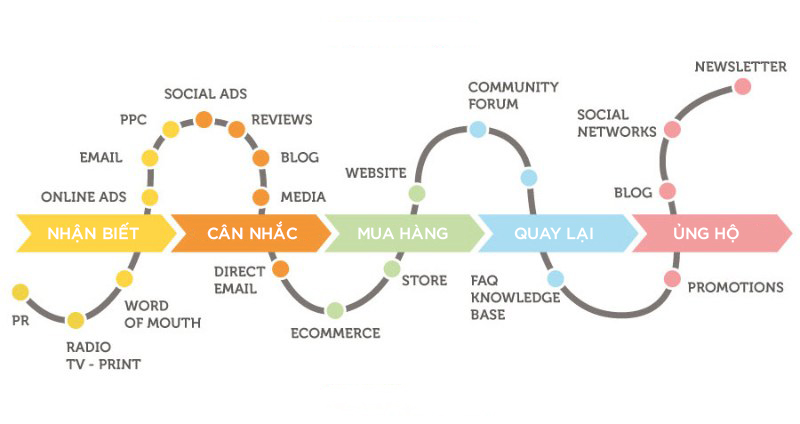
The customer journey simulates the process a customer goes through in experiencing a product or service over time — from the stage where the customer encounters and interacts with the product, researches and considers it, all the way to buying, using it, and recommending it to people around them.
To build a customer journey map, you need to draw up a customer persona, list the touchpoints, and identify the factors the business wants to learn about customers. Today there are many different types of customer journey maps, such as the Empathy Map, Experience Map, Future State, and Service Blueprint; the business needs to determine which map is suitable to apply.
Step 4: Collect data on customer insight
Once the customer journey is known, marketers proceed to collect customer data. Today there are two types of business data: primary data and secondary data. Primary data is data that does not already exist and must be collected and compiled by the business through surveys, interviews, or experiments. Secondary data is data collected by researchers and market analysts for their own purposes. Businesses can find these data sources online, in research papers, in books, or in other documents, and use them for business purposes.
Step 5: Analyze and study the data

After collecting and compiling figures from various sources, marketers must devise solutions to analyze the data and classify it into groups. The person performing the work must use different analytical methods and models, and use tools to calculate and illustrate the data in various types of tables and charts. Through this, they analyze consumer behavior and derive customer insight.
Step 6: Identify customer insight
From the results of analyzing and studying the data, marketers will have an accurate basis for deriving customer insight. However, note that before applying this insight to any product change, advertising, or customer approach strategy, you need to verify whether your conclusions are correct. To avoid risk, you can test the insight with smaller plans or campaigns to check the accuracy of the research results.
At that point, the business will need a tool to track customer behavior and manage customer relationships — a CRM such as SimCRM. With this software, the business knows which stage each customer is in, tracks potential customers, nurtures clients, and obtains the most accurate forecasts. Currently, the SimCRM package offers businesses a free 30-day trial. Sign up now to experience the software!
Methods for finding customer insight
The Truth – Tension – Motivation model
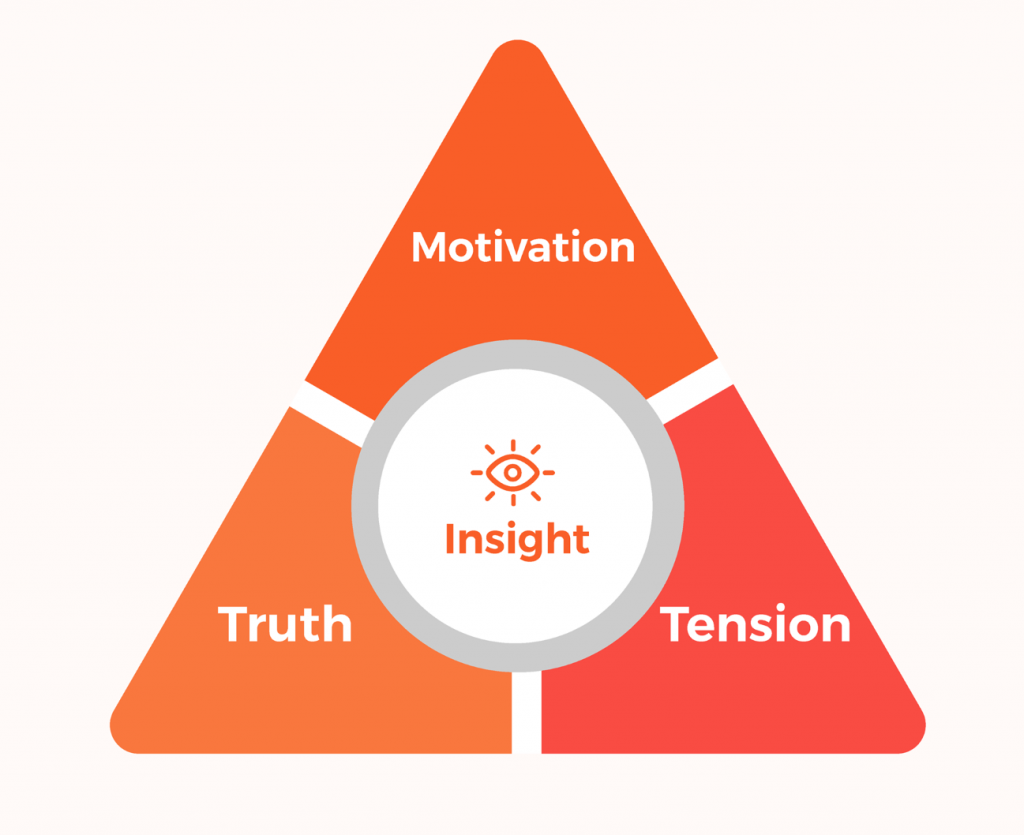
Every consumer has different secrets buried deep inside. A good insight must express the following three ideas:
-
An undeniable truth (truth)
-
A strong motivation (motivation)
-
A contradiction without an answer in the consumer's mind (tension)
Note that an insight does not need to present both motivation and tension — usually only one of the two. What matters, whether it is motivation or tension, is that it contains the problems or "pain points" the customer faces that your product or service must solve.
For example, the insight behind the "OMO – Dirt is good" campaign shows that mothers know getting dirty gives their children new lessons, but mothers dread washing those stains.
-
Truth: Children are active and love activities and games, even though their clothes get dirty.
-
Tension: Mothers dread having to wash the stains out of clothes.
-
Motivation: Mothers want their children to grow up and learn new lessons.
The 3C model
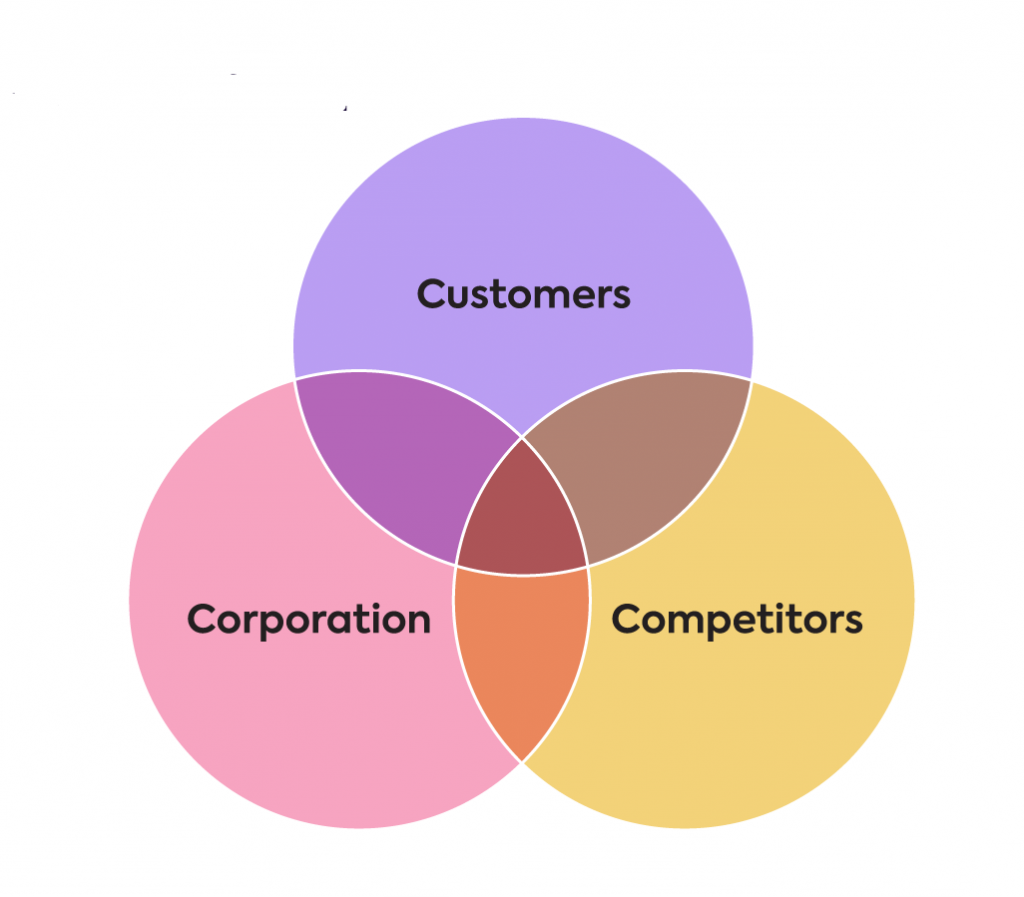
Insight is built on three elements: Consumer Truth, Company (Corporation) Truth, and Competitor Truth. Specifically:
-
Consumer Truth: The perceptions, thoughts, desires, and problems of consumers that the company can solve.
-
Company Truth: The strengths and solution approaches of the business.
-
Competitor Truth: The nature and characteristics of competing businesses in the industry.
For example, in Starbucks' 3C model, customer insight is built on:
-
Customer: Customers want not just to drink coffee, but also to have their own space to enjoy it.
-
Competitor: It is also high-quality coffee, but not every competitor can create an impressive, comfortable, personal space for customers to enjoy coffee.
-
Company: Starbucks' strengths include its store spaces, product quality, and experience in multinational expansion.
The 3D model
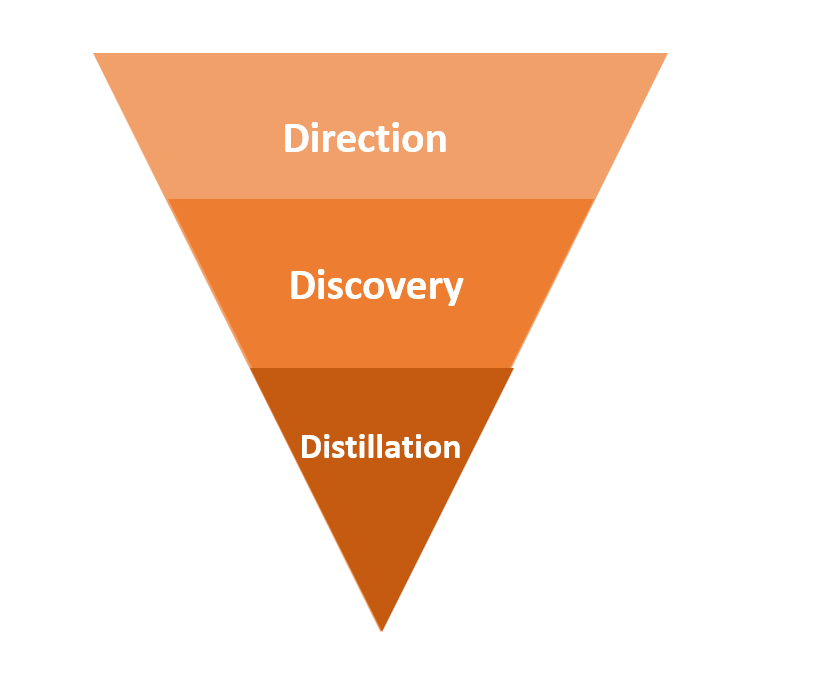
The 3D model is a process for understanding customer insight, comprising the following 3 steps:
-
Direction (defining the research scope): at this step, marketers must clearly understand and define the subjects and objectives of the research.
-
Discovery: the practitioner explores and collects information about the subjects and the target market. You need to know what customers think of the business, the relationship between you and your customers, customers' consumption habits, and more.
-
Distillation: after obtaining the information, the business distills which information is useful and usable to draw accurate conclusions about customer insight.
Interim conclusion
Identifying and building customer insight is essential for every business so that it can offer services and products suited to customers and take the right approach. In doing so, the business will attract more customers and earn more revenue. We hope that through this article, SimERP has helped you understand customer insight somewhat, along with the methods for finding insight successfully.
Related articles
Bài viết liên quan

25 tháng 10, 2026 · 3 phut doc
2024年网页设计趋势预测如何? | Wotech Electronics
关于 2024 年网页设计趋势——步入 2024 年,年初正是我们为新事物预留时间的时刻。这也非常适合设计师群体唤醒我们内心的"艺术之魂"。闲话不多说,快来和 Markdao 一起浏览 2024 年的 UX/UI 设计趋势吧,说不定您就能为自己接下来的网页设计项目"迸发"出一个绝妙的点子呢!

25 tháng 10, 2026 · 1 phut doc
什么是网站(Website)?网站的详细定义及其带来的商业价值
什么是网站(https://www.markdao.com.vn/blog/website-la-gi)——这个问题或许已经无需定义,因为在如今这个信息时代,网站对每一家企业而言都是不可或缺的组成部分。正是网站帮助用户更近距离地接触企业所提供的产品和服务,从而提升经营效益。此外,要在当今竞争如此激烈的环境中求发展,网站是一个重要因素,它将带你走向品牌与销量上的双重成功。

25 tháng 10, 2026 · 1 phut doc
什么是SEO标准网站?一场"打赢"Google SEO标准的战役 | Wotech Electronics
99%的用户在购买前会先搜索信息,73%的用户只会访问排名前10的网站,并认定它们是值得信赖的品牌……在数字营销爆发的时代,这些数字有力地印证了SEO标准网站的重要性。然而,许多人对什么是SEO标准网站(https://www.markdao.com.vn/blog/huong-dan-toi-uu-seo-website-chuan-seo-on-page)仍然相当模糊,并未真正理解。达到SE…