
What is Accounts Receivable/Payable Accounting? Bookkeeping and Journal Entries for Receivables and Payables | Wotech Electronics
Vũ Khôi
Tác giả tại Wotech Electronics Blog
What is Accounts Receivable/Payable Accounting? Bookkeeping and Journal Entries for Receivables and Payables
Vu Khoi
Author at Wotech Electronics Blog
Accounting is a critical function for every business when financial and accounting issues need to be resolved. A company whose finance and accounting apparatus works well, with clearly kept books and insightful analysis, empowers its leadership to make effective business decisions. And a strong accounting apparatus capable of supporting effective decision-making cannot do without an accounts receivable/payable accountant.
The concept of receivables and payables accounting
We first need to understand the concept of debt (công nợ). A company's receivables/payables are amounts still owed and carried over to the next period when the company enters into a payment transaction with an individual or another partner organization during the purchase and sale of products, goods, or services. Debt can arise when a customer makes a purchase but cannot yet pay the full amount due, or on the seller's side when, wanting to close the sale, the seller allows the buyer to purchase without paying immediately.
Receivables/payables is a subset of the general accountant's work. In small and medium-sized companies, the general accountant will include debt tracking among their duties; however, in larger enterprises this area is handled by dedicated individuals. The person responsible for tracking and bookkeeping the company's receivables and payables is called a receivables/payables accountant. Let's explore with SimERP, in depth, what this job involves day to day.
The work of a receivables/payables accountant
The accounting staff member handles tasks revolving around managing and tracking customer debt, receivables and payables, the cash fund book, payables, bank deposits, and more. The receivables/payables accountant records and settles amounts with customers, and therefore works not only with customers but also with many related departments. Specifically:
Managing and securing documents
-
Before processing payment and receipt procedures, the receivables/payables accountant must check and ensure the documents are complete and accurate.
-
To provide the basis for the cashier to disburse money, the accountant must prepare receipt and payment vouchers according to the prescribed forms.
-
Hand over the original documents (receipt and payment vouchers) to the relevant department.
-
Store, preserve, and bundle documents by transaction, serial number, and date.
-
Receive documents for payment, such as copies of invoices, warehouse receipt notes, warehouse issue notes, and so on.
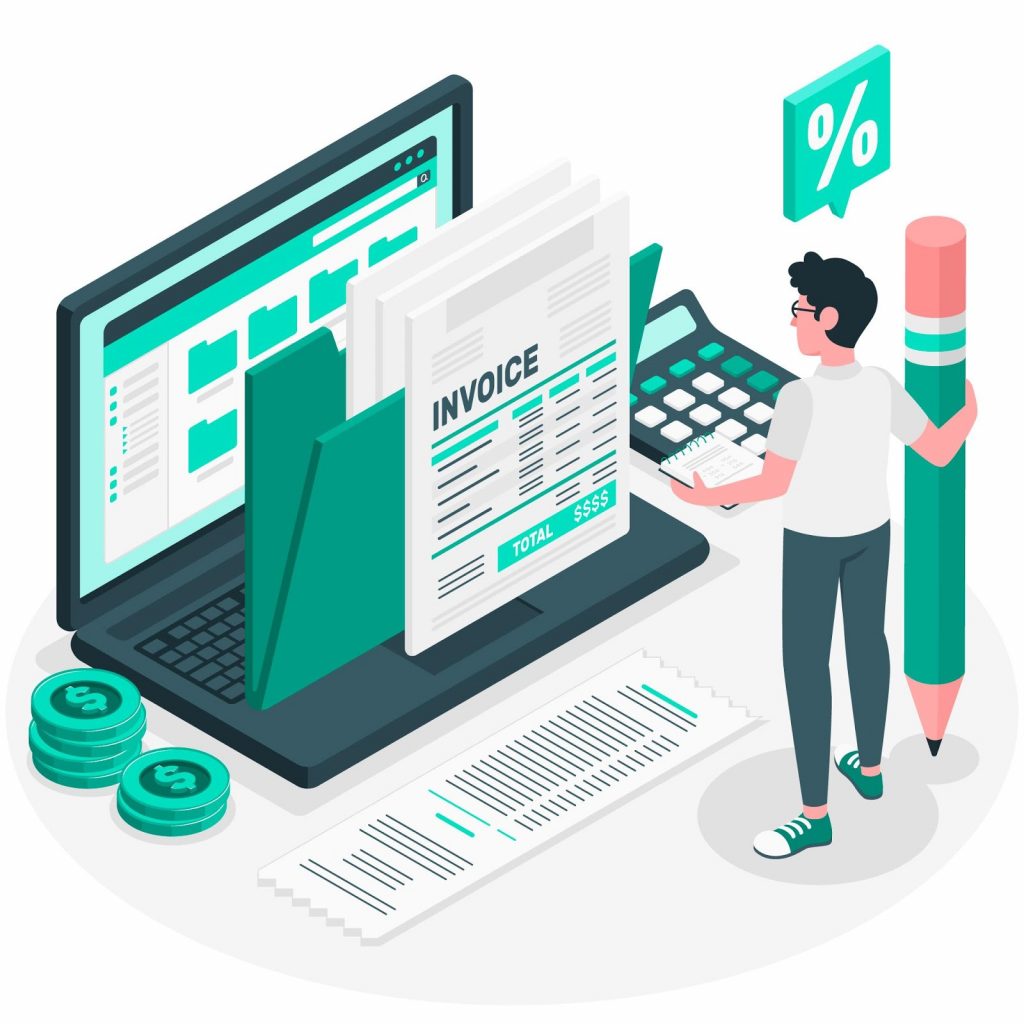
Tracking, reporting, and reconciling balances
-
Track internal advances (temporary payments).
-
Print fund reports and the cash fund book.
-
Reconcile and verify the end-of-day cash balance with the cashier.
-
Reconcile the cash fund balance between the fund report and the company's general accounting.
-
Prepare vouchers for remitting to the state budget and the bank.
-
Track and prepare reports on the status of internal debt balances by counterparty, either on request or on a regular schedule (month, quarter, year), as required by the Board of Directors, the Chief Accountant, or the Head of Finance (with reconciliation against the debt balances in the general ledger).
-
Calculate the debt arising each month, then prepare payment notice letters (for both internal parties and customers) each month between the 5th and the 15th (updated with any increases or decreases in balances during the period). Handle cash receipt-and-payment accounting and cash advances (for advances not part of projects tracked by the project accountant), reconciling the figures weekly.
-
Each month, reconcile with the local/site accountants on the debt status of both internal parties and customers.
-
For receivables and payables: since the accountant handles customer receivables, they should also prepare a payment schedule with customers.
While handling this work, the accountant can also propose solutions to other departments:
-
Propose to the department head how to handle payment cases where issues arise.
-
Present opinions on more effective and optimal debt collection measures. A receivables and payables accountant is needed here. Proactively remind parties to settle outstanding debts.
-
Advise the department head on the extent of customer debt and on payment schedules.
How to make journal entries for receivables and payables
Based on the sales invoice
Debit Account 131:
Credit Account 5111: Revenue from goods sales
Credit Account 5112: Revenue from finished product sales
Credit Account 5113: Service revenue
Credit Account 3331: Output VAT
Based on the receipt voucher
The receipt voucher must show all required information: the depositor, address, and reason for the payment, and it must bear the customer's full signatures and seal so the accountant can book the entry — the accountant needs to carefully check the information on the payment voucher before passing it to the accounting department for booking.
Debit Account 111: Cash increases
Credit Account 131: Customer receivables — debt must be broken down by specific customer.
Based on the bank debit advice
This identifies which customer paid into the company's bank account. The document carries the full signatures of the bank where the company holds its account.
Debit Account 112
Credit Account 131.
Experience for receivables/payables accountants

Hard skills:
-
Understand how things operate and have experience working with Excel and office software, because a receivables/payables accountant must work in Excel constantly on tasks such as preparing declaration schedules and calculations.
-
Know how to record receivables/payables and have the professional competence to perform the tasks described above.
-
Have a strong analytical mindset in order to manage debt sensibly.
-
Be able to use accounting software effectively and productively.
Soft skills
-
Carefulness and attention to detail are essential not only in receivables/payables accounting but in accounting work in general. When it comes to being "meticulous" and "careful," accountants must be extremely detail-oriented, rechecking every number in the Excel file to make sure no errors slip through.
-
Strong communication skills. Because the nature of receivables/payables work involves dealing with external customers on collections and payments, the role calls for someone who can build relationships and is quick, honest, and considerate with customers.
-
Resilience under pressure. Given the nature of the job, there will be no shortage of moments when the receivables/payables accountant must take calls from other companies demanding payment, or keep calling customers who have not settled their debts in full, and so on.
Debt tracking software
As mentioned above, one of the things that makes a great receivables/payables accountant is knowing how to apply technology — that is, receivables/payables accounting software — to manage work better and achieve outstanding productivity.
Debt tracking software is enormously meaningful for accountants because it:
-
Helps business owners track and manage data in a single system, minimizing the problem of scattered data.
-
Reduces redundant paperwork while every order is recorded with detailed debt values and detailed statistics on the quantity and amount of each product.
-
Centrally manages customer and supplier debt information, making it easy to search and classify.
-
Confirms balances with customers and companies periodically and prepares debt reports. Using lookup codes, forms, and tools, it can generate payment schedule notices, especially through reminder settings.
-
Debt details can be tracked easily and in fine detail, because debt is managed by debt number and by the person responsible for it.
-
Limits errors and mistakes. The accountant can process and apply payments and receipts to match each debt, even when multiple transactions are made with the same customer.
Related articles
Bài viết liên quan

25 tháng 10, 2026 · 3 phut doc
2024年网页设计趋势预测如何? | Wotech Electronics
关于 2024 年网页设计趋势——步入 2024 年,年初正是我们为新事物预留时间的时刻。这也非常适合设计师群体唤醒我们内心的"艺术之魂"。闲话不多说,快来和 Markdao 一起浏览 2024 年的 UX/UI 设计趋势吧,说不定您就能为自己接下来的网页设计项目"迸发"出一个绝妙的点子呢!

25 tháng 10, 2026 · 1 phut doc
什么是网站(Website)?网站的详细定义及其带来的商业价值
什么是网站(https://www.markdao.com.vn/blog/website-la-gi)——这个问题或许已经无需定义,因为在如今这个信息时代,网站对每一家企业而言都是不可或缺的组成部分。正是网站帮助用户更近距离地接触企业所提供的产品和服务,从而提升经营效益。此外,要在当今竞争如此激烈的环境中求发展,网站是一个重要因素,它将带你走向品牌与销量上的双重成功。

25 tháng 10, 2026 · 1 phut doc
什么是SEO标准网站?一场"打赢"Google SEO标准的战役 | Wotech Electronics
99%的用户在购买前会先搜索信息,73%的用户只会访问排名前10的网站,并认定它们是值得信赖的品牌……在数字营销爆发的时代,这些数字有力地印证了SEO标准网站的重要性。然而,许多人对什么是SEO标准网站(https://www.markdao.com.vn/blog/huong-dan-toi-uu-seo-website-chuan-seo-on-page)仍然相当模糊,并未真正理解。达到SE…