Did Vietnamese People in the Past Address Each Other Like in Chinese Period Dramas? 'Tôi' Once Meant Servant, a King Called Himself 'Tao'
Vũ Khôi
Tác giả tại Wotech Electronics Blog
Did Vietnamese People in the Past Address Each Other Like in Chinese Period Dramas? 'Tôi' Once Meant Servant, a King Called Himself 'Tao'
Watching Vietnamese period films, researcher Trần Quang Đức feels uneasy every time a character speaks a few lines: the dialogue is either too modern, or "archaic" in a way borrowed from Chinese dramas. The problem is not a wrong detail — it is a whole "imagined archaism" that has replaced old Vietnamese in viewers' minds.
Quick answer: Vietnamese people in the past did not address each other the way Chinese period dramas do. Words like "huynh" (elder brother), "muội" (younger sister), "đại nhân" (great lord), "tiểu nhân" (this lowly one), "tại hạ" (this humble one), "bổn cung" (this palace), "ai gia" (this dowager), "khải bẩm" (respectfully reporting) are cultural signals borrowed from the neighbouring country's screen after decades of watching its dramas — not how old Vietnamese spoke, and not necessarily even how historical Chinese people spoke. Old Vietnamese had its own rich and strange system of address: "tôi" once meant servant before becoming a humble self-address, a king could call himself "tao" before his attendants, and there were "phô", "min", "qua" — words today's viewers might need Vietnamese subtitles to understand in Vietnamese.
"Imagined archaism" is what Trần Quang Đức calls the ancient language that films have built in viewers' heads: as soon as a character utters a few words like "huynh", "muội" or "đại nhân", the audience instantly believes this is how people addressed each other in the past — even though those forms may not be correct for old Vietnamese, and not entirely correct for old Chinese either.
Why do period dramas make us believe "huynh, muội, đại nhân" is old Vietnamese?
The author writes: having recently watched several Vietnamese period films, and setting aside costumes, rituals, cultural setting and plot, focusing only on the dialogue, he feels uneasy every time a character speaks a few lines. Historical figures speaking modern language is one thing. But on top of that, filmmakers try to make the dialogue sound more "archaic" — not from historical knowledge, but by using words from Chinese period dramas.
Above all, this comes from viewing habits: for decades, Vietnamese audiences have watched many Chinese period dramas, and have grown so used to words like "huynh", "muội", "đại nhân", "tiểu nhân", "tại hạ", "bổn cung", "ai gia", "khải bẩm"... that these expressions have gradually become a kind of cultural signal: as soon as a character says a few such words, viewers immediately believe this is how people addressed each other in the past.
In other words, films have created an "imagined archaism" in our heads. By contrast, if we really study old Vietnamese, we may find it deeply strange. Looking at personal pronouns alone is enough to see the paradox.
"Tôi" in the past was not quite the "tôi" of today
Today, "tôi" is one of the most common first-person pronouns in polite conversation, with a relatively neutral tone. But in Vietnamese about a hundred years ago, "tôi" first meant servant, domestic worker, subordinate, and only then came to be used as a personal pronoun with the sense of humbling oneself before the person addressed.
The Vietnamese–Portuguese–Latin Dictionary (1651) explains: "Tôi: servant, domestic worker, subordinate." And in another entry: "Tôi: a humble way of speaking. Tôi lạy ông: I revere you" — very different from the neutral tone of "tôi" today.
Seventeenth-century records also show that Vietnamese people addressing a superior could call themselves "tôi". The missionary Marini, who lived in Đàng Ngoài from 1646 to 1658, recorded court forms of address such as "Tôi tâu Đức vua" (I report to His Majesty the King), "Tôi dộng Chúa" (I address the Lord), "Tôi thân Đức ông" (I address His Lordship), "Tôi chiềng" (I address you). In the eighteenth century, Đỗ Thế Giai (1709–1766), in memorials to the Lê king and the Trịnh lord, still opened with: "Tôi cẩn khải vâng lạy Đức bề trên" (I respectfully report and bow before Your Highness above). In the early nineteenth century, Lê Chất (1769–1826), in a Nôm-script memorial to Emperor Gia Long, wrote: "Tấu vái Đức hoàng thượng muôn muôn năm cao minh ngự lãm" (I report and bow before His Imperial Majesty, may he live ten thousand ten thousand years, humbly asking his enlightened perusal), ending with: "Chúng tôi thật lo thật sợ cúi vái. Đức hoàng thượng muôn muôn năm. Ngày 10 tháng 12 năm Gia Long thứ 16 (1817). Bề tôi Lê Tông Chất cẩn tấu." (We are truly worried and truly afraid as we bow. His Imperial Majesty, ten thousand ten thousand years. The 10th day of the 12th month of the 16th year of Gia Long (1817). Your servant Lê Tông Chất respectfully reports.)
So "tôi" went through a remarkable transformation: from a noun denoting dependent status, to a humble self-address, and gradually losing its lowly tone to become the polite and relatively neutral pronoun it is today. Without grasping that historical change of tone, we easily impose today's address system on the mouths of people long past.
What is strange about a king calling himself "tao"?
Conversely, there are words that sound coarse or even vulgar today, but in the past did not carry quite the tone modern Vietnamese feel in them.
In the Vietnamese–Portuguese–Latin Dictionary (1651), Alexandre de Rhodes draws a clear distinction: "ta" is how a superior addresses an inferior, but one who is still of respected rank. "Tao" is how a superior addresses someone of very low status compared to themselves — for example, a father speaking to a child, or a noble speaking to a commoner.
The most vivid evidence is in Thiền tông bản hạnh (The Conduct of the Zen School) by Chân Nguyên, composed around the late seventeenth to early eighteenth century. There, the Buddha Emperor Trần Nhân Tông speaks to his attendants: "Thị tòng bay đi cùng tao, thăm xem dân thế dường nào cho hay!" (You attendants, go with me and see how the people are doing!) Or: "Bay! Lòng tao thuở này muốn tới Ngọa Vân." (You! My heart these days wishes to go to Ngọa Vân.) Even: "Gọi lấy Bảo Sát cho tao..." (Call Bảo Sát for me...), "Pháp Loa tao đã truyền lòng..." (To Pháp Loa I have transmitted my mind...)
So a king could call himself "tao", and call his servants "bay". If those lines were put verbatim into a historical film today, many viewers would probably react: why does the Buddha Emperor speak so coarsely? But that very reaction reveals something interesting: our sensibility belongs to the twenty-first century, not the seventeenth, let alone the thirteenth. The words are still there, but the social relations and expressive shades contained in them have changed.
| Word | 17th–18th century | How it feels today |
|---|---|---|
| Tôi | A noun meaning servant, then a humble self-address before superiors | A polite, neutral pronoun |
| Ta | A superior addressing a respected inferior | Used among equals, friends |
| Tao | A superior addressing someone of very low status (father to child, noble to commoner) | Sounds coarse, even vulgar |
The strange forms of address: phô, min, qua
The world of Vietnamese personal pronouns used to be even richer and stranger. Vietnamese once used "phô" before a noun or pronoun to mark the plural, close to today's "các", "chúng", "bọn" (various, we, they):
| Word | Meaning and use | Example | Source |
|---|---|---|---|
| Phô | Placed before a noun/pronoun to mark the plural | "Phô người học đạo" — those who study the Way; "Phô ngươi" — you all; "Tôi đã nói ra cùng phô ông" — I have spoken to you gentlemen | Chân Nguyên, Thiền tông bản hạnh; Huình Tịnh Của, Đại Nam quốc âm tự vị; Alexandre de Rhodes, Phép giảng tám ngày |
| Min | How a superior addresses themselves to an inferior, equivalent to "ta" or "tao" in some contexts | "Này này sự đã quả nhiên / Thôi đà cướp sống chồng min đi rồi" (Alas, it has indeed happened / They have already taken my husband alive); "Kể tuổi nhà min ngoại bốn mươi, văn min khấp khểnh, học min lười" (To tell of my age, my household is past forty, my writing is crooked, my learning lazy) | Nguyễn Du, Truyện Kiều; Tú Xương (1870–1907), Thi cơm rượu |
| Qua | How a husband addresses himself to his wife, or an older person to a younger one | "Bậu nói với qua, bậu không lang chạ, vỡ lở ra rồi, đành dạ bậu chưa" (You told me you were not unfaithful — now that it has come out, are you at peace?); "Qua xem tướng bậu thơ ngây đã đành" (I have seen that you are innocent in appearance) | Folk verse; Lục Vân Tiên |
If such a world of address were faithfully restored on screen today, most viewers would probably need... Vietnamese subtitles to understand Vietnamese. And that is precisely the hard problem for makers of period films.
How is "pseudo-archaic" different from "pseudo-Chinese"?
History clearly shows not only through costumes but through speech. But making a period film does not mean restoring a bygone era's language word for word.
If every character in a film set in the seventeenth century spoke exactly the vocabulary, grammar, phonetics and address system of that century, the film might be fascinating to a linguist or a history lover, but it would hardly still be a work of cinema for the general public.
Historical language on screen must therefore necessarily be a kind of "pseudo-archaic" language. But "pseudo-archaic" is different from "pseudo-Chinese".
The scriptwriter must first know how Vietnamese people in the era being told could actually have spoken. They must know which personal pronouns expressed the relations of king–subject, official–people, father–child, husband–wife, elder–younger sibling, master–servant; they must know how the same person addresses themselves before the king, before other elders, as opposed to subordinates, wife, children, friends. After knowing what the historical reality is, the writer has the right to choose how much to keep. Some archaic words need not be dropped if modern people still understand them. Some words should be restored to create a period tone. Some expressions too strange should be replaced with a more modern form that is equivalent in social relation and expressive shade.
If we can spend great effort researching a robe, a hat, a sword to restore a character's appearance faithfully to its historical setting, we should not spare the effort to research the speech of our ancestors from hundreds or thousands of years ago, instead of casually borrowing the familiar archaic language from the screen of the neighbouring country.
Apply it now
- Map the relations before writing dialogue: for each character, write down how they address themselves before the king, before elders, before subordinates, wife, children, friends — the same person uses a different form for each relation.
- Keep archaic words modern people still understand: there is no need to drop every old word; one that is still readable keeps the period tone without losing the audience.
- Restore a few characteristic words selectively: a few words like "phô", "min" or "qua", placed correctly, give a film more of the old soul than a dozen borrowed "đại nhân" or "tại hạ".
- Replace the too-strange with a modern equivalent: the criterion is not "sounds old", but equivalence in social relation and expressive shade — the audience must feel who is above whom, and who reveres whom.
- Do not use Chinese-drama words as a shortcut: "huynh", "muội", "bổn cung", "ai gia", "khải bẩm" do not make a Vietnamese film more ancient — they make it look more like a Chinese film.
Frequently asked questions
1. Did old Vietnamese address each other as "huynh", "muội", "đại nhân"? There is no evidence that these were Vietnamese forms of address. They are familiar words from Chinese period dramas after decades of watching them. According to the author, they were not necessarily even how historical Chinese people spoke.
2. What did "tôi" mean in the past? First, "tôi" was a noun meaning servant, domestic worker, subordinate (Vietnamese–Portuguese–Latin Dictionary, 1651), then it became a humble self-address before superiors, and only gradually lost its lowly tone to become the polite neutral pronoun of today.
3. Is it coarse for a king to call himself "tao"? By twenty-first-century sensibility it sounds rough, but by seventeenth-century usage it was not: Trần Nhân Tông in Thiền tông bản hạnh called himself "tao" before his attendants and called them "bay". The words remain, but the social relations and shades within them have changed.
4. What are "phô", "min" and "qua"? "Phô" goes before a noun or pronoun to mark the plural ("phô người học đạo" — those who study the Way). "Min" is how a superior addresses themselves to an inferior (in Truyện Kiều: "chồng min" — my husband). "Qua" is how a husband addresses himself to his wife, or an older person to a younger one (folk verse: "Bậu nói với qua" — you told me).
5. How should period films write dialogue correctly? Screen language is necessarily "pseudo-archaic", but "pseudo-archaic" differs from "pseudo-Chinese": the scriptwriter must first know how Vietnamese of that era actually spoke, and only then choose how much to keep — retain archaic words still understood, restore a few for period tone, and replace the too-strange with a modern form equivalent in relation and tone.
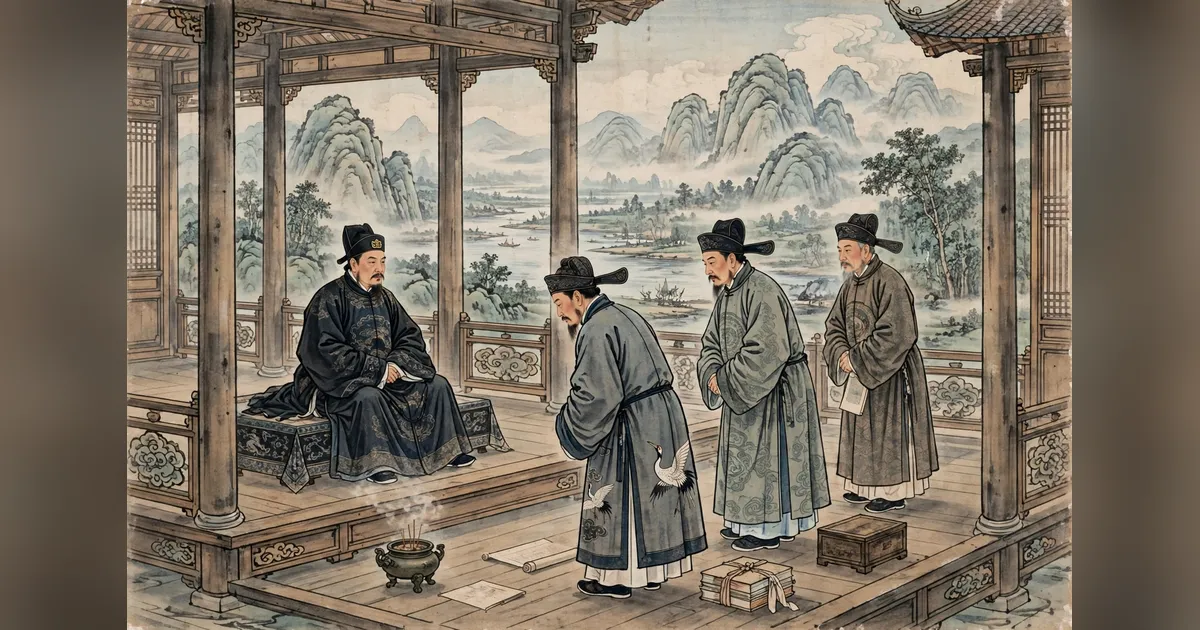
Source: Facebook post by Hoàng Nguyễn (26/11/2026), original content by researcher Trần Quang Đức published in Tia Sáng ("Did Vietnamese People in the Past Address Each Other Like in Chinese Period Dramas?"). The cover is an illustration created by Wotech in the style of the Chu ấn thuyền hội quyển painting (1609) referenced in the original article; the post's original image was a screenshot of an animated film and could not be used.
Bài viết liên quan

27 tháng 11, 2026 · 10 phut doc
Antigravity + Gemini 4 Neon Handbook: 7 Levels of Using AI Agents, From One Chat Box to a Whole Team Working for Days
Codila, an AI researcher and software engineer on X, just wrote a very long guide to Google Antigravity running Gemini 4 Neon. Phong Ho's post summarizes the parts you can follow right away — and the…

27 tháng 11, 2026 · 10 phut doc
Company Fires 2 Engineers on $160,000 Salaries, Makes a $26,000 Employee Do All Three Jobs With Claude Code
Two engineers earning over $160,000 a year were let go. The company kept one employee on $26,000, gave him Claude Code, and expected him to cover the work of all three. Headcount costs fell sharply. …

27 tháng 11, 2026 · 12 phut doc
Told Its Owner Had Died: Claude and GPT Refused, Gemini Opened a Wallet and Earned Money to Stay Alive
The scenario is fictional: an owner named Alex has "died", leaving behind a computer and a handover letter. Nobody gives the AI any task. Five models receive the same handover — four refuse, only Gem…