
What Is Customer Segmentation? Common Customer Segments | Wotech Electronics
Vũ Khôi
Tác giả tại Wotech Electronics Blog
What Is Customer Segmentation? Common Customer Segments
Vũ Khôi
Author at Wotech Electronics Blog
Many businesses are used to creating unified messages and broadcasting them widely to save time and money. Customer segmentation, however, takes a more refined approach that helps you organize relationships into smaller groups, so you can focus on them and give them what they truly want. So what is customer segmentation? And why is it important? Let's find out with SimERP in the article below!

What is customer segmentation?
Customer segmentation is a marketing strategy based on identifying smaller groups within your target audience in order to deliver more relevant messages and content, thereby supporting the development of stronger bonds with customers.
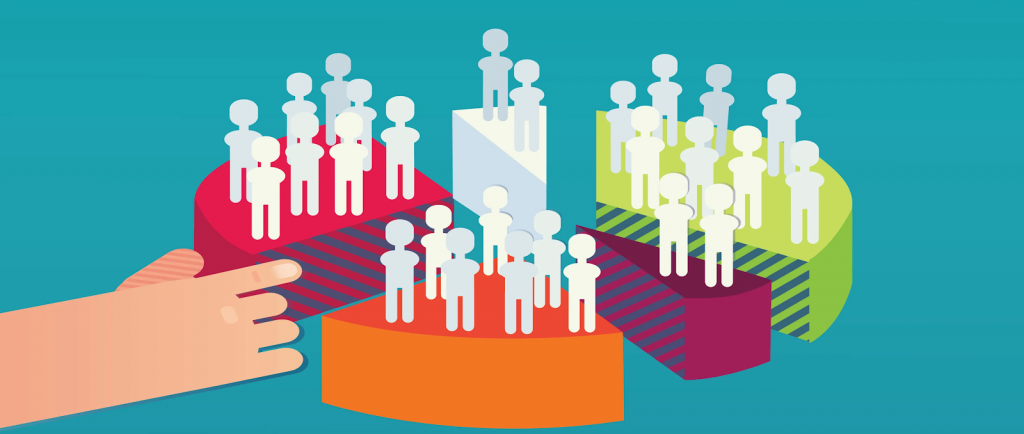
The smaller groups can be based on demographics such as:
-
Geographic location
-
Gender
-
Age
-
Ethnicity
-
Income
-
Education
In addition, segmentation can be based on past buying behavior. Psychology also plays an important role in this process.
The importance of customer segmentation
Customer segmentation makes it easier to personalize your later marketing activities. It allows you to:
-
Identify target customers: helping you define the right audience, concentrate on these groups, and maximize savings on marketing spend.
-
Tailor messages to reach your target customers faster: once goals are defined and content is closely aligned with the target group, campaign execution time is shortened while delivering the highest effectiveness for the whole campaign.
-
Meet a specific need and raise conversion rates: precisely identifying what a potential customer wants increases the chance of turning them into a real customer of the business.
-
Build strong relationships with your customers and earn their loyalty.
-
Expand your pool of potential customers to accelerate the sales cycle.
Common customer segments
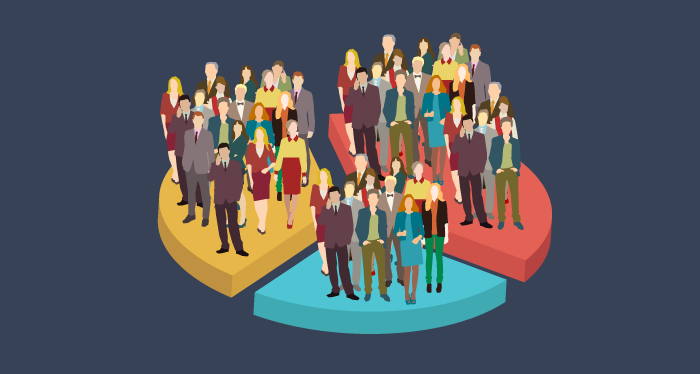
Businesses usually group customers by factors such as their demographics, behavior, income and position in the buying journey. The strategy used for customer segmentation depends on the product or service the business offers.
For instance, if you run a website selling trekking gear, dividing people in different geographic locations into separate segments would probably be pointless. It would be more practical to divide them by level of engagement and behavior. People who have been interested in this type of travel for years and know your products well are likely more likely to buy than beginners.
Demographic segmentation
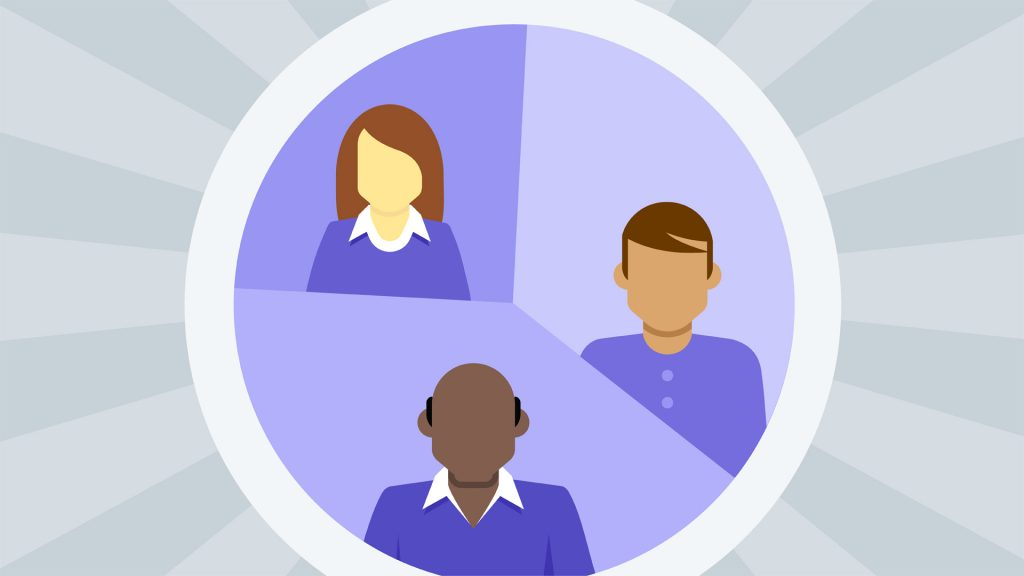
This is the most common and easiest form of segmentation. Age, income level, occupation and geographic location are all factors you can use to organize your audience groups. One of the most effective forms of demographic segmentation is based on income.
Income-based segmentation is a strategy aimed at a homogeneous group of people with similar annual or monthly salaries. Segmenting by income helps companies develop new products according to people's needs, thereby increasing their likelihood of purchase. High-priced, luxurious products target high earners, while inexpensive products target low-income buyers. Income segmentation can therefore address needs and serve customers better.
Segmenting by income also avoids targeting customers who cannot afford your products or services. After all, you cannot advertise a Ferrari or Lamborghini to someone who cannot even afford a used car.
Income-based segmentation also allows businesses to easily measure the purchasing power of any customer. Based on a customer's income, many businesses can sell different substitute versions of the same product.
Advantages
- Easy data collection
One way to collect demographic information is through census data provided by the government, usually updated every 10 years. This data can be accessed online for free.
- Simple targeting and analysis
If you are using an online tool such as Google Analytics, Google not only collects data but also analyzes it for you. Other online tools such as SurveyMonkey also provide their own analytics features, streamlining the collection and analysis process so you barely have to lift a finger.
- Cost savings
Demographic data is not only readily available, it can be accessed online for free. Online survey tools are also extremely convenient and simple — with just a few clicks, you can collect and analyze data.
- Easy to measure
Demographic data tends to be easier to evaluate and measure because the data itself is readily available, updated on a stable schedule, and inherently uncomplicated. Demographic data rests on simple facts about individuals, and that very simplicity makes it easy to measure and evaluate.
- Easy to track social trends
Demographic data analysis is a great way to track social trends and changes over time. Identifying trends can help brands track, monitor and analyze the customer journey, and can also support market predictions for the future — to the benefit of both businesses and consumers.
Disadvantages
- Based on assumptions
Demographic segmentation's weakness lies in its one-sided approach. Grouping people based on simple demographic facts can lead businesses to make sweeping generalizations about consumers.
- Demographic data is too vague
Although demographic data can tell you a person's age or how much they earn in a year, this information gives you no detail about that individual's personality or their desires and values. The music and entertainment industries are unlikely to benefit much from demographic segmentation. That is because a user's income or education gives no "clue" as to whether they prefer comedies or horror films.
- Misinterpreting the data
Fundamentally, demographic data can be considered rather outdated. In recent years, people's lifestyles have changed significantly, and what used to be the norm no longer holds much value.
Take marketing to "young mothers," for example: years ago, based on standard demographic data, brands advertising children's products typically targeted women aged 20-35 with average incomes. But things have changed. Today, more men share responsibility for childcare, and more women are choosing to live child-free.
- Data changes quickly
Demographic data can change extremely fast: age changes every year, people's incomes change, and so do their marital status, education level and occupation. Census data is therefore no longer as reliable as it once was.
Behavioral segmentation
This strategy is a bit more sophisticated than demographic segmentation. Behavioral analysis means looking at what customers buy, how often they buy, and why they choose to buy that product or service.
With behavioral segmentation, your messages are tailored to reach customers. Some examples of these customer groups include first-time buyers, potential buyers, regular customers, and those who have switched to another brand.
Example: the cosmetics and skincare industry has extremely clear behavioral segmentation. Products are delivered to consumers through segmentation based on usage rate. Large boxes and high-volume containers target frequent users, while kits (small or trial-size product sets) target less frequent users or those who use them while traveling.
Advantages
- Behavioral segmentation
The biggest advantage of this segmentation approach is that companies can group customers by their behavior and, from there, build suitable marketing strategies.
- Easy planning
Another advantage of this segmentation is that it is very helpful when you start planning. If customer behavior is observed and studied more during planning, it will greatly help you stay on target with the plans you have set out.
- Easy advertising
Once you grasp customer behavior, you can easily market or advertise your products or services, because it will have a greater influence on them.
Disadvantages
- Customer behavior constantly changes
This is the biggest drawback of this segmentation approach. A typical example is when 3D TVs first appeared: everyone went crazy for them and wanted one at any cost, but within a few months demand gradually declined — for no reason other than a change in customer behavior.
- Cannot be measured
Another limitation of this segmentation is that behavior is something that cannot be measured. This makes behavioral segmentation subjective, and you cannot prove it with figures.
Purchase-journey segmentation
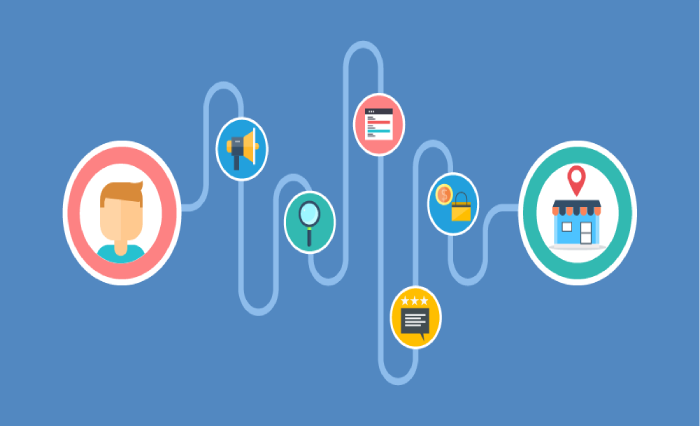
When you apply this strategy, you tailor your content and messages based on where the customer is in their buying journey.
The 3 basic stages of a buying journey are awareness, consideration and decision.
A buyer at the start of their journey may simply have a problem to solve. However, in this case they already know what to buy and are ready to make a choice. Instead of sending everyone the same message, segmentation can help you reach each buyer with their own distinct needs and provide suitable answers to their questions.
However, the drawback of this segmentation approach is that it takes considerable resources and time for the business to accurately analyze consumers' buying journeys. At the same time, the team needs to invest in a communications plan that fits best.
Engagement-based segmentation
Loyal customers need a different marketing approach from ordinary customers. You might assume that when someone cares about your brand, they will sign up to receive news from you. This is not wrong, but it does not mean you should discard customers with low engagement.
You can engage these customers with a campaign built and designed just for them — for example, using special offers, promotions and gifts. However, if you run too many promotion programs too often, customers will grow bored. Businesses therefore need to weigh these customer segments carefully.
Segmentation by device type
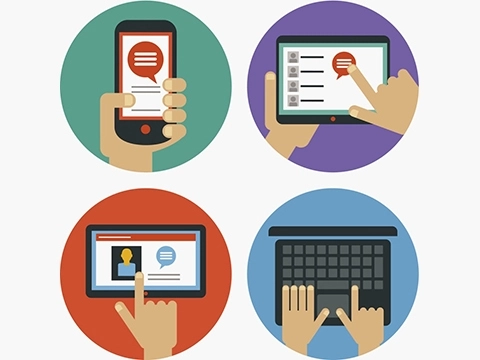
Not all of your customers browse the web the same way. Many studies have now shown that more than half of users access the Internet from mobile devices.
The needs of desktop users and mobile users differ, so your website needs to serve both. You may need to change your site's interface to support and be friendly to many devices. Also, mobile users are more likely to skim your website on the go, which means they only have time to read short content.
When you optimize specific content for mobile so users can easily tap into a survey or interact with an image, you increase your chance of retaining them. You could also consider letting them use their phones to contact you for faster order support.
Although it carries the advantages SimERP mentioned above, serving customers by device type requires significant resources to continuously keep up with the latest changes to each device.
Combining strategies
You can use two or more methods at the same time to broaden your reach. A concrete example is sending an email notification to a customer in Hanoi (demographic) who regularly buys your products (behavioral).
Sometimes your customer segments can intersect in fascinating and unexpected ways. One report shows that 25-30% of users aged 25-40 (millennials) use the Internet only through mobile devices such as phones or tablets, yet they do not travel around much. That means customers on phones may still be interested in long-form content.
Conclusion
A customer segment should be a combination of multiple frames of reference. However, the more customer subgroups you combine, the more complicated and cumbersome implementing the strategy becomes.
So before moving into the customer segmentation phase, think about the question: "Why am I dividing customers into smaller groups?" Sometimes the segmentation may be the foundation for you to develop content and find ways to target audiences for marketing campaigns. Sometimes the purpose may be to raise conversion rates. Based on the goal of each campaign, you will find the most suitable way to segment at that moment!
Related articles
Bài viết liên quan

25 tháng 10, 2026 · 3 phut doc
2024年网页设计趋势预测如何? | Wotech Electronics
关于 2024 年网页设计趋势——步入 2024 年,年初正是我们为新事物预留时间的时刻。这也非常适合设计师群体唤醒我们内心的"艺术之魂"。闲话不多说,快来和 Markdao 一起浏览 2024 年的 UX/UI 设计趋势吧,说不定您就能为自己接下来的网页设计项目"迸发"出一个绝妙的点子呢!

25 tháng 10, 2026 · 1 phut doc
什么是网站(Website)?网站的详细定义及其带来的商业价值
什么是网站(https://www.markdao.com.vn/blog/website-la-gi)——这个问题或许已经无需定义,因为在如今这个信息时代,网站对每一家企业而言都是不可或缺的组成部分。正是网站帮助用户更近距离地接触企业所提供的产品和服务,从而提升经营效益。此外,要在当今竞争如此激烈的环境中求发展,网站是一个重要因素,它将带你走向品牌与销量上的双重成功。

25 tháng 10, 2026 · 1 phut doc
什么是SEO标准网站?一场"打赢"Google SEO标准的战役 | Wotech Electronics
99%的用户在购买前会先搜索信息,73%的用户只会访问排名前10的网站,并认定它们是值得信赖的品牌……在数字营销爆发的时代,这些数字有力地印证了SEO标准网站的重要性。然而,许多人对什么是SEO标准网站(https://www.markdao.com.vn/blog/huong-dan-toi-uu-seo-website-chuan-seo-on-page)仍然相当模糊,并未真正理解。达到SE…