Remote HR Management: Effective Methods and Tools for 2022 | Wotech Electronics
Vũ Khôi
Tác giả tại Wotech Electronics Blog
Remote HR Management: Effective Methods and Tools for 2022
Vũ Khôi
Author at Wotech Electronics Blog
During the Covid-19 pandemic, working from home brought safety, cost savings, time savings, and many great benefits for businesses. Can today's remarkable technological achievements help employees complete their tasks well when working from home, and how can you manage remote employees effectively? Let's find the answer with SimERP in the article below.
Remote HR management – A measure of a business's capacity
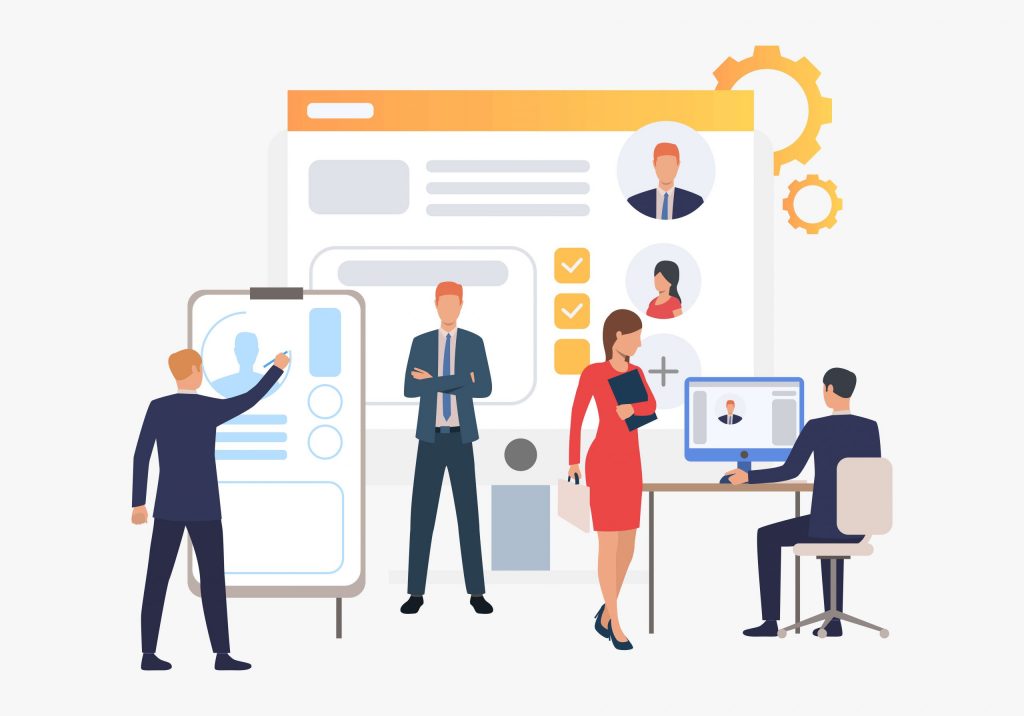
Remote HR management is something many businesses care about. That's because the trend of remote work is becoming increasingly common across all industries.
Remote HR management saves costs while still ensuring work gets done. But it is also a challenge for businesses to consider: are they strong enough "internally" to manage it? Or are they still struggling with management challenges without solid answers to issues such as: managing working hours, sales targets, roadmaps, etc.? If you have answered these questions and the results show no variables changing, then it is time to leverage and develop your internal capacity to conquer the market — with the criterion of creating a comfortable working environment where employees can operate at full capacity. In addition, the management approach must fit the specific nature of each department's work.
In this way, remote HR management accurately reflects a company's real situation and difficulties, from which solutions can be found. Therefore, you must build a strong internal foundation in order to compete with rivals in the market.
Why do businesses need remote HR management?

Remote HR management is something every manager needs to pay special attention to. Managing and supervising employees remotely helps the business achieve its set goals and allocate resources promptly — the right person, the right task, the right deadline.
In managing people in the era of the information technology revolution, leaders need to follow these principles:
-
Empower employees, tying work to their responsibilities.
-
Spend more time leading and less time micromanaging employees; encourage sharing and motivate employees to complete their tasks.
-
Control for work effectiveness rather than time and space.
Benefits of tracking and managing employees' work:
-
Timely support for employees in orientation, feedback, and task completion.
-
Building a culture of discipline when working remotely.
-
Optimizing employee productivity and building habits of self-discipline at work.
-
Allocating resources and costs reasonably and in a timely manner, avoiding losses.
4 ways to manage remote staff effectively
Set clear goals
When managing employees working remotely, leaders need to focus on goals and work results rather than simply managing working hours or specific tasks. The goals set must always be clear, and managers need to regularly discuss with employees how those goals can be achieved. That's why managers should make time to meet their employees in person periodically, making it easy to exchange important information while building greater empathy, sharing, and mutual understanding — strengthening the employee-manager relationship and delivering the best work performance.
Make the most of technology

To manage remote employees effectively, leaders must master the use of the many software tools, social networks, and programs of the tech era. Typical examples include Skype, Hangouts, Viber, etc. These apps are as widely used as Facebook but have the advantage of being dedicated to communication, minimizing time wasted and the loss of focus caused by unrelated news. Their main and only function is messaging. So if you are proficient with such utility apps, ask your employees to use them with you to discuss work without fear of them slacking off, getting distracted, or losing focus on the job.
Besides exchanging information, we also need to exchange many documents. Therefore, choosing an optimal tool such as Google Drive or Dropbox is also a great idea. It lets you share documents with employees quickly and simply.
>>>> Read more: Attendance management: An effective process with Leaves – SimERP software
Review and evaluate employees periodically and flexibly
When managing employees remotely, leaders need an even more comprehensive, overarching view to avoid risks. Therefore, beyond managing employees' hours, time, and tasks, monitoring work performance is also extremely important. This raises a thought-provoking question for leaders: if you manage employees' schedules and working hours too tightly and rigidly, will work performance actually meet expectations? Don't misunderstand — just because you cannot direct employees in person and must do it remotely does not mean supervision should become ever stricter. If you think that way, you may lose many talented people. So, leaders should limit overly rigid tracking and monitoring measures, and should not demand constant handovers of work throughout the working day. This can make employees emotionally frustrated and break the flow of their work. Naturally, the consequence is that work performance does not improve — and worse, they may leave your company.
Alongside flexible checking and monitoring, leaders should also pay attention to rewards. Rewarding is always seen as a spiritual gift with a powerful effect on each person, especially when you cannot direct work in person. If the business sets reasonable, clear criteria for evaluating and rewarding employees and combines this with flexible supervision, it naturally follows that employees will feel grateful and deeply fond of their "boss". They understand that although they don't work side by side with their leader regularly, the leader still cares and clearly grasps everyone's drive to excel, rewarding those who deserve it. This is a crucial factor that keeps employees striving in self-directed conditions without direct supervision from a manager.
Useful remote HR management tips
Remote employees are also an important piece of the business
Send your remote employees regular newsletters about what's happening in the company. Show them that you still remember and care about them. Build a close relationship and try to learn about their personal lives. You can also send them gifts on holidays and regularly invite them to the office to check in and chat, fostering a sense of camaraderie.
Ensure communication between employees and the business

It's fair to say that communication is one of the key factors in remote HR management, because it creates tight cohesion between employees and managers. Through this communication channel, managers can easily support employees whenever they encounter difficulties, and convey and update information to their staff quickly and in a timely manner. Therefore, you need to create an online communication channel so everyone can easily exchange and update information quickly. Otherwise, you will only be able to update through other means, where accuracy is hard to guarantee. That's why building an effective communication channel is mandatory.
Ensure information security
Every business has trade secrets to protect. So information security is also an important factor in remote HR management. That information may include: customer lists, sale prices, discounts, etc. Security must therefore be put first to ensure fair competition in the market. You need to carry out digital transformation: replace traditional ledgers and paper documents with digital storage so information cannot be stolen or lost. You can equip your employees with work applications to ensure this.
Choose remote employee management tools
To manage staff remotely, choosing the right management software also plays a very important role. The software must meet the criteria of supporting work operations so employees can work conveniently without any obstacles. For example, for field sales work, a mobile app with simple, easy-to-master operations is their top priority. So when choosing employee management software, businesses need to pay attention to the features that support the work. Most importantly, the software must fully cover management, reporting, and tracking of employees' work processes and results, so the business saves resources, costs, and time in management.
Nowadays, using an enterprise resource planning (ERP) solution is a common trend. SimERP is one of them. SimERP is an enterprise resource planning software built on Odoo — the most popular ERP software in the world — with outstanding advantages such as: a flexible and effective HR management module, a powerful permissions system, flexible user counts, and diverse deployment models.
Using remote employee management software

For business leaders, they don't always have time to manage employees directly, especially with the Covid-19 pandemic now spreading everywhere.
With traditional management methods, leaders can improve employees' work quality and productivity by:
-
Dividing work and setting clear goals
-
Requiring specific reports
-
Building the habit of using internal communication channels
-
Placing trust in employees
However, these are only temporary solutions and often fail to deliver the expected results. That's why remote HR management software was created, providing strong support for leaders and making remote management easier and more convenient.
Benefits of remote employee management software
– Maintaining workforce operations:
-
Keep online attendance and payroll processing running regularly.
-
Submit and approve remote-work requests quickly.
-
Support managers in managing tasks and projects scientifically right in the remote-work application.
-
Ensure productivity and work efficiency, since working hours are still managed with some flexibility (employees can start early or finish late compared to office hours, as long as the full 8 hours are met).
– Saving resources for the business:
-
Reduce costs of maintaining company assets and resources: electricity, water, wifi, computers, air conditioning, etc.
-
Reduce the effort and time managers and HR spend on managing remote work.
– Fitting current trends:
-
Limit large gatherings while the Covid-19 situation remains complicated.
-
The remote-work trend helps recruit talent from anywhere regardless of geography.
-
Smart management aligned with digital transformation, applying information technology in every field.
-
Employees get to work comfortably, free from the constraints of office space.
-
Ease traffic congestion in big cities.
Things to consider when choosing remote employee management software
When adopting remote work, businesses should keep the following in mind:
-
Simplify supporting software
-
Use one software that fully integrates all operations instead of many tools for many tasks.
-
Reasonable deployment costs.
-
Multi-platform support, especially mobile devices.
Top 4 most effective remote HR management tools today
The HR management module of SimERP software
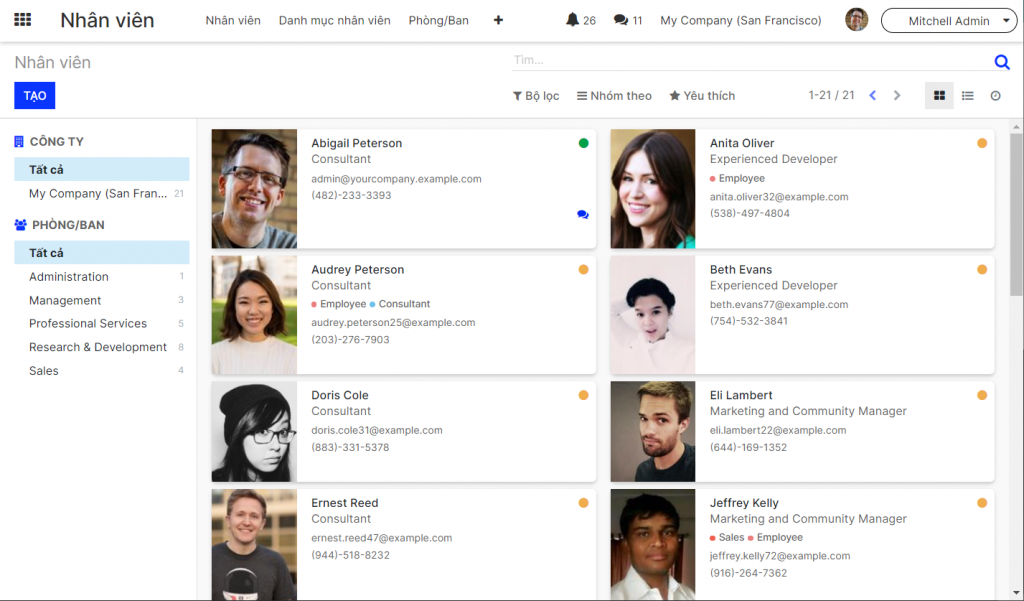
With SimERP's HR management module, businesses can manage their workforce remotely in a comprehensive and effective way. Everything from recruitment and employee information management to attendance tracking is managed on a single platform.
Standout features of SimERP's HR management module:
Recruitment and personnel evaluation
-
Helps the company run its recruitment process intelligently, conveniently, and effectively.
-
Stores candidate information and data by position and recruitment area.
-
Tracks each candidate's status: screening, interviews, pass rate.
-
Analyzes metrics: number of CVs, candidates' interview attendance rate, offer/rejection rates.
Attendance management
-
Helps leadership and employees easily track and update attendance information.
-
Monitors each employee's location and working hours.
-
Receives and approves employees' leave requests.
-
Assigns work according to employees' schedules.
Employee information management
-
Stores all employee data on one unified platform.
-
Manages staff by unit, department, and role-based permissions.
-
Tracks headcount increases and decreases at any time.
-
Creates reminder schedules: birthdays, periodic reviews, contract renewals.
The G Suite online toolkit
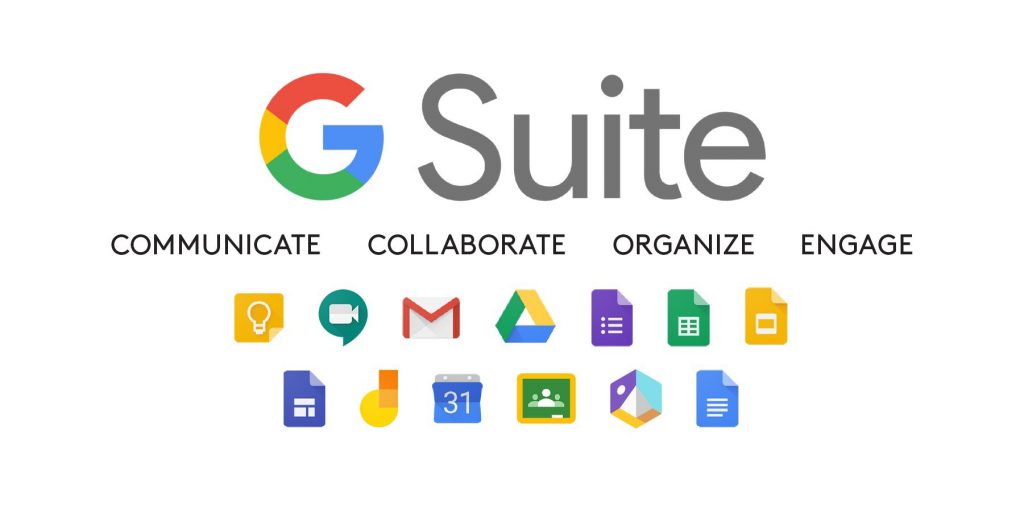
G Suite is known as Google's blockbuster toolkit, serving the communication and work needs of businesses and organizations. This toolkit integrates many utilities such as Drive, Email, Office online, Calendar, Hangouts, etc., making it easy for users to send emails, make calls, video call with partners, and share data.
With each of the business's G Suite documents, employees can easily use them for specific purposes:
Choose access permissions for specific individuals, people within the company, or external partners.
Those with access to a data file can chat directly together, edit, or comment on the content.
Documents are stored on the cloud platform, shareable with a single link without downloading.
Allows those with access — and managers — to see who is working in a file and what content they are editing.
As such, G Suite can be considered a wonderful low-cost remote work tool that enables data synchronization and access from anywhere, on any device, since all data is stored on the Cloud — letting employees handle work even with just the phone in their hand.
Acheckin remote attendance management software
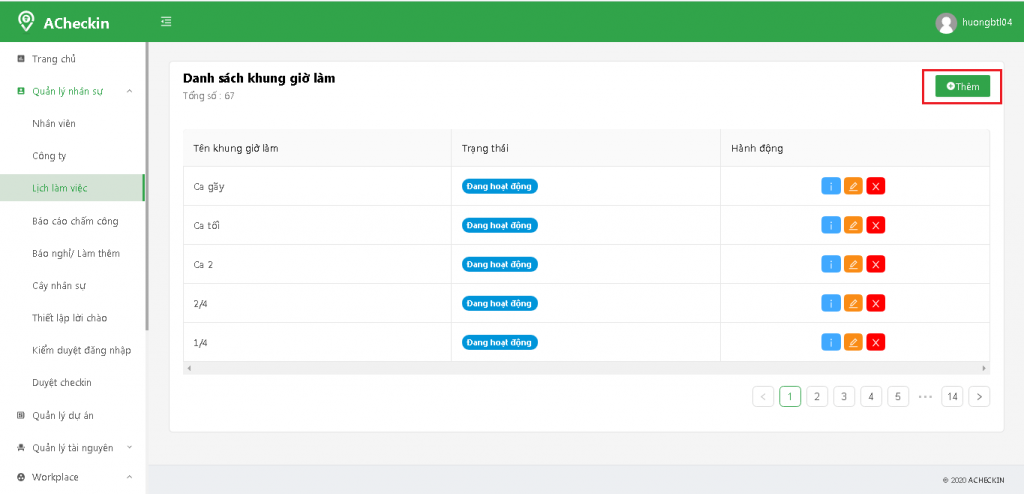
Working remotely was not chosen by many companies in the past because of concerns like: are employees really working? Is the business paying salaries just for employees to sit around? Or how can the business keep tabs on employees when they work from home? These concerns have been partly resolved thanks to the emergence of remote attendance software.
Remote attendance management software is seen as a tool that helps managers easily track the progress and workload of each employee.
Standout features:
-
Attendance via facial recognition.
-
Real-time photo capture based on current location.
-
Work timeline saved over time.
The software sends employees' attendance information to managers. In addition, some applications of this software add a feature to capture random screenshots of the work screen and send notifications to employees when it detects they haven't touched the computer in a long while. Thanks to this, businesses can still ensure work progress and feel more at ease when allowing employees to work remotely.
Building an internal corporate communications network
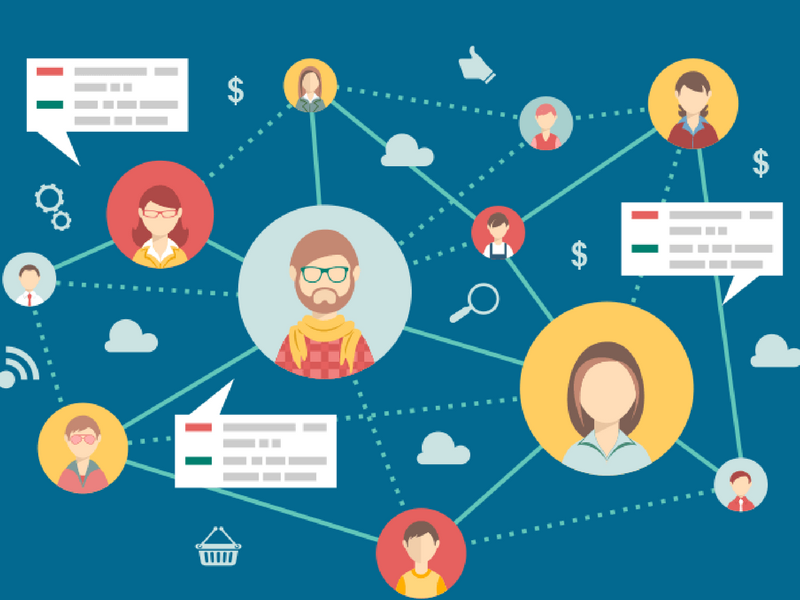
Nowadays, instead of using social networks like Facebook and Zalo — which distract employees during work and raise security concerns — internal communications networks are increasingly valued and developed by businesses.
Notably, an internal corporate communications network is also an effective remote employee management tool that helps businesses proactively convey information and important announcements to employees even when they work from home. Moreover, an internal communications network is a practical solution that lets employees easily access and absorb the vision, mission, and core values their company has built and continues to build. As a result, even when employees don't work at the office, they still understand those values and put them into practice.
In addition, with interactive, commenting features like other social networks, a professional internal communications network helps leaders promptly grasp the sentiments and feedback of their staff so they can adjust solutions accordingly in time.
Conclusion
Transforming the working model for an entire business has never been easy. You will need to manage every aspect, from organizational structure to working conditions and equipment, then the supporting tools and the spiritual foundation for all employees. But once the transition succeeds, the benefits your business gains from remote work will be worth that preparation. If you have any questions, leave a comment below this article so SimERP can answer you quickly!
Related articles
Bài viết liên quan

25 tháng 10, 2026 · 3 phut doc
2024年网页设计趋势预测如何? | Wotech Electronics
关于 2024 年网页设计趋势——步入 2024 年,年初正是我们为新事物预留时间的时刻。这也非常适合设计师群体唤醒我们内心的"艺术之魂"。闲话不多说,快来和 Markdao 一起浏览 2024 年的 UX/UI 设计趋势吧,说不定您就能为自己接下来的网页设计项目"迸发"出一个绝妙的点子呢!

25 tháng 10, 2026 · 1 phut doc
什么是网站(Website)?网站的详细定义及其带来的商业价值
什么是网站(https://www.markdao.com.vn/blog/website-la-gi)——这个问题或许已经无需定义,因为在如今这个信息时代,网站对每一家企业而言都是不可或缺的组成部分。正是网站帮助用户更近距离地接触企业所提供的产品和服务,从而提升经营效益。此外,要在当今竞争如此激烈的环境中求发展,网站是一个重要因素,它将带你走向品牌与销量上的双重成功。

25 tháng 10, 2026 · 1 phut doc
什么是SEO标准网站?一场"打赢"Google SEO标准的战役 | Wotech Electronics
99%的用户在购买前会先搜索信息,73%的用户只会访问排名前10的网站,并认定它们是值得信赖的品牌……在数字营销爆发的时代,这些数字有力地印证了SEO标准网站的重要性。然而,许多人对什么是SEO标准网站(https://www.markdao.com.vn/blog/huong-dan-toi-uu-seo-website-chuan-seo-on-page)仍然相当模糊,并未真正理解。达到SE…