What Is the Sales Process? Steps in the Sales Process? | Wotech Electronics
Vũ Khôi
Tác giả tại Wotech Electronics Blog
What Is the Sales Process? Steps in the Sales Process?
Vũ Khôi
Author at Wotech Electronics Blog
A business cannot operate effectively without a sales process that is well-designed and well-suited to it. In the article below, you will gain a clearer understanding of what a sales process is, a walkthrough of the steps in the most widely applied sales process, and the risks you may encounter along the way.
What Is the Sales Process?

A sales process is the sequence and manner of carrying out sales activities defined in advance, made mandatory, and aimed at meeting the business objectives of a company or organization.
An effective sales process helps your team master the sequence of steps, coordinate with one another easily, operate consistently and professionally, and interact with customers with greater confidence.
The Sales Management System
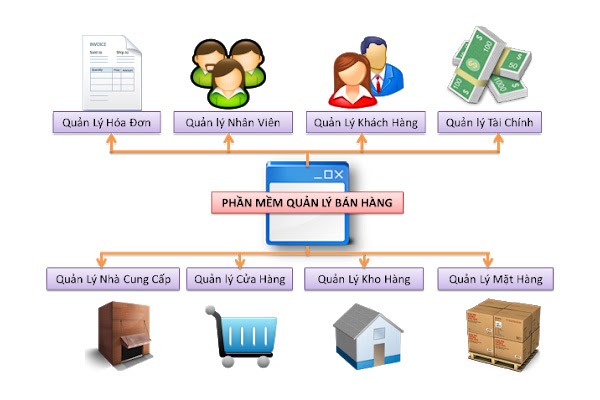
Sales management is a management activity tasked with distributing and managing products to the right distribution channels in order to meet a company's business objectives. For the sales process to run effectively, a sales management system that operates smoothly and logically is indispensable.
A sales management system is essentially sales management software that helps you optimize your business operations with the following functions:
-
Order management
-
Inventory management
-
Financial management
-
Sales management
-
Inventory management
-
Activity reporting
Choosing and using sales management software that fits your company's business objectives helps you better manage the distribution process and better handle risks that arise while products are being distributed.
Building an Effective Sales Process

Every business has a different sales process depending on the nature and characteristics of its operations, its scale, and so on. That said, a company's sales activity can generally be summarized in the 7-step sales process below.
Preparation
The second step in the sales process is preparing for your first contact with potential customers, researching the market, and gathering all information related to your product/service. At this stage, you need to develop the concept for your product/service presentation and tailor it to the specific needs of each group of potential customers.
Prospecting for Potential Customers
The first — and critically important — step in the sales process is prospecting for potential customers: customers who have a need and the potential to become users of your product/service in the future.
During this stage, you need to identify your potential customers from your target customer base and determine clearly whether they actually need, and can afford, the products/services your company offers. This can be done through the following effective tools:
-
Online advertising: increase website traffic and deliver the right message to customers through various formats such as search engine advertising (SEM), display and image ads, media advertising, and more
-
Social events: take advantage of ceremonies and major events to market your products
-
Affiliate marketing: share product links with consumers
-
Telesales: call an existing customer base to market products
-
Forum activity: post articles sharing experience and reviews of products/services related to your company's offerings on websites, social networks, and more
Approach

Once the necessary preparation steps in the sales process are done, the next move is to reach out and connect with customers. Common approaches include:
-
Leveraging your website, your company's existing channels, mobile apps, and telesales
-
Leveraging social media: reaching customers through networks like Facebook, Twitter, and Instagram, as well as groups with high traffic and engagement that suit the products/services your company offers, and more
-
Leveraging paid advertising: especially Google and Facebook ads
-
Leveraging PR: appearances in news outlets, KOLs, and more
-
Leveraging marketing through email marketing and search engines
When engaging with customers face to face, to achieve the desired marketing results each employee should:
-
Use open body language, such as smiling and speaking in a confident, likable voice
-
Offer compliments that fit the context without going overboard into flattery
-
Ask appropriate questions to create good interaction with the customer
-
Listen attentively and understand the customer's concerns
-
Offer sincere advice and useful information that helps solve the customer's problem
Presenting the Product/Service

After reaching the right potential customers, you need to deliver your product/service presentation effectively by referring to specific cases for each prospect and identifying their pain points. There are 4 main types of pain points:
-
Financial pain point: your potential customer is paying too much for the product/service they currently use, and you need to demonstrate that your solution/product/service can help them reduce costs.
-
Productivity pain point: your potential customer wants to use their time more effectively with a given product/service. In this case, you need to show that your product/service delivers higher productivity at the same level of effectiveness — or even higher.
-
Process pain point: the potential customer wants to improve an old sales process that is complicated and feature-poor. Therefore, you need to highlight the standout features of your product/service that resolve this anxiety.
-
Support pain point: the potential customer is not receiving the support they expect during the consultation and purchasing process, such as fast delivery or card payments, and so on. So present concretely and persuasively the services and offers your company provides when they decide to buy.
Ultimately, the main point of the presentation is to connect the features of your product or service to concrete benefits for the customer. So focus on listening to the customer's thoughts about the problems they are facing in order to offer the best solution.
Handling Objections
The fifth stage of the sales process is listening to customer feedback about their difficulties and obstacles during the purchase or while using the product/service, and finding ways to resolve them. However, according to Invesp, many salespeople give up along the way: 44% of salespeople give up after one rejection, 22% after two, 14% after three, and 12% after four — even though 80% of sales require at least five follow-ups on a customer's problem.
Resolving customer obstacles not only increases customer satisfaction and retains them effectively, but is also the best way to spot flaws in your own sales process so you can make timely adjustments. Here are the steps you should take to make this stage go well:
-
Active listening: attentive listening not only gives you more information for resolving the customer's obstacle but also increases the customer's goodwill, because they feel their opinion is being taken seriously
-
Repeat back what you heard: repeating helps you confirm the issue with certainty and avoids mishearing or misunderstanding the problem.
-
Validate your prospect's concern: through listening and understanding, accurately identify the problem the customer is facing and the causes of those obstacles in the sales process.
-
Ask relevant follow-up questions: ask suggestive, related questions to dig deeper into the issue the customer is unhappy about — this is also an effective way to make the customer feel your attentiveness and professionalism.
-
Leverage social proof: present convincing evidence that addresses the customer's problem, emphasizing the standout features of your product/service that are useful for that issue.
-
Set a specific date and time to follow up: after resolving the customer's obstacles, set a specific follow-up date and time to make sure the customer is not encountering any related problems.
-
Anticipate sales objections: through behavioral research and listening to customer feedback, predict the sales objections that may arise so you can offer the optimal solution in time.
Closing the Deal
This is the stage of the sales process that covers the final activities that occur when closing a deal, aimed at a win-win outcome. It is the stage every salesperson aims for, because it affects the company's business performance and the commission the salesperson earns. So how do you close deals effectively? Depending on the nature and business objectives of your company, you can choose from the approaches below:
-
Offer closing-related choices: propose options related to closing once you are sure the customer is satisfied with what the product/service delivers. For example: "Would you like to pay in cash or by bank card?" or "Would you like to pay here in full or in installments?"
-
Suggest an incentive: give the customer some benefit to encourage them to close the deal, such as a discount voucher, a free month of use, and so on
-
Emphasize time urgency: for example, "We only have 3 spots left" or "This offer/promotion applies this month only," and so on
Following Up with Customers
A successful close is not the last step in the sales process. You need to plan follow-ups from the moment the customer successfully receives the goods, throughout their experience with the product, and build a strategy to market other related products in the future.
At this stage, a customer care strategy is absolutely essential. Through it, you can run surveys on customer needs and behavior to resolve emerging obstacles promptly and enhance their experience through adjustments and improvements.
Addressing Risks in the Sales Process

Although a sales process consists of a sequence of activities defined in advance, additional campaigns, an underperforming team, or errors in management can still lead to unwanted risks such as the following:
A poorly fitting sales strategy
Misidentifying the market and potential customers causes you to waste time, money, and effort running campaigns. Always monitor and confirm that you are on the right track, measure whether you are hitting your targets, keep updating continuously, and provide your team with the tools they need to respond to market changes and shifts in customer needs and behavior.
Profit and sales metrics
In the digital age, data plays a vital role in a company's business operations. Collecting inaccurate or incomplete information on profit margins/selling prices will distort your company's data and hurt the sales team's performance.
In practice, bad data on profit margins and skewed pricing affects the sales team's ability to offer buyers the right product at the right price to achieve the margin the company needs.
Friction between the Sales and Marketing departments
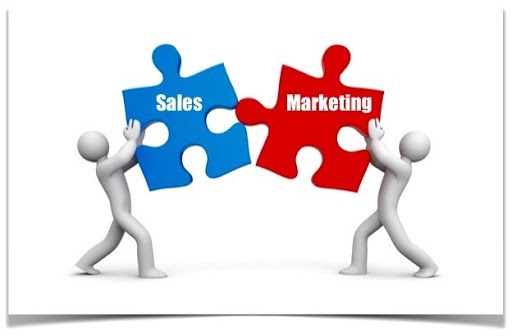
Sales staff often do not know about the strategies the Marketing department is running, or may even dismiss them. Sales tends to see Marketing as the department that "burns money" with many ineffective campaigns. Meanwhile, Sales takes pride in being the vital resource that brings in revenue and a large volume of customers through selling.
The Marketing department, for its part, tends to doubt the professional skills of Sales, believing that salespeople lack sufficient knowledge and have a narrow view of the potential of its campaigns.
Friction between Sales and Marketing can occur in any company, and without adequate solutions it will affect the company's business operations.
Underperforming sales
According to Forbes, 57% of sales professionals miss their annual quota. This underperformance happens when salespeople do not know their potential customers and miss many opportunities to drive revenue. Many companies focus so heavily on online selling that they forget that direct interaction with customers and prospects is just as important. On the other hand, relying only on soft skills in selling while neglecting data-driven strategies for personalizing the customer experience will erode the company's competitiveness over the long term.
All of these scenarios reduce the number of potential customers and the flow of prospects moving through the sales funnel. A data-driven yet inspiring strategy brings out the strengths of the members of your team and, ultimately, keeps your salespeople engaged with a large pool of potential customers.
Conclusion: Every business will have a different sales process depending on many factors such as the nature of its business and the size of the organization. Designing a sales process that fits, having solutions for the risks encountered, and continuously optimizing it in the era of Industry 4.0 are priorities every company needs to address.
Related Articles
Bài viết liên quan

25 tháng 10, 2026 · 3 phut doc
2024年网页设计趋势预测如何? | Wotech Electronics
关于 2024 年网页设计趋势——步入 2024 年,年初正是我们为新事物预留时间的时刻。这也非常适合设计师群体唤醒我们内心的"艺术之魂"。闲话不多说,快来和 Markdao 一起浏览 2024 年的 UX/UI 设计趋势吧,说不定您就能为自己接下来的网页设计项目"迸发"出一个绝妙的点子呢!

25 tháng 10, 2026 · 1 phut doc
什么是网站(Website)?网站的详细定义及其带来的商业价值
什么是网站(https://www.markdao.com.vn/blog/website-la-gi)——这个问题或许已经无需定义,因为在如今这个信息时代,网站对每一家企业而言都是不可或缺的组成部分。正是网站帮助用户更近距离地接触企业所提供的产品和服务,从而提升经营效益。此外,要在当今竞争如此激烈的环境中求发展,网站是一个重要因素,它将带你走向品牌与销量上的双重成功。

25 tháng 10, 2026 · 1 phut doc
什么是SEO标准网站?一场"打赢"Google SEO标准的战役 | Wotech Electronics
99%的用户在购买前会先搜索信息,73%的用户只会访问排名前10的网站,并认定它们是值得信赖的品牌……在数字营销爆发的时代,这些数字有力地印证了SEO标准网站的重要性。然而,许多人对什么是SEO标准网站(https://www.markdao.com.vn/blog/huong-dan-toi-uu-seo-website-chuan-seo-on-page)仍然相当模糊,并未真正理解。达到SE…