
Over-Optimized Onpage SEO — Are You Making This Serious Mistake?
Vũ Khôi
Tác giả tại Wotech Electronics Blog
Over-Optimized Onpage SEO — Are You Making This Serious Mistake?
Vũ Khôi
Author at Wotech Electronics Blog
Good Onpage SEO combined with a smart Offpage strategy will help a website hold top rankings on search engines sustainably. Right! This is something everyone doing SEO knows — all too well. Precisely because they know how important Onpage SEO is, time and again websites make the mistake of going too far with their optimization strategy. In the end, what's the difference between optimizing a website properly and being "over-optimized"? And how can you spot an over-optimized website? Let Markdao Vietnam walk you through it in the article below!
What is over-optimization? When does Onpage SEO backfire?
An over-optimized website happens when the techniques aimed at boosting search engine rankings have side effects that damage the website's quality. Every SEO-er knows that keyword stuffing and link spamming mean driving your Onpage SEO into a dead end. In 2012, Google introduced a penalty for websites playing with link-stuffing and link-spamming. As a result, some websites lost their index entirely. Over-optimizing is therefore poison pills for your SEO — be careful!
When over-optimizing, instead of producing effective Onpage SEO, users get a worse experience when they visit your website. Specifically, text stuffed excessively with keywords makes paragraphs feel "suffocating" and unnatural. If the number of links on your website is too many to count, it means you've been over-optimizing your anchor text.
4 signs of over-optimized Onpage SEO that could sink your SEO strategy!
Onpage SEO is only truly effective if you know when to stop at "enough". If Marketers are too greedy and want to push keyword results up quickly, they are killing their own website. Google has many algorithms to detect and punish over-optimization. Below are the signs that you are making your website "drink the poison".
Stuffing Onpage SEO keywords into the text until it's "cramped"
Keyword stuffing is the clearest sign of whether you're over-optimizing. Of course, allocating keywords at a reasonable density is very good for improving website rankings. Inserting keywords correctly helps Google understand what your article is about and rank it appropriately. But if the text is over-optimized and stuffed with too many keywords, it becomes hard to read.
No one wants to read an article like this, do they?

Writing Onpage SEO articles with "strange", irrelevant keywords
Don't try to insert links for Onpage SEO keywords unrelated to your website's content. This is a very familiar symptom of over-optimizing with irrelevant keywords. When the Googlebot visits your website, it visits all the pages along every path that appears on the web. Content and keywords that have nothing to do with each other will reduce the website's overall strength.
Optimizing Onpage SEO by using multiple H1s on one page
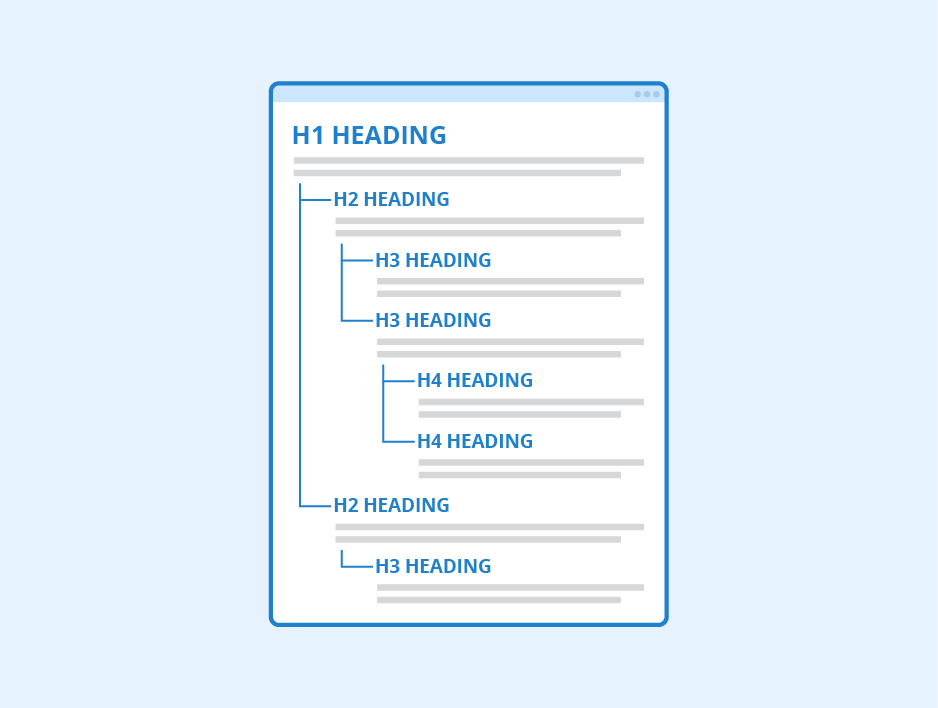
There's an unwritten rule in optimizing Onpage SEO: only one H1 tag is allowed. The H1 is the page's main heading — it must contain the keyword and summarize what the page, or the article, is about. Using more than one H1 tag on a page is over-optimization. The Googlebot gets "confused" when crawling this page because it can't tell which heading represents the most important content. So remember: one page/post needs only one H1 tag. You can use multiple H2s, H3s, and H4s, but only one H1 tag.
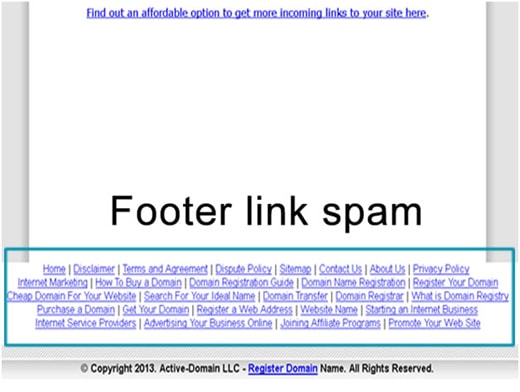
Link and keyword spam in the footer: not an effective Onpage SEO method
Google is gradually downgrading the value of footer links. What's more, when the keyword sits at the very bottom of a page's content, and these links receive only a minimal quality score, the keyword's CTR and a host of other metrics will be very low — and simply bring no value to Onpage SEO. So when you want to add keywords in the footer, think it over carefully — it's like playing a game of chance.
The backlash of over-optimizing your Onpage SEO?
The latest Google Panda update targets all websites whose content is over-optimized for Onpage SEO. If you're stumbling down the path of over-optimizing content with an excessive number of keywords, you run a very high risk of being penalized by Panda. And Marketers know what happens when Panda strikes: the website suddenly plummets in the rankings. Over-optimizing your content can therefore backfire.
Over-optimization also leads to a poor user experience. Your text will no longer be easy or enjoyable to read if you pile on too many keywords. A text riddled with links isn't appealing either. If your visitors feel annoyed, they won't want to buy anything or return to your website. That means over-optimized Onpage SEO will also receive less social media attention.
Related articles
Bài viết liên quan

25 tháng 10, 2026 · 3 phut doc
2024年网页设计趋势预测如何? | Wotech Electronics
关于 2024 年网页设计趋势——步入 2024 年,年初正是我们为新事物预留时间的时刻。这也非常适合设计师群体唤醒我们内心的"艺术之魂"。闲话不多说,快来和 Markdao 一起浏览 2024 年的 UX/UI 设计趋势吧,说不定您就能为自己接下来的网页设计项目"迸发"出一个绝妙的点子呢!

25 tháng 10, 2026 · 1 phut doc
什么是网站(Website)?网站的详细定义及其带来的商业价值
什么是网站(https://www.markdao.com.vn/blog/website-la-gi)——这个问题或许已经无需定义,因为在如今这个信息时代,网站对每一家企业而言都是不可或缺的组成部分。正是网站帮助用户更近距离地接触企业所提供的产品和服务,从而提升经营效益。此外,要在当今竞争如此激烈的环境中求发展,网站是一个重要因素,它将带你走向品牌与销量上的双重成功。
25 tháng 10, 2026 · 1 phut doc
什么是SEO标准网站?一场"打赢"Google SEO标准的战役 | Wotech Electronics
99%的用户在购买前会先搜索信息,73%的用户只会访问排名前10的网站,并认定它们是值得信赖的品牌……在数字营销爆发的时代,这些数字有力地印证了SEO标准网站的重要性。然而,许多人对什么是SEO标准网站(https://www.markdao.com.vn/blog/huong-dan-toi-uu-seo-website-chuan-seo-on-page)仍然相当模糊,并未真正理解。达到SE…