
What Is Digital Finance? Benefits, Current State, and the Digital Finance System in Vietnam | Wotech Electronics
Vũ Khôi
Tác giả tại Wotech Electronics Blog
What Is Digital Finance? Benefits, Current State, and the Digital Finance System in Vietnam
Vũ Khôi
Author at Wotech Electronics Blog
It is undeniable that the Internet now affects many aspects of everyone's life — daily living, study, work — and finance is no exception. Digital finance is not a new industry in developed countries. But in Vietnam, the term is gradually becoming familiar and is having a powerful impact on the financial market in general and banking in particular. So what is digital finance? Let's explore it with SimERP in the article below.
What is digital finance?
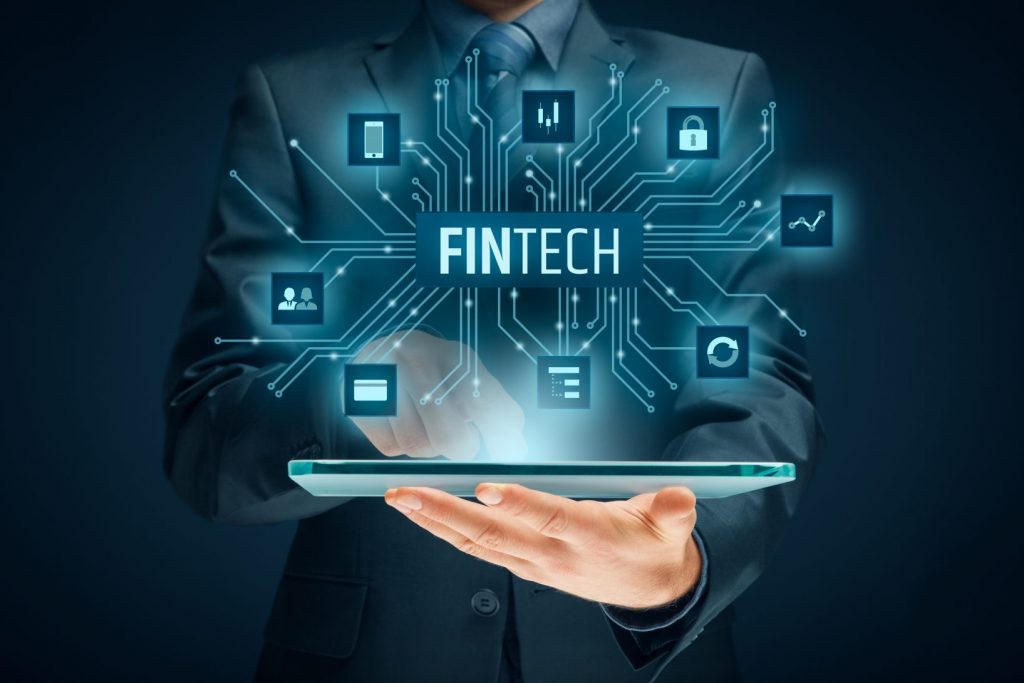
Digital finance (also known as Fintech) is the combination of finance and technology. In other words, it concerns delivering financial activities and services through Internet connectivity and the use of electronic algorithms.
Currently, Fintech serves companies that use the Internet, mobile devices, open-source software, cloud computing technology, or cryptocurrencies such as Bitcoin to simplify transaction processes and improve the efficiency of banking and investment activities.
Digital finance targets three main groups that constantly interact with one another:
-
Digital finance companies: two main groups — companies providing technical tools that help consumers improve borrowing, money management, or startup financing, and companies specializing in technical equipment and software support for financial institutions.
-
Financial institutions: banks, investment firms, insurers, securities companies, finance companies, etc., which can invest in digital finance companies or proactively acquire new technology to capture the market.
-
Customers: those who benefit the most through the use of financial services in general.
Benefits of digital finance
-
Provides many advanced features supporting all customer needs that arise.
-
Transactions can be carried out anywhere, at any time, with fast, easy, and convenient operations.
-
Customer and transaction information is stored and updated automatically with high security.
-
Reduces infrastructure investment costs for businesses, allowing them to focus instead on developing their technology capabilities.
-
Digital finance applications are becoming increasingly diverse, delivering more new service experiences for customers — and this is also an opportunity for businesses to invest and grow.
-
Helps customers in remote areas access financial services that traditional banking has not yet reached.
Current state and trends of digital finance in Vietnam
The state of Vietnam's digital finance market
According to research by Solidiance, Vietnam's digital finance market was worth 4.4 billion USD as of 2017 and was projected to reach 7.8 billion USD by 2020 — equivalent to 77% growth over three years.
That development became even more pronounced in 2018, when Vietnam's digital finance market overtook e-commerce, which stood at 104 million USD, and other sectors, successfully attracting 117 million USD in startup funding to become the most-funded sector for startups.
According to the report "Fintech in ASEAN: From Start-up to Scale-up 2019" by PricewaterhouseCoopers, United Overseas Bank, and the Singapore Fintech Association, in 2018 Vietnam's digital finance market captured only 0.4% of investment capital. However, as of September 30, 2019, that figure had risen to 36%, making Vietnam the second country in ASEAN by funding raised for its digital finance market, behind only Singapore (51%).
This remarkable growth was achieved thanks to the following major deals:
-
January 2019: MoMo raised 100 million USD in a Series C funding round from investor Warburg Pincus.
-
April 2019: Utop successfully received a 3 million USD investment from FPT and SBI Holdings.
-
July 2019: the parent company of the VNPAY wallet successfully raised 300 million USD from GIC and SoftBank Ventures.
-
December 2019: Interloan received a 500,000 USD investment from Phoenix Holdings.
In 2020, Vietnam's digital finance market continued to achieve significant growth thanks to the adoption of digital transactions and government support for expanding digital payment methods.
Notably, when the Covid-19 pandemic broke out, it stimulated the development of digital banking like never before — for example: VietinBank partnering with the UK's Opportunity Network, CIMB Bank Vietnam partnering with Toss (South Korea), VPBank with BE Group (Sweden), OCB with RippleNet (USA), etc. In addition, on October 22, 2020, the Shinhan Group signed an MOU with Grab Vietnam to jointly develop new digital financial services.
The growing investment in Vietnam's digital finance market in general, and the payments segment in particular, stems from strong business potential: Vietnam has a young population, a large number of unbanked citizens, and a steadily rising rate of Internet and mobile device usage.
Trends in digital finance development in Vietnam
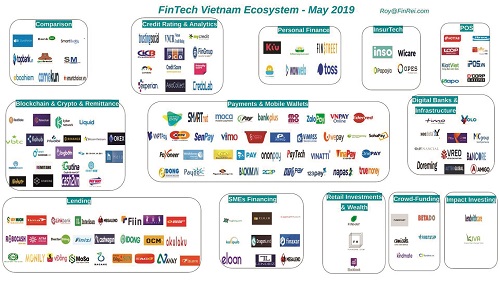
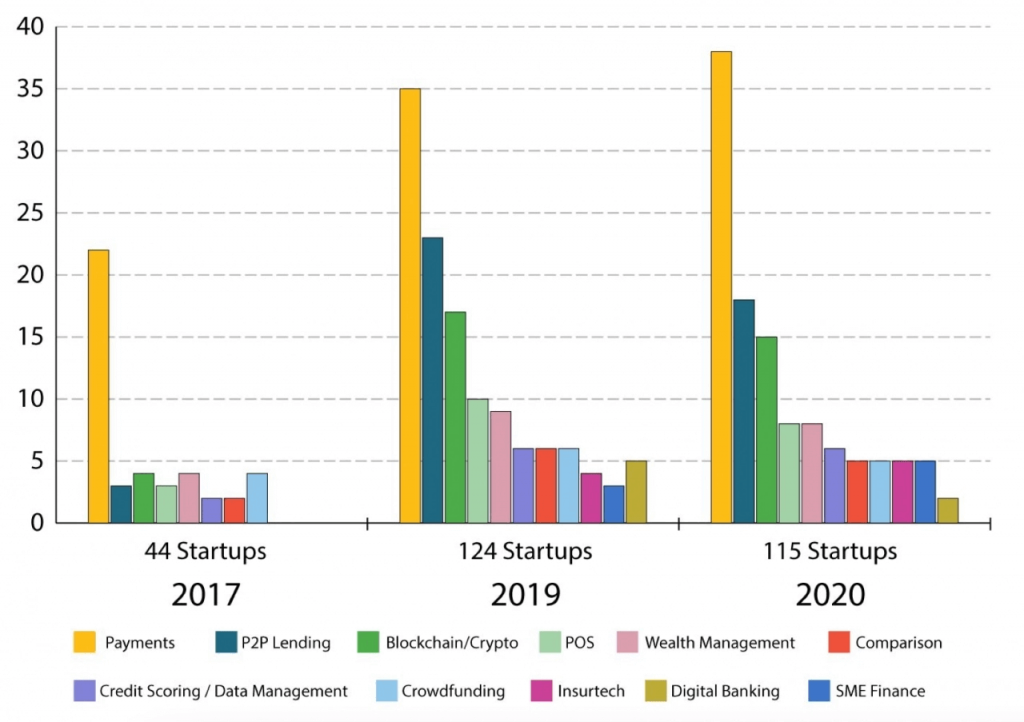
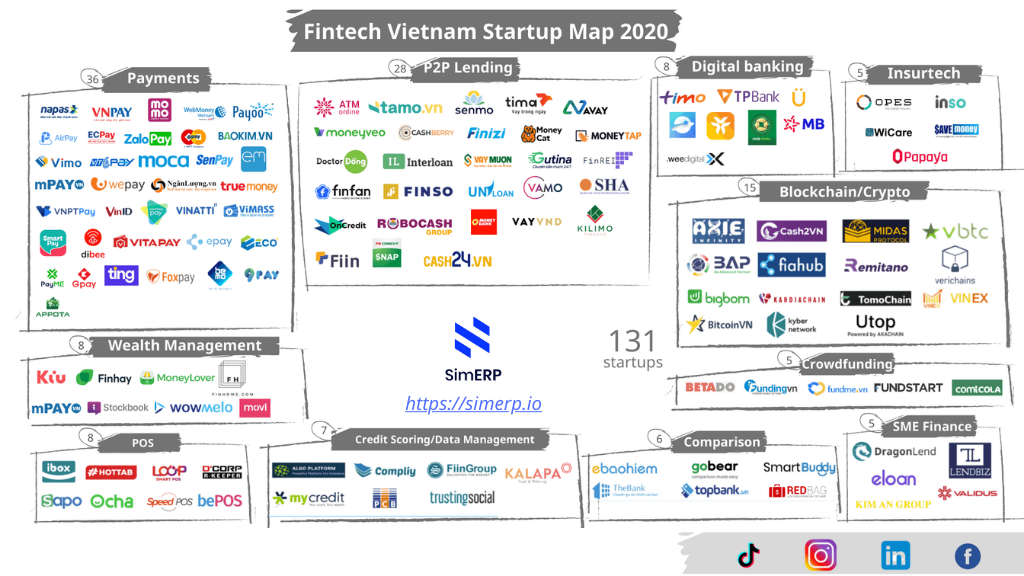
According to a survey by the Institute for Banking Technology Development Research of Vietnam National University, Ho Chi Minh City, there are currently more than 154 companies operating in digital finance in Vietnam, including:
-
Payments and e-wallet companies lead with 37 businesses, such as MoMo, Viettel Pay, Zalo Pay, and Airpay;
-
25 companies in lending: Tima, Validus, Vay Muon, VNVon, etc.;
-
22 companies in Blockchain, Crypto, and Remittance: TomoChain, Vinsofts, Kyber Network (KNC), Remittance Hub, etc.
Beyond these main segments, Vietnam's digital finance market currently includes several other key segments such as wealth management, crowdfunding, credit scoring, SMEs financing, POS, and Insurtech.
Overall, digital finance in Vietnam is mainly concentrated in three areas: payments, peer-to-peer (P2P) lending, and crowdfunding. Areas such as wealth management, liquidity management, investment, insurance, and automated financial advisory services are still taking shape.
Moreover, as peer-to-peer lending, e-wallets, payments, and card installments penetrate deeply into people's lives, Vietnamese digital finance companies will tend to compete for the potential retail market share of traditional banks.
In addition, up to 70% of digital finance companies in Vietnam are startups with investment capital from countries such as Japan, the US, China, Canada, and the UK. As a result, building large-scale digital finance enterprises is quite difficult, with many major challenges in a fiercely competitive environment.
Even so, the emergence of many new, diverse areas of digital finance is a great opportunity for Vietnamese companies to innovate continuously, and digital transformation of the finance and banking industry is an inevitable shift in the ever-developing 4.0 technology era.
The digital finance system
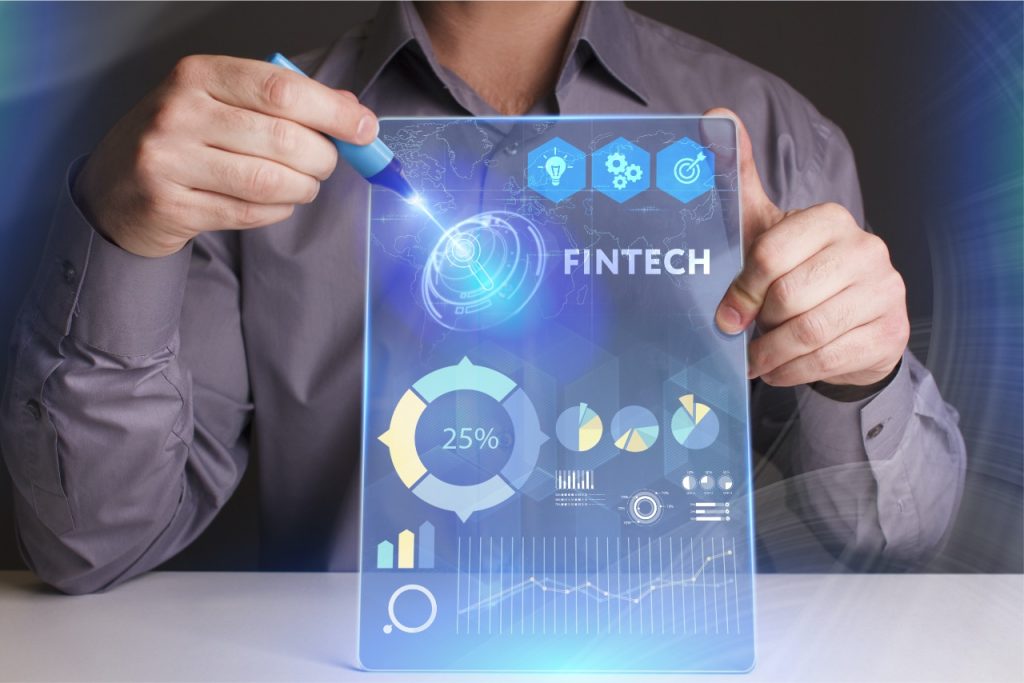
The digital finance system is built on complex algorithms and applies many different modern technologies. Below, SimERP reveals the technologies that have helped create this system, along with their applications.
The technologies used
Artificial Intelligence (AI) and Machine Learning (ML)
A term frequently mentioned in recent years, artificial intelligence (AI) is defined as intelligence created through human programming, with the goal of enabling computers to automate intelligent behaviors like humans.
Machine learning (ML) is an application of AI focused on developing computer programs that can access data and use it to learn for themselves.
These are two of the most widely used technologies in digital finance, playing a major role in the industry's development. Some of their applications include credit scoring, fraud detection, regulatory compliance monitoring, and asset management.
Big Data and data analytics
Data is a precious information asset for a business to survive and grow. However, the importance of big data lies not in the volume a business collects, but in what the business can do with it.
Through the Big Data a business holds on customer information, preferences, behaviors, spending habits, and past consumer behavior, it can conduct thorough analysis to make accurate predictions about future behaviors and needs, and devise marketing strategies or fraud-detection tactics to improve operations.
Robotic Process Automation

Robotic Process Automation (RPA) is software that can easily be programmed to perform basic tasks within applications the way a human would. Unlike ML, the robots in RPA are programmed to carry out tasks within a specific employee workflow that are simple and repetitive — such as receiving, checking, and sorting forms — with the support of programmers.
Some of the most common applications of RPA in finance include:
-
Statistics and data collection.
-
Regulatory compliance management.
-
Communication and marketing via email and chatbots.
-
Transaction management.
Blockchain technology
Blockchain, or chain-block technology, is a database system that allows the storage and transmission of blocks of information linked together through encryption. Each block contains information about its creation time, a timestamp, and transaction data, and is linked to the previous block.
Because data, once accepted by the network, cannot be altered, this technology is designed to resist fraud and data tampering. Blockchain is also the backbone of many cryptocurrencies — an application of digital finance. Each fundraising website takes revenue as a percentage of the funds raised.
Applications of digital finance
Crowdfunding platforms
Crowdfunding platforms such as Kickstarter, GoFundMe, and Patreon are the result of developments in digital finance. These platforms support raising investment capital for projects from anyone, anywhere in the world.
Mobile payments
Carrying out financial transactions through apps installed on mobile devices has become common and continues to grow rapidly in recent years. We are no longer strangers to apps linked directly to banks such as Smart Banking, Internet Banking, MoMo, ViettelPay, AirPay, and more.
With these apps, customers can borrow, transfer money, and create savings quickly and easily with just a few simple taps and an Internet connection. This saves customers time, effort, and cost when making transactions.
Insurtech

Insurtech is the combination of "Insurance" and "Technology," referring to the creative use of technology to extract savings and efficiency from the current insurance model. This application allows insurance companies to deliver services with high data security. It is fair to say that the birth of Insurtech has streamlined the insurance process through direct application submissions and policy management support.
Robo-advisors
The branch currently attracting the most attention in digital finance, Robo Advisors are online investment management software that use algorithms to allocate assets and build optimal investment portfolios for customers. They are considered an effective solution for people who lack the money to hire a financial advisor. The application helps you choose investments, build a diversified portfolio, and can even execute transactions automatically to reduce the investor's tax bill.
Regtech
Regtech is the management of legal processes in the finance industry through information technology applications, with the core functions of regulatory monitoring, reporting, and compliance. It is an optimal solution, managing large volumes of data quickly, efficiently, and at low cost. In addition, Regtech tools also monitor online transactions in real time to identify anomalies in electronic transactions.
Opportunities and challenges of digital finance
The relentless development of the digital era has pushed digital finance to deliver more advanced, modern products and services for the finance–banking sector, creating many opportunities in the Vietnamese market, specifically as follows:
Opportunities for Vietnamese digital finance
-
Vietnam has a young and large population of more than 96 million people, including 68.17 million Internet users (1/2020), GDP growth of around 6.7% per year, and a high literacy rate — all showing the development potential of the digital finance market in Vietnam.
-
A low corporate income tax rate (just 20%) along with many tax incentives for information technology businesses, with digital finance companies receiving tax incentives under Resolution 41/NQ-CP in 2016.
-
Digital finance companies can operate and grow freely, without yet facing any legal barriers.
-
A large number of startup investment funds such as VIISA, Innovatube, and Expara from many developed countries including Japan, the US, China, and Canada.
-
It is a sector receiving state support for startups, with Project 844 supporting the startup ecosystem and the State Bank's regulatory sandbox framework for digital finance.
Challenges for Vietnamese digital finance
Alongside the benefits above, investing in digital finance leaves many businesses worried about the following risks and potential dangers:
-
Because it is built on technology, it may face security issues involving leaks and theft of information (transaction data, customer information, etc.).
-
Rapid and extraordinary growth has outpaced the legal framework for the sector, which is still incomplete, so it is not yet as tightly regulated as traditional banking.
-
A fiercely competitive market demands constant innovation to survive and grow.
-
A workforce with deep, high-level technology expertise remains limited.
-
A clear wave of layoffs caused by the arrival of technology.
-
Risks remain regarding system failures, interest rates, liquidity, bad debt, and more.
Conclusion
Despite the many remaining risks and dangers, it is undeniable that the benefits digital finance brings — along with the opportunities for investment and growth — are enormous, helping businesses increase competitiveness and enhance their image by keeping up with technology trends in customers' eyes. With these insights into digital finance, SimERP hopes this knowledge will support your future investment strategies.
Related Articles
Bài viết liên quan

25 tháng 10, 2026 · 3 phut doc
2024年网页设计趋势预测如何? | Wotech Electronics
关于 2024 年网页设计趋势——步入 2024 年,年初正是我们为新事物预留时间的时刻。这也非常适合设计师群体唤醒我们内心的"艺术之魂"。闲话不多说,快来和 Markdao 一起浏览 2024 年的 UX/UI 设计趋势吧,说不定您就能为自己接下来的网页设计项目"迸发"出一个绝妙的点子呢!

25 tháng 10, 2026 · 1 phut doc
什么是网站(Website)?网站的详细定义及其带来的商业价值
什么是网站(https://www.markdao.com.vn/blog/website-la-gi)——这个问题或许已经无需定义,因为在如今这个信息时代,网站对每一家企业而言都是不可或缺的组成部分。正是网站帮助用户更近距离地接触企业所提供的产品和服务,从而提升经营效益。此外,要在当今竞争如此激烈的环境中求发展,网站是一个重要因素,它将带你走向品牌与销量上的双重成功。

25 tháng 10, 2026 · 1 phut doc
什么是SEO标准网站?一场"打赢"Google SEO标准的战役 | Wotech Electronics
99%的用户在购买前会先搜索信息,73%的用户只会访问排名前10的网站,并认定它们是值得信赖的品牌……在数字营销爆发的时代,这些数字有力地印证了SEO标准网站的重要性。然而,许多人对什么是SEO标准网站(https://www.markdao.com.vn/blog/huong-dan-toi-uu-seo-website-chuan-seo-on-page)仍然相当模糊,并未真正理解。达到SE…