
Why Manage Inventory? Which Methods Are Effective? | Wotech Electronics
Vũ Khôi
Tác giả tại Wotech Electronics Blog
Why Manage Inventory? Which Methods Are Effective?
Vu Khoi
Author at Wotech Electronics Blog
How to manage inventory for maximum effectiveness is always a hard problem that each business must find its own answer to, because it is an important process — one of the factors that determines how well business operations perform. Understanding that concern, SimERP shares in this article what businesses need to know about inventory management, why it matters, and some effective solutions businesses can consider.
What is inventory management?

Inventory is a component of current assets — the goods a business holds for eventual sale. It accounts for a large share and plays an important role in a company's production and business activities. Today, inventory can be classified into the following four types:
-
Raw materials: materials that are sold or held for future production, materials sent out for processing and recycling, or materials purchased while still in transit.
-
Work in progress (semi-finished products): products that have just completed one or several stages of the production process (excluding the final stage) and are received into the warehouse or transferred to be further processed into finished goods for warehousing or external sale.
-
Finished goods: completed products that have finished the final stage of the production process.
-
Supplies: materials needed to produce products but that do not directly make up the product itself, such as packaging, fuel, cartons, and so on.
Depending on the nature of the business, these four types of inventory may be maintained differently from one company to another. However, what matters most to every business is: how to manage inventory effectively?
Sales management is the management activity of an individual, group, or organization in the sales field, involving distributing the company's products and services based on the business strategy to targeted distribution channels in order to achieve the set business objectives.
As an important activity in the sales management process, inventory management is the management of a company's process of ordering, storing, and using its inventory. This includes managing and monitoring the movement of goods from the manufacturer to the warehouse and from facilities to points of sale.
For large-scale businesses with complex production processes and supply chains, monitoring and resolving risks of goods imbalance (shortages and surpluses) is a difficult problem. Businesses need precise answers to:
-
The reasonable inventory ratio
-
Facilities conditions: whether warehouse space is sufficient for the volume of goods, and the equipment and machinery used in the production process
-
Customer demand for the products the business offers
-
Management costs
-
Opportunity costs
Why manage inventory?
Inventory management is a process of many complex steps involving monitoring and handling large volumes of goods. Having a suitable management solution and an efficient operating process is very important because it brings businesses the following benefits:
Maintaining a reasonable inventory level
Proper inventory management lets you know how much stock the company currently has and how that stock moves, so you can predict a reasonable inventory level and avoid shortages or surpluses. In addition, during periods of material volatility (for example, seasonal or economic fluctuations), effective warehouse management gives you preventive stocking measures and appropriate, timely handling.
Cost savings
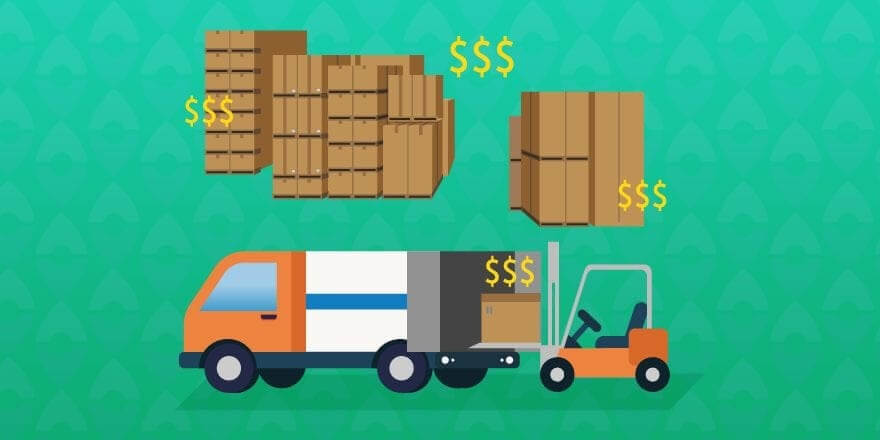
Saving costs on materials and supplies
Regular management gives you a clear picture of the company's warehouse situation hour by hour and day by day, allowing you to control and adjust to limit the number of products that are damaged, worn, or past their expiration date and must be destroyed. This allows the business to save better on material costs. To do this, you need a rigorous inventory statistics process along with close budgeting and budget control to avoid unnecessary waste.
Saving warehousing costs
Warehousing costs depend on the quantity and size of the goods the company stores, along with the equipment and related fees necessary for storing those goods.
The more and bulkier the goods, the more space and warehousing equipment they consume, with other costs such as electricity, water, and labor — which drives your warehousing costs up, and vice versa. Therefore, this is a cost that always varies depending on product characteristics and changing economic conditions.
Identifying early which goods consume a lot of storage space and resources helps you optimize your adjustments and transport them in time, reducing warehousing costs to a reasonable level.
Controlling purchasing costs
Having a specific and sensible purchasing plan is extremely important. This is especially true for industries related to food service and fast food, where the usable life of materials is limited — controlling incoming goods and stocking appropriately helps minimize waste.
In addition, holding large inventories with capital that generates no return is something no business wants. Therefore, researching the market, as well as customer behavior and demand, is very important for determining which products need to be purchased and stocked in the right amounts.
Minimizing errors

Designing an effective inventory management system helps you monitor inventory regularly and accurately, saving time, so errors in calculations and stocktaking are detected promptly and appropriate solutions can be applied.
Increasing revenue
Regular inventory management lets you know which items are selling well so you can plan timely restocking. For items that are unsold and piling up in the warehouse, you can promptly launch reasonable discounts and promotions.
In addition, grasping customer demand allows you to predict the quantity of goods needed to supply, stock, and maintain production and business operations, helping the business avoid the risk of shortages at critical times of the year or when consumer needs and behavior shift. This optimizes revenue and improves profits.
Improving working capital efficiency
Working capital is the concept referring to a company's short-term liquid assets, including materials, work in progress, inventory or finished goods reserves, accounts receivable, and cash, minus the company's current liabilities. Without working capital, business operations stall for lack of budget to continue.
Inventory management is one of the important activities in working capital management, comprising two key activities as follows:
-
Projecting working capital: report inventory data for specific periods such as hours, days, and weeks; carry out quantitative operations and material cost quotations, and warehouse management operations. This helps managers make wise predictions and decisions and adopt appropriate solutions for sensible capital reserves, especially for small businesses with limited budgets.
-
Shortening the capital turnover cycle: understand sales revenue, warehouse stock levels, and the price, quality, and quantity characteristics of each item accurately and flexibly, so adjustments can be made sensibly, easing pressure on working capital.
>>>> See more: The Process of Receiving and Issuing Finished Goods, Merchandise, and Materials
Inventory management methods

How to manage inventory effectively — preventing losses while delivering benefits — is always a hard problem each business must answer for itself. To do this, you need inventory accounting: a clear grasp of quantities, values, and holding times to prepare inventory accounting reports, and finally to devise corrective solutions.
Businesses can choose one of two inventory management methods: the perpetual inventory method or the periodic inventory method.
The perpetual inventory method
Just as its name suggests, the perpetual inventory method means continuously, systematically, and regularly tracking and recording the receipt, issue, and stock of materials and goods in the accounting books.
This method is highly flexible. When you choose to apply it, inventory accounting accounts are used to reflect current quantities and the movements, increases, and decreases of materials and goods. This allows the book value of inventory to be determined at any point in the accounting period.
Because of this characteristic, the perpetual method is typically applied by businesses with large inventory values in frequently used items such as machinery, equipment, and high-quality technological goods, and so on.
Value of goods issued in the period = Quantity issued in the period * Issue unit price
At the end of the accounting period, an actual stock count is performed, and the results are compared and reconciled with the inventory figures in the accounting books. In principle, these two figures must always match; if there is a discrepancy, the cause must be clearly identified and promptly addressed to avoid unwanted losses.
The perpetual inventory method has the following pros and cons:
-
Advantages: inventory value can be determined at any time, information is updated regularly, and errors in management and recording are minimized
-
Disadvantages: information must be recorded and updated continuously, which can put pressure on accountants
The periodic inventory method

This is an accounting method based on actual stocktaking results to reflect the end-of-period inventory value of materials and goods in the general ledger, from which the value of goods issued during the period is calculated. In other words, this method only reflects inventory value at the beginning and end of the accounting period.
When applying the periodic inventory method, every movement of materials and goods into or out of the warehouse is not tracked or recorded in the inventory accounting accounts; instead, the value of goods purchased and received during the period is tracked and recorded in account 611 (Goods Purchased) and determined using specific formulas.
This method is commonly used by businesses trading in a diverse range of goods, many types of materials, and items with different specifications, as well as low-value or frequently produced goods.
Value of goods issued in the period = Beginning inventory value + Total value of goods received in the period – Ending inventory value
The periodic inventory method has the following pros and cons:
-
Advantages: simple, requiring little time and effort in continuous recording and accounting, thereby reducing the volume of information stored in records.
-
Disadvantages: lacks accuracy regarding goods and cannot control the risks and errors that may occur during work, so the business cannot respond flexibly or devise solutions in a timely manner.
>>>> See more: The Most Essential Warehouse Management Roles, Diagrams, and Skills
4 effective inventory management models
The ABC analysis model
The ABC analysis technique is a method of classifying products and materials in inventory management into 3 groups based on the relationship between their quantity and value, as follows:
-
Group A: consists of goods with the highest annual value (70–80% of total inventory value), but in quantity terms accounts for only 15% of total stock. This group needs strict control and frequent accounting cycles, typically once a month.
-
Group B: consists of stock with average annual value (15–25% of total inventory value), accounting for about 30% of total stock by volume. Goods and materials in this group need good-level control, and audits should be conducted quarterly (roughly once every 3 months).
-
Group C: consists of stock with low annual value (about 5% of total inventory value), with quantity accounting for about 55% of total stock. This group is controlled at a moderately simple level (audits roughly every 6 months).
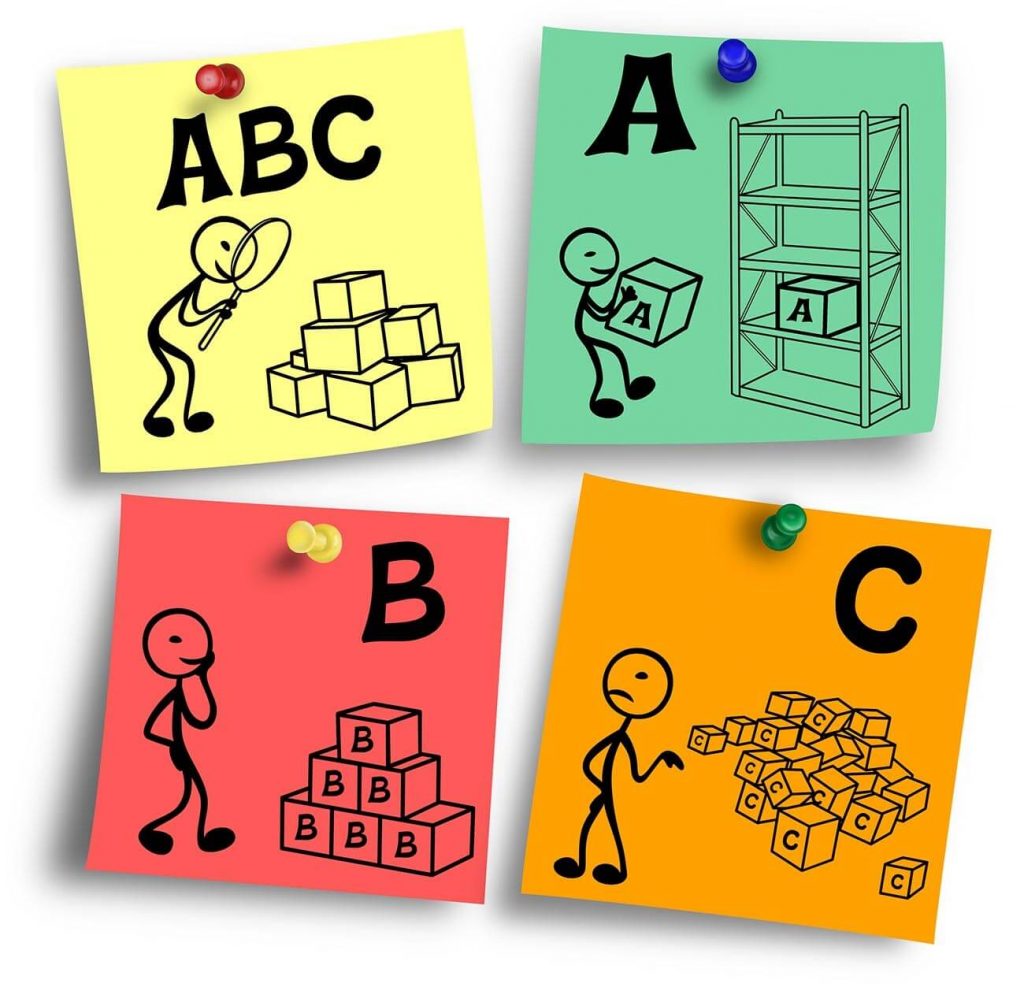
The ABC analysis model has the following advantages:
-
A clear classification mechanism and focused evaluation allow appropriate investment, with a suitable management approach for each type of goods
-
Improves the skill level of warehouse staff through regularly and accurately executed check cycles
The EOQ inventory management model
Economic Order Quantity, abbreviated EOQ, is a quantitative model used to determine the optimal — most cost-saving — inventory level that still meets a company's sales needs. This is done based on two types of costs present in a business: the cost of purchasing goods and the cost of holding inventory.
When the cost of materials or goods rises, the purchasing cost decreases while the cost of holding inventory increases. In other words, these two costs are inversely correlated. The purpose of the EOQ model is precisely to calculate so that the total of these two costs is as low as possible.
The EOQ model formula:
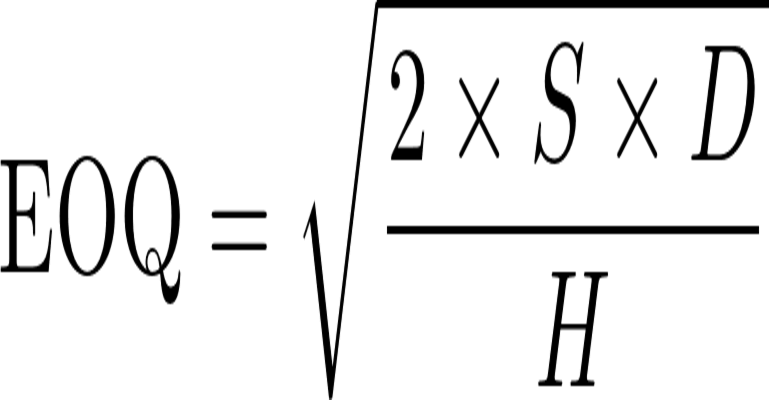
Where:
-
Q is the order quantity per order
-
D is the annual inventory demand, which can be computed as beginning inventory + inventory added during the year – ending inventory
-
S is the cost of placing each order, including shipping, phone calls, goods inspection, delivery, and so on
-
H is the cost of storing goods, including warehouse rental, machinery and equipment, utilities, staff salaries, and more
The advantage of the EOQ model is that it helps optimize ordering and warehousing costs. Although it is considered the simplest and most widely used model today, it does have certain limitations as follows:
-
Unrealistic input assumptions: the inputs of the EOQ model require the assumption that consumer demand remains constant for at least one year
-
Computational difficulties: it assumes both purchasing costs and storage costs are constant, which makes calculations difficult in certain business events
The POQ production order quantity model
Production Order Quantity Model, abbreviated POQ, is an inventory model applied when goods arrive continuously or when a product is just being produced, used, or sold.
The POQ model differs from the EOQ model by strengthening realism through relaxing assumptions. The key difference is the assumption that goods arrive continuously, in multiple deliveries, and that daily usage demand must be lower than the supply rate to avoid shortages.
The POQ model suits trading companies, businesses that produce their own materials, or companies that both manufacture and sell. This model has the following formula:
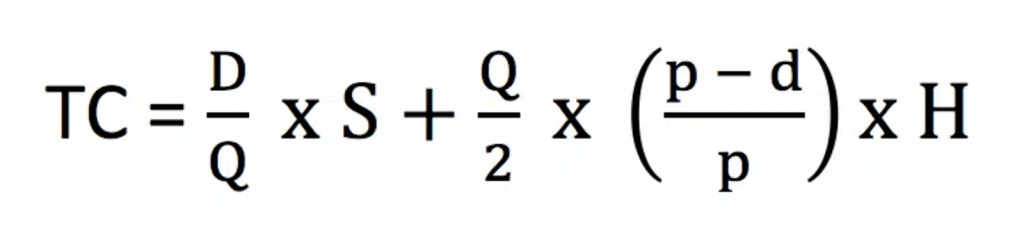
Where the symbols are the same as in the EOQ model, and P is the daily supply capacity (on the condition that d < P).
The QDM quantity discount model
The QDM (Quantity Discount Model) is an inventory model that takes into account price changes depending on the volume of each order. The model applies when a supplier offers a discount policy for large-volume purchases, known as quantity-discount selling. However, this increases inventory levels and warehousing costs while reducing ordering costs. Therefore, the goal when using this model is to choose the order quantity that minimizes total annual inventory costs.
The steps for calculating in the QDM model are as follows:
Step 1: Determine the optimal order quantity at each discount level using the following formula:
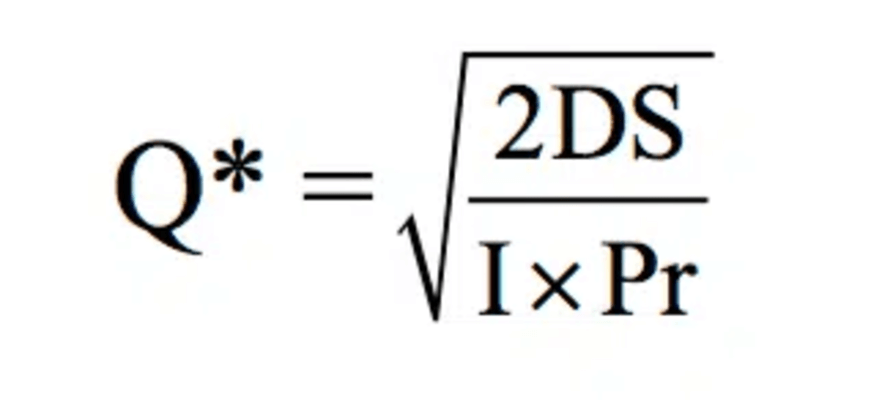
Where:
-
Pr is the purchase price per unit of goods
-
I is the percentage carrying cost based on the purchase price per unit of goods
Step 2: Adjust the appropriate order quantity at each discount level so that it meets the quantity requirement to qualify for the discount, but is not so large that it exceeds the maximum
Step 3: From the quantity found in step 1, calculate the total cost at the adjusted quantity

Step 4: Choose the Q* with the lowest total inventory cost as determined in step 3
Effective inventory management solutions for businesses
Follow the inventory management process correctly
The inventory management process begins at the moment materials and supplies are transported from the supplier's warehouse to the company's storage warehouse, and lasts until finished goods are issued from the finished goods warehouse.
An inventory management process involves many complex steps, and it will cause difficulties if the business does not control and handle problems correctly. Therefore, building a sensible process from the very start helps the business execute and deploy more smoothly and effectively. This process includes:
-
Establishing the goods-receiving process
-
Establishing the goods-issuing process
-
Establishing the process for stocktaking and inventory adjustments
-
Establishing the recycling process
For each step of the process to run seamlessly and consistently, the manager needs years of experience, flexible and skillful thinking in mastering the process, coordinating staff, and predicting, detecting, and promptly resolving emerging errors. In addition, the inventory management process must be strictly and rigorously followed by the entire workforce through working rules and staff management.
>>>> See more: Managing Your Warehouse with Excel: Simple, But Still Suitable?
Conduct regular stocktakes of goods in the warehouse

Stocktaking is work that should be performed regularly (at least once every 6 months) and must comply with the specific stocktaking instructions that have been established and approved in advance. This activity verifies whether the inventory quantities at each point in time match the recorded figures. From there, the business can detect errors and correct them promptly, preventing losses of goods.
In addition, frequent stocktaking also helps the business review and make necessary adjustment decisions based on the condition of the goods (damaged, to be liquidated, obsolete, etc.).
Managing inventory with barcodes
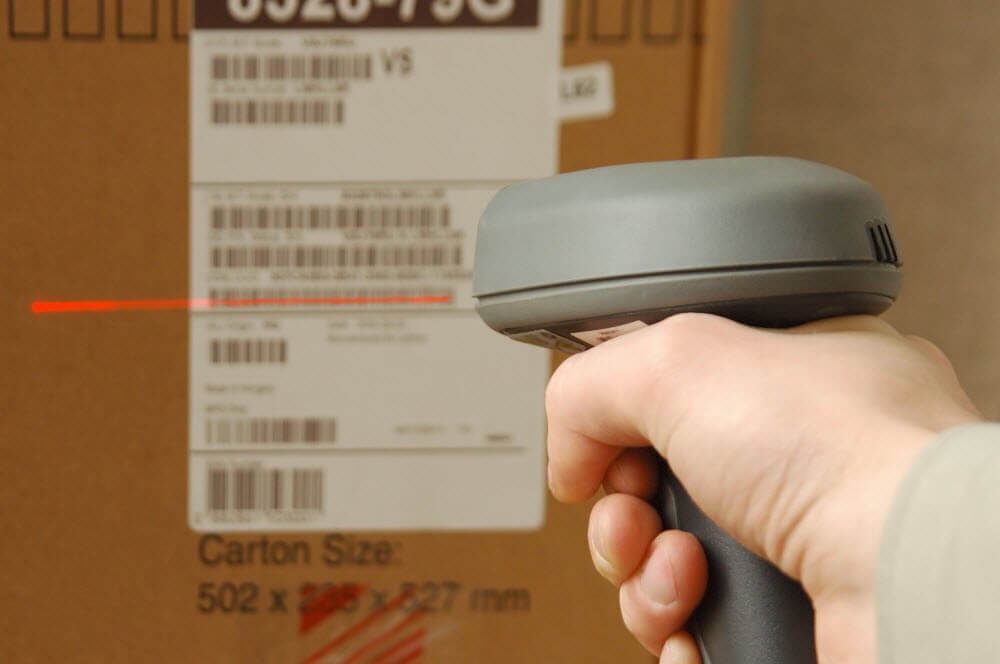
Barcodes are an automatic identification and data capture technology that works through a string of characters assigned to products and goods. With optimal encoding capability and modern technology that supports diverse character types, barcode systems have been and are being widely used across many industries, providing an effective solution for managing every item in the warehouse.
For barcode-based inventory management to run smoothly, first you need to classify goods according to predefined characteristics, then apply barcodes to each group in the most manageable way. Reading barcodes is extremely easy: simply scan the code with a scanner, and the system instantly displays item information such as shelf location, quantity, and item condition in detail.
Using barcodes also helps managers arrange goods professionally, saving costs and reducing the time and effort the business spends compared with the traditional manual management process.
Applying information technology to inventory management

As the Industry 4.0 era continues to advance, keeping up with and applying scientific and technological achievements helps businesses reduce costs, increase management efficiency, and become more competitive. The advent of inventory management software has provided optimal and effective solutions for controlling the quantity, value, and condition of inventory, as well as the movement and use of materials in warehouse receipt and issuance.
Managing inventory with Excel
Before modern inventory management software became widely known, Excel was the management solution commonly used by businesses, with the following advantages:
-
Low usage cost
-
Simple and easy to operate
-
Provides a wide variety of calculation functions
However, alongside those advantages, Excel still has drawbacks that businesses should consider:
-
Limited Excel capacity — processing large volumes of data slows down the system
-
Only one person can work on a file at a time, which takes a lot of working time
-
You need to master the calculation functions to work effectively
-
Manual data entry causes errors and consumes a lot of effort
-
Data is not strictly secured and can easily be stolen or lost
-
No linkage in updating data between departments
-
Information control is difficult
Given the advantages and disadvantages above, Excel is only suitable for small businesses and small shops with few goods and little data to store and process. So what is the optimal solution for large enterprises and distributors?
Smart inventory management software

As one of the features of sales management software, warehouse management has eased managers' worries through the following advantages:
-
Large storage space
-
Easy control of information on each item: item name, category, location, detailed condition, and more — through smart classification and lookup
-
Helps managers make sound decisions by providing fast and accurate automated inventory reporting
-
Saves time, money, and human resources
Alongside the development of the Industry 4.0 era, many Vietnamese warehouse management software products have emerged that effectively optimize business operations, which you can explore: Bravo, SimERP, KiotViet, Sapo, Suno, SOF, Ecount, and more.
Conclusion: Inventory management is a process of many complex steps and is by no means easy to manage. Therefore, building a correct and suitable process from the very beginning makes it easier for you to control and execute activities consistently and effectively. Through the points shared above, SimERP hopes you have gained further insight into the importance of inventory management and can find the warehouse management solution that fits your business's nature, needs, and business goals.
Related articles
Bài viết liên quan

25 tháng 10, 2026 · 3 phut doc
2024年网页设计趋势预测如何? | Wotech Electronics
关于 2024 年网页设计趋势——步入 2024 年,年初正是我们为新事物预留时间的时刻。这也非常适合设计师群体唤醒我们内心的"艺术之魂"。闲话不多说,快来和 Markdao 一起浏览 2024 年的 UX/UI 设计趋势吧,说不定您就能为自己接下来的网页设计项目"迸发"出一个绝妙的点子呢!

25 tháng 10, 2026 · 1 phut doc
什么是网站(Website)?网站的详细定义及其带来的商业价值
什么是网站(https://www.markdao.com.vn/blog/website-la-gi)——这个问题或许已经无需定义,因为在如今这个信息时代,网站对每一家企业而言都是不可或缺的组成部分。正是网站帮助用户更近距离地接触企业所提供的产品和服务,从而提升经营效益。此外,要在当今竞争如此激烈的环境中求发展,网站是一个重要因素,它将带你走向品牌与销量上的双重成功。

25 tháng 10, 2026 · 1 phut doc
什么是SEO标准网站?一场"打赢"Google SEO标准的战役 | Wotech Electronics
99%的用户在购买前会先搜索信息,73%的用户只会访问排名前10的网站,并认定它们是值得信赖的品牌……在数字营销爆发的时代,这些数字有力地印证了SEO标准网站的重要性。然而,许多人对什么是SEO标准网站(https://www.markdao.com.vn/blog/huong-dan-toi-uu-seo-website-chuan-seo-on-page)仍然相当模糊,并未真正理解。达到SE…