What Is Customer Psychology? What Are the Laws and Characteristics of Customer Psychology? | Wotech Electronics
Vũ Khôi
Tác giả tại Wotech Electronics Blog
What Is Customer Psychology? What Are the Laws and Characteristics of Customer Psychology?
Vũ Khôi
Author at Wotech Electronics Blog
Nowadays, whatever you sell, competition in the market is very high. That is precisely why analyzing customer psychology is extremely necessary to make an impression on customers and win market share. Read the article below to see how different customer groups behave as consumers, and how businesses can make use of customer psychology analysis.
What Is Customer Psychology

Customer psychology comprises all the psychological activities and purchase behaviors of customers before, during, and after the purchase: observing the product, gathering product information, choosing a brand, making the purchase decision, using and experiencing the product, and recommending the product to others.
Researching customer psychology focuses on analyzing how customers think, feel, reason, and make decisions. Analyzing the evolution of customer psychology is a business's task — it allows you to understand your customers and grasp their psychology and consumer behavior. The purpose of this activity is to uncover consumption motives, sticking points, and barriers in the purchase process, so the business can devise ways to create a consumption experience that satisfies customers' consumption needs.
Customer Psychology by Age
Customer psychology of teens and young adults — Generation Z, the consumers of the future

Over the past 2 decades, brands have been striving to connect with and win Millennial customers (the generation aged 30–45) because of their willingness to spend. However, according to the latest report from NIELSEN Vietnam, by 2025 Generation Z (aged 22–35) will be the market's key consumer group — Gen Z will make up about 25% of the national workforce, equivalent to 15 million new young users. So if your brand wants to lead the market and capture the largest share, researching the psychology of young customers is essential. In general, young people exhibit the following psychological characteristics:
Chasing trends and novelty
Young people are characterized by enthusiasm, dynamic thinking, daydreaming, and a love of risk. In consumer psychology, these traits show up as chasing trends and novelty.
While Millennials in the past just needed to eat and dress adequately, the new consumers care much more about change and novelty compared with the everyday. Even if they already own a product, customers will still consume an identical product with newer quality, or a substitute product with new features, to experience something fresh. Typical examples we can see are the growth and popularity of the fast fashion category and the constant stream of new smartphones.
A desire to express themselves and their individuality
At this stage, customers' psychology emphasizes young people's sense of self — they strongly pursue independence and try to express their personality in everything they do. This psychological trait is reflected in the search for special products, the products few others have. They often dismiss generic products that don't express their individuality.
This is also an extremely interesting trait of consumers that sellers can leverage to target customer psychology with "limited" campaigns, stimulating the psychology of many customer groups — raising brand and product value while enhancing the shopping experience.
Impulsive and emotion-driven
With limited life experience, this customer group's ability to analyze and judge situations is still unstable and sometimes immature. So when handling matters, they are easily emotional and impulsive. Their psychological trait shows up in consumer behavior: when choosing products, subjective feeling takes precedence. They usually decide whether they like a product based on whether it satisfies their momentary emotional desires. If you like something, you will surely find every way to make the purchase decision quickly.
Influenced by herd mentality
Alongside the constant growth of technology and the Internet, young consumers are exposed very early to social media platforms, giving them access to different cultures and prominent lifestyles everywhere in the world. For that reason, this user group tends to be influenced by celebrities or high-profile influencers on social media.
Customer psychology of middle-aged consumers

Beyond the young customer group, we cannot overlook middle-aged customers, given their high financial capacity and decision-making power in the purchase process. The psychological traits of middle-aged and older consumers are mainly expressed as follows:
Psychological stability
Because middle-aged and older consumers have life experience, their emotional reactions are generally fairly stable; their purchase decisions are rarely swayed by emotions, and most use reason to control their behavior. This group is therefore usually more careful in consumption and will not shop impulsively the way young people do.
Careful planning
Middle-aged and older consumers generally have families. They buy according to their actual needs, and also value economy. They will have detailed knowledge of the quality, price, uses, and types of goods, and will draw up detailed plans for their shopping. Products are often divided into groups so buyers can weigh how necessary each is and set a suitable budget.
Following their own opinions and unaffected by external factors
Most middle-aged and older consumers have their own consumption views; they trust their own experience and judgment. Even when they hear salespeople's advertising or others' recommendations, they still follow their own rules of analysis to determine whether they need to buy something, whether their budget allows it, or how much it allows. For this consumer group, businesses should not use gimmicky sales tactics or psychological ploys as they do when marketing to young people — instead, respect and listen to their opinions.
High brand loyalty
Middle-aged and older consumer groups formed certain living habits long ago and generally will not change them, because they have a conservative mindset when shopping. They have deep impressions of the products and brands they have used before, and they trust them greatly. They are the company's loyal consumers.
5 Ways to Apply Customer Psychology to Boost Sales
Identify your target customers
Before conducting customer psychology research, the business must clearly identify its target customer group. There are many reasons to define target customers, but in this case, clearly the business will not want to spend too much analyzing the psychology of a group that has no need for the product or no minimum ability to pay.
Learn about the target group's consumer behavior, preferences, and concerns
Research into consumer behavior changes according to each stage of the customer's purchase: the pre-purchase stage (researching, weighing options); the purchase stage (considering price, barriers); and the post-purchase stage (referring, repurchasing). The methods a seller can consider when wanting to understand customers' consumer behavior:
-
Questionnaires/Quick surveys: This method gets customer feedback quickly and in large volumes. However, it cannot dig deep into what drives customers to be satisfied or dissatisfied with a product.
-
In-depth interviews: Find a group of your most loyal customers and conduct in-depth interviews. Unlike quick surveys, in-depth interviews let the seller understand their customers most profoundly. Not only do you learn whether customers are satisfied with the product — you can also grasp the causes, barriers, and motivations behind their psychology. However, this method demands more budget, time, and personnel than the initial approach.
Join groups, communities, and forums on social media

Consumers in the digital technology era tend to research products before buying and to discuss and share about those products while using them. You can create conversations on social media and listen to your very own customers share. Nothing beats hearing the "inside information" customers are whispering to each other. However, this psychological analysis method takes a lot of time and requires regular updating.
The "fear of missing out" syndrome (FOMO)
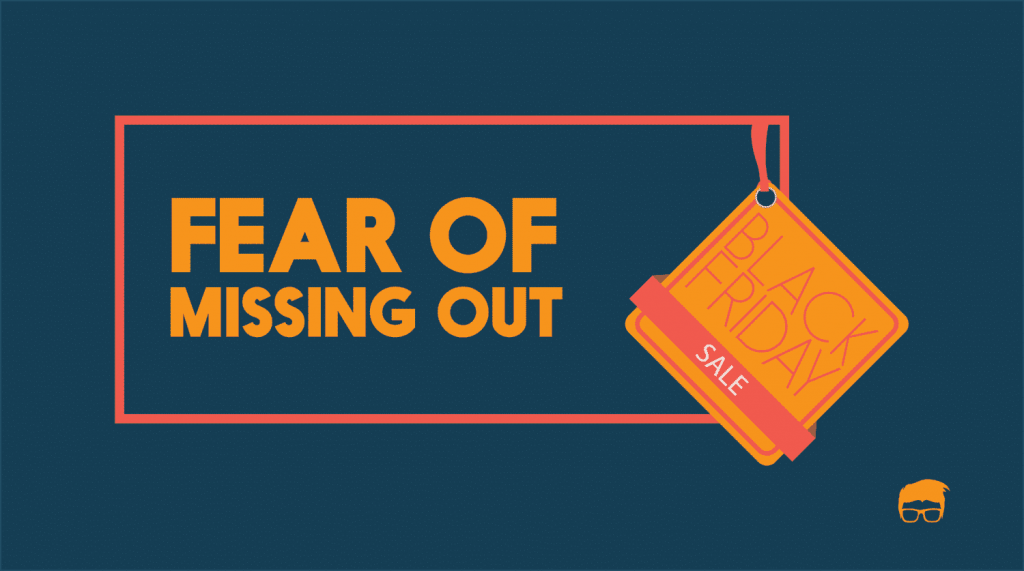
Have you ever lined up at a grocery store just to grab a few items "at the last minute" before the store stops selling them? Those items aren't placed with such signs randomly — this phenomenon happens because the business is targeting people's fear of missing out.
This psychological strategy is even more powerfully deployed in the digital era, when stimulating customer psychology while shopping online. Clearly, the customer had no intention of buying, but when presented with promotions limited in quantity and time, customers are easily pushed into wanting to buy quickly so as not to "miss out" on the deal.
Leverage the influence of the senses
Leverage the influence of the senses to drive purchases, through:
-
Images: Research shows the human brain processes visual information 60,000 times faster than text alone. Of course, some readers won't mind reading text, but 65% of readers are visual readers, and paragraphs containing images can increase click-through on the text by up to 80%.
-
Color: Each color conveys a different state. Colors have a huge impact on our emotions and perceptions, driving us to buy depending on the case. An example of customer psychology upon seeing yellow: yellow can evoke youthfulness and optimism, and is often used in activities to attract customer attention. Black usually connotes mystery, power, and luxury, and is often used by expensive brands. Or sellers can use orange to push the ordering process along faster.
-
Sound: If you own a traditional store, using sound is indispensable. Identify your target customer file and choose the genre of music that group loves. While shopping, if customers hear a song they like, a feeling of familiarity easily arises and delivers a memorable experience.
-
In addition, businesses can also consider other factors such as: scent, the way the store is arranged, or signage placement.
Analyze customer psychology with a CRM system
Beyond traditional analysis methods, with the arrival of the Internet and the development of technology, businesses can apply applications to manage and store customer information and, in particular, simplify customer psychology analysis. These applications' strength is optimizing the workflow, increasing management efficiency and reducing customer care time.
One such application is the SimCRM customer relationship management software, which lets businesses manage customer information online and supports customer psychology analysis activities.
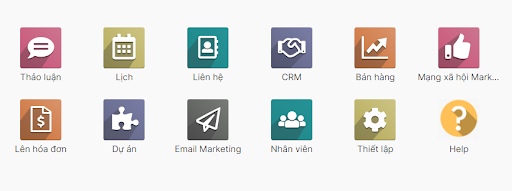
The app brings convenience to businesses and sellers in managing the modules: Sales and invoicing; Project management; Social network; CRM; Employees; Email Marketing, and so on. The modules are linked together so the business can perform multiple operations at once on a single platform, ensuring accuracy and coherence. This app makes customer psychology analysis much simpler thanks to:
-
Consolidating information about target customers: as mentioned above, before analyzing customers, the business needs to define its target customer group. The app lets the business consolidate all customer information and divide customers into groups with different consumption characteristics. This way, the business can grasp the basic characteristics the target group has.
-
Monitoring and compiling social media activity: monitoring posts and tracking the activity of groups, communities, and forums on social media; analyzing customers' reactions to the product or related issues to plan future content communications.
-
Automating the process of understanding customer psychology during purchase: when analyzing questionnaires, the app will automate sending emails to a target customer group and automatically compile that information for the business.
-
Storing internal and customer information: beyond psychology analysis, the business can consolidate customer information in the system to manage it and set up future customer care activities, turning new potential customers into the loyal customer group.
With so many features like these, businesses can now easily analyze customer psychology and control all of their activities. Visit now to try the SimCRM app for free!
Conclusion
Analyzing customer psychology in business is a necessary activity for companies to understand customers' thoughts and feelings — what motivates them and what holds them back — so they can respond with timely strategies. Use applications like SimCRM to increase analysis efficiency and save your business time!
Related Articles
Bài viết liên quan

25 tháng 10, 2026 · 3 phut doc
2024年网页设计趋势预测如何? | Wotech Electronics
关于 2024 年网页设计趋势——步入 2024 年,年初正是我们为新事物预留时间的时刻。这也非常适合设计师群体唤醒我们内心的"艺术之魂"。闲话不多说,快来和 Markdao 一起浏览 2024 年的 UX/UI 设计趋势吧,说不定您就能为自己接下来的网页设计项目"迸发"出一个绝妙的点子呢!

25 tháng 10, 2026 · 1 phut doc
什么是网站(Website)?网站的详细定义及其带来的商业价值
什么是网站(https://www.markdao.com.vn/blog/website-la-gi)——这个问题或许已经无需定义,因为在如今这个信息时代,网站对每一家企业而言都是不可或缺的组成部分。正是网站帮助用户更近距离地接触企业所提供的产品和服务,从而提升经营效益。此外,要在当今竞争如此激烈的环境中求发展,网站是一个重要因素,它将带你走向品牌与销量上的双重成功。

25 tháng 10, 2026 · 1 phut doc
什么是SEO标准网站?一场"打赢"Google SEO标准的战役 | Wotech Electronics
99%的用户在购买前会先搜索信息,73%的用户只会访问排名前10的网站,并认定它们是值得信赖的品牌……在数字营销爆发的时代,这些数字有力地印证了SEO标准网站的重要性。然而,许多人对什么是SEO标准网站(https://www.markdao.com.vn/blog/huong-dan-toi-uu-seo-website-chuan-seo-on-page)仍然相当模糊,并未真正理解。达到SE…