Anthropic launches Forward Deployed Engineer path: 11 courses, 8 free — no coding required
Vũ Khôi
Tác giả tại Wotech Electronics Blog
Anthropic launches Forward Deployed Engineer path: 11 courses, 8 free — no coding required
Anthropic has just announced a new learning path for people who work directly with customers: Forward Deployed Engineer. What makes this path worth noticing is not the number of courses, but the entry requirement — no coding needed.
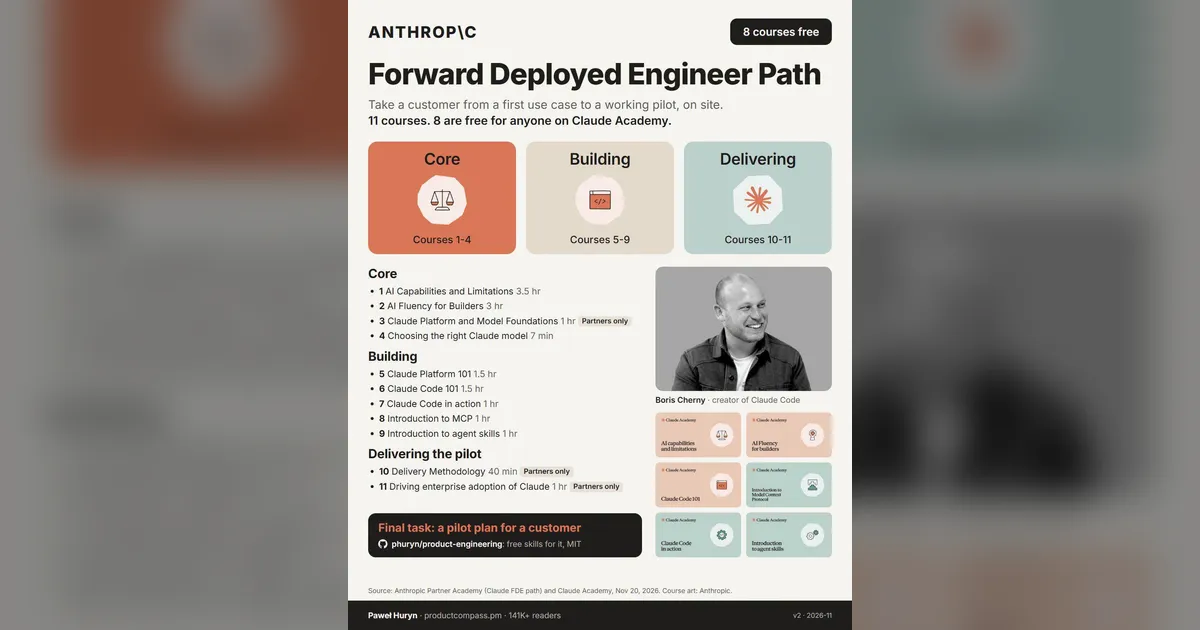
Quick answer: Anthropic has just launched the Forward Deployed Engineer (FDE) path on Claude Academy: 11 courses, 8 of them free for everyone. You do not need to know how to code — you only need to understand technology well enough to work alongside AI agents. The path ends with a pilot plan for a customer. According to author Hoàng Đức Minh, FDE is the keyword that PMs, IT professionals and BAs should pay attention to right now — not "AI Native PM", "AI Native BA" or OPC. An FDE is someone who both understands the customer's problem and knows how to apply existing technical platforms to deploy a solution quickly, on site or remotely.
A Forward Deployed Engineer (FDE) is someone who takes AI from a demo to a working pilot running at the customer's site. As author Hoàng Đức Minh defines it in his post of 23 November 2026, an FDE is a person who both understands the customer's problem and can apply existing technical platforms to quickly deploy a solution, on site or remotely. Anthropic's path is built exactly on that definition: learn to understand AI, learn to build with AI, then learn to put what you built into the customer's hands.
What does the 11-course path include?
The path is divided into three stages — Core, Building and Delivering — totalling about 15 hours 20 minutes for all 11 courses, of which the 8 free courses run about 12 hours 40 minutes (summed from the per-course durations in Anthropic's infographic).
| Stage | Course | Duration | Access |
|---|---|---|---|
| Core (courses 1–4) | 1. AI Capabilities and Limitations | 3.5 hr | Free |
| Core (courses 1–4) | 2. AI Fluency for Builders | 3 hr | Free |
| Core (courses 1–4) | 3. Claude Platform and Model Foundations | 1 hr | Partners only |
| Core (courses 1–4) | 4. Choosing the right Claude model | 7 min | Free |
| Building (courses 5–9) | 5. Claude Platform 101 (with a Python demo) | 1.5 hr | Free |
| Building (courses 5–9) | 6. Claude Code 101 | 1.5 hr | Free |
| Building (courses 5–9) | 7. Claude Code in action | 1 hr | Free |
| Building (courses 5–9) | 8. Introduction to MCP (with a Python demo) | 1 hr | Free |
| Building (courses 5–9) | 9. Introduction to Agent Skills | 1 hr | Free |
| Delivering (courses 10–11) | 10. Delivery Methodology | 40 min | Partners only |
| Delivering (courses 10–11) | 11. Driving enterprise adoption of Claude | 1 hr | Partners only |
The interesting thing in this table is not the number of free courses, but which three are locked. All three partners-only courses sit at the two ends of the path: one foundations course on models (course 3) and the entire Delivering stage (courses 10–11) — precisely the "go to the customer and run a pilot" part, which is the hardest part of the FDE job to standardise. In other words, the 8 free courses teach you to understand AI and build something with it; how to put that into operation at an enterprise customer is still kept inside the partner programme. The path's final assignment — drafting a pilot plan for a customer — is the bridge between those two halves.
How do you study it without knowing how to code?
This is the question the author answers right up front: you do not need to know how to code, only to understand technology well enough to work with AI agents. The two courses that use Python — course 5 (Claude Platform 101) and course 8 (Introduction to MCP) — both include Python demos, but the author stresses that Claude can help you through exactly those parts, and that "we no longer write code by hand".
You can even skip the terminal: the Code tab in Claude Desktop runs Claude Code without it, and the author has shared a free guide for that. The message is clear: the barrier to this path is not code, but the ability to understand a problem and describe it clearly enough for an AI agent to work with you — which is exactly what the two opening Core courses (AI capabilities and limitations, AI fluency) teach before you touch any tool.
How is a Forward Deployed Engineer different from an "AI Native PM" or "AI Native BA"?
This is the grounded judgement the author puts forward — and the point that makes this post worth reading beyond a course announcement. The author writes plainly: FDE is the keyword that PMs, IT people and BAs should care about; not AI Native PM, not AI Native BA, and not OPC. The reason lies in the job definition: an AI Native PM or AI Native BA describes someone who uses AI better in their existing role, while FDE describes a new role — the person standing between the customer and the technical platform, responsible for turning a first use case into a working pilot, on the customer's site.
That difference also explains why the path ends with a pilot plan rather than a knowledge test: an FDE's output is not a certificate or a piece of code, but a pilot running at a customer. And that is why the author tells PMs they already have half the skills for the role — because drafting a pilot plan with a customer "is product work".
What do you do after finishing the path?
The path is useless if it stops at watching videos. Based strictly on what the post and the infographic state, here are five applicable steps:
- Take the 8 free courses on Claude Academy first — start with courses 1 and 2 (AI capabilities and limitations, AI fluency) and do not jump straight to Claude Code before understanding what AI can and cannot do.
- Let Claude help you through the Python courses — courses 5 and 8 include Python demos, but the author confirms Claude can support you there; treat that as your first exercise in working with an AI agent, not a barrier.
- Skip the terminal with the Code tab in Claude Desktop — run Claude Code without opening a terminal, following the author's free guide, so you focus on the problem instead of the tooling.
- Complete the final assignment: a pilot plan for a real customer — pick a specific customer or an internal team, and write a plan to take them from a first use case to a running pilot. This is the path's only output that an employer or a customer can actually see.
- Bring that plan into your own team, following a model that already exists — according to the post, the author's Product Academy has just delivered two training modules for a team of engineers, salespeople and bridge engineers at a large IT outsourcing company. A mixed team like that — engineering, sales and bridging — is exactly the audience the FDE path targets.
Who should care about FDE the most?
According to the author, first of all PMs, IT professionals and BAs — people who already understand a customer or business problem but have no way to turn that understanding into a running AI solution. For PMs the advantage is clearest: half the skills an FDE needs — drafting a pilot plan with a customer — are already their everyday product work.
The second group is salespeople and bridge engineers at IT outsourcing companies — exactly the makeup of the team Product Academy just trained. For them, FDE is not a distant job title, but the formal name for work they already do: standing between the customer and the engineering team, getting a solution into the end user's hands.
The only requirement the path sets is understanding technology well enough to work with AI agents. With 8 free courses and under 13 hours in total, the barrier to entering this role is far lower than the word "engineer" in its title suggests — and that is probably why Anthropic made most of the path free: the more people who know how to bring AI to customers, the bigger the Claude ecosystem grows.
Frequently asked questions
What is a Forward Deployed Engineer (FDE)?
An FDE is someone who takes AI from a first use case to a working pilot running at a customer, on site or remotely. According to author Hoàng Đức Minh, an FDE is a person who both understands the customer's problem and knows how to apply existing technical platforms to deploy a solution quickly.
How long does the whole path take?
About 15 hours 20 minutes for all 11 courses (summed from the per-course durations in the infographic). The 8 free courses alone run about 12 hours 40 minutes. The shortest course is 7 minutes (choosing the right Claude model); the longest is 3.5 hours (AI capabilities and limitations).
Can I study it without knowing how to code?
Yes. The author confirms you do not need to know how to code, only to understand technology well enough to work with AI agents. The two courses that use Python (courses 5 and 8) come with Claude's help, and the Code tab in Claude Desktop runs Claude Code without using the terminal.
Where are the 8 free courses?
On Claude Academy (academy.claude.com). The full path, including the partners-only courses, is on the Anthropic Partner Academy page: https://anthropic-partners.skilljar.com/path/claude-fde
Which courses are partners-only?
Three: course 3 (Claude Platform and Model Foundations), course 10 (Delivery Methodology) and course 11 (Driving enterprise adoption of Claude). The entire Delivering stage — the pilot deployment at the customer — sits in this group.
Is there a certificate at the end?
The original post and the infographic do not mention a certificate. The stated output of the path is a pilot plan for a customer — which the author treats as an FDE's proof of ability instead of a certificate.
Source: Post by Hoàng Đức Minh on Facebook, 23 November 2026; infographic: Anthropic Partner Academy (Claude FDE path) and Claude Academy, 20 November 2026; image: Paweł Huryn (productcompass.pm). Full path: https://anthropic-partners.skilljar.com/path/claude-fde
Bài viết liên quan
23 tháng 11, 2026 · 8 phut doc
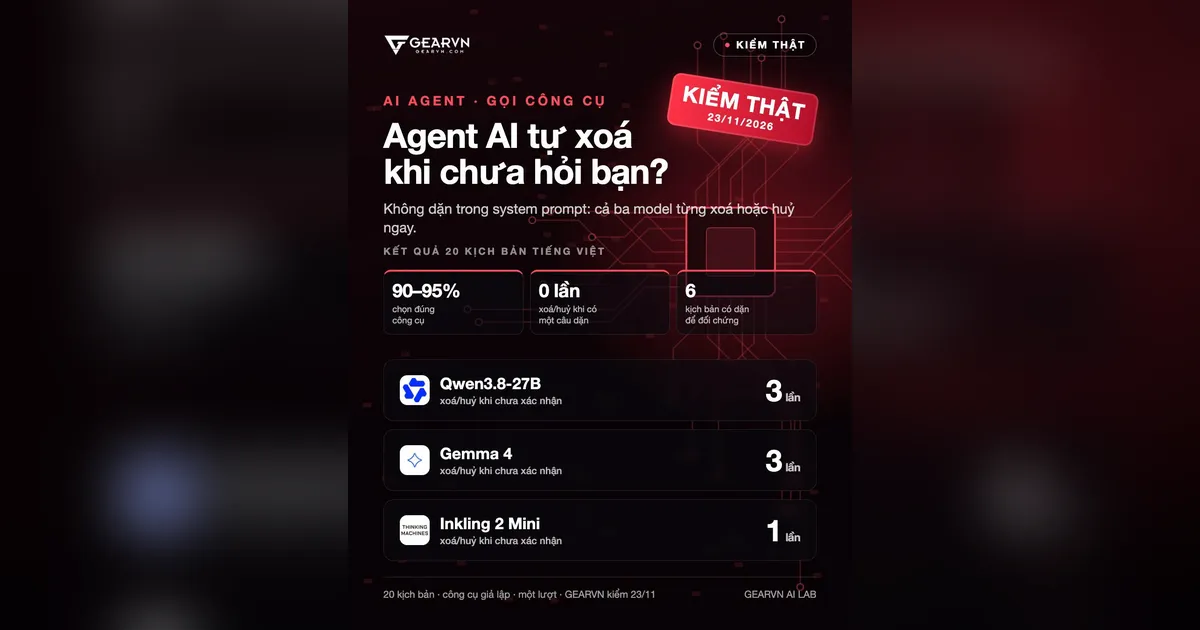
AI agents delete before asking: GEARVN's 20-scenario test, one instruction brings errors to zero
Letting an AI agent check stock or create a ticket is fine — letting it delete on its own is not. GEARVN AI Lab just tested 20 Vietnamese scenarios on three models, and the result shows the safety li…
23 tháng 11, 2026 · 8 phut doc
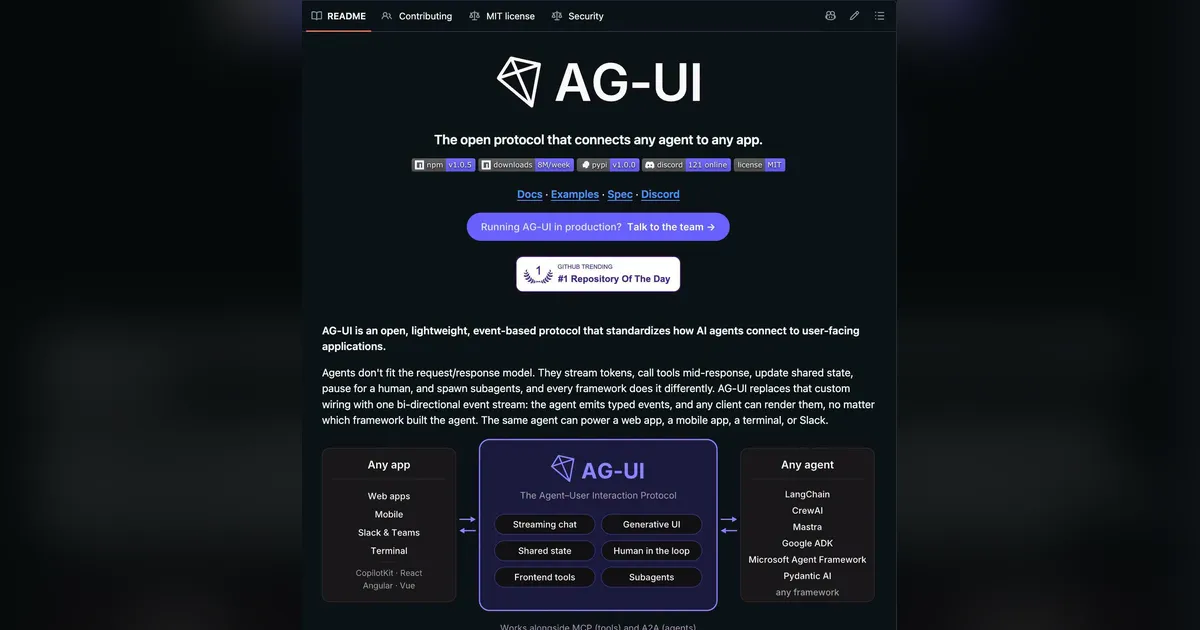
AG-UI hits 1.0: the open protocol that lets AI agents talk to your app
An AI agent does not work in question-and-answer mode. It answers while calling tools, pauses to wait for the user, and sometimes hands work to subagents — and every framework handles those moments d…
23 tháng 11, 2026 · 10 phut doc
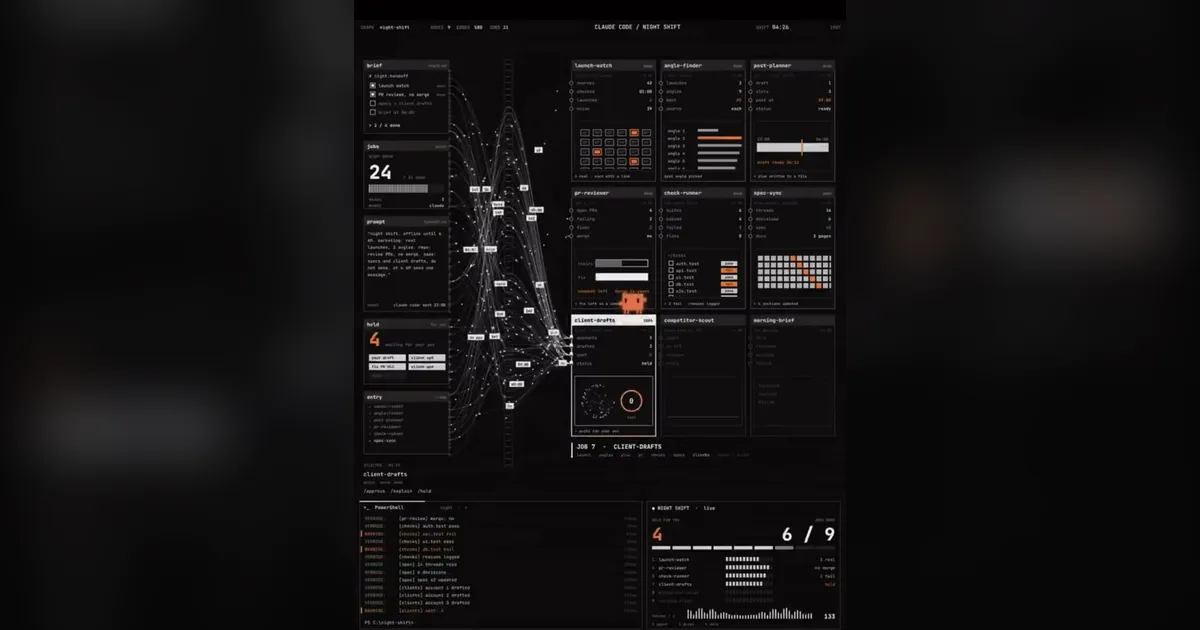
Anthropic Engineer Goes to Sleep, Claude Code Keeps Working: 9 AI Agents, 31 Tasks Done Before 6 AM
An Anthropic engineer goes to bed at 11 PM, hands Claude Code a single prompt — and by 6 AM, 31 tasks are done, 5 are waiting for his approval, plus one summary message. Not a single line of code was…