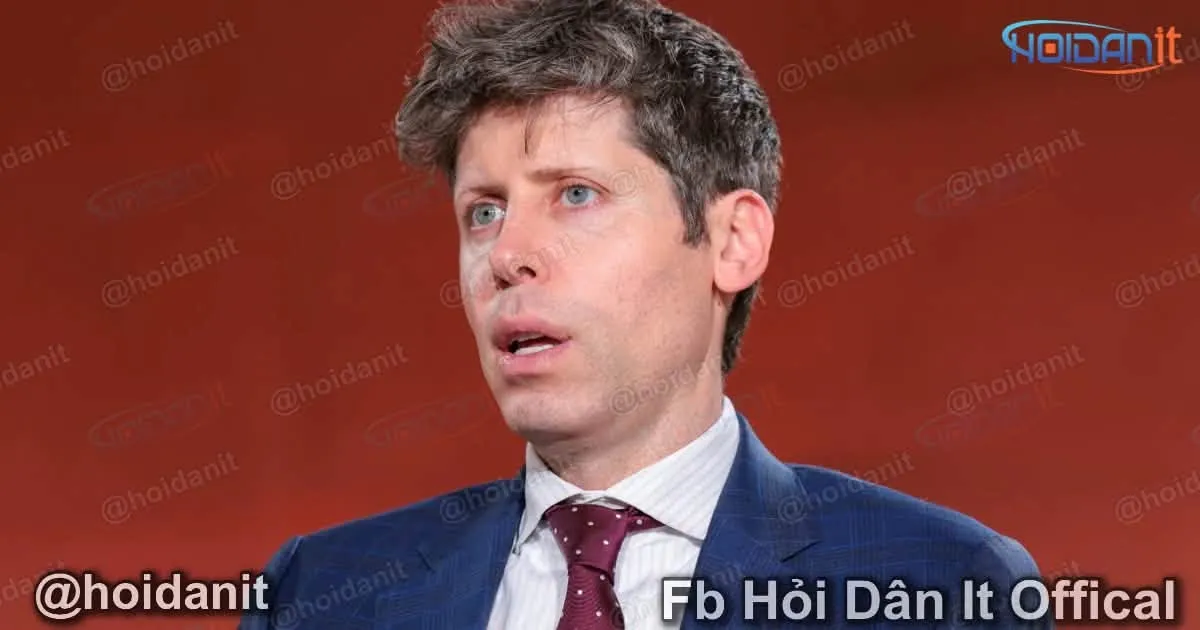
OpenAI's Message to Anthropic and DeepMind: Only Months Away from a 'Cognitive Nuclear Bomb'?
Vũ Khôi
Tác giả tại Wotech Electronics Blog
OpenAI's Message to Anthropic and DeepMind: Only Months Away from a "Cognitive Nuclear Bomb"?
A message said to be from OpenAI to its two biggest rivals is circulating: we may be only a few months away from a "cognitive nuclear bomb" — and you know it too. The original post stresses that this is circulating content, with no public evidence confirming its authenticity. But the idea behind it is what deserves discussion.
Quick answer: According to a post by Hỏi Dân IT, a message said to be from OpenAI to Anthropic and Google DeepMind reads roughly: "We are only a few months away from a cognitive nuclear bomb, and we know you are also approaching that milestone. Perhaps we need to agree on how to prevent the proliferation of these breakthrough AI capabilities?" The two most notable words are not "nuclear bomb" but "we" — the message implies the biggest rivals are very close too. The circulating content also mentions an internal OpenAI model described as far beyond GPT-6.2 Astra, said to have crossed a capability threshold related to solving a Millennium Prize Problem — but the post states there is currently no public evidence sufficient to confirm that claim. This article presents the story exactly as it is circulating, together with the original author's view of the power paradox behind it.
A "cognitive nuclear bomb" is how the circulating message describes a breakthrough AI capability threshold — something that could produce scientific breakthroughs humans would take decades to achieve. The irony, according to the post's author, is that the companies pouring tens of billions of dollars into winning the AI crown are now being called to sit at the same table and discuss how to stop the very technology they are racing to create.
Three powers racing to build the most powerful artificial brains on the planet
OpenAI, Anthropic, and Google DeepMind — the three forces racing to build the most powerful artificial brains on the planet. And if the circulating message is accurate, that race may be approaching a threshold even its participants are starting to worry about.
In an ordinary technology race, whichever company builds the stronger product wants to announce it as soon as possible, attract customers, win market share, and leave rivals behind. But what happens if the next product is not simply a chatbot that writes code faster, solves math better, or answers more cleverly?
What happens if it can produce scientific breakthroughs humans would take decades to achieve? Then the story stops being about who sells the most AI subscriptions. It becomes a much more uncomfortable question: who has the right to own, control, and decide when to release an intelligence capability that could shift the global balance of power?
The two most notable words: "we"
The two most notable words in the message, according to the post's author, are not "nuclear bomb". They are "we".
OpenAI does not say it alone is approaching a breakthrough. The message also implies the biggest rivals are very close. This is a fascinating paradox of the AI industry: the fiercest competitors may be standing before the same threshold, at the same time.
https://files.catbox.moe/mswipu.jpg
And this is the detail that makes the story special. The circulating content also mentions an internal OpenAI model described as far beyond GPT-6.2 Astra, said to have crossed a capability threshold related to solving a problem from the Millennium Prize Problems.
To understand the weight of that claim, note that the Millennium Prize Problems are seven famous problems announced by the Clay Mathematics Institute in 2000, with a one-million-dollar prize for each solution meeting the award conditions. Among them are names like the Riemann Hypothesis and the P versus NP problem — challenges that have tormented generations of mathematicians.
If an AI system could genuinely find a correct solution to such a problem on its own, that would be an extremely notable scientific advance. But there is a very large gap between AI producing a solution that looks convincing and the mathematics community verifying and recognizing that solution.
There is currently no public evidence sufficient to confirm the claim about the internal model or that it successfully solved a Millennium Prize Problem. Even so, the idea behind this message is what deserves discussion.
If AI generates new knowledge, who decides which knowledge may appear?
If AI becomes a machine capable of generating new knowledge at a superior level, who decides which knowledge is allowed to appear before the public? A private company? A group of safety experts? A government? Or all of them together?
This question connects directly to the proposal OpenAI publicly announced just days earlier: using log-perplexity as a common yardstick across labs and setting a first "development ceiling", to be exceeded only when the ability to understand and monitor AI behavior reaches a specific milestone. The circulating message — if real — is the next step of the same logic: not just proposing a yardstick, but proposing to sit down together to agree on how to prevent proliferation.
The bigger paradox: a safety fence or a fence protecting incumbents?
There is a bigger paradox. If OpenAI, Anthropic, and DeepMind agree together to limit the release of the most powerful AI capabilities, that decision could help reduce the risk from dangerous systems. But it also raises a competition problem.
The three companies hold enormous computing resources, research talent, and infrastructure, and could jointly set rules that smaller laboratories would find very hard to meet. A mechanism built to protect society could unintentionally become a fence protecting the position of those already leading.
| View | Safety | Power |
|---|---|---|
| The three big labs restrain together | Less risk from dangerous systems, time to build monitoring | Whoever decides what is "too dangerous to release" may also own that very technology |
| Free release | Knowledge reaches more people, open competition | Risk spreads before monitoring mechanisms exist |
| Rules set by the leaders | A common standard, easier coordination | Smaller labs struggle to comply, barriers to entry rise |
That is why the AI safety story cannot be separated from the power story. Because the person who decides which technology is too dangerous to release may also be the person who owns that very technology.
And perhaps this is the most debatable question: if one day the world's three biggest AI companies declare they have created something too powerful to share with the rest of humanity, should we feel safer because they know restraint, or more worried because the power to decide the future is concentrated in too few hands?
In the race for artificial intelligence, the greatest power may not belong to whoever creates the smartest brain, but to whoever gets to decide who may use that brain.
Apply it now: reading AI breakthrough news without being swept along
- Ask "who says it, where is the evidence" before believing: this message is circulating and has not been publicly confirmed — the original post says so itself. A claim only becomes fact when there is verifiable evidence, not when it spreads widely.
- Separate "producing a solution" from "a solution being recognized": the gap between AI offering a convincing-looking solution and the mathematics community verifying and recognizing it is very large — especially for Millennium Prize Problems.
- Look at the messenger's incentives: a restraint proposal from the very leader of the race can be both responsibility and competitive advantage. The two possibilities do not exclude each other.
- Watch three verification milestones: whether OpenAI, Anthropic, or DeepMind confirm the message; whether there is any independent evidence for the internal model mentioned; and whether any lab signs onto the log-perplexity "development ceiling".
- Ask who decides: when an AI capability is called "too powerful to share", ask who decides, by what standard, and who gets to take part in that decision.
1. Is OpenAI's message to Anthropic and DeepMind real? Not confirmed. The original post states clearly that this is content "said to be" and "circulating", and there is currently no public evidence sufficient to confirm its authenticity. This article presents the story exactly as it is circulating.
2. What does "cognitive nuclear bomb" mean? It is how the message describes a breakthrough AI capability threshold — something that could produce scientific breakthroughs humans would take decades to achieve. It is a metaphor in the message, not a technical term.
3. Has the internal model beyond GPT-6.2 Astra really solved a Millennium Prize Problem? There is no public evidence. The original post states there is currently no evidence sufficient to confirm this claim. AI producing a convincing-looking solution must be distinguished from the mathematics community verifying and recognizing that solution.
4. Why would the three big labs want to sit together instead of competing? According to the post's author, because the next product may be not just a better chatbot but a capability to generate new knowledge at a superior level — at which point the question is no longer who sells the most subscriptions, but who decides which knowledge may appear.
5. What is the problem with the three biggest companies setting the rules together? It could reduce risk, but it could also unintentionally become a fence protecting the leaders' position: smaller laboratories would find it very hard to meet rules the three big companies set together. AI safety and power cannot be separated.
Source: post by Hỏi Dân It Offical (Facebook, November 23, 2026). The message content and the claim about the internal model are circulating information, not publicly confirmed — this article presents them at exactly the level of verification the original post states.
Bài viết liên quan
23 tháng 11, 2026 · 8 phut doc
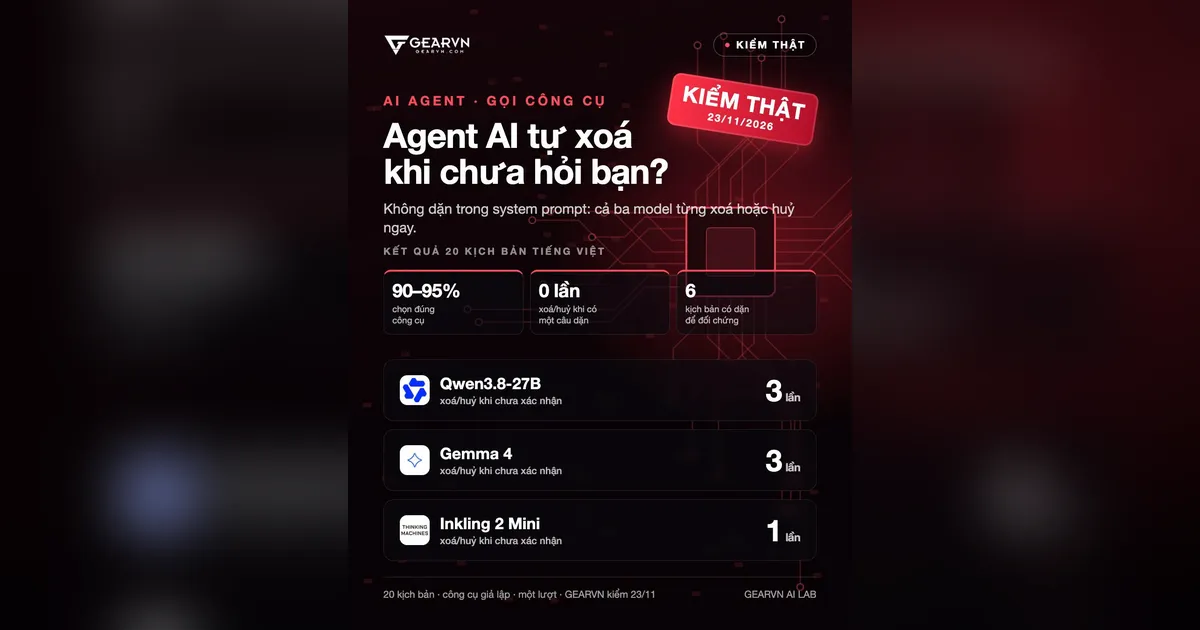
AI agents delete before asking: GEARVN's 20-scenario test, one instruction brings errors to zero
Letting an AI agent check stock or create a ticket is fine — letting it delete on its own is not. GEARVN AI Lab just tested 20 Vietnamese scenarios on three models, and the result shows the safety li…
23 tháng 11, 2026 · 10 phut doc
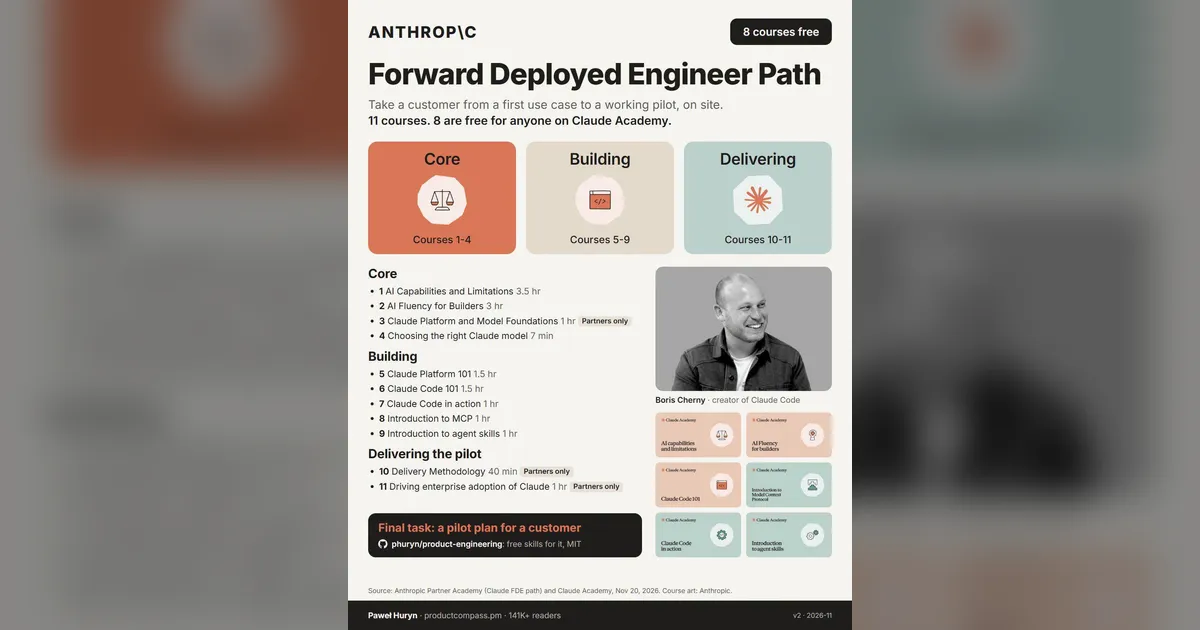
Anthropic launches Forward Deployed Engineer path: 11 courses, 8 free — no coding required
Anthropic has just announced a new learning path for people who work directly with customers: Forward Deployed Engineer. What makes this path worth noticing is not the number of courses, but the entr…
23 tháng 11, 2026 · 8 phut doc
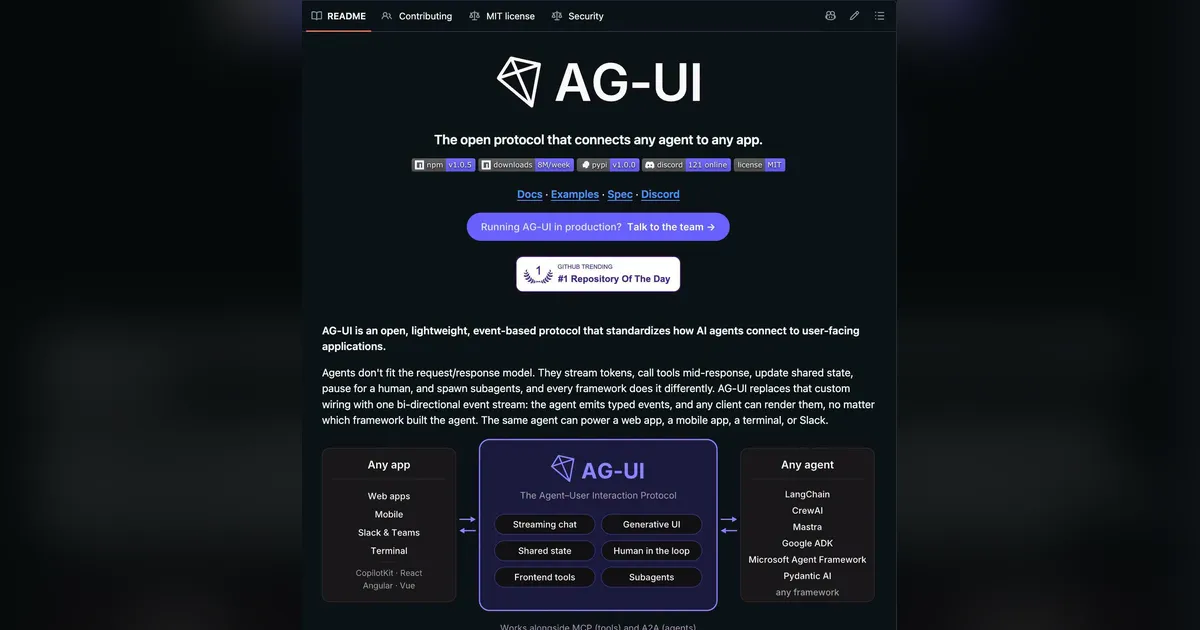
AG-UI hits 1.0: the open protocol that lets AI agents talk to your app
An AI agent does not work in question-and-answer mode. It answers while calling tools, pauses to wait for the user, and sometimes hands work to subagents — and every framework handles those moments d…